Food Safety
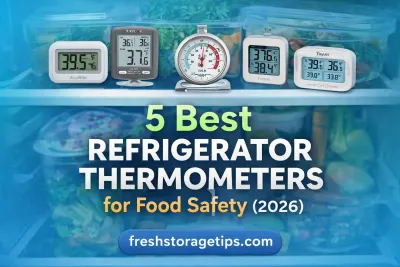
5 Best Refrigerator Thermometers for Food Safety (2026)
Discover the best refrigerator thermometers to keep your food safe. Compare digital and analog models,…
Food Safety
Most food goes bad for three reasons: it gets too warm, it stays out too long, or nobody is sure what the date on the label means. This section collects the guides that explain the why behind food storage, from the Danger Zone to freezer myths and date labels, so every other tip on this site makes sense.
On this page: The Three Numbers That Keep Food SafeWhat the Dates on Your Food Really MeanJump Directly to the Food Safety Guides
Food safety is not about fear, it is about a few simple numbers. Once you know them, you waste less food and worry less about what is in the fridge. Everything in this section is grounded in the guidance of the USDA Food Safety and Inspection Service and the FDA.
40°F (4°C): the FDA advises keeping your refrigerator at or below this temperature, and an appliance thermometer is the only way to know it does. 0°F (-18°C): the freezer temperature at which, according to the USDA, food will always be safe; only the quality drops over time. 2 hours: the longest perishable food may stay out of the fridge, or just 1 hour when it is hotter than 90°F (32°C). Between 40°F and 140°F, the Danger Zone, bacteria can double in as little as 20 minutes.
Freezing pauses bacteria, it does not kill them: the USDA explains that microbes become inactive at 0°F and can become active again after thawing. We explain what that means for your food in what happens to food when you freeze it and does freezing kill bacteria.
Except for infant formula, the USDA says date labels are not an indicator of safety. A “Best if Used By” date tells you when the product has its best flavor or quality, a “Sell-By” date is for the store, and a “Use-By” date is the last date for peak quality. The USDA estimates that 30 percent of food waste comes from people throwing away good food because they misread these dates. Read the full explanation in the truth about best before and use by dates.
8 guides
Explore the food safety guides below. Each one explains one part of the science behind fresh food, in plain language.
Discover the best refrigerator thermometers to keep your food safe. Compare digital and analog models,…
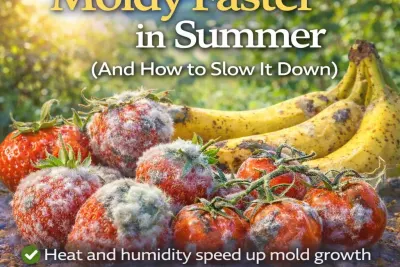
Why does food mold faster in summer? Discover how heat, humidity, and airborne spores speed up spoilage,…
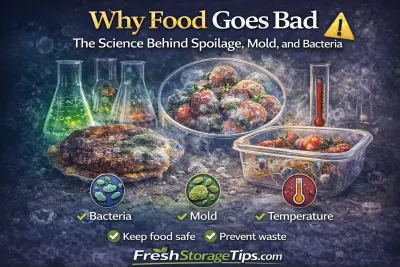
Why does food spoil? Discover the science behind bacteria, mold, and oxidation and learn how to slow…
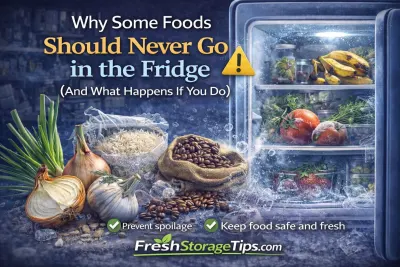
Stop ruining your groceries. Discover the foods that should never go in the fridge and the science…
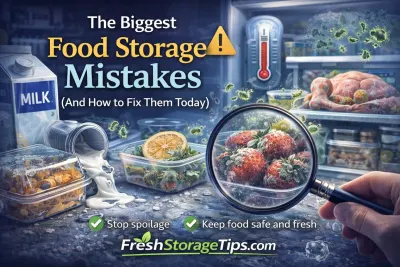
Stop wasting money on spoiled groceries. Learn the biggest food storage mistakes and simple…
Stop throwing away good groceries. Learn the real scientific difference between best before and use by…
What really happens when food freezes? Learn how ice crystals form, why freezer burn happens, and how to…
Throwing away spoiled groceries again? Discover why food spoils fast in your fridge and the simple shelf…
The rules that come back in every guide on this site, from the USDA and the FDA.
| What | Temperature |
|---|---|
| Refrigerator | 40°F (4°C) or below |
| Freezer | 0°F (-18°C) |
| Danger Zone | 40°F to 140°F |
| Food out of the fridge | 2 hours max |
| Above 90°F (32°C) | 1 hour max |
The USDA advice depends on how firm and moist the food is:
A fridge that runs too warm, food left out after dinner, and good food thrown away because of a misunderstood date are the everyday habits behind most spoiled groceries. Start with the biggest food storage mistakes and foods that should never go in the fridge, then use the food storage chart for the exact times of 50+ foods.