You buy fresh food from the store.
A few days later, something strange happens.
The bread grows fuzzy green spots. The strawberries turn soft and watery. The milk smells sour even before the date on the carton.
It feels random. But food doesn’t go bad by accident. Behind every spoiled ingredient is a simple biological process.
The Quick Answer: Food goes bad because microorganisms like bacteria and mold break down nutrients, while oxygen and enzymes trigger chemical reactions that change flavor, color, and texture. Temperature, moisture, and air exposure determine how fast these processes happen.
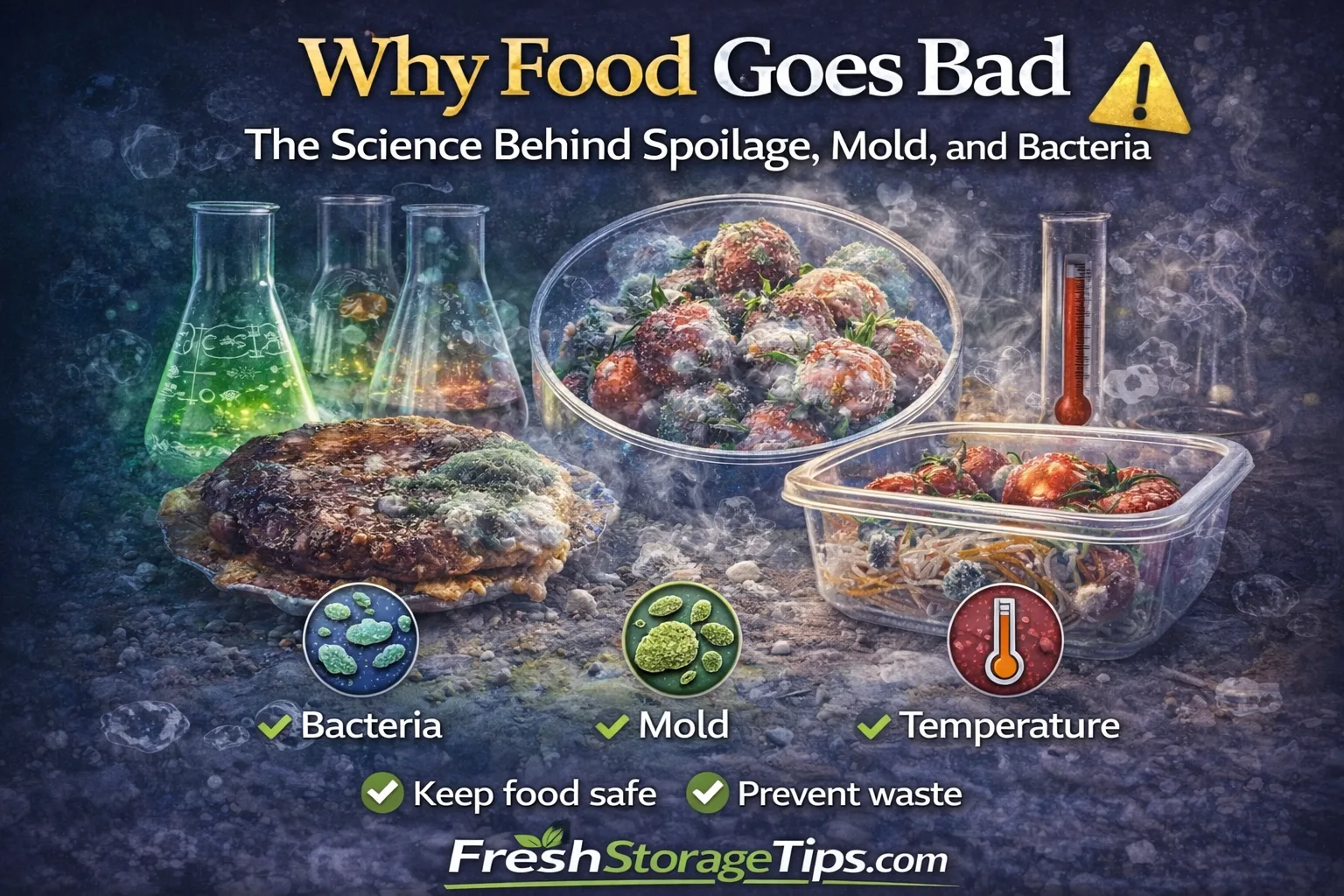
The Living Battlefield in Your Pantry
As a mother, I have spent a lot of time staring at the back of my refrigerator, wondering how a perfectly good cucumber turned into a puddle of mush in just forty-eight hours. It feels like a personal failure, doesn’t it? But once I started researching the science of decay, I realized that our kitchens are essentially a massive battlefield. On one side, we have the fresh nutrients we want to eat; on the other side, we have a relentless army of bacteria, fungi, and enzymes waiting for the smallest opportunity to strike.
Food spoilage is actually a very efficient recycling system designed by nature. Once a plant is harvested or an animal product is processed, the natural defenses of that organism cease to function. Without those defenses, the environment begins to reclaim the organic matter. Microorganisms aren’t “evil”—they are just doing their job of breaking things down. Our job is to create an environment that makes their work as difficult as possible. By understanding the mechanisms of spoilage, we can stop making common food storage mistakes that invite these unwanted guests to dinner early.
1. Biological Spoilage: The Microscopic Eaters
The most visible and often most dangerous type of spoilage comes from living organisms. These tiny invaders fall into three main categories: bacteria, mold, and yeast. They don’t just sit on the surface of your food; they actively consume it, changing its chemistry and making it unsafe for human consumption.
The Bacterial Speed Demons
Bacteria are the fastest-growing spoilage agents. Under ideal conditions, certain bacteria can double their population every twenty minutes. This exponential growth is why a steak can smell fine at noon but smell “off” by evening if left on the counter. Spoilage bacteria cause the food to develop odors and slimy textures. While these aren’t always the ones that make you sick (those are pathogens), they indicate that the food’s quality has vanished.
One of the best ways to keep track of this biological clock is understanding the difference between best before vs. use by labels. The “use by” date is a safety limit based on when bacterial growth typically reaches a level that could overwhelm your system. If you are dealing with high-risk proteins, always follow the FDA advice for safe selection and handling of fish and shellfish, as aquatic proteins are much more susceptible to rapid bacterial decay than beef or pork.
Mold: The Silent Navigator
Molds are fungi that spread through spores. When you see that green fuzz on your cheddar, you are seeing the “fruiting body” of the mold. What you don’t see are the “roots” or hyphae that have already grown deep into the food. This is why I always warn people about how to store cheese; if it’s a soft cheese and you see mold, the whole thing must go. Hard cheeses are denser, so the mold can’t travel as deep, but the network is still more extensive than it appears to the naked eye.
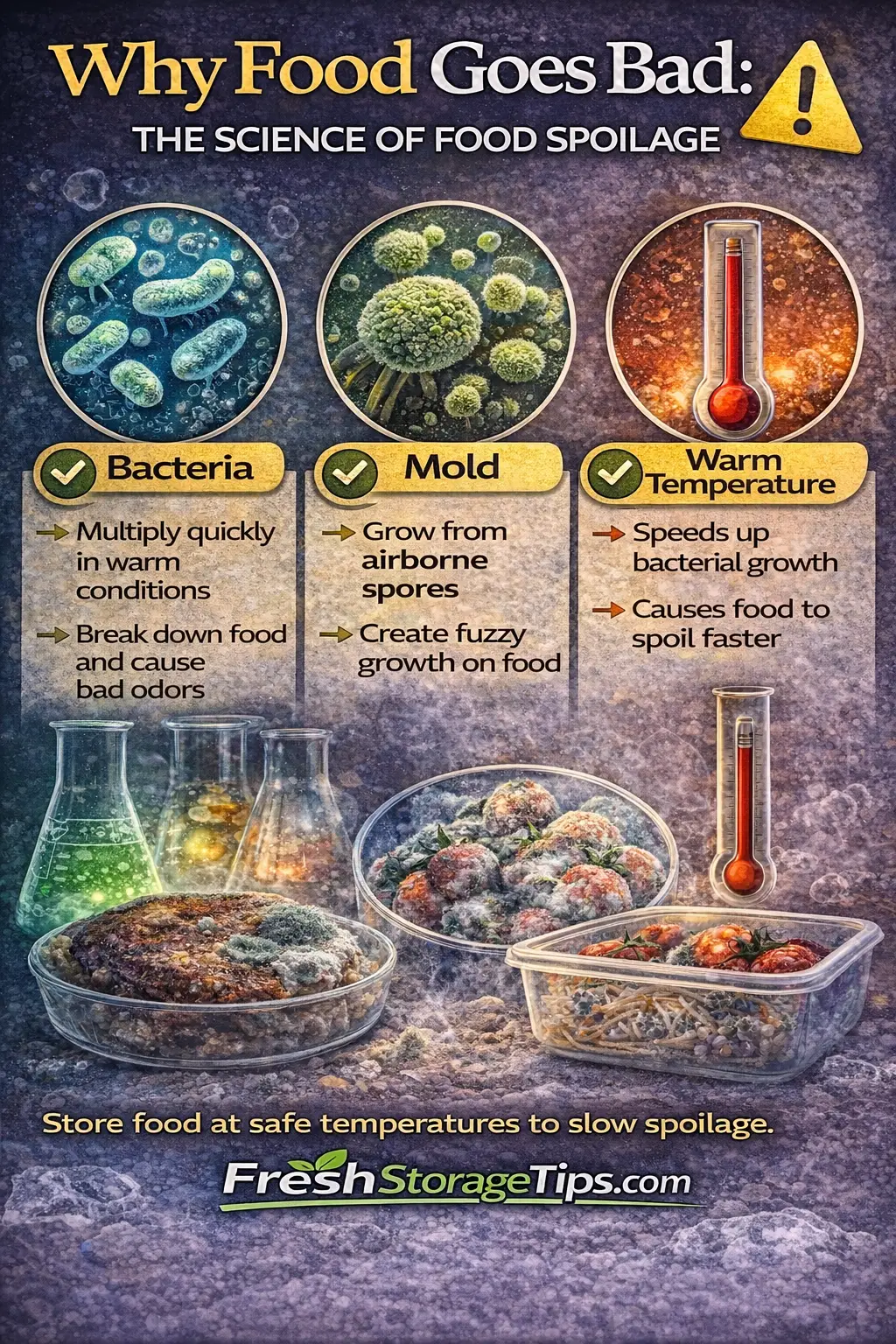
2. Chemical Spoilage: Self-Destruction
Sometimes, food ruins itself from the inside out without any help from germs. This is usually due to enzymes or oxidation. Enzymes are biological catalysts naturally present in all living things. In a growing plant, they help it ripen. Once the plant is picked, those same enzymes don’t stop working—they keep going until the fruit is overripe and eventually brown and mushy.
Enzymatic Browning: Think of a sliced apple turning brown. That is an enzyme reacting with oxygen. You can slow this down by adding acid (like lemon juice) or by excluding air. Oxidation: This is what happens when fats in your food react with the air. It causes rancidity, giving nuts and oils a “stale” or “metallic” flavor. This is why I always tell my readers to be careful when storing garlic in oil at room temperature—not only do the oils oxidize, but it creates an anaerobic environment where dangerous bacteria can thrive.
The FATTOM Rule: What Microbes Need to Grow
To prevent spoilage, you must remove at least one of these six factors that bacteria and mold require to survive:
- Food: Microbes need nutrients, specifically proteins and carbohydrates.
- Acidity: Most bacteria prefer a neutral pH. High-acid foods like pickles are naturally resistant to spoilage.
- Temperature: The “Danger Zone” is between 40°F and 140°F. Keeping food cold is your best defense. Refer to Oregon State’s refrigeration guidelines for precise safety ranges.
- Time: Bacteria need time to multiply. Never leave perishables out for more than two hours.
- Oxygen: Removing air through vacuum sealing stops many types of mold and bacteria.
- Moisture: Bacteria need water. Drying food (dehydration) is one of the oldest preservation methods.
Video Guide: SciShow – Why Food Goes Bad
The Chemistry of Decay
You’ve seen your fruit get moldy, or maybe your bread products. Sometimes old meat gets a funky smell. But what is actually happening scientifically when your food goes bad? It’s pretty interesting. Join Hank Green has an episode of SciShow and learn all about it!
Marleen’s Tip: Pay close attention to how they explain the role of water activity. It explains why honey lasts forever but a peach lasts three days!
3. Physical Spoilage: The Invisible Damage
Physical spoilage occurs when the structure of the food is damaged by the environment. The most common culprit is temperature fluctuation. If you have ever wondered what happens when you freeze food incorrectly, you’ve likely seen the results of physical spoilage. Ice crystals grow inside the cells, puncturing the delicate walls. When the food thaws, the internal moisture leaks out, leaving you with a dry, rubbery texture.
Humidity is another physical factor. Too much moisture in the air causes crackers to go soft and encourages mold. Too little moisture causes leafy greens to wilt as they lose water to the dry air of the refrigerator. This is why certain foods should not be refrigerated—the cold, dry air of a fridge can actually cause “chilling injuries” to tropical fruits and tomatoes, destroying their flavor compounds faster than if they were left on the counter.
Interactive Spoilage Risk Chart
Filter by food type to see the primary scientific cause of its spoilage and how to prevent it.
| Item | Primary Spoilage Cause | Scientific Sign | Prevention |
|---|---|---|---|
| Fresh Fish | Bacterial/Enzymatic | Ammonia smell (TMA release) | Storage on ice (0°C) |
| Strawberries | Mold (Botrytis) | White/Grey fuzz | Keep dry; wash only before eating |
| White Bread | Mold/Retrogradation | Staling (Starch crystallization) | Freezing for long term |
| Leafy Greens | Respiration/Bacteria | Wilting and slime | High humidity crisper |
| Ground Beef | Bacteria/Oxidation | Gray color; sour smell | Strict temperature control |
Scientific Best Practices for High-Risk Items
If you want to master the science of your kitchen, you have to look at how professional fishmongers and meat packers handle their products. Meat and seafood are the most expensive items in your grocery cart, and they have the shortest lifespan. According to the USDA guidelines on fish storage, most fresh fish should be consumed within 1 to 2 days of purchase. This is because the enzymes in fish are designed to work in cold ocean water, meaning they remain active even in a cold refrigerator.
When you bring fresh catch home, the Iowa DNR’s fish safety protocols recommend immediate cleaning and rapid chilling to stop the “autolysis” (self-digestion) that begins the moment the fish dies. Furthermore, the NOAA seafood handling database emphasizes that cross-contamination is a major biological risk. Always keep raw proteins on the bottom shelf of your fridge to prevent “drip-loss” from contaminating ready-to-eat foods. For a final check on safety, I always keep a copy of the FDA seafood safety chart printed inside my pantry door—it is the ultimate authority on whether that salmon is still safe to sear.
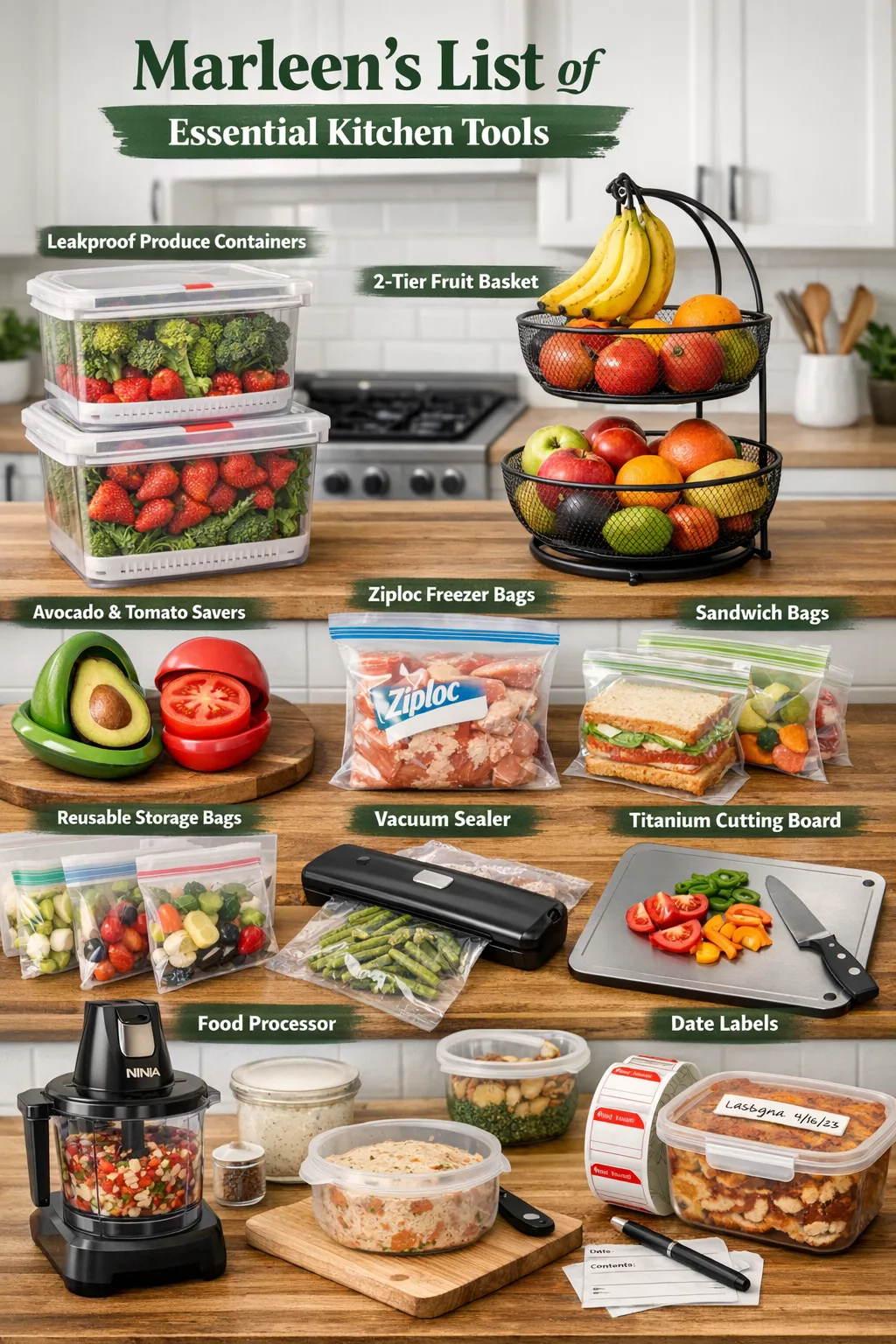
Marleen’s List of Essential Kitchen Tools
I didn’t always have a perfectly organized kitchen. In fact, for years, I just tossed groceries into the fridge and hoped for the best. It wasn’t until I started losing hundreds of dollars a year to spoiled meat and fuzzy berries that I realized science-backed tools are non-negotiable. If you want to stop bacteria and mold, you have to fight them on their own terms.
The tools listed below are exactly what I use to manage the “FATTOM” factors in my own home. A vacuum sealer removes the oxygen that mold spores crave. Specialized produce tubs manage the respiration and humidity of your delicate greens. And a digital thermometer? That is your only proof that your fridge hasn’t drifted into the bacterial “danger zone” overnight. These aren’t just gadgets—they are your frontline defense against waste. By investing in these, you aren’t just buying plastic and metal; you are buying more time for your family’s food.
Vacuum Sealer for Food
The ultimate weapon against oxidation. By removing air, you stop aerobic bacteria and prevent freezer burn on expensive meats.
View on AmazonDigital Thermometer
Don’t trust the dial on your fridge. This verifies you are strictly under 40°F, where spoilage bacteria slow to a crawl.
View on AmazonFood Product Saver Tubs
These bins feature raised bases and vents to keep produce out of its own condensation, stopping mold before it starts.
View on AmazonAirtight Storage Containers
Mismatched plastic leaks air. These professional-grade containers keep humidity in (or out) exactly where it belongs.
View on AmazonDissolvable Food Labels
Science doesn’t guess, and neither should you. Write the date on these labels so you know exactly when the biological clock started.
View on AmazonElectric Food Processor
Quickly prep and seal bulk vegetables to minimize their exposure to room-temperature air and contaminants.
View on AmazonAs an Amazon Associate, I earn from qualifying purchases.
Sources & Transparency
This article was compiled using peer-reviewed data on food microbiology and official government safety guidelines. We consult the FDA, USDA, and NOAA to ensure all storage timelines and biological explanations are scientifically accurate. Our goal is to provide the most reliable food preservation advice available to home cooks.
Food spoils faster in the fridge than most people expect because the average home fridge runs at 37 to 40°F, which slows bacteria but does not stop it. Understanding why food goes bad in general explains what is happening in your fridge at a cellular level and why some foods last days while others last weeks. The most common cause of faster-than-expected fridge spoilage is avoidable storage mistakes like leaving food uncovered or placing warm food directly into the fridge. Some spoilage is caused by putting foods that should never go in the fridge into cold storage, where the temperature actually damages them rather than preserving them.
Last updated: