
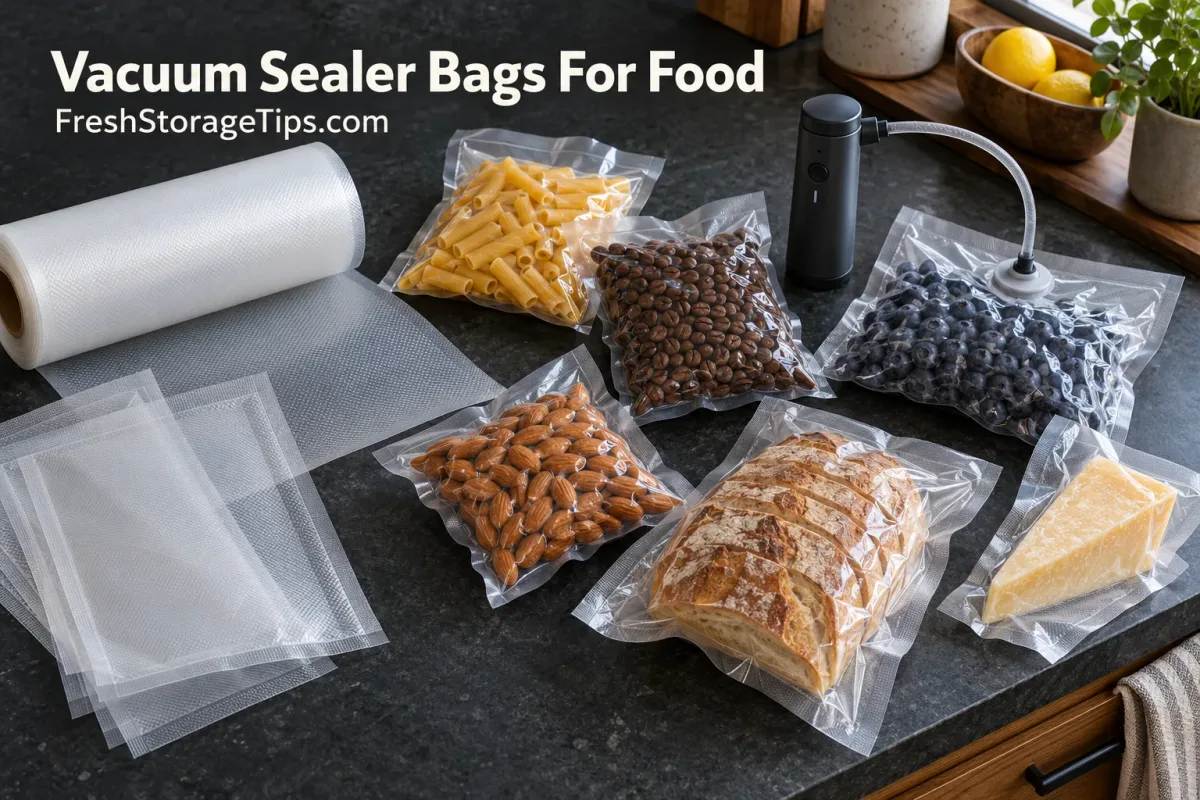
You can vacuum seal almost any food, but where you keep it afterwards decides whether that’s a good idea. Vacuum sealing does not make perishable food shelf-stable. Only dry foods such as nuts, grains, dried fruit and properly made jerky can stay sealed at room temperature. Meat, poultry and vegetables still need the fridge or freezer, and home-sealed fish belongs in the freezer. For vegetables, the expert advice is to vacuum package and freeze, after blanching most of them.
Stocking up on bags? The bags and sealer we link to on this page: vacuum sealer bags FoodSaver FM2100 (Amazon; as an Amazon Associate I earn from qualifying purchases)
The One Question to Ask First: Where Will It Live?
Vacuum sealing is great at one thing: keeping air away from food. Montana State University Extension puts it bluntly, though: vacuum sealing “is NOT a food preservation method by itself.” If a food needed the fridge or freezer before you sealed it, it still needs it afterwards.
| Where it will be stored | What you can seal |
|---|---|
| Pantry (room temperature) | Only dry foods: nuts, grains, dried fruit, properly prepared jerky, crackers |
| Fridge | Fresh meat and poultry, and cooked food, for the normal fridge times |
| Freezer | Almost everything that freezes well, including blanched vegetables and fish. This is where sealing helps most |
Why the pantry list is so short: Dr. Joy Waite-Cusic explained on Ask Extension that the bacteria behind botulism grow with little or no oxygen, in moist, low-acid food, above fridge temperature. Dry foods have too little available water for them, so “nuts, grains, or properly prepared jerky” and dried fruit can be stored vacuum sealed. Moist, low-acid foods at room temperature in a sealed bag are the opposite: “a nearly perfect set of conditions” for the toxin. Vacuum sealing is not a preservation method on its own: it does not replace refrigeration, freezing or approved methods such as canning. Keep sealed moist foods in the fridge at 40°F or below or in the freezer at 0°F, follow the times in the table, and never treat sealed perishable food as if it were shelf-stable.
Food by Food: Can You Vacuum Seal It?
| Food | Vacuum seal? | How |
|---|---|---|
| Nuts, grains, dried fruit | Yes, even for the pantry | Low moisture keeps bacteria from growing. A plain airtight container works too, as Clemson Extension points out |
| Raw meat and poultry | Yes, fridge or freezer | See how long vacuum-sealed meat lasts |
| Fish | Yes, for the freezer | Storing: Clemson advises keeping vacuum-packed fish frozen until you use it. Thawing: in the fridge, or take it out of the package first (details in “Two Rules” below) |
| Potatoes | Not raw at room temperature; yes for the freezer after blanching | Montana State: choose new potatoes, peel, remove eyes, bruises and green spots, water blanch 3 to 5 minutes, cool, drain, then pack |
| Mushrooms | Not fresh at room temperature; yes for the freezer after steaming | Montana State: slice or quarter ones larger than 1 inch, and steam blanch them (not in water). A 5-minute dip in 1 teaspoon of lemon juice per pint of water first keeps the color better |
| Onions | Not fresh at room temperature; yes for the freezer | Whole onions: blanch 3 to 7 minutes until the center is hot. Chopped green onions can be frozen without blanching (Montana State) |
| Garlic | Not fresh at room temperature | Grows in soil, low in acid, moist: Dr. Waite-Cusic explains why that makes it risky at room temperature. If you seal it, keep it frozen |
| Bell peppers | Yes for the freezer | For salads, Montana State freezes strips or rings without blanching; for cooked dishes, blanch slices or rings 2 minutes, halves 3 minutes |
| Lettuce | Not a good candidate | The USDA lists lettuce among foods that “simply don’t freeze well”, so sealing it for the freezer makes little sense, and we found no reliable source for vacuum sealing it for the fridge. For keeping it fresh, see how to store lettuce |
| Cucumbers | No official advice found | We found no extension method for freezing cucumbers. See how to store cucumbers |
| Cooked leftovers | Yes, fridge or freezer | Seal them promptly: perishable food shouldn’t spend more than 2 hours in total above 40°F (Clemson) |
Vegetable how-tos above come from Montana State University Extension’s “Freezing Vegetables” publication, which has blanching times for many more vegetables.
Why Fresh Vegetables Are the Tricky Group
It may be surprising, but in the Ask Extension answer it’s vegetables, not meat, that get singled out. Here’s why, in Dr. Waite-Cusic’s words: garlic and mushrooms are “low in acid” and “high in available water”, and because both grow in contact with the soil, the chance that botulism spores are on them “is high.”
And it’s not just those two. Asked whether onions belong in the same group, she answered that they are “also a risk”, and that “all vegetables fit in this risk group.” Her advice: “vacuum package AND freeze.”
The good news: in the freezer, sealed vegetables are a great idea. Montana State explains that freezing almost completely stops bacterial growth, at least while the food stays completely frozen, and less oxygen helps against spoilage. Montana State adds that you should blanch most vegetables first, because “under-blanching stimulates enzymes, which is worse than no blanching.” So follow the times, don’t guess.
Can You Vacuum Seal Frozen Food?
Yes. For vegetables, Montana State describes a handy way to do it, called a tray pack: you freeze the pieces first and pack them afterwards.
- Spread the (blanched, chilled and well-drained) pieces in a single layer on a tray.
- Freeze until firm. Montana State says to check after about an hour.
- Fill the bags quickly, seal and put them straight back in the freezer.
Because the pieces froze separately, it’s easier to take out one handful of peppers later instead of chiselling a brick in half.
Soups and sauces: our own tip, not from the sources above: freeze liquids solid in a container first and then seal the frozen block, so the sealer doesn’t pull liquid towards the seal.
Two Rules That Keep Sealed Food Safe
- Get it cold fast. Perishable food should not spend more than 2 hours in total above 40°F, or 1 hour when it is above 90°F (USDA). Time on the counter before sealing counts too, so seal promptly and put the bags in the fridge or freezer right away.
- Thaw in the fridge, and let air in. Clemson says to “thaw foods in the refrigerator, never at room temperature”, and Montana State says the same for vegetables. When you thaw sealed vegetables, Dr. Waite-Cusic advises cutting or opening the bag “to allow oxygen into the package.” For vacuum-packed fish, Clemson recommends thawing in the refrigerator. Need it faster? Take the fish out of the vacuum package first. Never thaw vacuum-packed fish in its sealed bag on the counter or in water.
Your Vacuum Sealing Kit
Everything on this page works with a basic home sealer, the right bags and a way to date what goes in the freezer. These are the ones we link to; check that the bag size and type fit your machine before you order. Still choosing a machine? Here are the 5 vacuum sealers I would pick for different kitchens.
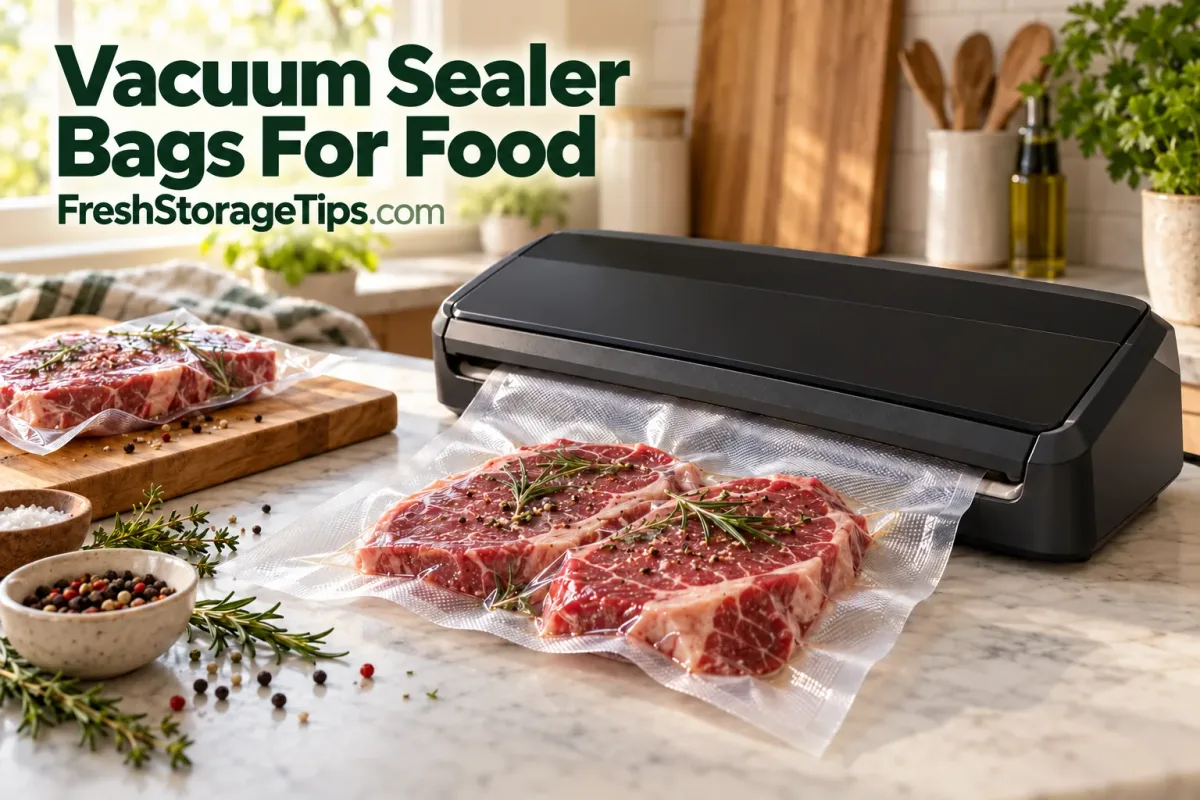
FoodSaver FM2100 Vacuum Sealer
Takes the air out of the bag and seals it, for nuts and grains in the pantry or meat, fish and blanched vegetables in the freezer.
See the FoodSaver on Amazon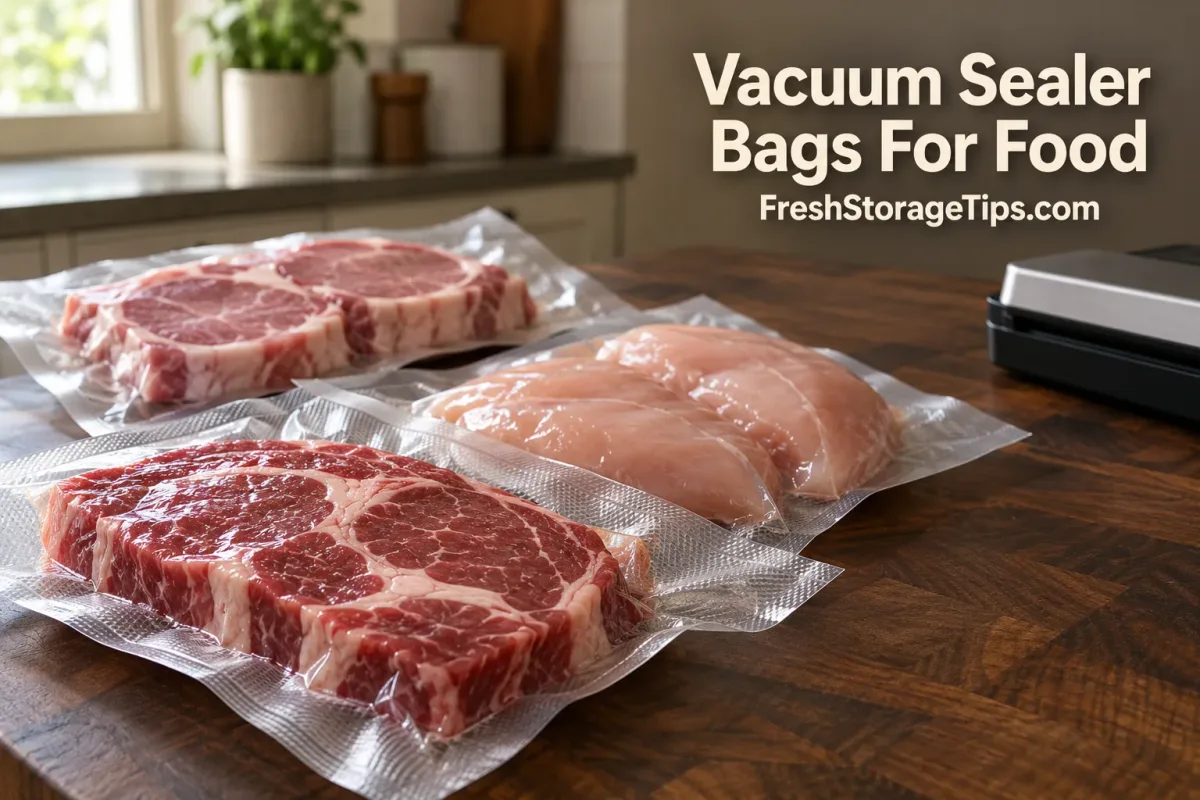
Vacuum Sealer Bags
A sealer is only as good as its bags. For pieces that should stay loose, use the tray pack above: freeze first, then bag and seal.
Look at these bags on Amazon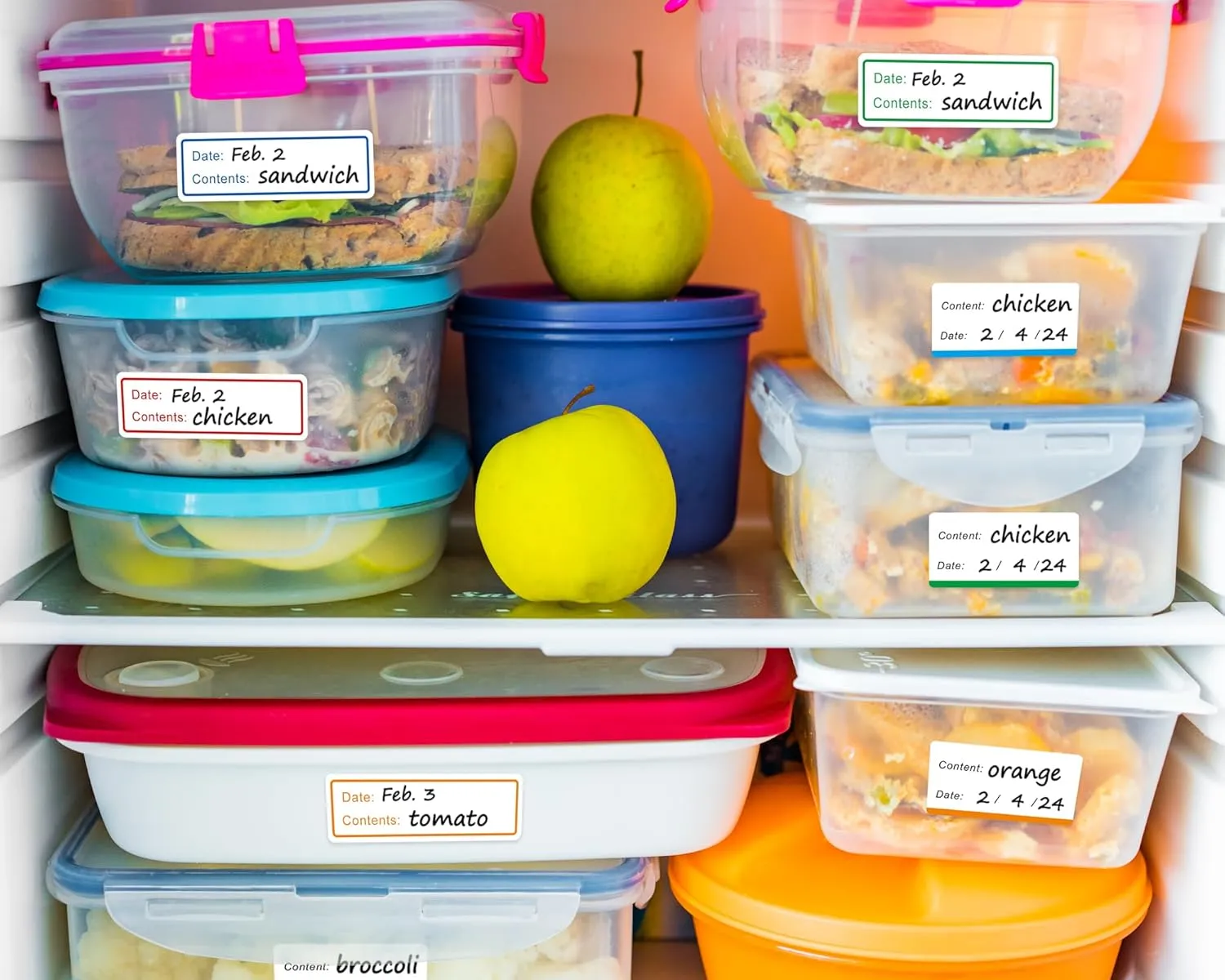
Freezer Labels
Write the food and the date on every bag, so you know what to use first when you open the freezer.
Check labels on AmazonAs an Amazon Associate I earn from qualifying purchases.
Frequently Asked Questions
What foods can be vacuum packed and stored at room temperature?
Only dry foods, such as nuts, grains, dried fruit and properly prepared jerky. Their low moisture keeps botulism bacteria from growing. Moist foods such as meat and vegetables must be refrigerated or frozen after vacuum sealing.
Can you vacuum seal potatoes?
Not raw for storage at room temperature. For the freezer, Montana State University Extension advises peeling them, removing eyes and green spots, water blanching them for 3 to 5 minutes, then cooling, draining and packing them.
Can you vacuum seal mushrooms?
Fresh mushrooms should not be vacuum sealed and kept at room temperature: they are low in acid, moist and grow in contact with soil, which makes botulism a real risk. For the freezer, steam blanch them first, then seal and freeze.
Can you vacuum seal lettuce?
Lettuce is not a good candidate. The USDA lists it among the foods that simply don’t freeze well, so sealing it for the freezer makes little sense, and we found no reliable source recommending vacuum sealing it for the fridge. Store it the normal way instead (see our lettuce storage page).
Can you vacuum seal frozen food?
Yes. For vegetables, Montana State University Extension describes a tray pack: freeze blanched, drained pieces in a single layer on a tray until firm, then pack them quickly and put them straight back in the freezer.
Do vacuum sealed vegetables need to be refrigerated?
Yes. Asked about vacuum sealing, Dr. Joy Waite-Cusic answered on Ask Extension that “all vegetables fit in this risk group” for botulism, and advised to vacuum package and freeze, then open the bag when thawing so air can get in. Montana State adds that vacuum sealing is not a preservation method by itself.
Sources & Transparency
The food safety reasoning comes from an Ask Extension answer by Dr. Joy Waite-Cusic (2020). Vegetable preparation and the tray pack method come from Montana State University Extension’s Freezing Vegetables publication. Clemson University Extension’s Home Freezing Equipment and Vacuum Packaging Foods at Home fact sheets cover dry foods and thawing, and Thawing Vacuum Packed Fish covers fish. Some of these publications are a few years old (2007 to 2020); we found nothing newer that contradicts them. The note on lettuce comes from USDA FSIS Freezing and Food Safety. The soup tip is our own suggestion, not from these sources. We did not test anything ourselves.
More on the foods in this table: how to store potatoes, how to store garlic, how to store lettuce, how to store cucumbers, how to store bell peppers, how to store nuts and how to store rice long term. What the freezer itself does to food is explained in what happens when you freeze food.
Last updated: