You buy a loaf of bread on Monday.
By Wednesday, green fuzz appears on the crust.
In winter that same loaf might last a full week. So what changed?
The answer isn’t bad groceries. It’s summer.
Warm temperatures and high humidity create the perfect environment for mold spores to grow. Once the weather heats up, food can spoil two to three times faster than in cooler months.
The Quick Answer: Food molds faster in summer because mold thrives in warm, humid environments. Higher temperatures speed up microbial growth, while humidity provides the moisture mold needs to spread rapidly on bread, fruit, and leftovers.
The Summer Spoilage Struggle
As a mother who tries to keep a tight grocery budget, there is nothing more disheartening than reaching for a bag of berries only to find them covered in white fur. We often assume that our kitchen environment remains constant throughout the year, but the reality is that the seasonal shift into summer radically alters the biology of our food storage spaces. When the temperature outside climbs, the invisible life forms inside our homes start to move at double speed.
In this guide, I want to share exactly why this happens and how you can fight back. It is not just about luck; it is about managing the specific scientific factors that mold requires to grow. By the time you finish reading, you will know how to adjust your kitchen habits to ensure your family's food lasts through the hottest months of the year without unnecessary waste.
Why Mold Grows Faster in Warm Temperatures
Mold is a fungus, and fungi have a very specific relationship with heat. Most common household molds are mesophilic organisms. This means they are biologically programmed to thrive when the temperature is between 70°F and 90°F. During a typical winter, our homes might be kept around 65°F to 68°F. This small temperature difference is enough to keep mold spores in a relatively dormant state.
However, when summer arrives, ambient temperatures in the kitchen often hover right in that 80°F sweet spot. At these temperatures, the metabolic rate of mold increases exponentially. The chemical reactions that allow a spore to germinate and spread happen faster because there is more kinetic energy in the environment. This is a core part of why food goes bad. In higher heat, the biological "clock" of your food is simply ticking at a much faster rate. A colony that would take six days to appear in January can establish itself in less than forty-eight hours in July.
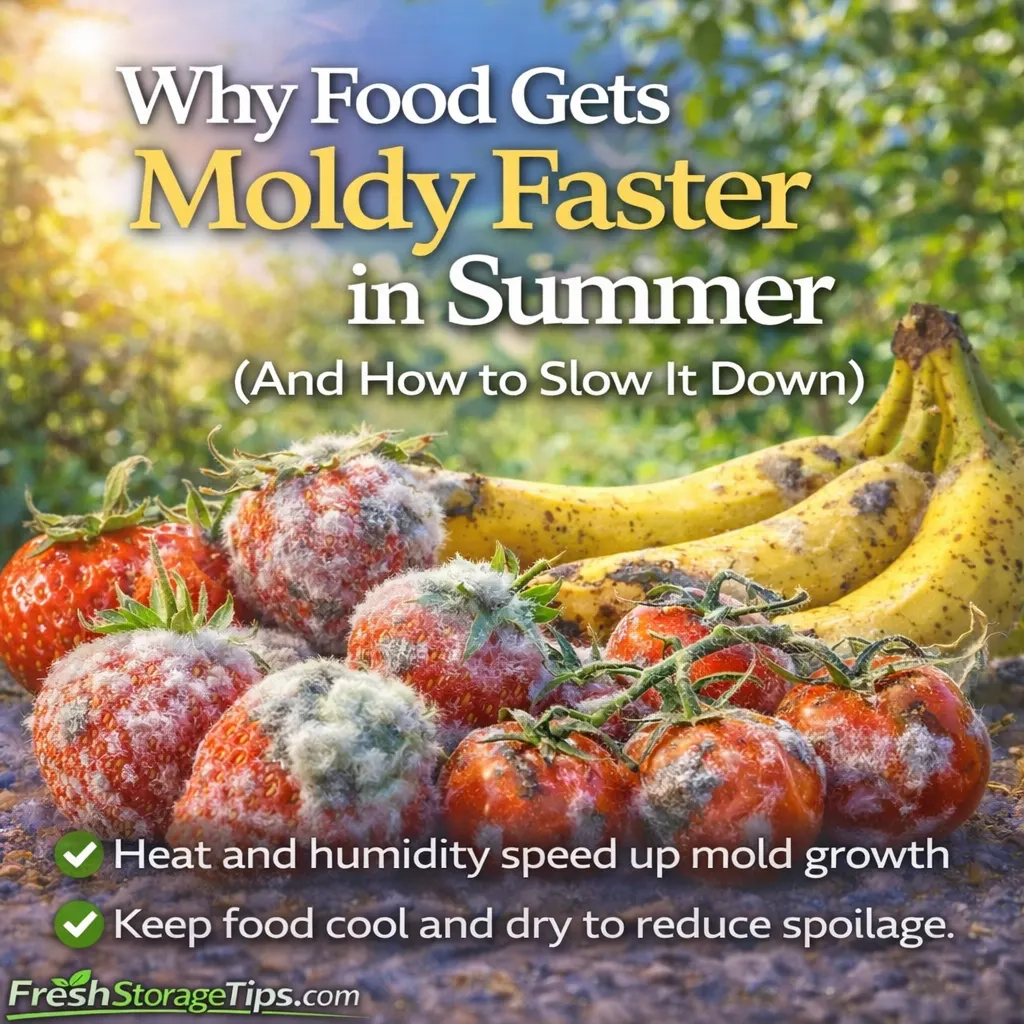
The Role of Humidity in Mold Growth
If heat is the engine that drives mold growth, humidity is the fuel. Mold cannot grow on a perfectly dry surface. It requires a specific level of water activity (aw) to absorb nutrients from its host. In the summer, the air can hold much more water vapor than in the winter. When this humid air comes into contact with your food, it creates a thin, often invisible layer of moisture on the surface.
This is particularly dangerous when we use plastic bags. Have you ever noticed "sweat" inside a bread bag on a hot day? That is condensation, and it is a paradise for fungal spores. High relative humidity prevents the surface of our food from drying out, ensuring that any spore that lands there has the exact amount of water it needs to begin its invasion. This explains why food storage mistakes involving poor ventilation are so much more destructive during the humid months of the year.
Foods That Mold the Fastest in Summer
Not all foods react the same way to the summer climate. As a rule of thumb, the more moisture and sugar a food contains, the faster it will mold when the heat hits. I have learned to be especially careful with the following items during a heatwave:
- Berries: Raspberries and strawberries are incredibly delicate. Their skins are thin, and they are often packed with high moisture, making them the first victims of summer rot.
- Tomatoes: While we often hear about foods that should not be refrigerated, tomatoes left on a 90°F counter will mold at the stem in record time.
- Soft Cheeses: High-moisture cheeses like brie or fresh mozzarella are highly susceptible. Proper knowledge of how to store cheese using breathable parchment paper instead of plastic wrap is vital in summer.
- Stone Fruits: Peaches and plums soften as they ripen in the heat, creating easy entry points for mold spores.
Why Bread Molds So Quickly in Hot Weather
Bread is essentially a sponge for moisture. In the summer, the starch molecules in bread undergo a process where they release water toward the crust. In a humid kitchen, this water doesn't evaporate; it stays on the surface. Because bread is porous, mold spores don't just sit on the top; they send their "roots" deep into the center of the loaf. This is why you can never simply "cut the mold off" bread. By the time you see it, it is everywhere.
I always tell my readers to check their best before vs. use by dates more frequently in the summer. A loaf that says it is good for a week was likely tested in a temperature-controlled laboratory, not a 85°F kitchen with 70% humidity. If you find yourself throwing away half a loaf every week, consider what happens when you freeze food. Freezing bread is the most scientifically sound way to stop the summer mold cycle completely.
Video Resource: SciShow - How Does Mold Grow?
Understanding the Fungal Life Cycle
It can be helpful to see exactly how mold spores land and begin to digest your food. This SciShow episode is a fantastic look at the biology of mold and why it is so difficult to stop once it starts. It perfectly complements the storage tips I share here!
Marleen's Summary: Mold is actually trying to turn your food back into soil. In the summer, the conditions are so perfect that this process goes into overdrive. Watching this will help you understand why keeping things dry is so important.
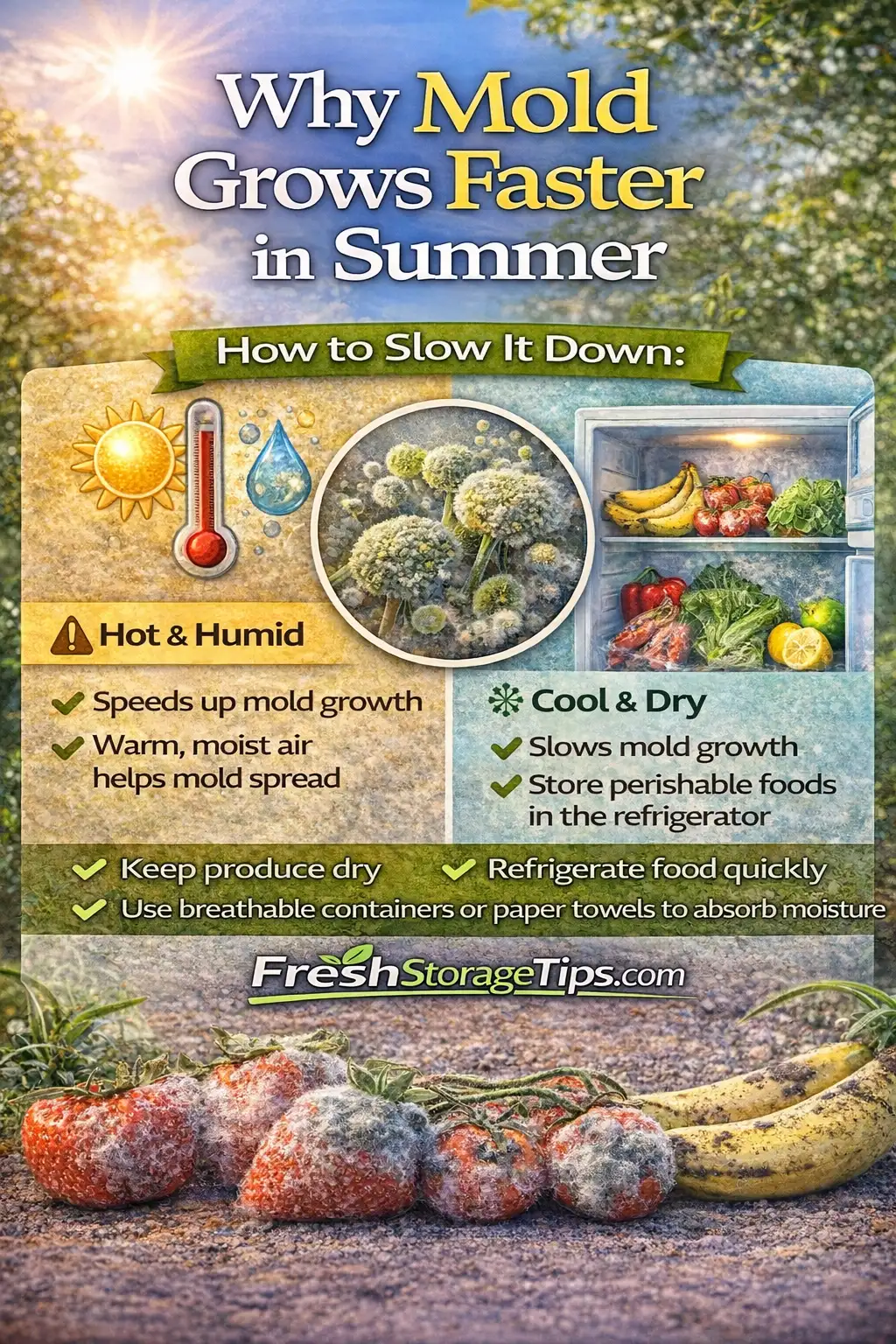
How to Slow Mold Growth in Your Kitchen
The good news is that you are not powerless. By altering a few simple habits, you can drastically reduce the amount of food you throw away. Here is my summer survival plan for the kitchen:
- Lower the Humidity: If you have air conditioning or a dehumidifier, use it. Keeping the humidity below 50% makes it much harder for mold spores to activate.
- Ventilate Your Bread: Stop using airtight plastic bags for room-temperature bread. A linen bread bag or a ventilated bread box allows moisture to escape.
- Wait to Wash: Never wash berries or grapes until the moment you are ready to eat them. Even a drop of water trapped in the stem of a strawberry will lead to mold in a summer kitchen.
- Check Your Fridge Temp: Ensure your refrigerator is actually staying below 40°F. In the summer, the compressor has to work harder. Refer to the Oregon State guidelines for refrigeration to verify your settings.
For high-risk proteins, temperature management is even more critical. According to USDA fish storage guidelines, seafood is particularly vulnerable to the heat. I always follow the official safety protocols for seafood handling, which recommend using ice packs for transport during summer shopping trips. Additionally, the FDA safety charts suggest that any perishable left out for more than an hour when the temperature is above 90°F should be discarded immediately.
Advanced Summer Storage Tactics
If you have the space, the freezer is your best friend in July. Most people don't realize that storing garlic or even certain hard cheeses in the freezer can preserve them perfectly when the kitchen gets too hot. For those who catch their own meals, the Iowa DNR fish cooking and safety guide emphasizes that rapid cooling is the only way to stop both mold and bacteria. Furthermore, the NOAA seafood database notes that even a 5-degree rise in storage temperature can halve the shelf life of fresh fish in the summer.
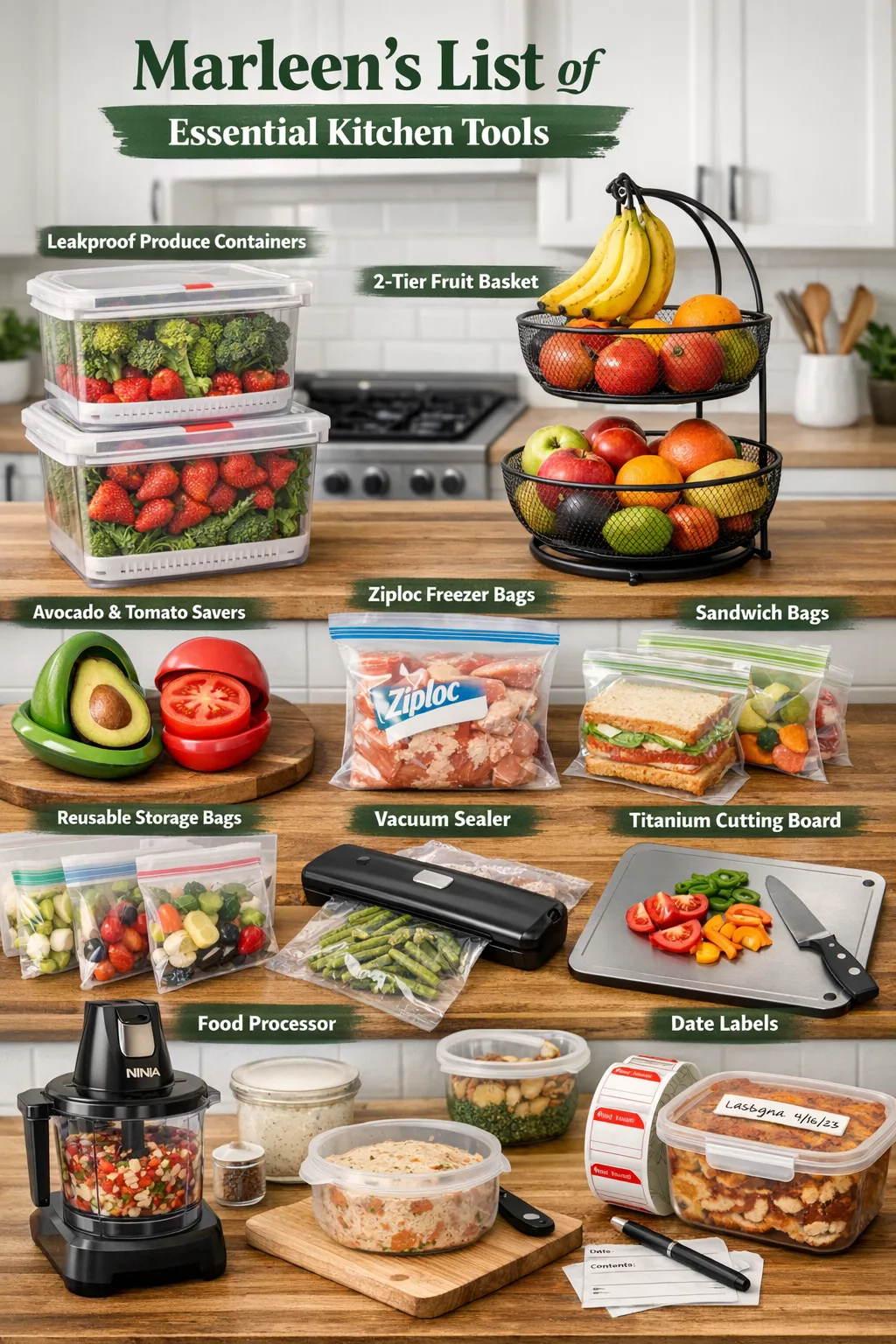
Marleen’s List of Essential Kitchen Tools
I didn't always have a scientifically optimized kitchen. For a long time, I was just like everyone else—guessing if the milk was still good and throwing away fuzzy bread every other week. It wasn't until I started losing real money to summer spoilage that I realized the right tools make all the difference. When the temperature and humidity rise, your standard "clutter" of mismatched plastic bins just won't cut it. You need tools that actually address the biological needs of your food.
The tools listed below are the exact ones I use in my own home to keep our groceries fresh through the dog days of August. Vacuum sealers remove the oxygen that mold spores crave, while specialized produce tubs manage the humidity that leads to rot. And a digital thermometer? That is your only real way to know if your fridge is losing the battle against the summer heat. These items pay for themselves within a single season by cutting your food waste in half. Stop letting the summer humidity steal your grocery budget and start using these expert-approved storage solutions!
Food Product Saver Tubs
Designed with ventilation and a raised base to keep your berries and greens away from the moisture that triggers mold growth.
View on AmazonVacuum Sealer for Food
This is the ultimate mold-stopper. By removing the air, you stop the spores from being able to "breathe" and replicate.
View on AmazonDigital Thermometer
In summer, your fridge has to work harder. Verify that your appliance is keeping food safely under 40°F with this simple tool.
View on AmazonFood Storage Containers
Ditch the cheap plastic. These airtight containers create a professional seal that locks out the humid summer air.
View on AmazonDissolvable Labels for Food
Since things spoil faster in the heat, you need to know exactly when that leftover was made. These wash off with no residue!
View on AmazonFood Processor
I use this to quickly process bulk vegetables for the freezer before the summer heat can make them wilt or mold.
View on AmazonAs an Amazon Associate, I earn from qualifying purchases.
Common Summer Mold Questions
Is moldy bread safe if I cut the spot off?
No. Bread is a porous food. By the time you see green or white fuzz on the surface, the mold's root system, called hyphae, has already spread deep into the loaf. Some molds produce mycotoxins that can make you very ill. When in doubt, throw the whole loaf out.
Does putting bread in the fridge stop mold in summer?
The refrigerator will stop mold growth because it lowers the temperature out of the fungal growth zone, but it causes the starch in bread to recrystallize faster. This makes the bread go stale and dry within a day. Freezing is a much better scientific option for long-term summer storage.
Why do my strawberries mold so fast even in the crisper drawer?
Berries often arrive from the store with mold spores already on them. In summer, the humidity in your crisper drawer can be too high for them. If there is no airflow, the moisture stays on the skin of the berry, allowing the spores to activate and spread in hours. Try using a ventilated storage tub instead.
Can mold grow in the freezer?
No. At 0°F (-18°C), mold cannot grow because the water it needs is frozen into ice and unavailable for biological use. However, freezing does not always kill mold spores; it just puts them into a state of suspended animation until they thaw.
Sources & Transparency
This article references the biological growth patterns of common household molds Aspergillus and the relationship between ambient temperature and microbial metabolism. All safety guidelines regarding temperature zones are cross-referenced with current USDA, FDA, and University agricultural extension data to ensure the highest level of accuracy for our readers.
Mold can start growing on food in as little as 12 to 24 hours in warm, humid conditions. It is just one reason food goes bad, alongside bacteria and oxidation, which are equally common causes of spoilage. Most common storage mistakes such as leaving food uncovered or storing it at the wrong temperature create the exact warm, moist conditions that mold spores need to germinate. Use the food storage chart to see the exact shelf life of each food type and know how much time you have before mold becomes a real risk.
Last updated: