
Dairy & Eggs
Can You Freeze Cottage Cheese? How Long After Opening?
Can you freeze cottage cheese, and does it last one week or two after opening? What the USDA and Daisy…
Dairy & Egg Storage
Dairy & Egg Storage: Keep Milk, Cheese & Eggs Fresh
Milk, cheese, butter, yogurt and eggs all live in the fridge, but they do not all follow the same rules. A block of cheddar keeps for weeks, soft cheese for about one, and a carton of eggs somewhere in between. This section brings every dairy and egg guide on the site together, with the official US storage times behind them.
On this page: The Fridge Rules for Dairy and EggsWhen Mold Shows Up: Cut or Throw Away?Jump Directly to the Dairy & Egg Guides
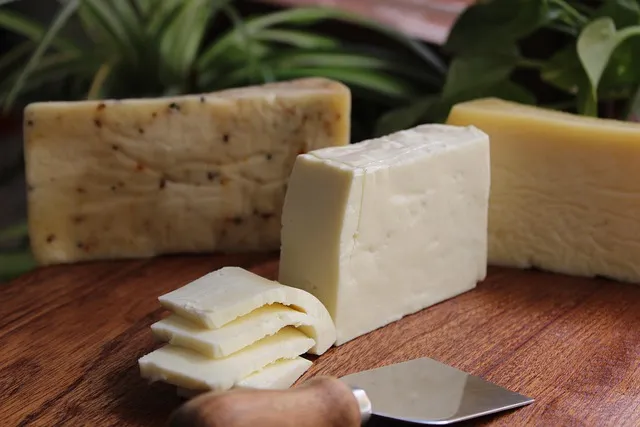
Dairy and eggs are some of the most perishable foods in an American kitchen, and some of the most wasted. The good news is that the rules are simple once you know them: keep them cold, keep them covered, and know which ones can be rescued when something goes wrong. Everything below is based on the USDA FoodKeeper, the FDA’s egg safety advice and the USDA guidance on mold, and every guide in this section goes deeper into one food.
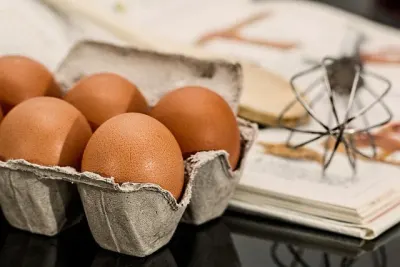
Start with the temperature: the FDA advises keeping your refrigerator at 40°F (4°C) or below, and an inexpensive refrigerator thermometer is the only way to be sure. Keep eggs in their original carton; the FDA recommends using them within 3 weeks for best quality, and the FoodKeeper gives eggs in the shell 3 to 5 weeks in the fridge. Hard-boiled eggs keep 1 week.
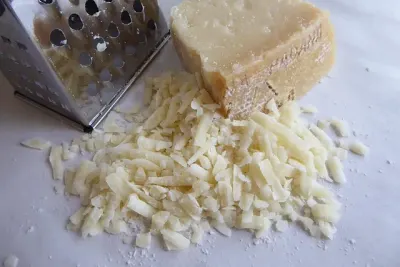
Milk and sour cream follow the date on the package. Butter keeps 1 to 2 months in the fridge, margarine about 6 months, and yogurt 1 to 2 weeks. For cheese the type decides: hard cheese keeps 3 to 4 weeks once opened, soft cheese like brie 1 to 2 weeks.
This is the one rule that saves the most money. On hard cheese such as cheddar or parmesan, the USDA says you can cut off at least 1 inch around and below the mold spot and use the rest. Soft cheese (cream cheese, cottage cheese, goat cheese), shredded, crumbled or sliced cheese, sour cream and yogurt with mold go in the bin: moisture lets mold and bacteria spread below the surface. Brie and Camembert are also discarded when mold appears that is not part of the cheese itself.
21 articles
Explore the dairy and egg guides below. Every guide covers one food: how long it lasts, where it goes in the fridge and how to tell when it has turned.
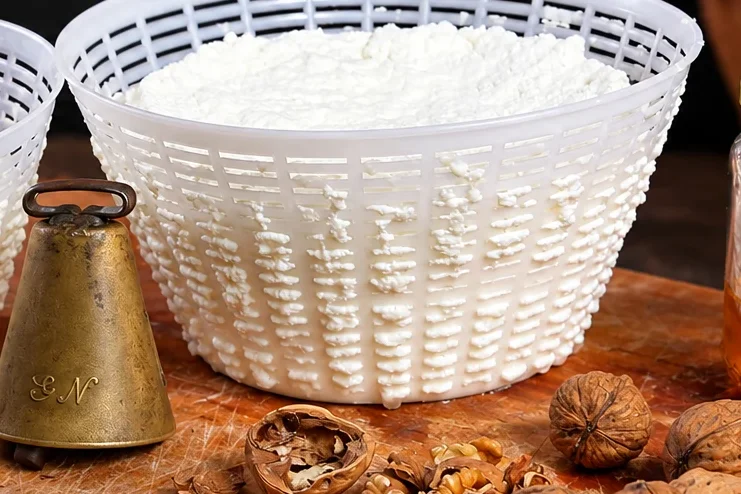
Can you freeze cottage cheese, and does it last one week or two after opening? What the USDA and Daisy…
How long ricotta lasts before and after opening, what the USDA and a cheesemaker say, why water on top…
How to store fresh, ripened and aged goat cheese: how long each keeps before and after opening, what…
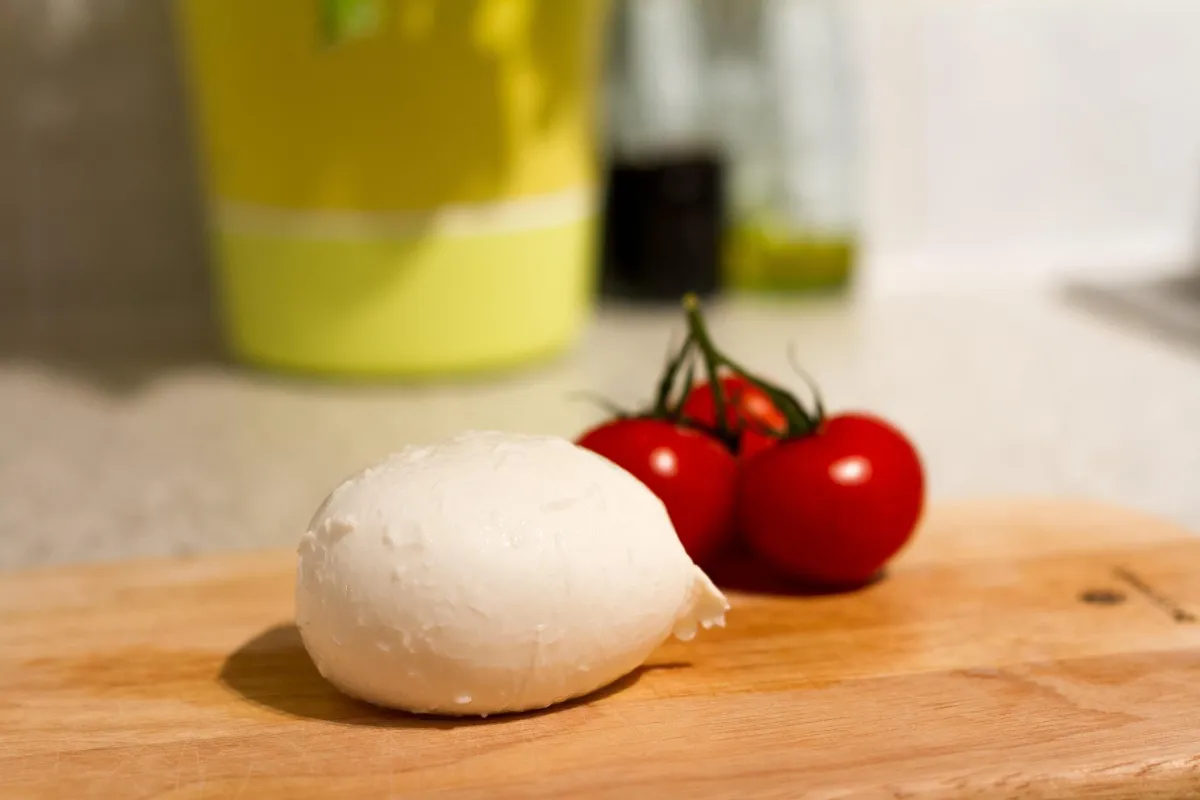
How to store fresh and shredded mozzarella: why the maker drains the water, how long each type lasts…
Can you freeze cream cheese, and how long does it last once opened? What the USDA and Philadelphia say,…
How to store feta cheese after opening: why brine matters, what feta makers advise, how long it keeps,…
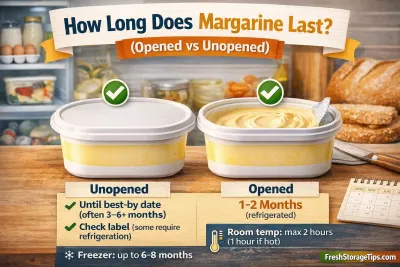
Margarine lasts 1–2 months opened in the fridge and up to 1 month past the best-by date unopened. See…
Yes, margarine goes bad. Learn the 3 clear signs (smell, color, texture), how long it lasts opened vs…
Yes, margarine should be refrigerated to stay fresh. Left out too long, the oils separate and spoil…
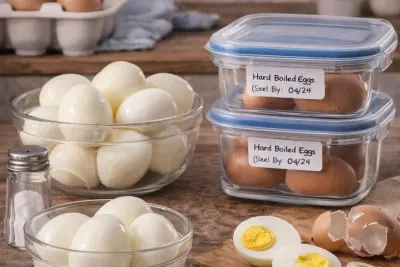
Hard boiled eggs stay fresh for up to 7 days in the fridge, peeled or in the shell. Learn how to store…
Whipped cream can collapse overnight. Learn how to store it so it stays fluffy and usable for days.
How to store hard and aged cheese like cheddar, Gouda and Gruyère: the right wrapping, USDA fridge and…
How to store Parmesan and Parmigiano Reggiano: USDA fridge times, the maker's wrapping advice, why…
Is the watery layer on sour cream normal? How to store an opened tub, the upside-down trick, how long it…
Most people store brie wrong: it dries out or picks up fridge smells in days. In wax paper, an uncut…
Yes, you can freeze margarine - it lasts up to 6 months. Learn the exact fridge vs freezer method to…
Does mayo go bad? Learn how long an open jar of mayonnaise lasts in the fridge and the right way to…
Learn how long yogurt lasts after opening and the right way to store or freeze it safely.
Should butter be refrigerated? Learn the best way to store butter to prevent rancidity.
Most people store eggs wrong. Learn how to keep eggs fresh longer with the correct fridge placement.
Stop ruining good cheese. Learn how to store cheese correctly so it stays fresh, moist and flavorful.
The storage times of the USDA FoodKeeper for the most common dairy products and eggs, at 40°F (4°C) or below. Quality drops before safety does, so these are the times for the best taste and texture.
| Food | Fridge |
|---|---|
| Eggs in the shell | 3 to 5 weeks |
| Hard-boiled eggs | 1 week |
| Butter | 1 to 2 months |
| Hard cheese, opened | 3 to 4 weeks |
| Soft cheese (brie, goat) | 1 to 2 weeks |
| Cream cheese | 2 weeks |
| Yogurt | 1 to 2 weeks |
| Milk, sour cream | Package date |
Some dairy freezes well, some does not survive it:
Cheese boards, egg salad, quiche and anything made with cream count as perishable food. The FDA advises never leaving cooked eggs or egg dishes out of the refrigerator for more than 2 hours, or for more than 1 hour when it is hotter than 90°F (32°C). Leftover cooked egg dishes keep 3 to 4 days in the fridge.
For the full list of 50+ foods, see the food storage chart, and for why some foods are better off outside the fridge, read foods that should not be refrigerated.