

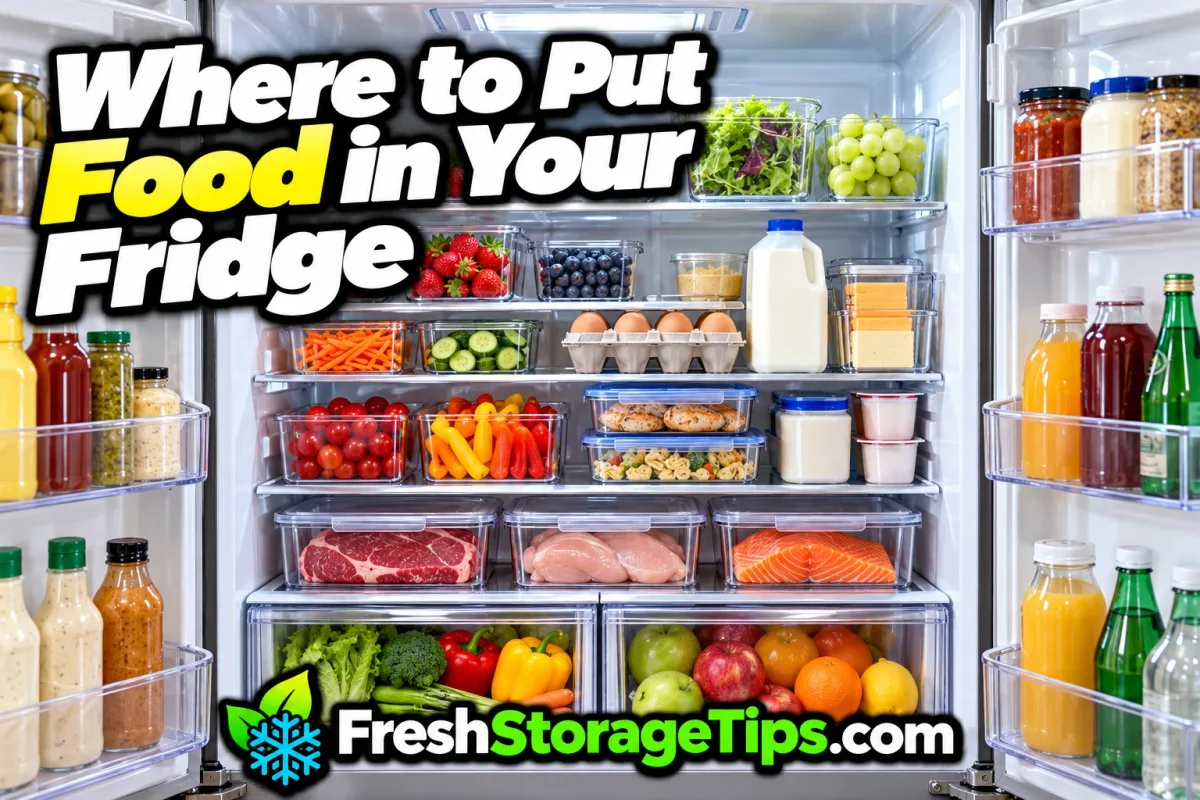
Start with the temperature: the USDA wants the whole fridge at 40°F or below, so every spot is safe. Then use the spots smartly. Raw meat, poultry and fish go sealed on the bottom shelf. Eggs and milk stay on a shelf, not in the door, because the door is the warmest, most up-and-down spot. Vegetables go in a humid drawer, most fruit in a drier one. And give the air room to move.
Two things that make this easier: clear fridge bins a fridge thermometer (Amazon; as an Amazon Associate I earn from qualifying purchases)
First, the Honest Bit: Temperature Beats Placement
You’ll read a lot online about “zones” and “microclimates” in your fridge. The USDA keeps it simpler: the temperature should be 40°F or below throughout the unit, “so that any place is safe for storage of any food.” Placement helps food last longer and keeps raw juices away from your salad. But if the fridge itself runs at 45°F, no clever shelf plan will save your leftovers. So step one is a thermometer check (here’s how, plus the target temperatures).
Fridge set right? Then here’s where everything goes.
Your Fridge, Shelf by Shelf
| Spot | What goes there | Why |
|---|---|---|
| Upper and middle shelves | Leftovers, ready-to-eat food, yogurt, cheese, milk, and eggs in their carton | Eggs belong in their carton on an inside shelf, not in the door (USDA, FDA). Ohio State puts them in the coldest part, which is toward the back, but keep them out of the direct path of a cold-air vent: Whirlpool says eggs and liquids there can freeze. Keeping ready-to-eat food up high keeps it away from raw meat drips (my advice). |
| Bottom shelf | Raw meat, poultry and seafood, sealed or on a plate | So raw juices can’t drip onto other food (Illinois Extension, USDA). |
| Meat/cheese drawer | Meat, cold cuts, cheese | Some fridges send extra cold air into this drawer to keep food very cold without freezing it (USDA). |
| Crisper drawers | Vegetables in one (high humidity), fruit in the other (low humidity) | The USDA says vegetables need higher humidity and fruit lower. |
| Door | Sturdy stuff: condiment bottles, pickles, sealed drinks, water | The door is the warmest spot (Ohio State) and swings the most (USDA): no perishables there. |
What Should (and Shouldn’t) Go in the Fridge Door
The USDA is clear about the door: “Don’t store perishable foods in the door. Eggs should be stored in the carton on a shelf.” The USDA explains that the temperature in the door bins fluctuates more than inside the fridge itself.
That’s a little annoying, because most fridges come with a cute egg tray in the door. Use it for something else.
- Not in the door: eggs, milk, cream, raw meat, leftovers, anything that says “keep refrigerated” and spoils fast.
- Fine in the door (my advice): ketchup, mustard, hot sauce, pickles, jam, salad dressing bottles, sealed drinks and water. Sturdy things that don’t mind a bit of temperature swing.
Not sure if something belongs in the fridge at all? Some foods actually do worse in the cold: see foods that should not be refrigerated.
Raw Meat on the Bottom Shelf, Always Wrapped
Illinois Extension says to store raw meat, poultry and seafood on the bottom shelf, and to put it on a plate or in a container while it thaws. The USDA and FoodSafety.gov say the same thing in their own words: raw meat goes in a sealed container or is wrapped securely, so its juices can’t drip onto other food.
Timing matters too. The USDA’s rule of thumb is 1 to 2 days in the fridge for raw poultry and ground meat. If you won’t cook it by then, freeze it. More on that in how long ground beef lasts in the fridge.
Crisper Drawers: Humid for Veggies, Dry for Fruit
According to the USDA, vegetables need higher humidity and fruits need lower humidity, and some crisper drawers have a slider so you can set each drawer. If yours has one, set the vegetable drawer to high humidity and the fruit drawer to low, following the labels on the slider (they differ per brand).
My tip: give fruit and vegetables each their own drawer, so each drawer can have its own humidity setting. For the details per fruit, see fruit storage.
Six Habits That Keep Food Fresh Longer
- Cover everything. The USDA says covering food keeps the moisture in and stops it picking up odors from other food. The FDA adds covered containers or sealed bags.
- Don’t stuff it. The FDA warns not to crowd the fridge so tightly that air can’t circulate.
- Split big batches. A big pot of soup goes in small, shallow containers so it cools fast (USDA).
- Wipe spills right away. Hot, soapy water, then rinse (USDA). The FDA says regular cleaning also helps reduce the growth of Listeria.
- Do a weekly clean-out. The USDA suggests throwing out perishable food that should no longer be eaten once a week. Cooked leftovers: 3 to 4 days.
- Old to the front. Put new groceries behind the old ones (my advice), so the open jar of salsa doesn’t hide behind three new ones.
Smells hanging around? The USDA’s tip is an open box of baking soda on a shelf. For a fridge that really stinks, see how to get rid of fridge smell after spoiled food.
Fridge Myths, Quickly
- “The egg tray in the door is for eggs.” USDA and FDA: eggs go in their carton on a shelf.
- “If it smells fine, it’s safe.” The USDA says the bacteria that make you sick usually don’t change the taste, smell or look of food.
- “Let hot food cool on the counter first.” The USDA says hot food can go straight into the fridge; just split big amounts into shallow containers.
- “Colder is always better.” Not if your milk turns to slush. Whirlpool says 34°F or below can freeze food near the air outlets. See why your fridge is freezing food.
Frequently Asked Questions
What is the coldest part of the refrigerator?
Usually the back of the shelves; Ohio State University Extension calls the back the coldest area and the door the warmest. Some fridges also have a meat drawer that gets extra cold air. A thermometer tells you how your own fridge behaves.
What should you store in the fridge door?
Only sturdy items like condiments, pickles and sealed drinks. The USDA says not to store perishable foods in the door, and eggs belong in their carton on a shelf.
Where should raw meat go in the fridge?
On the bottom shelf, in a sealed container or wrapped securely, so raw juices can’t drip onto other food (Illinois Extension, USDA). Use or freeze raw poultry and ground meat within 1 to 2 days.
Why does food spoil so fast in my fridge?
Things to check (my advice, based on the USDA and FDA tips above): a fridge warmer than 40°F, food left uncovered, a fridge packed so tightly that air can’t move, and perishables kept in the door. Check the temperature with a thermometer first.
Sources & Transparency
Temperature throughout, door, eggs, crispers, meat drawer, covering, spills and weekly clean-out: USDA FSIS, “Refrigeration and Food Safety”. Eggs, covered containers, crowding and Listeria: FDA, “Are You Storing Food Safely?”. Coldest and warmest area: Ohio State University Extension, “Refrigerator Storage” (HYG-5403). Bottom shelf: University of Illinois Extension, “Meat Safety: Storing”. Sealed containers: FoodSafety.gov, “4 Steps to Food Safety”. Food freezing near vents: Whirlpool Product Help. Tips marked as mine are my own advice.
Last updated: