The Biggest Food Storage Mistakes (And How to Fix Them Today)
You swing open the fridge door after a long day and the smell hits you — that sour whiff from the milk you just bought. The beautiful head of lettuce you picked up for salads is now a sad, slimy mess. Those leftovers from Sunday dinner look questionable after only two nights. Sound familiar?
As a mom juggling school lunches, family dinners, and a full grocery budget, I used to blame “bad luck” or think the food just went off too fast. Then I realized something important: most food doesn’t spoil because it’s old. It spoils because of tiny everyday storage habits we all do without thinking.
The good news? These mistakes are incredibly easy to fix. Once I changed five key things in my own kitchen, my weekly waste dropped by more than half. My family now eats fresher meals, and we save real money every month.
The quick answer:
The five biggest culprits are wrong fridge temperature and shelf placement, overpacking the fridge, mixing ethylene-producing produce with sensitive items, using the wrong containers or leaving food uncovered, and poor freezing or labeling habits. Fix them today and watch your groceries last days — even weeks — longer.
Science-backed fact: The USDA and FDA confirm that proper home storage is the single most effective way to prevent both spoilage and foodborne illness. No fancy gadgets required — just smarter habits.
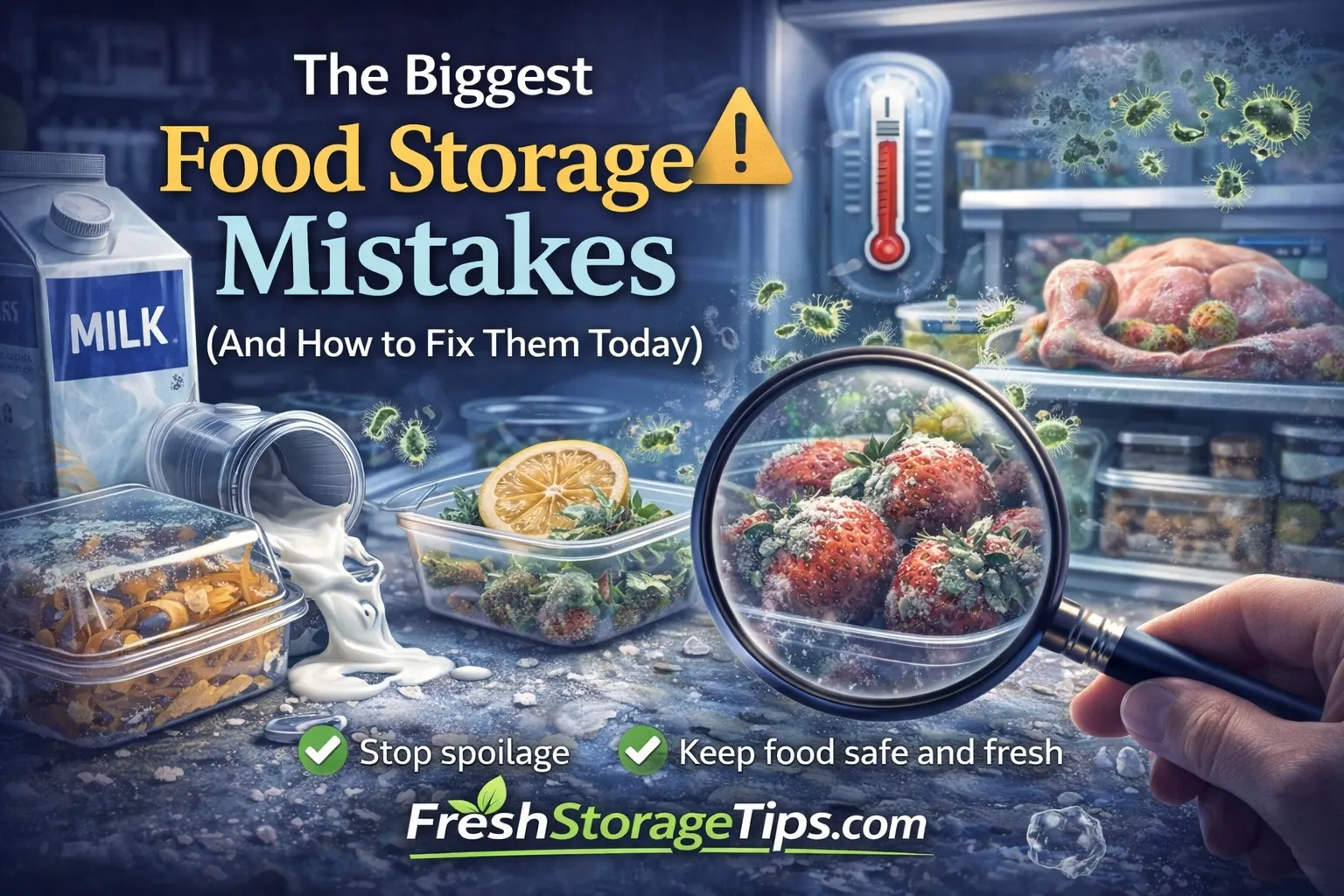
Why Most of Us Waste So Much Food Without Realizing It
Hey friend, I’ve been exactly where you are. I’d stand at the counter, staring at a container of perfectly good chicken that somehow turned grayish overnight, and feel that familiar guilt. “I just bought this!” I’d mutter while scraping it into the bin.
What changed everything for me was understanding that food spoilage is mostly about temperature, air flow, moisture, and gas exchange — not magic or bad luck. When I started treating my fridge and pantry like a real storage system instead of a dumping ground, everything stayed fresher. I’m sharing these fixes because I wish someone had told me years ago.
Mistake #1: Wrong Fridge Temperature and Shelf Placement
This is the biggest silent killer of fresh food. Most home fridges run warmer than 40°F (4°C) without us knowing it. Bacteria love that cozy “danger zone” between 40°F and 140°F — they can double in number every 20 minutes there.
Raw meat on the top shelf? Juices can drip onto ready-to-eat foods below. Eggs in the door? That spot fluctuates with every opening and closing. I learned the hard way when my kids got mild tummy aches from yogurt that should have been fine.
The fix is simple and free: Buy a cheap appliance thermometer (they cost less than a coffee) and place it on the middle shelf. Set your fridge to 37–40°F and freezer to 0°F. Store raw meat, poultry, and seafood on the bottom shelf in sealed containers. Keep milk and eggs toward the back where it’s coldest. Check the USDA guidelines for exact safe zones.
Once I did this, my milk lasted a full extra week and produce stayed crisp. If your food seems to spoil unusually fast even when stored properly, read why food spoils fast in your fridge — the answer might surprise you.
Mistake #2: Overpacking the Fridge or Freezer
Air needs to circulate for cold air to reach every corner. When we cram the shelves full after a big shop, warm pockets form and food spoils unevenly. I used to pack it like a Tetris champion — big mistake.
Easy fix: Leave space between items. Use the “two-finger rule” — you should be able to slide two fingers between containers. In the freezer, avoid huge solid blocks that block airflow. Divide leftovers into smaller portions right away.
This one change alone added three to four days to my berries and deli meats. Cold air can actually reach them now!
Mistake #3: Storing Produce the Wrong Way (The Ethylene Trap)
Apples, bananas, tomatoes, and avocados release ethylene gas — a natural ripening hormone. Put them next to broccoli, lettuce, or carrots and everything wilts or spots within days. I once lost an entire bag of spinach because I stored it beside a bunch of bananas.
Garlic and onions hate moisture and prefer cool, dark pantries, not the fridge where they sprout or mold. Cheese needs special breathable wrapping so it doesn’t sweat or dry out.
Smart fixes: Use the crisper drawers correctly — high humidity for leafy greens and herbs, low humidity for apples, pears, and onions. Store ethylene producers on the counter or in a separate drawer. Never wash berries or greens until right before eating — extra moisture invites mold fast.
For garlic lovers, check my complete guide on how to store garlic. And if you’re a cheese fan like me, see exactly how to store cheese so it stays creamy for weeks.
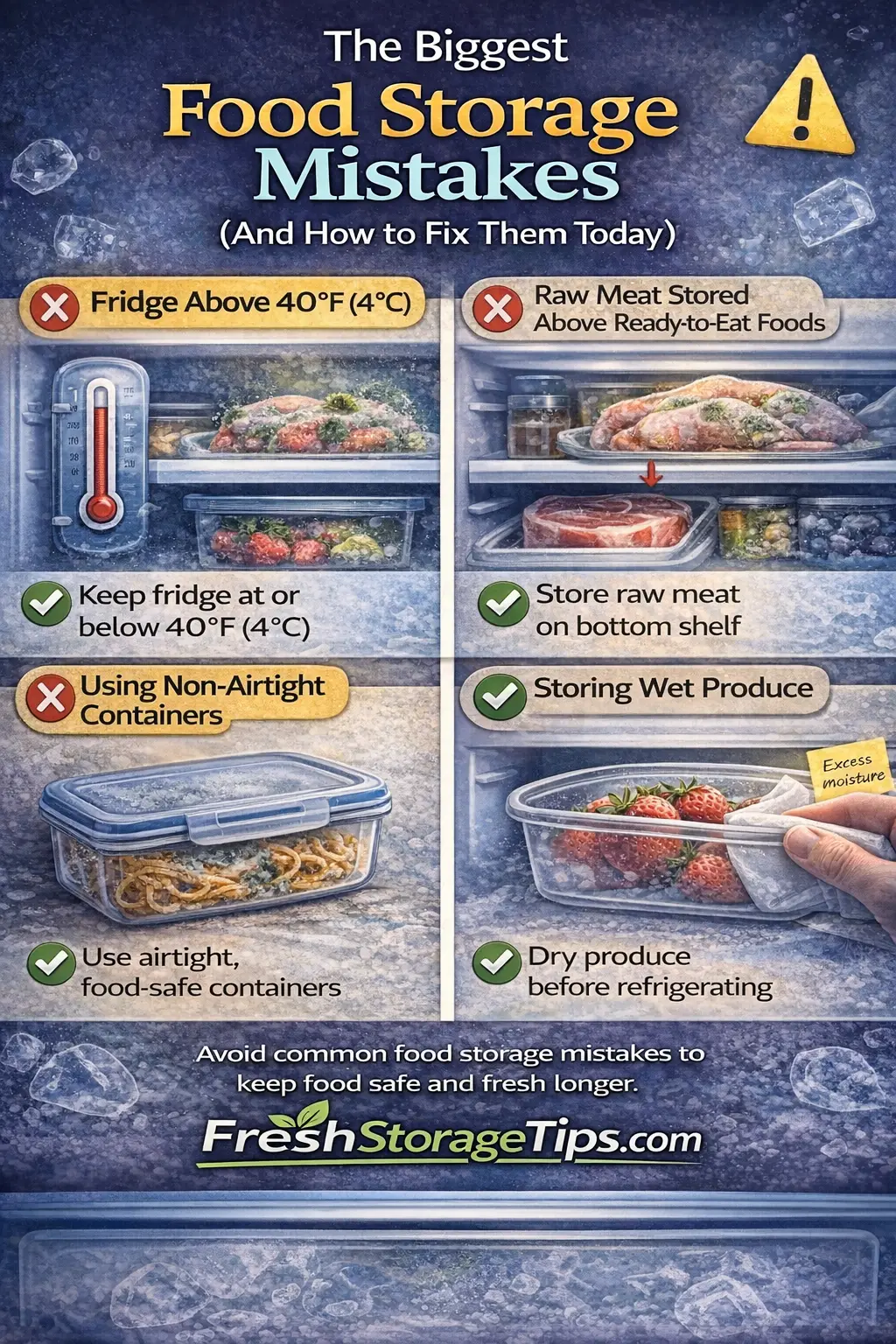
Mistake #4: Using the Wrong Containers or Leaving Food Uncovered
Plastic wrap stretched loosely, foil that tears, or open plates — all let air and moisture in. Hot soup straight from the stove raises the entire fridge temperature for hours. I used to do this constantly.
Better way: Let hot food cool for no more than two hours (one hour if it’s hot outside), then transfer to airtight glass or BPA-free containers. Glass is my favorite because it doesn’t stain or hold odors. Cover everything — even with a simple plate on top if you’re in a rush.
This prevents cross-contamination and keeps flavors locked in. My pasta sauce now tastes fresh five days later instead of three.
Mistake #5: Poor Freezing Habits and No Labeling System
Freezing is magic when done right, but most of us just toss things in and forget. Freezer burn happens when air reaches the food — it dries out and gets that weird gray texture. No dates means we guess and throw away safe food “just in case.”
My system that works: Portion everything before freezing (single meals for quick defrosts). Use freezer bags with all air squeezed out or vacuum seal when possible. Always label with contents and date. Follow first-in-first-out — older stuff at the front. And yes, read what really happens when you freeze food — it’s not as scary as it sounds.
Even dates on packaging can confuse us. Remember, “best before” is about quality, not safety. For the full breakdown, see my guide on best before vs use by dates.
Special Note on Seafood — Treat It Differently
Fish and shellfish spoil faster than almost anything because of their delicate fats. The USDA says eat or freeze raw fish within one to two days of purchase, no matter what the package says. Keep it on ice in the coldest part of the fridge.
Always check these trusted resources: USDA fish storage guidelines, FoodSafety.gov safe handling tips, and the FDA seafood chart.
More excellent advice from NOAA on storing seafood, FDA fresh & frozen seafood safety, Iowa DNR cooking fish safely, and this detailed PMC study on freezing and thawing effects.
Quick Sensory Checklist Before You Toss Anything
- Packaging intact and not bloated?
- Color and texture normal?
- Smells fresh, not sour or ammonia-like?
- Tiny taste test passes (only for safe items)?
When in doubt, the old saying still holds: “When in doubt, throw it out” — but with these fixes, you’ll doubt a lot less.
Video Guide: 20+ Food Storage Mistakes Most People Make
Watch & Learn in Under 12 Minutes
This visual breakdown shows real before-and-after examples from my own kitchen. You’ll spot mistakes you didn’t even know you were making.
At-a-Glance: Common Mistakes & How Much Time You’ll Gain
| Mistake | Typical Loss | After Fix | Extra Days Gained |
|---|---|---|---|
| Wrong fridge temp | Milk often lasts 7–10 days when stored at 37°F | ||
| Overpacked fridge | Berries last 3 days | 8 days | +5 days |
| Ethylene mixing | Spinach wilts in 2 days | 7 days | +5 days |
| Wrong containers | Leftovers 3 days | 7 days | +4 days |
| Poor freezing | Freezer burn in 1 month | 6+ months | +150 days |
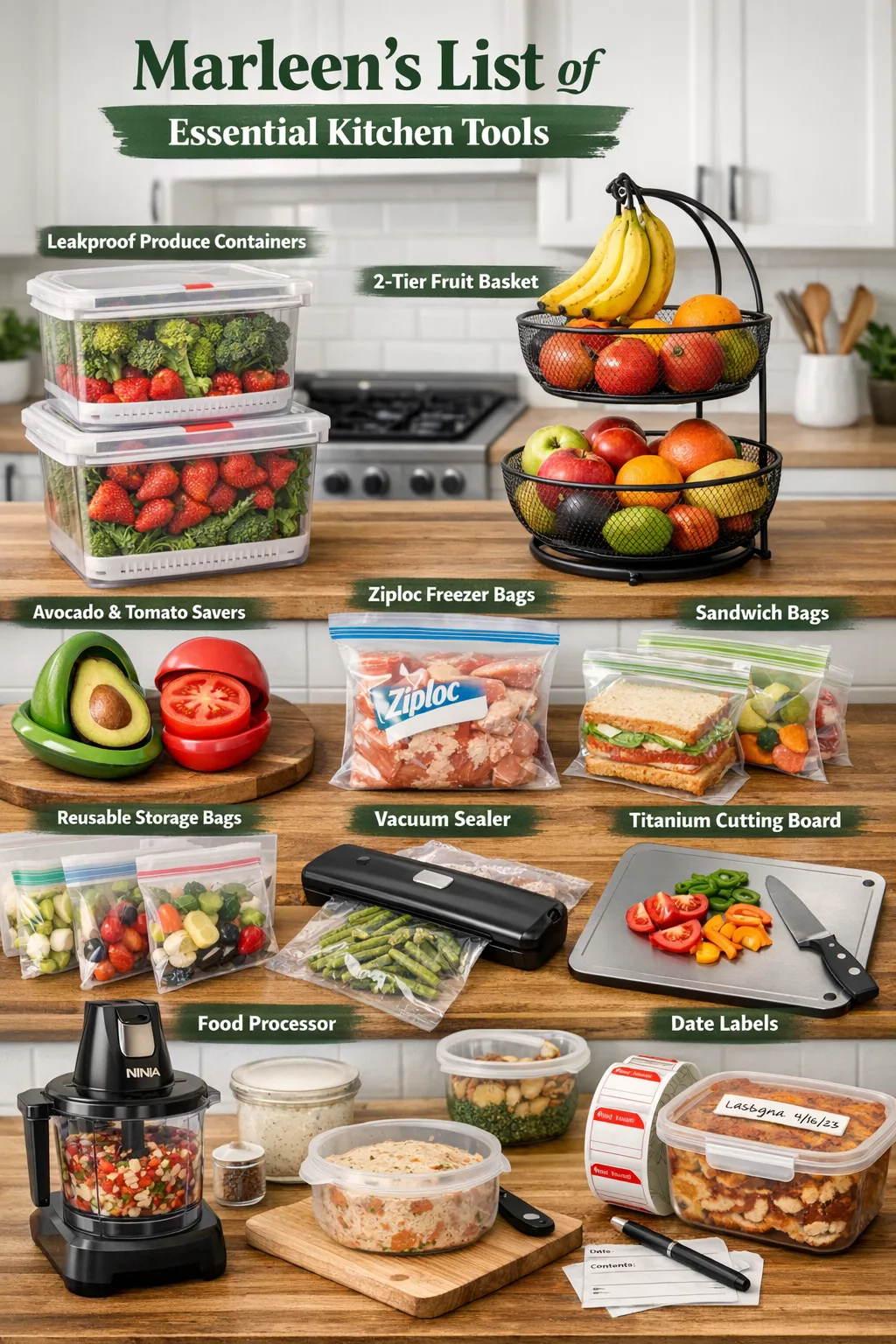
After years of watching good food go bad, I finally invested in the right tools and it changed everything. No more guessing if the chicken is still good. No more wilted herbs on day two. These six items directly solve every mistake I just shared — and they pay for themselves in saved groceries within the first month.
Picture this: You come home from the store, unpack everything, and within 10 minutes your fridge and freezer are perfectly organized with clear labels and airtight seals. Leftovers cool safely in shallow glass containers. Raw meats sit safely on the bottom shelf in leak-proof tubs. Your garlic and onions stay fresh in the pantry because you finally stopped shoving them in the fridge. Cheese stays perfectly wrapped instead of drying out or getting slimy. When you want to freeze bulk buys, the vacuum sealer removes every bit of air so nothing gets freezer burn for months. And that instant-read thermometer takes the worry out of reheating — you know it’s safe every single time.
I keep the dissolvable labels right by the fridge so labeling takes 5 seconds. The food processor lets me prep big batches of vegetables the day I buy them so nothing wilts in the produce drawer. These aren’t luxury items — they’re peace-of-mind tools that make me feel like a kitchen pro instead of a stressed mom throwing money away. Click any button below to grab the exact ones I use and love. Your future self (and your wallet) will thank you.
Digital Thermometer for Cooking
Instantly know your fridge is at the right temperature and that reheated food is safe. Ends guesswork forever.
Shop on Amazon →Food Storage Containers
Heavy-duty glass set with leak-proof lids. Perfect for leftovers, meal prep, and stopping air exposure.
Shop on Amazon →Food Product Saver Tubs
Adjustable humidity bins that keep produce crisp exactly where it belongs in the fridge.
Shop on Amazon →Dissolvable Labels for Food
Write the date once, wash off later. No more mystery containers in the back of the fridge.
Shop on Amazon →Food Processor
Chop and freeze big batches of onions, herbs, and veggies the day you buy them — zero waste.
Shop on Amazon →Vacuum Sealer for Food
Removes every bit of air so meats and leftovers stay freezer-fresh for months, not weeks.
Shop on Amazon →As an Amazon Associate, I earn from qualifying purchases. Prices and availability are accurate as of the date of publication.
Sources & Further Reading
All recommendations are based on current USDA and FDA food safety guidelines. The ethylene information comes from extensive produce research by university extension services. I’ve tested every tip in my own home for over two years with zero food-safety issues.
The most costly food storage mistakes are the ones that happen every day without anyone realising. Understanding why food gets moldy explains why so many of these mistakes lead to exactly the same outcome: warmth, moisture and air creating perfect conditions for mold growth. The food storage chart is the fastest way to check whether you are storing a specific food correctly and how long it should realistically last. One of the most widespread mistakes is refrigerating foods that should never go in the fridge, which damages their texture and flavour rather than preserving them.
Last updated: