
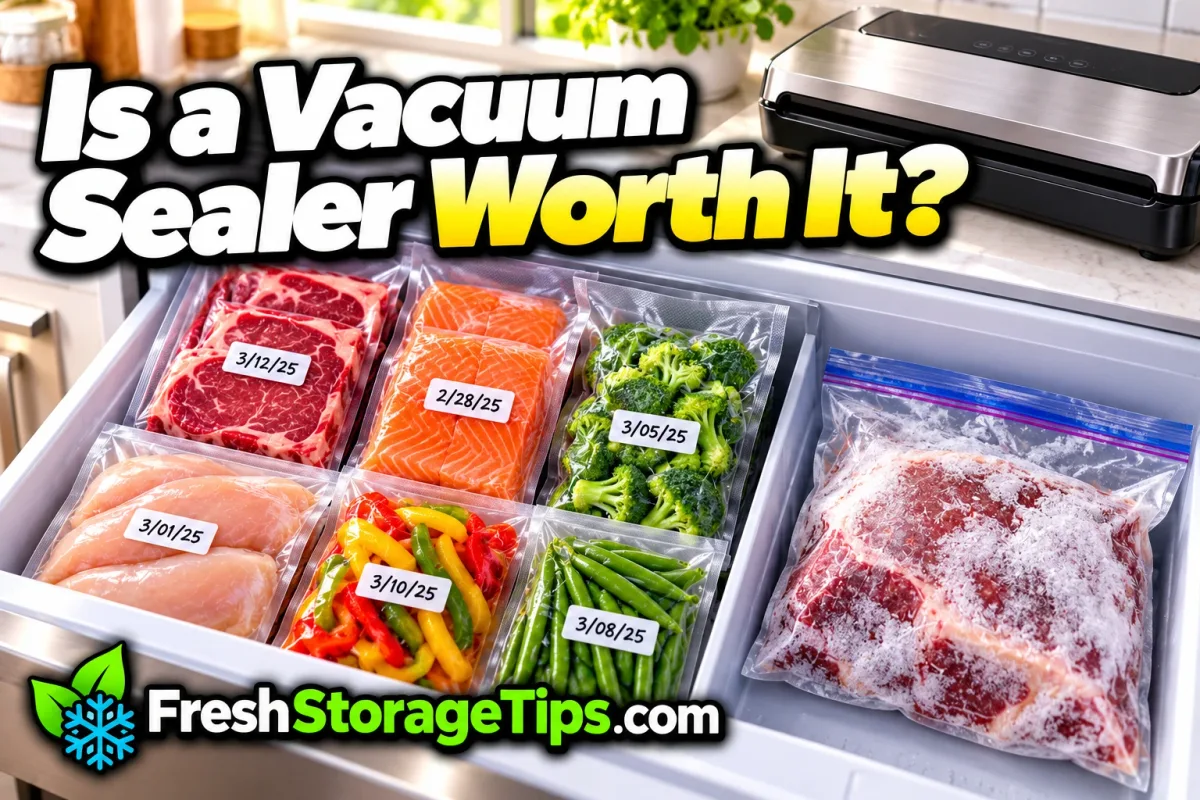
A vacuum sealer is worth it if you freeze a lot: meat bought in bulk, hunting or fishing, batch cooking. It keeps air away from food, which is what causes freezer burn. It’s not worth it if you hope it will make food last weeks longer in the fridge or keep it safe on the counter. It doesn’t do that.
The 30-Second Self-Test
It’s probably worth it if you...
- buy meat in family packs or bulk and freeze most of it,
- hunt, fish or get a share of a whole animal,
- cook big batches and freeze portions,
- regularly throw out freezer-burned food,
- have a freezer that’s always a game of Tetris.
It’s probably not worth it if you...
- shop for a few days at a time and rarely freeze anything,
- mainly want to keep fridge food fresh for weeks,
- have no room on the counter or in a cupboard for one more machine,
- already have airtight containers that do the job.
What a Vacuum Sealer Really Does
It helps against freezer burn. The USDA explains that freezer burn “is caused by air coming in contact with the surface of the food.” Less air on the food means less chance of freezer burn. It lowers the risk; it doesn’t rule it out, for example when a seal leaks. Freezer burn doesn’t make food unsafe, but those dry, leathery spots are why a steak from the back of the freezer can taste like cardboard.
It slows flavor changes. Clemson Cooperative Extension says vacuum packaging “can help prevent oxidation, which can lead to off-flavors.”
It saves freezer space. Flat, tight packs stack better than lumpy bags. Clemson mentions this too.
It shines with dry packs. In Clemson’s words, vacuum packaging “works the best for dry packs”, meaning food packed without added liquid or syrup. Think meat, hard cheese, or vegetables frozen loose first (my examples). One exception from FoodSaver’s FM2100 manual: “Soft cheeses should never be vacuum sealed.”
What It Doesn’t Do (Despite What the Box Suggests)
It doesn’t turn days into weeks in the fridge. For fresh meat in regular store wrap, Michigan State University Extension gives up to 3 days after packaging; vacuum packaged with a good seal, up to 7 days from retail purchase. That’s about fresh meat bought from the store, not a rule for every food or every home-sealed pack, and it still depends on a cold fridge. A nice bonus, not a miracle. The full story is in how long vacuum-sealed meat lasts.
It doesn’t make food shelf-stable. Montana State University Extension says vacuum sealing “is NOT a food preservation method by itself.” Meat, leftovers and vegetables still go in the fridge at 40°F or below or the freezer at 0°F. Only dry foods can stay in the pantry; here’s what you can vacuum seal and where to keep it.
It doesn’t make frozen food safer. The USDA says food kept at 0°F is always safe; “Only the quality suffers.” A sealer protects the quality part.
The Things Nobody Mentions Until You Own One
Safety rule for fish: Clemson Cooperative Extension warns about botulism with vacuum-packed fish. Keep it frozen until you use it, or take it out of the package before thawing. More in what you can vacuum seal.
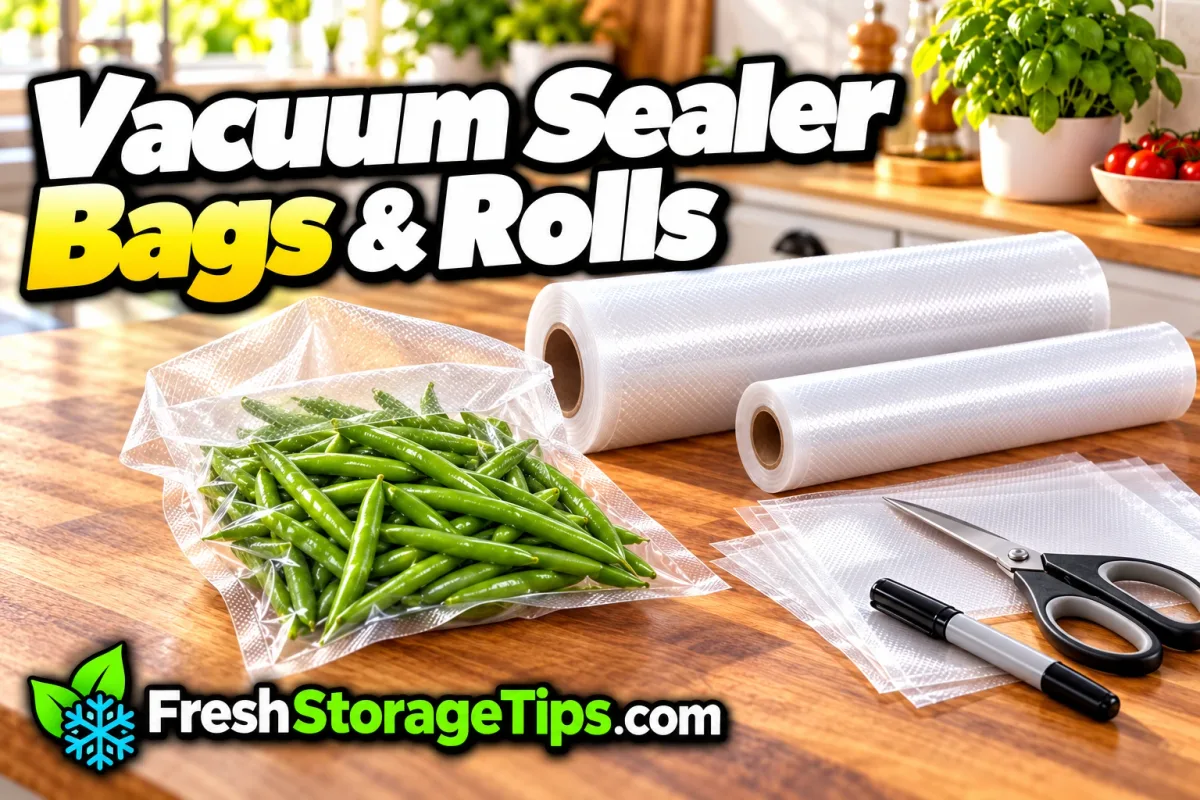
- Bags are a running cost. Clemson notes that vacuum packaging “requires a vacuum sealing machine and bags.” The machine is a one-time buy; bags or rolls are not. Rolls let you cut bags to the size you need.
- Wet food takes practice. A regular suction sealer can pull liquid toward the machine. FoodSaver’s FM2100 manual says to freeze liquids before vacuuming and to pre-freeze meat and fish for 1 to 2 hours. A chamber sealer is the other way out.
- Soft food can get squashed. Bread and berries go flat unless your sealer has a gentle mode (the Nesco VS-12 listing names one for bread and berries) or you freeze them first.
- It needs a home. Countertop sealers are long, and a heavy-duty one like the Weston Pro-2300 weighs 22.6 pounds. Measure before you buy.
Not Ready to Buy? Try These First
- Airtight containers for leftovers in the fridge and dry food in the pantry.
- Overwrap store packages before freezing. The USDA notes that store wrap “is permeable to air” and suggests an extra layer for long freezer storage.
- Freezer bags with the air pressed out for short freezer stays (my tip: lay the bag flat and press the air out before closing it).
- Labels with the date on everything, sealed or not, so the oldest food gets eaten first.
If you find yourself doing all of this every week, that’s usually the moment a sealer starts to make sense.
The Verdict, Kitchen by Kitchen
- Bulk meat, hunting, fishingYes, this is what sealers are made for
- Batch cooking and meal prepYes, especially for freezer portions
- Lots of soups and stewsYes, but look at a chamber sealer
- Small household, little freezingProbably not: containers and labels do the job
- Hoping for weeks of fridge lifeNo: that’s not what it does
Decided it’s a yes? Here are the vacuum sealers I’d pick for different kitchens, from a small pump to a heavy-duty one.
Quick Questions
Is a vacuum sealer worth it for a small household?
Only if you freeze food regularly. A vacuum sealer mainly helps against freezer burn; if you rarely freeze anything, airtight containers and dated labels usually do enough.
Does vacuum sealing really prevent freezer burn?
It helps a lot, but it’s not a guarantee. The USDA explains that freezer burn comes from air touching the surface of the food, and a good vacuum seal keeps most of that air out. A leaking seal lets it back in. Freezer burn affects quality, not safety.
Does vacuum sealed food last longer in the fridge?
A little. Michigan State University Extension gives fresh store-bought meat up to 7 days from purchase when it’s vacuum packaged with a good seal, against up to 3 days after packaging in regular store wrap. That’s not a general rule for every food, and it still needs the fridge.
Can vacuum sealed food be stored at room temperature?
Only dry foods such as nuts, grains and dried fruit. Perishable food such as meat, leftovers and vegetables still needs the fridge or freezer; vacuum sealing is not a preservation method on its own.
What else do I need besides the sealer?
Bags or rolls that fit your machine, and something to write the date with. Clemson Extension also advises following the directions that come with the vacuum packages.
Sources & Transparency
Freezer burn, safety at 0°F and overwrapping: USDA FSIS, “Freezing and Food Safety”. Oxidation, freezer space and dry packs: Clemson Cooperative Extension, HGIC 3024 “Home Freezing Equipment” and HGIC 3865 “Vacuum Packaging Foods at Home”. Fridge days for fresh meat: Michigan State University Extension, “Dates on meat packages”. Fish and botulism: Clemson HGIC 3865 (linked above). “Not a preservation method by itself”: Montana State University Extension, “Freezing Vegetables”. Freezing wet food first and the soft cheese warning: the FoodSaver FM2100 owner’s manual. Tips and examples marked as mine are my own suggestions, not rules from these sources.
Last updated: