Home » Archives for Marleen Van Der Zijl » Page 2
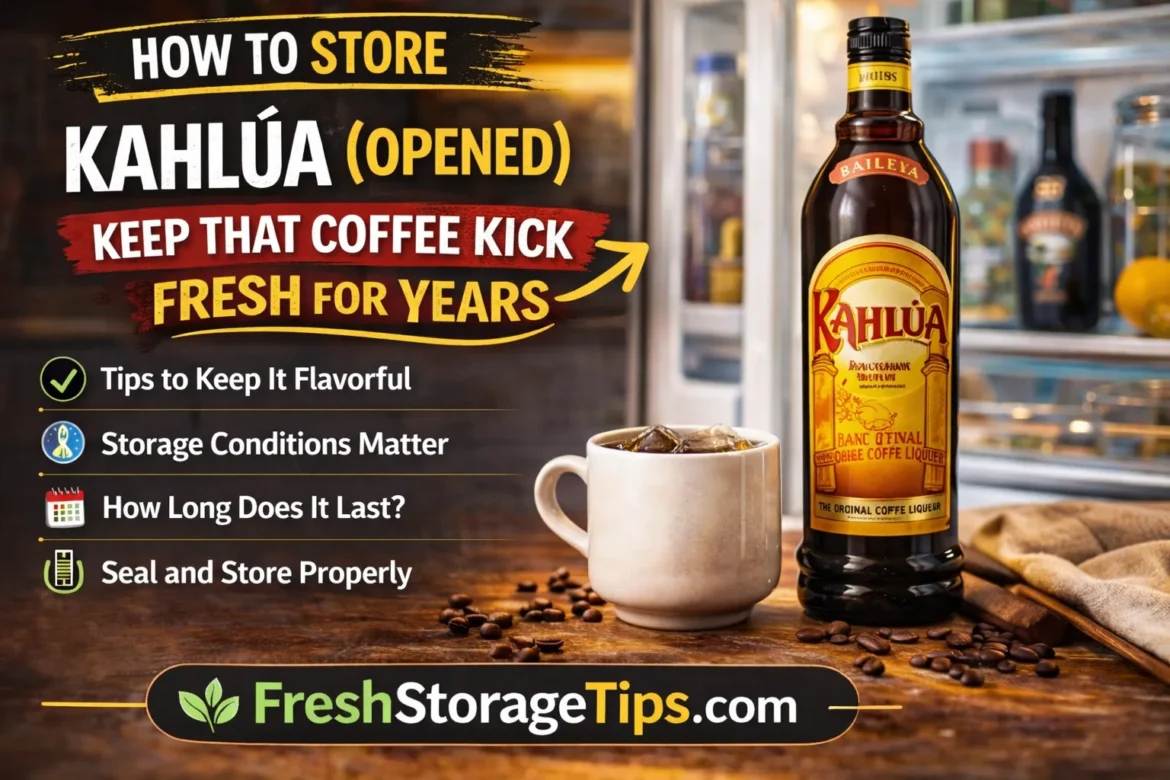
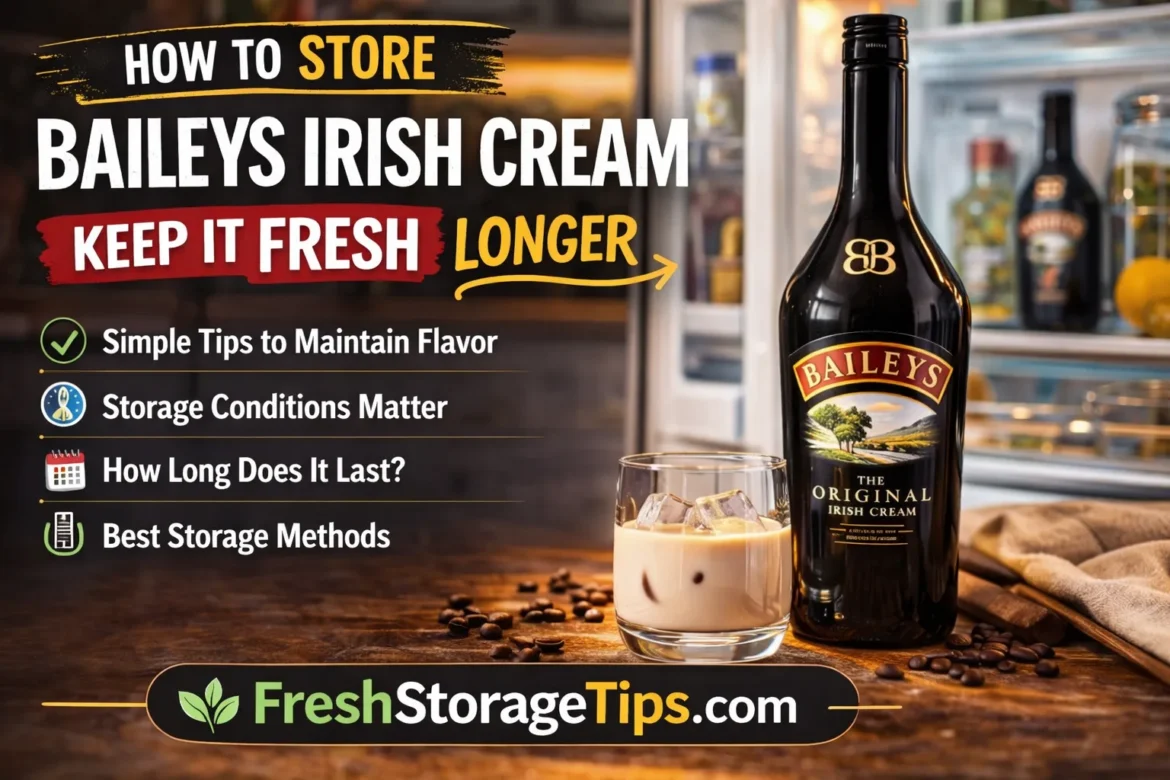
Bottle of Baileys Irish Cream with a glass showing how to store Baileys properly to keep it fresh longer
How to Store Baileys Irish Cream (Does It Need Refrigeration?)

How to Store Baileys Irish Cream (Keep It Fresh Longer)

You decide to treat yourself after a long dinner. You open a brand new bottle of Baileys Irish Cream to pour a generous splash into your hot coffee or to mix up a sweet, comforting dessert drink. When you are finished, you instinctively walk over and put the bottle right back on the open shelf with the rest of your normal liquor collection. A few weeks later, you stare at that same bottle and a sudden, worrying thought crosses your mind. Because this drink is made with real dairy, should this actually be sitting in the refrigerator right now?

Baileys Irish Cream is absolutely not a typical spirit. It contains a very large amount of real dairy cream permanently blended with Irish whiskey. This delicate combination means that everyday storage matters much more here than it does with almost any other bottle sitting in your home liquor cabinet. When you are learning proper beverage storage techniques for your kitchen, you quickly realize that anything containing animal milk fats requires extra attention.

The good news is that the original creators of Baileys (a flagship brand now proudly owned by the global beverage entity Diageo) carefully designed this unique product to stay stable for quite a long time without spoiling instantly. The bad news is that extreme heat, bright sunlight, and improper kitchen storage habits can still slowly ruin the beautiful flavor and creamy texture over time. If you want every single glass to taste perfectly smooth, sweet, and fresh, there are a few simple but vital storage rules worth knowing.

The Quick Answer: Baileys Irish Cream does not strictly require refrigeration, but it must be stored in a cool, dark place and kept tightly sealed. For the absolute best results, you should store the bottle between 0 to 25 °C (32 to 77 °F). While refrigeration is optional, keeping it cold heavily preserves the rich flavor and prevents the cream from separating. You should aim to finish the bottle within 6 months of opening it.

Kitchen Quality Tip: Always wipe the lip of the bottle clean before you screw the cap back on. The high sugar content can easily crystallize around the threads, making the bottle incredibly difficult to open next time and attracting unwanted ambient air into the seal.

Bottle of Baileys Irish Cream with a glass showing how to store Baileys properly to keep it fresh longer

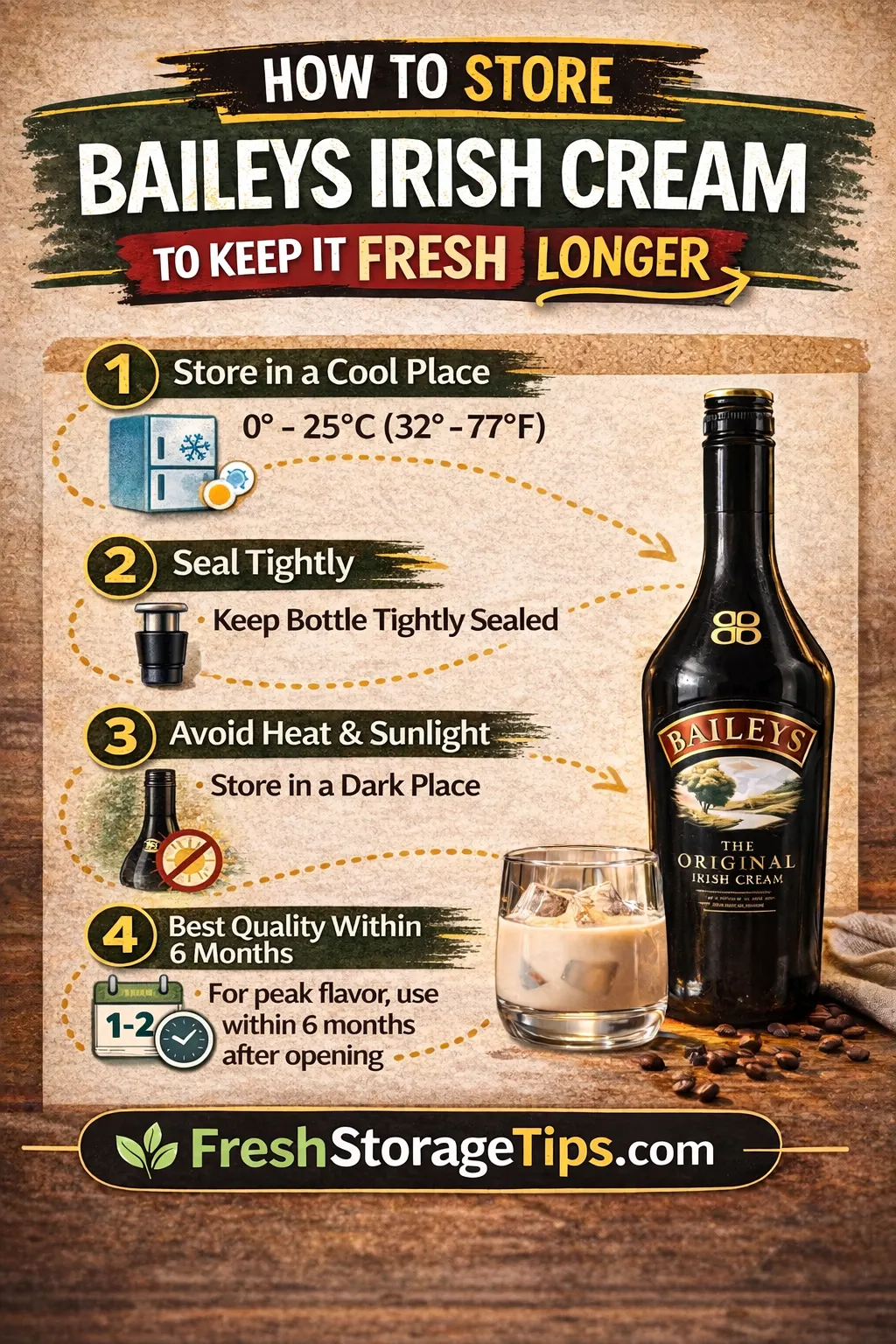
Baileys Irish Cream storage tips: keep the bottle sealed, store between 0–25°C, avoid heat and sunlight, and use within 6 months after opening for the best flavor.

Understanding the Science of the Emulsion

To fully understand how to protect your drink from spoiling prematurely, you must understand exactly what you are holding. When you pour a glass of Baileys Irish Cream (Diageo), you are looking at a brilliant scientific marvel of modern food engineering. Milk and alcohol do not naturally want to stay mixed together. If you were to simply pour raw cow’s milk into a glass of strong whiskey, the natural acid and alcohol would immediately cause the milk proteins to curdle and clump up into an unappealing, sour mess.

The creators solved this specific problem by using a highly specialized homogenization process. They expertly blend the rich Irish dairy cream with the whiskey, cocoa extract, and vanilla at incredibly high speeds alongside a specific vegetable oil emulsifier. This rigorous mechanical process breaks the milk fats down into microscopic particles and binds them tightly to the alcohol molecules. This creates a highly stable, uniform liquid that refuses to separate under normal, stable conditions.

Because the alcohol content sits at a sturdy 17 percent by volume, the whiskey actually acts as a powerful natural preservative for the dairy cream. This is exactly why you do not have to worry about looking up how to store milk when handling this specific product. The whiskey creates a harsh internal environment where standard spoilage bacteria simply cannot survive and multiply. However, while the bacteria are kept at bay, the delicate emulsion itself remains highly vulnerable to environmental stress. Heat and oxygen are its two greatest enemies in your kitchen.

Interactive Storage Time Chart

This handy reference chart clearly shows exactly how long your bottle will last depending on how you treat it. Use the buttons to filter the best method for your current situation at home.

Bottle Condition Best Location Maximum Quality Time Important Storage Tip
Unopened Bottle Dark Pantry Up to 2 Years Check the manufacturer date on the label.
Opened Bottle Refrigerator About 6 Months Cold temperatures protect the delicate emulsion.
Opened Bottle Dark Liquor Cabinet 3 to 6 Months Must be kept below 77°F to prevent early spoilage.

Does Baileys Really Need Refrigeration?

The short answer is no, refrigeration is not strictly mandatory for safety. The official guidance from the company states that Baileys guarantees its product for two full years from the day it was manufactured, opened or unopened, as long as it is stored at the correct room temperature. However, the reality of everyday home kitchen storage is rarely that perfect.

Most home kitchens experience massive daily temperature fluctuations. You boil a large pot of pasta, you run the hot oven for an hour, the afternoon sun hits the cabinets directly, and the entire house gets incredibly warm. These constant, rolling swings in temperature put extreme physical stress on the chemical emulsion inside the bottle. If you leave your bottle in a cabinet that routinely gets warm, the milk fats will eventually start to separate from the alcohol. Once this physical separation occurs, the drink becomes permanently lumpy and ruined. You cannot simply shake it back into a perfectly smooth state.

This is precisely why almost every beverage expert strongly recommends keeping an open bottle firmly in the refrigerator. The consistent, reliable cold temperature of a fridge completely halts the physical degradation process. It protects the rich cocoa notes, preserves the smooth texture, and ensures the alcohol does not evaporate out of the neck of the bottle. If you already practice how to keep wine fresh by managing temperature carefully, you already understand the vital importance of avoiding ambient heat in your kitchen.

Comparing Alcohol Preservation

To put this into proper perspective, we have to look closely at how different alcohol levels protect organic compounds. When you research how to store rum or strong vodka, you find that spirits sitting at 40 percent alcohol are virtually indestructible at room temperature. The alcohol level is so incredibly high that nothing can degrade it quickly. Baileys, sitting at just 17 percent, is much closer to a fortified wine in terms of shelf stability.

Scientific studies repeatedly emphasize the importance of strict temperature control for lower alcohol beverages. According to the Purdue University Extension, wine products are typically stored optimally between 10 and 16 degrees Celsius (50 to 60 degrees Fahrenheit). Their detailed research notes that storage temperature strongly affects aging reactions and flavor development over time. The exact same chemical principles apply to your bottle of Irish Cream.

If you allow the bottle to get too warm, you drastically accelerate the breakdown of the complex flavors. The University of Georgia CAES advises that delicate alcohol products should always be kept in a cool, dark place to prevent spoilage. Furthermore, the UC Davis Food Safety guidelines concerning alcoholic beverage production outline exactly how heat and oxygen exposure silently compromise quality.

When you leave the cap loose on your bottle, ambient oxygen sneaks in. The National Institutes of Health published peer reviewed research confirming that oxygen exposure during storage causes distinct chemical reactions that severely impact both aroma and flavor. This is exactly why a bottle left open on a warm counter will start to taste stale, overly sweet, and slightly metallic compared to a fresh pour.

Baileys vs. Kahlua: Shelf Life Comparison

A frequent question I get when discussing home beverage storage is how dairy based cream liqueurs compare directly to standard coffee liqueurs. Many people incorrectly assume they are the exact same thing and try to store them exactly the same way. This is a massive mistake that leads to terrible drinks.

Kahlua is a rum and coffee liqueur. It contains absolutely zero real dairy cream. Because it relies purely on sugar, coffee extract, and alcohol (usually around 20% ABV), it is far more stable than Baileys. An unopened bottle of Kahlua can easily last up to four years in a dark cabinet. Once opened, it will stay perfectly fine at room temperature for another year or two without spoiling or separating. Baileys, on the other hand, relies heavily on animal milk fats. That real dairy means the shelf life is dramatically shorter and the storage rules are much stricter. You must treat Baileys like a perishable food item, whereas Kahlua can safely sit on your bar cart next to your whiskey without issue.

Feature Baileys Irish Cream Kahlua (Coffee Liqueur)
Dairy Content Contains real milk cream Zero dairy (sugar & coffee based)
Unopened Shelf Life 2 Years 4 Years
Opened Shelf Life 6 Months (Best Quality) 1 to 2 Years
Refrigeration Needed? Highly Recommended Not Necessary

Storage Effectiveness Visualized

How you actively treat the bottle directly determines the quality of the drink you pour. Here is a clear visual breakdown.

Unopened (Cool Pantry)
Up to 2 Years
Opened (Fridge)
About 6 Months
Opened (Dark Cabinet)
3–6 Months
Opened (Warm/Sunny)
Spoils Rapidly
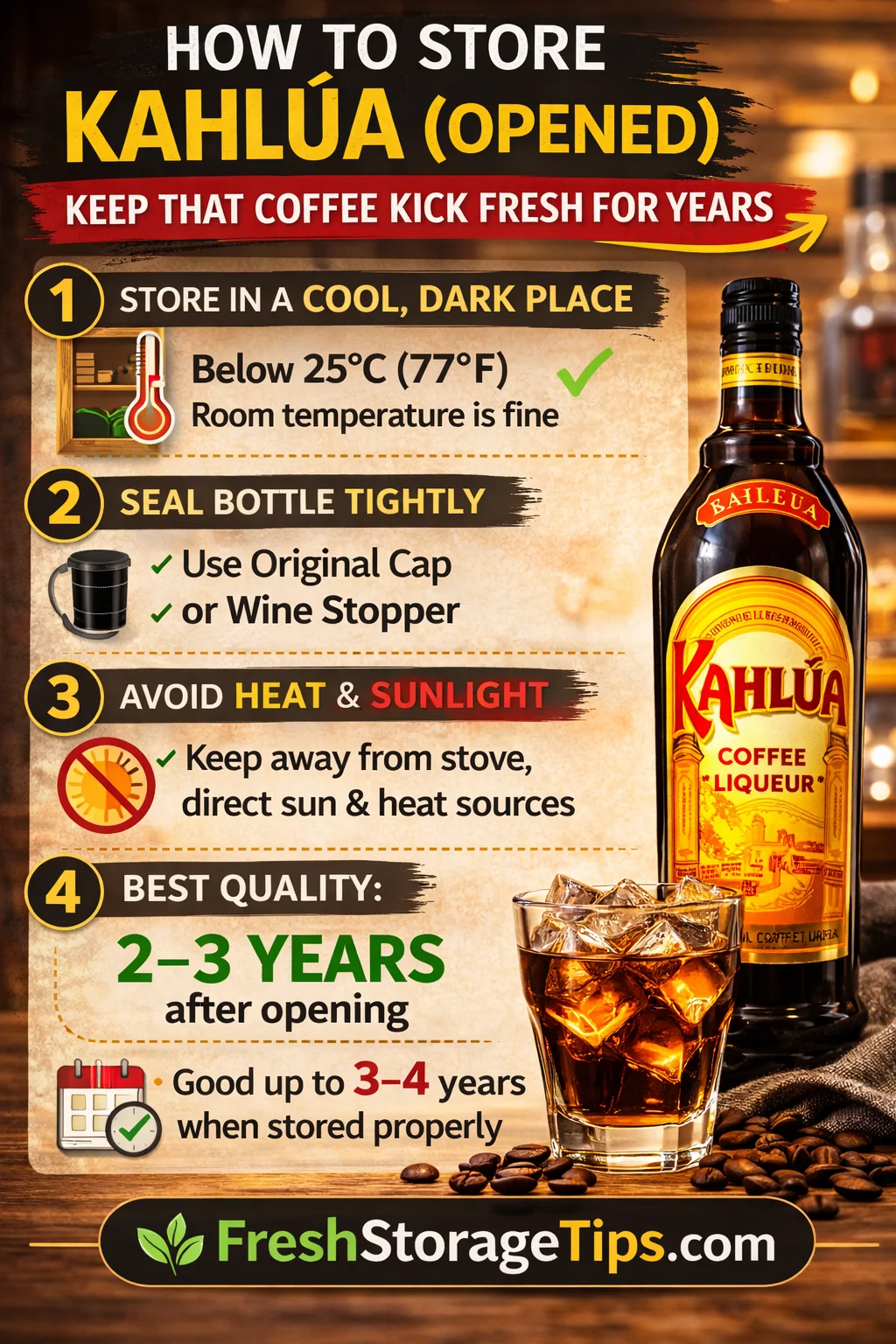
Infographic showing how to store Baileys Irish Cream including ideal storage temperature sealing the bottle and shelf life after opening

Simple guide showing how to store Baileys Irish Cream: keep between 0–25°C, seal tightly, and avoid heat.

How Long Does Baileys Last?

Unlike raw agricultural products, reading the expiration timeline on a bottle of Irish Cream requires a bit of practical math. Every authentic bottle has a manufacturing date laser printed somewhere on the glass, usually near the bottom label. The company officially states the product is perfect for two full years from that specific printed date.

This means if you buy a bottle today, but it was manufactured exactly one year ago, you only have one year of guaranteed peak freshness remaining. Always check the date carefully before you purchase it at the grocery store to ensure you are getting the freshest possible batch available.

Once you bring it home, an unopened bottle will comfortably sit in the back of a dark pantry without any issues. However, once you break the factory seal, the clock ticks a bit faster. While the manufacturer claims the two year rule still broadly applies after opening, common kitchen experience dictates otherwise. For the absolute best sensory experience, you should try to consume an opened bottle within about six months. After six months of being repeatedly opened and closed, the volatile vanilla and cocoa notes begin to fade quickly, leaving you with a drink that tastes somewhat flat. This flavor loss is a common problem with heavily flavored items, which you will easily recognize if you have ever learned how to store chocolate properly.

Signs Your Baileys Has Gone Bad

Because the drink contains a large volume of dairy, knowing exactly how to identify spoilage is incredibly important for your health and your palate. When the emulsion finally breaks or the alcohol protection fails, the signs are usually very obvious.

You should discard your bottle immediately if you notice any of the following distinct changes:

  • ⚠️ A Sour or Spoiled Smell: This is the most critical warning sign. Fresh Baileys smells incredibly inviting, heavily featuring sweet notes of rich chocolate, vanilla bean, and sharp whiskey. If you unscrew the cap and your nose is hit with the unmistakable sour stench of spoiled milk or old yogurt, the dairy has turned. Do not attempt to taste it. Pour it straight down the drain.
  • ⚠️ Thick, Lumpy Texture: The liquid should pour smoothly and thickly, just like heavy cream. If you pour a glass and notice thick chunks, cottage cheese like lumps, or heavy coagulation, the chemical emulsion has completely failed. The milk proteins have bound together. This happens frequently if the bottle was stored too close to a heat source.
  • 👀 Visible Layer Separation: If you look at the liquid in a clear glass and see a watery, dark layer separated from a thick, milky top layer, the product has significantly degraded. While a tiny bit of separation is normal and can be fixed with a gentle shake, heavy, permanent separation means the drink is no longer viable.
  • The Curdle Test in Coffee: Sometimes the liquid looks fine in the bottle, but the moment you pour it into hot coffee, it immediately curdles into floating chunks. This indicates that the acidity of the coffee was enough to push the already weakened, aging dairy over the edge into full spoilage. This is a clear sign the bottle is too old. If you brew high acid beans, which you can read about in guides on how to store coffee beans, this nasty reaction happens even faster.

Professional hospitality standards emphasize strict quality control over all dairy based ingredients. As clearly noted in resources provided by Oklahoma CareerTech regarding safe beverage management, serving compromised, separated dairy is a severe health hazard and entirely destroys the quality of the final drink. Never take a risk on a lumpy bottle.

Video Guide: Checking Your Bottle

Visual Proof of Spoilage

If you want a clear visual breakdown of why this popular drink spoils and exactly how to test your older bottles safely at home, watch this helpful overview. The host explains the timeline perfectly and details exactly what happens to the dairy cream over time.

Testing Tip: The video demonstrates how to compare an older bottle against a brand new fresh one. This side by side visual and olfactory test is the absolute best way to train your senses to recognize the off flavors caused by poor home storage habits.

Storage Myths Completely Busted

Let’s clear up some common kitchen folklore regarding your creamy liqueurs:

  • 🚫 Myth: You can freeze it to make it last years longer. Reality: You should absolutely never freeze this product. The extreme freezing temperatures will completely shatter the chemical emulsion. When you finally thaw it out, the water, alcohol, and fat will be permanently separated, leaving you with a disgusting, lumpy mess that cannot be fixed.
  • 🚫 Myth: If it has alcohol, it lasts forever. Reality: The 17 percent alcohol volume is a preservative, but it is not magic. It only slows down the bacterial growth in the cream. It cannot stop the physical degradation of the fats over a long period of time. Just as standard Oregon State University Extension guidelines on wine and cider indicate, lower alcohol products always have a defined expiration limit.
  • 🚫 Myth: You must shake it violently before pouring. Reality: Violent shaking is entirely unnecessary and can introduce too much air into the mixture. A very gentle tip of the bottle back and forth is more than enough to ensure the liquid is uniform before you pour.

Step-by-Step Storage Guide

We all hate pouring expensive drinks straight down the sink. To ensure you get the absolute most out of every purchase and keep your bottles tasting perfectly smooth, I have created a simple checklist. Following these steps guarantees longevity.

  1. Check the Manufacturing Date: Locate the laser printed date on the glass bottle. Calculate exactly two years from this date to know your maximum guaranteed freshness window. Do not keep the bottle past this date.
  2. Wipe the Threading: After pouring a drink, use a clean, damp cloth to wipe the glass threads at the top of the bottle. This prevents sticky sugar buildup that can ruin the airtight seal.
  3. Seal Tightly: Screw the original cap back on as tightly as physically possible. This firmly prevents ambient oxygen from entering the bottle and oxidizing the delicate dairy fats.
  4. Refrigerate for Longevity: Place the sealed bottle inside the main body of your refrigerator (avoid the door, which constantly fluctuates in temperature). The constant cold protects the chemical emulsion from separating.
  5. Label with the Opening Date: Write the current date on a piece of masking tape or a dissolvable food label and stick it to the back of the bottle. Plan to finish the contents within six months of this date for the best flavor.

If you only make one dessert cocktail every few months, do not buy the massive one liter party bottles. Look for the smaller half bottles at your local liquor store. You will finish them much faster, meaning you are always mixing with fresh, uncompromised ingredients.

Marleen's Kitchen Tools

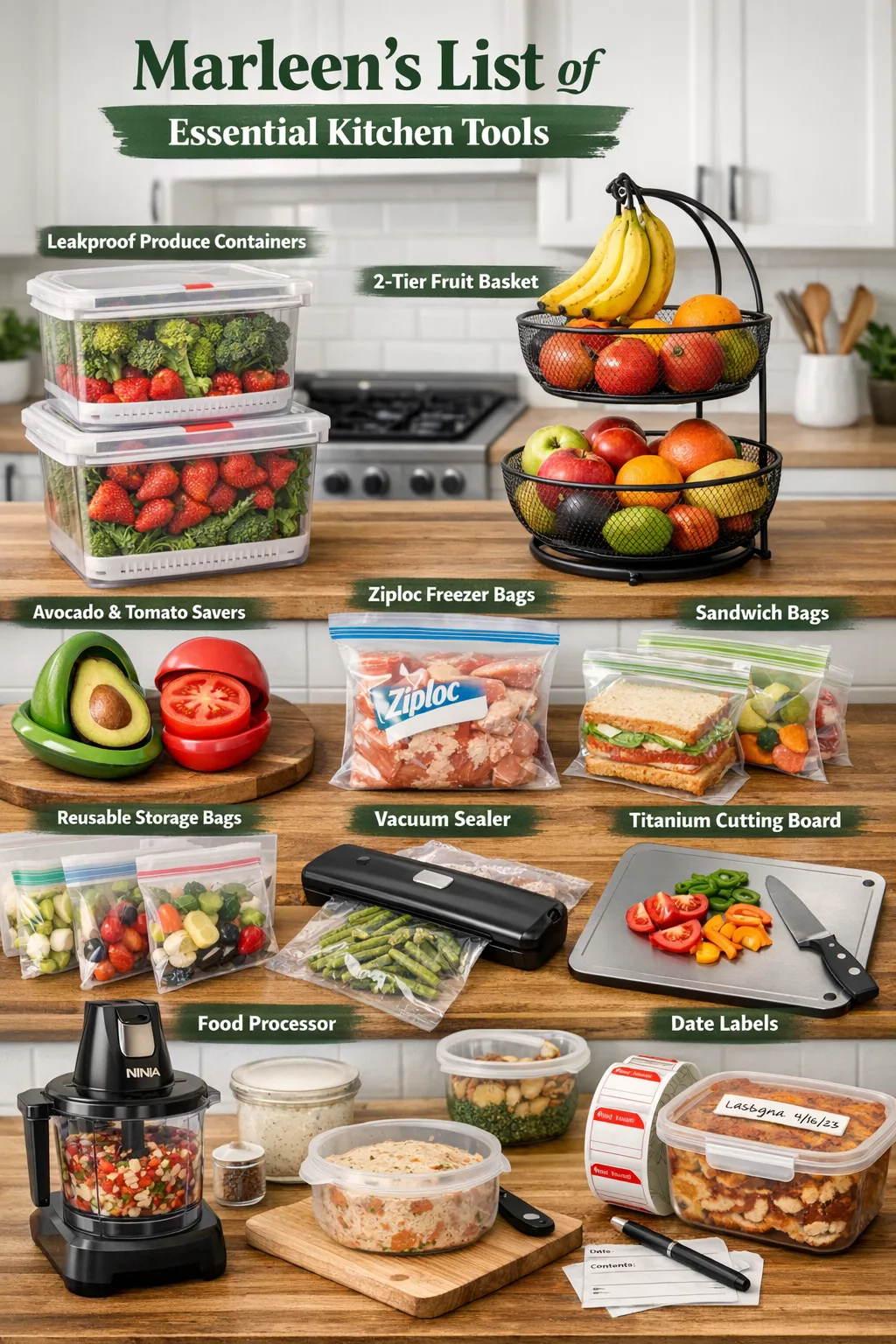
Marleen’s List of Essential Kitchen Tools

Storing liquids, fresh ingredients, and bulk foods properly requires a bit of precision and thoughtful planning. Over the years of running my own busy kitchen, hosting countless family dinners, and mixing late night drinks for friends, I have meticulously tested dozens of storage methods. I quickly realized that having the correct, high quality equipment changes absolutely everything. It is not just about keeping your food safe from harmful bacteria; it is about deeply respecting the expensive ingredients you purchase and making sure they retain their absolute best flavor until the very last drop or bite.

When dealing with highly sensitive items like dairy based liqueurs, delicate fresh herbs, or organic produce, managing the kitchen environment is your top priority. You need to control the internal temperature, minimize destructive oxygen exposure, and accurately keep track of time. For example, knowing exactly how cold your fridge runs is incredibly critical. You would be shocked to learn how many home refrigerators are not actually calibrated correctly. Investing in a highly reliable digital cooking thermometer ensures that your delicate bottles, fresh meats, and daily dairy are sitting securely in the optimal safe zone. This simple knowledge extends their shelf life significantly and prevents frustrating, unnecessary spoilage.

Beyond basic temperature control, managing direct air exposure is how you truly win the daily battle against food waste. Investing in a high quality vacuum sealer allows you to actively pull the destructive oxygen away from your ingredients. This completely locks in freshness for months longer than standard, flimsy plastic baggies. For daily use, I constantly rely on sturdy, airtight food storage containers and dedicated food product saver tubs. These hard sided bins effectively prevent delicate items from being crushed and feature heavy duty silicone seals that lock out humidity and strong, cross contaminating odors from the rest of the busy fridge.

Finally, visual organization is the ultimate glue that holds a highly functional kitchen together. If you cannot easily remember when you opened a jar of sauce or froze a large batch of soup, you are highly likely to throw it away out of an abundance of caution. Using specialized dissolvable labels has completely streamlined my entire pantry and freezer system. You can write the exact date directly on your containers, and when you are finally done, the label washes away completely under warm water without leaving any sticky, frustrating adhesive residue behind. Pair these smart, effective storage habits with a strong food processor for prepping bulk ingredients quickly, and you will quickly find that managing your kitchen inventory becomes a highly efficient, stress free routine that saves you an incredible amount of money every single month.

Digital Thermometer for cooking

Ensure your fridge and your cooked meals are hitting the exact perfect temperatures safely.

View on Amazon

Food Processor

Prep large batches of ingredients incredibly quickly before sealing and storing them for later use.

View on Amazon

Food Product Saver Tubs

Specialized hard sided tubs specifically designed to keep your most delicate produce fresh and crisp.

View on Amazon

Vacuum Sealer for food

The absolute ultimate tool for pulling oxygen away from your ingredients to stop premature spoilage.

View on Amazon

Food Storage Containers

High quality, highly durable bins that stack neatly and keep out damaging humidity and strong odors.

View on Amazon

Dissolvable Labels for food

Track opening dates perfectly. They wash off easily under warm water with zero sticky residue left over.

View on Amazon

As an Amazon Associate, I earn from qualifying purchases at no extra cost to you. Thank you for supporting the site!

Frequently Asked Questions

Does Baileys Irish Cream need to be refrigerated after opening?

No. The manufacturer strictly states that Baileys does not require refrigeration. However, keeping it securely in the fridge helps maintain the smooth texture and ideal flavor profile for a much longer period of time.

Does Baileys go bad if not refrigerated?

It will not spoil immediately, but if stored in a warm cabinet or exposed to sunlight, the heat will eventually cause the dairy cream to separate from the alcohol. Once this happens, the drink becomes permanently lumpy and unappealing.

How long does a bottle of Baileys last once opened?

An opened bottle will generally maintain its absolute best quality for about six months. After this point, the dairy may slowly begin to separate from the alcohol and the overall flavor will gradually degrade.

Can you freeze Baileys Irish Cream?

You should absolutely never freeze Baileys. The extreme cold will completely break the delicate chemical emulsion between the dairy cream and the whiskey. When it thaws, the liquid will be permanently separated and horribly lumpy.

How can you tell if Baileys has gone bad?

If the liquid smells sour like spoiled milk, looks thick and clumpy when poured, or separates into distinct layers that do not mix back together when shaken gently, it has spoiled and should be discarded immediately.

Sources & Transparency

This comprehensive guide references scientific alcohol storage guidelines provided by the Purdue University Extension and the National Institutes of Health. Additional detailed data on proper beverage handling, commercial production, and consumer safety was consulted via UC Davis Food Safety and the Oregon State University Extension.

Other spirits like rum don’t need the fridge after opening — Baileys is the exception because of the cream. Just like prosecco, Baileys has a very specific opened-bottle window before quality drops. Whiskey can sit for years after opening — Baileys cannot. Here’s why cream makes such a big difference.

Last updated:

Marleen van der Zijl, author of FreshStorageTips.com

About the author: Marleen van der Zijl

Marleen is a mother who loves hosting friends and absolutely hates seeing expensive drinks go to waste in the kitchen. She actively shares her tested, practical kitchen hacks to help you keep your home pantry deeply organized and your ingredients tasting incredibly fresh.

6 comments
0 FacebookTwitterPinterestEmail
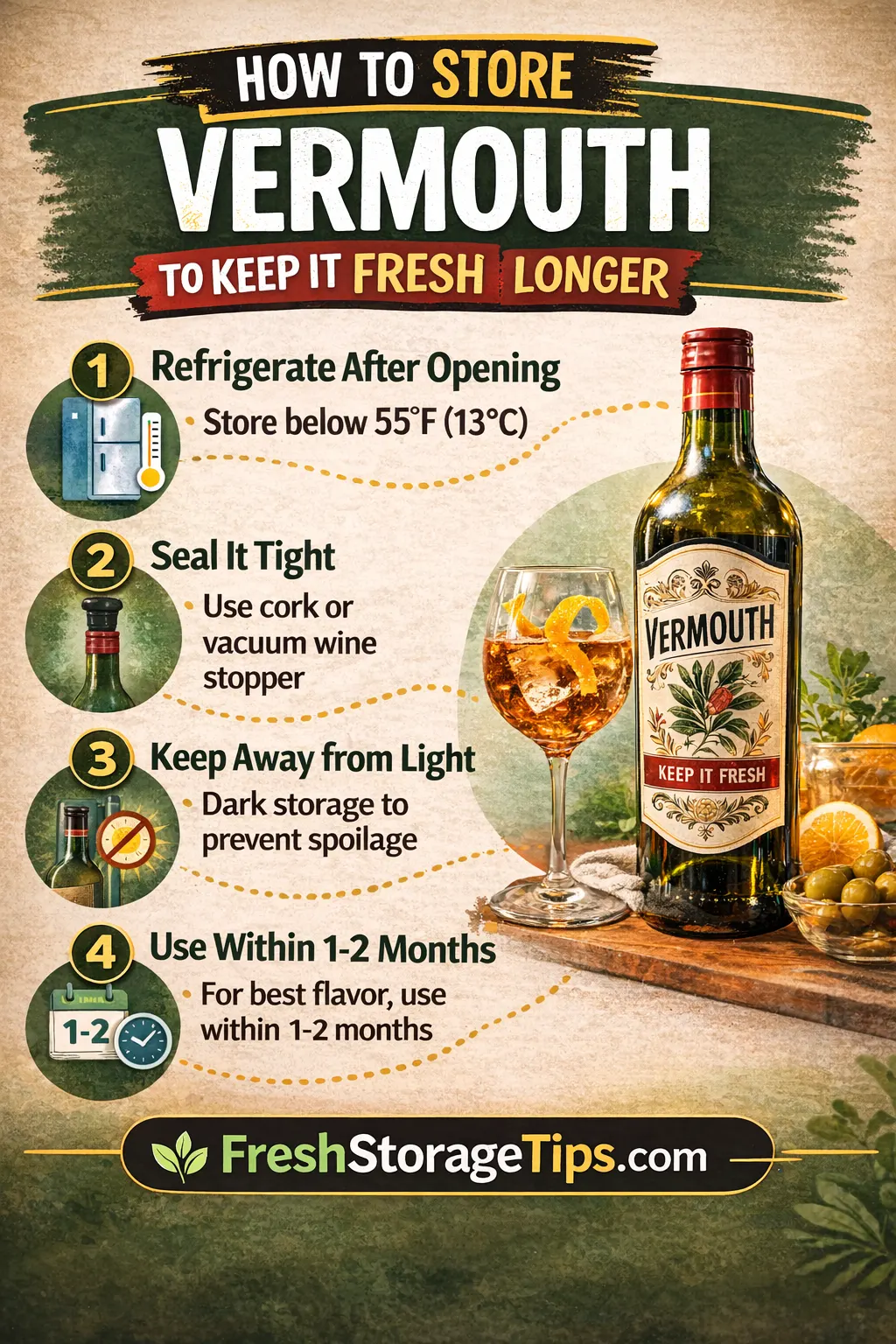
Bottle of vermouth and cocktail showing how to store vermouth properly to keep it fresh longer
How to Store Vermouth (Keep It Fresh Longer)

How to Store Vermouth (Keep It Fresh Longer)

You invite some friends over, open a bottle of vermouth to make a classic martini or a refreshing Negroni, and then put the bottle back in the cabinet alongside your other spirits. Weeks later, you reach for that exact same bottle to mix another drink. However, when you pour it into the glass, the flavor tastes entirely flat, dull, and even slightly sour. The vibrant herbal notes have completely vanished. Your carefully measured, expensive cocktail is ruined by one bad ingredient.

This happens frequently because vermouth is not a normal spirit. Unlike a bottle of clear vodka or heavy whiskey, vermouth is actually a fortified wine. This means it slowly oxidizes after opening. If it is stored incorrectly in a warm room, the delicate infused herbs and the wine base start to degrade much faster than you might expect.

The good news is that preventing this problem is very simple. With the right storage method, you can keep your vermouth fresh, complex, and flavorful for much longer. You simply need to change how you treat the bottle the moment the original factory seal is broken.

The Quick Answer: You must store vermouth exactly like wine, not like a hard liquor. Keep an unopened bottle in a cool, dark cabinet or pantry. Once opened, you must seal it tightly and keep it in the refrigerator. For the absolute best flavor in your cocktails, consume the open bottle within 3 to 4 weeks.

Kitchen Quality Tip: Heat and sunlight are the primary enemies of delicate botanicals. Always keep your bottles away from the stove or bright windows to protect the complex aromatic oils infused into the liquid.

Bottle of vermouth and cocktail showing how to store vermouth properly to keep it fresh longer

How to store vermouth properly: refrigerate after opening, seal tightly, and protect it from light.

What Exactly Is Vermouth?

To fully understand why proper storage matters so much, we first need to look at what is actually inside the bottle. Many people mistakenly believe this liquid is a strong distilled spirit because it is kept in the liquor aisle and used heavily in classic mixology. However, vermouth is simply a fortified wine flavored with various botanical ingredients. Understanding this foundation is critical for any home bartender learning proper beverage storage techniques.

The production process begins with a base of neutral, low alcohol grape wine. Winemakers then add a distilled spirit, usually an unaged grape brandy, to increase the overall alcohol content slightly. This step is the fortification process. Next, the mixture is aromatized. The producers steep a highly complex blend of roots, barks, flowers, seeds, herbs, and spices directly into the liquid. By law in many European regions, it must include wormwood, which gives the drink its signature slightly bitter profile. Other common ingredients include cloves, cinnamon, chamomile, angelica root, and citrus peel. The precise balance and volume of these ingredients are what separates a dry French style from a sweet Italian style.

The key point to remember here is the foundation of the beverage. Because it is wine based, it behaves completely differently than high proof spirits. When you research how to store rum or tequila, you learn that their high alcohol concentration acts as a permanent preservative at room temperature. Vermouth typically sits around 16 to 18 percent alcohol by volume. This level is simply not high enough to preserve the fragile wine indefinitely once it is exposed to the air.

Should Vermouth Be Refrigerated?

Yes. Without question, after opening, your vermouth should always be refrigerated. This is the single most important rule for home bartenders to follow. When you leave an open bottle on the counter, the ambient heat of your home accelerates the chemical reactions that cause rapid spoilage. If you are reviewing lists of foods that should not be refrigerated, you will never find fortified wine on them.

Refrigeration performs several critical functions to protect your investment. First, it drastically slows down oxidation. When molecules are cold, they move slower, meaning the oxygen interacts with the wine at a significantly reduced rate. Second, the cold environment preserves the delicate botanicals. The volatile oils extracted from the citrus peels and spices will evaporate or degrade quickly in warm temperatures. Finally, keeping it cold prevents the overall flavor profile from turning flat, stale, or aggressively bitter.

You might be wondering why you frequently see professional bartenders keeping open bottles on the shelf behind the bar, rather than in a cooler. This is a common sight that leads to a lot of confusion for home cocktail enthusiasts. The reality is simply a matter of volume and speed. A busy cocktail bar might pour through an entire bottle of sweet vermouth in a single Friday night service. Because the bottle is completely empty within twenty four hours, the liquid does not have enough time to oxidize and spoil. In a typical home setting, a single bottle might take you six months to finish. For long term home use, the refrigerator is absolutely mandatory.

The Science Behind Wine Spoilage and Storage

To truly appreciate the absolute need for cold storage, it helps to look closely at the chemistry taking place inside the glass. When you unscrew the cap or pop the cork, ambient air rushes into the bottle. The oxygen in that air immediately begins reacting with the ethanol and the phenolic compounds suspended in the wine.

Scientific studies consistently highlight how crucial temperature control is for any wine product. According to the Purdue University Extension, wine is typically stored optimally between 10 and 16 degrees Celsius (50 to 60 degrees Fahrenheit). Their research clearly notes that storage temperature strongly affects aging reactions and flavor development. While vermouth has a little extra alcohol to protect it slightly better than a standard bottle of Pinot Noir, it still falls victim to these exact same chemical laws once opened.

Over time, the oxygen converts the ethanol into acetaldehyde. This specific chemical compound gives oxidized wine a bruised apple or flat nutty characteristic. If left long enough in a warm environment, acetic acid bacteria can colonize the liquid and turn it slightly sour, heavily resembling vinegar. The National Institutes of Health published peer reviewed research confirming that oxygen exposure during storage causes distinct chemical reactions that severely impact both the aroma and the flavor of the beverage.

If you want to understand how to keep wine fresh, you must respect the science. Heat acts as a rapid catalyst for chemical change. Storing the bottle in a warm cabinet above your oven or near a sunny window is the fastest way to destroy the beautiful botanical bouquet the winemaker worked so hard to create. You need to keep things dark, cool, and stable.

Storage Method Showdown

How you store the bottle directly determines the cocktail quality you get in your glass. Here is the visual breakdown of expected shelf life.

Unopened (Pantry)
1–3 Years
Opened (Fridge)
3–4 Weeks
Opened (Counter)
1–2 Weeks
Vacuum Sealed (Fridge)
6–8 Weeks

How Long Does Vermouth Last?

The total lifespan of your bottle depends entirely on whether the factory seal has been broken and where the bottle sits in your house. An unopened bottle is relatively stable. As long as you keep it safely away from extreme heat radiators and bright windows, it will sit happily in your pantry for one to three years. However, it is very important to note that it does not improve in the bottle like a fine vintage red wine. It is bottled ready to drink.

The University of Georgia CAES advises that wine should be kept in a cool, dark place. Bottles with natural corks should be stored horizontally on their side to keep the corks moist and prevent air from leaking in. If your bottle has a modern metal screw cap, standing it upright is perfectly fine.

Once you open the bottle and place it in the fridge, you have about a month of peak flavor. After four weeks, it is not necessarily dangerous to drink, but the vibrant, crisp notes will begin to fade noticeably. If you make the mistake of leaving an open bottle on the counter at room temperature, it will start tasting stale and vinegary within ten to fourteen days. After this time, the drink usually becomes noticeably less aromatic and slightly sour, making it a terrible choice for a delicate cocktail.

Visual Glance: The Freshness Timeline

This timeline helps you manage your home bar inventory effectively. Once that cap is breached, the clock starts ticking very fast. Compared to a bottle of gin, vermouth is quite fragile. Treat an open bottle as a perishable grocery item that needs to be consumed within a few weeks, much like you would manage milk or fresh juice.

Interactive Vermouth Storage Chart

This quick reference guide shows exactly how long your bottle will last based on its current condition. Filter the table to find the best method for your specific situation at home.

Condition & Type Best Location Maximum Freshness Time Storage Tip
Unopened (Any Type) Dark Pantry 1 to 3 Years Keep away from heat sources like ovens.
Opened Sweet Vermouth Refrigerator 4 to 6 Weeks Sugar content hides oxidation slightly better.
Opened Dry Vermouth Refrigerator 3 Weeks Very delicate. Use a vacuum stopper.
Opened (Any Type) Kitchen Counter 1 to 2 Weeks Will turn sour and vinegary quickly. Not recommended.

How to Store Vermouth After Opening

If you want to stretch the life of your bottle and ensure your mixed drinks taste like they were made at an expensive professional bar, follow these practical steps to keep the liquid fresh longer.

  • Close the bottle tightly: Every time you pour a measure for your drink, put the cap back on immediately. Do not leave the bottle open on the counter while you prep dinner, slice garnishes, or chat with guests. The less fresh air that enters the bottle, the better the flavor remains.
  • Store in the refrigerator: Place the sealed bottle straight into the fridge. The consistent cold temperature of a refrigerator is the best defense against rapid oxidation. This is a strict rule outlined by many food safety and agricultural extensions, including the UC Davis Food Safety guidelines concerning alcoholic beverage production and safe handling.
  • Keep away from light: Ultraviolet light degrades organic compounds. Even inside the fridge, try to keep the bottle in a darker corner or in the door, rather than right under the harsh interior bulb. If your fridge has a glass door, light exposure is an even bigger concern.
  • Use a wine stopper if the cap leaks: Sometimes the original metal screw caps get bent or lose their seal after repeated use. If you suspect the cap is no longer airtight, switch to a reusable rubber wine stopper. Vacuum stoppers are even better because they pull the ambient air out of the bottle headspace before sealing it.
  • Write the opening date on the bottle: It is very easy to lose track of time. Use a piece of masking tape or a dissolvable label and write down the date you opened the bottle. This simple trick takes away the guesswork when you are building a drink three weeks later.

These small, simple steps can easily double the useful life of the bottle. Taking care of your ingredients is just as important as measuring your cocktail recipes correctly. If you also make your own mixers, you will find these rules align nicely with how to store cocktail syrup, as sugar based liquids also require cold storage to prevent bacterial growth and flavor loss.

Video Guide: The Shelf Life of Vermouth

Understanding Oxidation Visualized

If you want a great visual breakdown of why oxidation ruins your drinks and how to test your bottles at home, watch this helpful overview. The host explains the timeline perfectly and details exactly why the flavor shifts over time.

Testing Tip: The video demonstrates how to compare an old bottle against a brand new fresh one. This side by side tasting method is the absolute best way to train your palate to recognize the off flavors caused by poor home storage.

Infographic explaining how to store vermouth including refrigeration sealing and storage time

A quick guide to extending the life of your sweet and dry varieties.

How to Store Dry vs Sweet Vermouth

While both main types require strict refrigeration to prevent spoilage, their unique chemical makeups mean their flavors age slightly differently in the fridge environment.

Dry Vermouth (often labeled as Bianco or Secco) is significantly more delicate. It typically features a pale color, a crisp floral aroma, and a much lower sugar content. Because there is less sugar to act as a natural preservative and mask the off flavors, oxidation becomes noticeable much faster. A bottle of dry vermouth is usually best consumed within three weeks of opening. When making a dry martini, you want that crisp botanical bite to be as fresh as possible, otherwise the drink feels heavy and dull.

Sweet Vermouth (often labeled as Rosso or Rouge) is robust, dark, and carries a much higher sugar content alongside deep spice notes like vanilla, caramel, and clove. Sugar is a well known preservative in the culinary world. Because of the heavy sweetness and strong spice profile, sweet vermouth hides the initial signs of oxidation much better than its dry counterpart. It can typically last four to six weeks refrigerated before the flavor drop off becomes too severe to ignore. Just as sweet fruit wines require specific handling per the Oregon State University Extension guidelines on wine and cider production, the natural sugar levels dictate its overall shelf stability.

Signs Vermouth Has Gone Bad

Unlike raw meat or dairy, a spoiled bottle of fortified wine is highly unlikely to make you physically ill. The alcohol content combined with the acidic nature of the wine creates a harsh environment where harmful pathogens struggle to survive. However, just because it will not make you sick does not mean you should drink it. Spoiled ingredients ruin good cocktails.

You should discard your bottle if you notice any of the following sensory changes:

  • ⚠️ Sour or vinegary smell: This is the most obvious sign. If you take a sniff and your nose stings with the sharp scent of acetic acid or vinegar, the oxidation process has gone too far.
  • ⚠️ Dull or flat taste: Pour a small sip into a glass and taste it straight. If it lacks the complex, layered herbal bite you remember from when it was first opened, the volatile oils have died off completely.
  • 👀 Loss of herbal aroma: Fresh vermouth smells beautifully fragrant. If it smells like nothing, or just vaguely like old grape juice, it is well past its prime.
  • 👀 Darker or cloudy color: While sweet varieties are naturally dark, dry varieties should be relatively clear and pale. If your dry bottle has turned deeply yellow, brown, or has developed a cloudy haze, the wine has heavily oxidized.

Professional hospitality standards emphasize strict quality control. As noted in resources provided by Oklahoma CareerTech regarding beverage management, serving compromised ingredients is the fastest way to diminish the quality of your output. When in doubt, it is better to pour a questionable bottle down the drain rather than ruin a glass of expensive gin by mixing them together.

Vermouth Storage Myths Busted

Let’s clear up some common kitchen folklore regarding your home bar:

  • 🚫 Myth: The high alcohol content protects it forever. Reality: While 16 percent alcohol is higher than standard wine, it is not high enough to stop oxidation. Only spirits above 30 percent are generally shelf stable at room temperature.
  • 🚫 Myth: It gets better as it ages in the open bottle. Reality: Vermouth is blended and bottled to be consumed immediately. Exposing it to air only degrades the flavor, it never improves it.
  • 🚫 Myth: You can freeze it to stop it from going bad. Reality: Freezing alters the delicate chemical structure of the botanicals. When it thaws, the flavor compounds can separate and the taste will be permanently altered. This is a bad idea.

Actionable Advice for Home Bartenders

We all hate pouring money down the sink. To ensure you get the absolute most out of every purchase, keep a simple checklist in your head. First, always commit to putting the bottle back in the fridge the moment you finish pouring. Second, be very realistic about your drinking habits. If you only make one cocktail a month, do not buy a massive one liter bottle. Look for the smaller 375ml half bottles at your local liquor store. You will finish them faster, meaning you are always mixing with fresh ingredients.

Try utilizing vacuum wine stoppers to actively pull the destructive oxygen out of the bottle before you store it. Keep the bottles away from the bright light of your kitchen window, and always take three seconds to write the opening date on the back label. These tiny habits transform the quality of the drinks you serve at home. This is remarkably similar to the carbonation loss issues you face when managing sparkling wines. If you have ever looked into how to store prosecco, you know that once the defining characteristic is gone, the drink is essentially ruined.

Marleen's Kitchen Tools

Marleen’s List of Essential Kitchen Tools

Storing liquids, fresh ingredients, and bulk foods properly requires a bit of precision and thoughtful planning. Over the years of running my own kitchen, hosting countless family dinners, and mixing drinks for friends, I have tested dozens of storage methods. I quickly realized that having the right equipment changes everything. It is not just about keeping your food safe from bacteria; it is about respecting the expensive ingredients you purchase and making sure they retain their absolute best flavor until the very last drop or bite.

When dealing with highly sensitive items like fortified wines, delicate fresh herbs, or organic produce, managing the environment is your top priority. You need to control the temperature, minimize oxygen exposure, and accurately keep track of time. For example, knowing exactly how cold your fridge runs is critical. You would be surprised how many home refrigerators are not actually calibrated correctly. Investing in a reliable digital cooking thermometer ensures that your delicate bottles, fresh meats, and dairy are sitting in the optimal safe zone. This simple knowledge extends their shelf life significantly and prevents unnecessary spoilage.

Beyond temperature control, managing air exposure is how you truly win the battle against food waste. Investing in a high quality vacuum sealer allows you to pull the destructive oxygen away from your ingredients. This locks in freshness for months longer than standard plastic baggies. For daily use, I constantly rely on sturdy, airtight food storage containers and dedicated food product saver tubs. These hard sided bins prevent delicate items from being crushed and feature heavy duty seals that lock out humidity and strong odors from the rest of the fridge.

Finally, visual organization is the glue that holds a functional kitchen together. If you cannot remember when you opened a jar of sauce or froze a batch of soup, you are likely to throw it away out of caution. Using dissolvable labels has completely streamlined my pantry and freezer. You can write the date directly on your containers, and when you are done, the label washes away completely under warm water without leaving any sticky, frustrating residue behind. Pair these smart storage habits with a strong food processor for prepping bulk ingredients quickly, and you will find that managing your kitchen inventory becomes a highly efficient, stress free routine that saves you an incredible amount of money every single month.

Vacuum Sealer for food

The ultimate tool for pulling oxygen away from your ingredients to stop premature spoilage.

View on Amazon

Dissolvable Labels for food

Track opening dates perfectly. They wash off easily under warm water with zero sticky residue.

View on Amazon

Food Product Saver Tubs

Specialized hard sided tubs designed to keep your most delicate produce fresh and crisp.

View on Amazon

Digital Thermometer for cooking

Ensure your fridge and your cooked meals are hitting the exact perfect temperatures.

View on Amazon

Food Processor

Prep large batches of ingredients quickly before sealing and storing them for later use.

View on Amazon

Food Storage Containers

High quality, durable bins that stack neatly and keep out damaging humidity and odors.

View on Amazon

As an Amazon Associate, I earn from qualifying purchases at no extra cost to you. Thank you for supporting the site!

Frequently Asked Questions

Does vermouth go bad if not refrigerated?

Yes. If left at room temperature, the heat and oxygen cause the wine base to oxidize rapidly. It will develop a flat, sour, and vinegary taste within one to two weeks, rendering it useless for mixing cocktails.

Can you freeze vermouth to make it last longer?

No. While the alcohol content prevents it from freezing completely solid, the extreme cold alters the chemical structure of the delicate botanicals. When thawed, the flavor profile is permanently ruined.

How can I tell if my dry vermouth is still good?

Check the color and the smell carefully. Fresh dry vermouth is relatively clear and smells like crisp, fragrant herbs. If it turns yellow or brown, looks cloudy, or smells like sharp vinegar, it has oxidized and should be discarded.

Should I use a vacuum pump on my bottles?

Yes. A wine vacuum pump removes excess oxygen from the empty space inside the bottle. This severely limits the chemical reactions that cause spoilage and will help your bottle last several weeks longer in the fridge.

Sources & Transparency

This comprehensive guide references scientific wine storage guidelines provided by the Purdue University Extension and the National Institutes of Health. Additional data on beverage handling, production, and consumer safety was consulted via UC Davis Food Safety and the Oregon State University Extension.

Last updated:

Marleen van der Zijl, author of FreshStorageTips.com

About the author: Marleen van der Zijl

Marleen is a mother who loves hosting friends and absolutely hates seeing good drinks go to waste. She shares her tested, practical kitchen hacks to help you keep your pantry organized and your ingredients tasting incredibly fresh.

6 comments
0 FacebookTwitterPinterestEmail
Digital refrigerator thermometer inside a fridge showing safe temperature for food storage
5 Best Refrigerator Thermometers for Food Safety (2026)

5 Best Refrigerator Thermometers for Food Safety (2026)

The Quick Answer: You cannot rely on the built-in “1 through 5” dial inside your fridge. For strict food safety, your refrigerator must be kept at or below 40°F (4°C), and your freezer at 0°F (-18°C). Our top digital pick is the ThermoPro / TempPro TP110-2 for its backlit screen and Min/Max tracking, while the Taylor 5924 remains the gold standard for analog precision.
digital and analog refrigerator thermometers measuring fridge temperature

Why Your Built-In Fridge Dial is Lying to You

As a mother who is slightly obsessed with avoiding food waste, I used to think the little dial inside my fridge set to “4” meant my food was safe. I was absolutely wrong. Every time you open the door to grab a snack, or load in a massive grocery haul from the car, the internal temperature of your appliance spikes.

Understanding why food spoils fast in the fridge almost always leads back to temperature fluctuation. The FDA calls the range between 40°F and 140°F the “Danger Zone.” If your fridge creeps above 40°F (4°C) for even a couple of hours, bacteria multiply rapidly. This is especially dangerous for strict meat storage and keeping milk fresh.

To ensure everything aligns with the ultimate guidelines on how long food lasts in the fridge, you need an independent appliance thermometer. After evaluating multiple models used in home kitchens and commercial settings, comparing specifications, food safety recommendations, and thousands of user reviews, these are the most reliable refrigerator thermometers currently available.

Video Guide: Fridge and Freezer Monitor Install

The Importance of Min/Max Tracking

If you have a power outage or a fridge door that gets left cracked open by the kids, a standard thermometer only tells you the temperature right now. You won’t know how warm the food got while you were asleep.

This is why digital models with Minimum and Maximum memory recording are so highly recommended. They act as a security camera for your food, logging the highest temperature reached so you know definitively whether you need to throw out the mayonnaise or if it is safe to keep.

Where to Place a Refrigerator Thermometer

Buying the best thermometer in the world won’t help you if you place it in the wrong spot. Refrigerators do not have a single uniform temperature. Here is exactly where you should place your new monitor:

  • The Best Spot (The Middle Shelf): Place your thermometer on the middle shelf, either in the center or slightly toward the front. This area represents the true “average” temperature of your fridge, giving you the most accurate reading of what your cheese, deli meats, and leftovers are experiencing.
  • The Worst Spot (The Door): Never mount your thermometer in the door bins. The door is the warmest part of the appliance because it is exposed to ambient room temperature every time it opens.
  • Avoid the Vents: Do not stick the thermometer directly under or next to the cooling vents (usually at the back). It will read artificially cold and trick you into turning the fridge up too high, causing your lettuce to freeze in the crisper drawer.

Crucial Rule: Wait 24 hours. When you place a new thermometer, or when you adjust your fridge’s internal dial, it takes a full day for the dense mass of food and liquid inside to reach the new temperature. Do not make drastic dial adjustments based on a reading taken after just two hours.

The Best Refrigerator Thermometers for 2026

Whether you prefer the battery-free reliability of an analog dial (like traditional Taylor models) or the precise data-logging of a digital screen (like established brands such as AcuRite or ThermoPro), here are the top performers available on Amazon right now.

1. ThermoPro / TempPro TP110-2 (2 Pack)

🏆 Best Overall Digital
  • Type: Digital (LCD)
  • Waterproof: Yes (IPX6)
  • Special Feature: Backlit Display & Max/Min Record
  • Power: 2 Lithium Metal Batteries (Included)

ThermoPro (now often listed under their TempPro sub-brand) produces an absolute powerhouse with the TP110-2. The standout feature here is the backlit display. If you have ever tried to peer into a dark chest freezer in the basement, you know how valuable a backlight is. It tracks the Max and Min temperatures over a 24-hour period, which tells you if your fridge struggled to stay cold overnight.

It also features a robust IPX6 waterproof rating, making it highly durable for damp environments like deep freezers or walk-in coolers. Plus, the battery compartment twists open with a coin—no tiny screwdrivers required!

Check Price on Amazon

2. Taylor 5924 Large Dial Kitchen Thermometer

⭐ Best Analog Pick
  • Type: Analog (3-Inch Dial)
  • Material: Stainless Steel
  • Certification: NSF Certified
  • Power: Manual (No batteries needed)

If you don’t want to mess with batteries, the Taylor 5924 is a gold standard used heavily in commercial kitchens. It is NSF (National Sanitation Foundation) certified, meaning it meets strict public health standards for durability and accuracy. The extra-large 3-inch dial features clearly marked, color-coded “FREEZER”, “REF”, and “DANGER” zones.

The stainless steel casing is corrosion-resistant, and the thermometer can either hang from a wire rack or stand securely on its own on a glass shelf. Note: It is hand-wash only, do not run it through a dishwasher.

Check Price on Amazon

3. RIY Digital Fridge Freeze Room Thermometer

💰 Best Value Digital
  • Type: Digital (LCD)
  • Waterproof: IPX3 Rated (Check listing)
  • Mounting: Hook, Magnet, or Stand
  • Power: CR2032 Battery (Included)

This compact thermometer from RIY offers big digital numbers without taking up valuable shelf space. It is incredibly versatile when it comes to placement, offering a fold-out stand, a hanging hook, and a magnetic back so you can stick it straight to the inner wall if your fridge allows.

Like the ThermoPro, it records Max/Min temperatures, which is a lifesaver if you suspect your fridge compressor is starting to fail. The ABS environmentally friendly body is marketed with an IPX3 rating, which is sufficient to protect it from standard fridge condensation.

Check Price on Amazon

4. PECULA Refrigerator Thermometer (2 Pack)

⚖️ Best Multipack Analog
  • Type: Analog
  • Material: Stainless Steel & Glass
  • Temp Range: -20°F to 80°F
  • Power: Manual (No batteries)

Need to monitor both your kitchen fridge and your chest freezer at the same time? This 2-pack from PECULA is highly practical for large households. It features a classic hook-type panel design that easily clips onto wire racks or stands up on its base.

The dial is very easy to read at a glance, using bright blue (safe) and red (danger) zones so you don’t even have to read the exact numbers to know if your food is safe. The glass protective lens and stainless steel build ensure it survives the typical bumps of a busy fridge.

Check Price on Amazon

5. vouloir Waterproof Digital Thermometer (2 Pack)

🖥️ Best Large Screen
  • Type: Digital (LCD)
  • Screen Size: 2.56 inches
  • Waterproof: Yes (IPX3)
  • Power: CR2032 Battery (Included)

The vouloir thermometer set offers an incredibly clean, minimalist interface on a large footprint. The generous 2.56-inch screen displays the current, maximum, and minimum temperatures all at the exact same time, saving you from having to press buttons with cold fingers to cycle through data.

While this is a generic Amazon brand, the model has proven popular for its simple electronic operation with only three buttons on the back. It boasts an accuracy of ±2°F and a resolution of 0.2°F, meaning it picks up on slight temperature shifts very quickly.

Check Price on Amazon

Quick Comparison Guide

Filter by your preferred thermometer style to find the perfect match for your kitchen setup.

Brand / Model Type Best Feature Pack Size
ThermoPro TP110-2 Digital Backlit / IPX6 Waterproof 2 Pack
Taylor 5924 Analog NSF Certified / 3″ Dial 1 Pack
RIY Digital Digital Compact / Min-Max Record 1 Pack
PECULA Classic Analog Color-Coded Danger Zones 2 Pack
vouloir Waterproof Digital 2.56″ Simultaneous Display 2 Pack

Frequently Asked Questions

What temperature should a refrigerator be?

To keep food safe and prevent the rapid growth of bacteria, your refrigerator must be set to 40°F (4°C) or below. The ideal “sweet spot” is between 35°F and 38°F. Your freezer should be at exactly 0°F (-18°C).

Are digital fridge thermometers more accurate than analog?

Both types can be highly accurate depending on the brand. However, digital thermometers are often easier to read to the decimal point and offer crucial features like Max/Min temperature tracking, which analog dials cannot provide.

Where should a refrigerator thermometer be placed?

Place it on the middle shelf, away from the door and away from the direct cold air vents blowing in from the back. This provides the most accurate reading of the ambient temperature where the majority of your food rests.

How long does it take for a fridge thermometer to stabilize?

You should wait 12 to 24 hours after placing a new thermometer or adjusting your fridge’s temperature dial. The dense air and food inside the appliance take time to adapt to new cooling cycles.

As an Amazon Associate, I earn from qualifying purchases at no extra cost to you.

Last updated:

Update Log

  • : Initial publication comparing the top 5 refrigerator thermometers based on accuracy, durability, and user experience. Expanded guide on correct thermometer placement in the fridge.
Marleen van der Zijl, author of FreshStorageTips.com

About the author: Marleen van der Zijl

Marleen is a mother and food storage expert who hates food waste. She evaluates kitchen gadgets and storage techniques to help you keep produce, meat, and dairy fresh and safe for your family.

6 comments
0 FacebookTwitterPinterestEmail
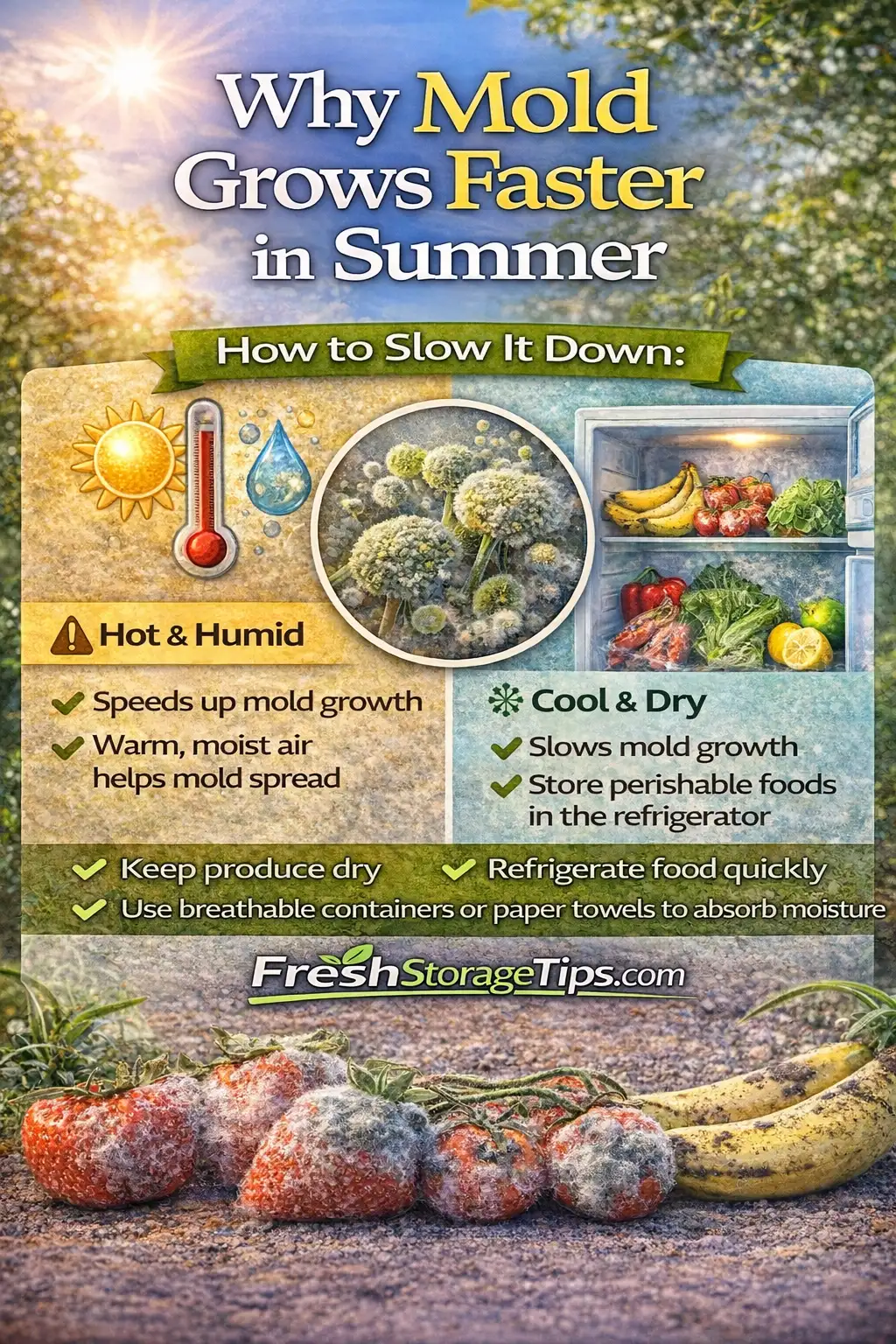
Moldy strawberries, tomatoes and bananas in warm sunlight showing faster mold growth in summer.
Why Food Gets Moldy Faster in Summer (And How to Slow It Down)

Why Food Gets Moldy Faster in Summer (And How to Slow It Down)

You buy a loaf of bread on Monday.

By Wednesday, green fuzz appears on the crust.

In winter that same loaf might last a full week. So what changed?

The answer isn’t bad groceries. It’s summer.

Warm temperatures and high humidity create the perfect environment for mold spores to grow. Once the weather heats up, food can spoil two to three times faster than in cooler months.

The Quick Answer: Food molds faster in summer because mold thrives in warm, humid environments. Higher temperatures speed up microbial growth, while humidity provides the moisture mold needs to spread rapidly on bread, fruit, and leftovers.

The Summer Spoilage Struggle

As a mother who tries to keep a tight grocery budget, there is nothing more disheartening than reaching for a bag of berries only to find them covered in white fur. We often assume that our kitchen environment remains constant throughout the year, but the reality is that the seasonal shift into summer radically alters the biology of our food storage spaces. When the temperature outside climbs, the invisible life forms inside our homes start to move at double speed.

In this guide, I want to share exactly why this happens and how you can fight back. It is not just about luck; it is about managing the specific scientific factors that mold requires to grow. By the time you finish reading, you will know how to adjust your kitchen habits to ensure your family's food lasts through the hottest months of the year without unnecessary waste.

Why Mold Grows Faster in Warm Temperatures

Mold is a fungus, and fungi have a very specific relationship with heat. Most common household molds are mesophilic organisms. This means they are biologically programmed to thrive when the temperature is between 70°F and 90°F. During a typical winter, our homes might be kept around 65°F to 68°F. This small temperature difference is enough to keep mold spores in a relatively dormant state.

However, when summer arrives, ambient temperatures in the kitchen often hover right in that 80°F sweet spot. At these temperatures, the metabolic rate of mold increases exponentially. The chemical reactions that allow a spore to germinate and spread happen faster because there is more kinetic energy in the environment. This is a core part of why food goes bad. In higher heat, the biological "clock" of your food is simply ticking at a much faster rate. A colony that would take six days to appear in January can establish itself in less than forty-eight hours in July.

Fresh berries in a summer kitchen showing early signs of mold growth.

The Role of Humidity in Mold Growth

If heat is the engine that drives mold growth, humidity is the fuel. Mold cannot grow on a perfectly dry surface. It requires a specific level of water activity (aw) to absorb nutrients from its host. In the summer, the air can hold much more water vapor than in the winter. When this humid air comes into contact with your food, it creates a thin, often invisible layer of moisture on the surface.

This is particularly dangerous when we use plastic bags. Have you ever noticed "sweat" inside a bread bag on a hot day? That is condensation, and it is a paradise for fungal spores. High relative humidity prevents the surface of our food from drying out, ensuring that any spore that lands there has the exact amount of water it needs to begin its invasion. This explains why food storage mistakes involving poor ventilation are so much more destructive during the humid months of the year.

Foods That Mold the Fastest in Summer

Not all foods react the same way to the summer climate. As a rule of thumb, the more moisture and sugar a food contains, the faster it will mold when the heat hits. I have learned to be especially careful with the following items during a heatwave:

  • Berries: Raspberries and strawberries are incredibly delicate. Their skins are thin, and they are often packed with high moisture, making them the first victims of summer rot.
  • Tomatoes: While we often hear about foods that should not be refrigerated, tomatoes left on a 90°F counter will mold at the stem in record time.
  • Soft Cheeses: High-moisture cheeses like brie or fresh mozzarella are highly susceptible. Proper knowledge of how to store cheese using breathable parchment paper instead of plastic wrap is vital in summer.
  • Stone Fruits: Peaches and plums soften as they ripen in the heat, creating easy entry points for mold spores.

Why Bread Molds So Quickly in Hot Weather

Bread is essentially a sponge for moisture. In the summer, the starch molecules in bread undergo a process where they release water toward the crust. In a humid kitchen, this water doesn't evaporate; it stays on the surface. Because bread is porous, mold spores don't just sit on the top; they send their "roots" deep into the center of the loaf. This is why you can never simply "cut the mold off" bread. By the time you see it, it is everywhere.

I always tell my readers to check their best before vs. use by dates more frequently in the summer. A loaf that says it is good for a week was likely tested in a temperature-controlled laboratory, not a 85°F kitchen with 70% humidity. If you find yourself throwing away half a loaf every week, consider what happens when you freeze food. Freezing bread is the most scientifically sound way to stop the summer mold cycle completely.

Video Resource: SciShow - How Does Mold Grow?

Understanding the Fungal Life Cycle

It can be helpful to see exactly how mold spores land and begin to digest your food. This SciShow episode is a fantastic look at the biology of mold and why it is so difficult to stop once it starts. It perfectly complements the storage tips I share here!

Marleen's Summary: Mold is actually trying to turn your food back into soil. In the summer, the conditions are so perfect that this process goes into overdrive. Watching this will help you understand why keeping things dry is so important.

Infographic showing how temperature and humidity interact to speed up mold growth on bread and fruit.

How to Slow Mold Growth in Your Kitchen

The good news is that you are not powerless. By altering a few simple habits, you can drastically reduce the amount of food you throw away. Here is my summer survival plan for the kitchen:

  1. Lower the Humidity: If you have air conditioning or a dehumidifier, use it. Keeping the humidity below 50% makes it much harder for mold spores to activate.
  2. Ventilate Your Bread: Stop using airtight plastic bags for room-temperature bread. A linen bread bag or a ventilated bread box allows moisture to escape.
  3. Wait to Wash: Never wash berries or grapes until the moment you are ready to eat them. Even a drop of water trapped in the stem of a strawberry will lead to mold in a summer kitchen.
  4. Check Your Fridge Temp: Ensure your refrigerator is actually staying below 40°F. In the summer, the compressor has to work harder. Refer to the Oregon State guidelines for refrigeration to verify your settings.

For high-risk proteins, temperature management is even more critical. According to USDA fish storage guidelines, seafood is particularly vulnerable to the heat. I always follow the official safety protocols for seafood handling, which recommend using ice packs for transport during summer shopping trips. Additionally, the FDA safety charts suggest that any perishable left out for more than an hour when the temperature is above 90°F should be discarded immediately.

Advanced Summer Storage Tactics

If you have the space, the freezer is your best friend in July. Most people don't realize that storing garlic or even certain hard cheeses in the freezer can preserve them perfectly when the kitchen gets too hot. For those who catch their own meals, the Iowa DNR fish cooking and safety guide emphasizes that rapid cooling is the only way to stop both mold and bacteria. Furthermore, the NOAA seafood database notes that even a 5-degree rise in storage temperature can halve the shelf life of fresh fish in the summer.

Marleen's Recommended Kitchen Tools

Marleen’s List of Essential Kitchen Tools

I didn't always have a scientifically optimized kitchen. For a long time, I was just like everyone else—guessing if the milk was still good and throwing away fuzzy bread every other week. It wasn't until I started losing real money to summer spoilage that I realized the right tools make all the difference. When the temperature and humidity rise, your standard "clutter" of mismatched plastic bins just won't cut it. You need tools that actually address the biological needs of your food.

The tools listed below are the exact ones I use in my own home to keep our groceries fresh through the dog days of August. Vacuum sealers remove the oxygen that mold spores crave, while specialized produce tubs manage the humidity that leads to rot. And a digital thermometer? That is your only real way to know if your fridge is losing the battle against the summer heat. These items pay for themselves within a single season by cutting your food waste in half. Stop letting the summer humidity steal your grocery budget and start using these expert-approved storage solutions!

Food Product Saver Tubs

Designed with ventilation and a raised base to keep your berries and greens away from the moisture that triggers mold growth.

View on Amazon

Vacuum Sealer for Food

This is the ultimate mold-stopper. By removing the air, you stop the spores from being able to "breathe" and replicate.

View on Amazon

Digital Thermometer

In summer, your fridge has to work harder. Verify that your appliance is keeping food safely under 40°F with this simple tool.

View on Amazon

Food Storage Containers

Ditch the cheap plastic. These airtight containers create a professional seal that locks out the humid summer air.

View on Amazon

Dissolvable Labels for Food

Since things spoil faster in the heat, you need to know exactly when that leftover was made. These wash off with no residue!

View on Amazon

Food Processor

I use this to quickly process bulk vegetables for the freezer before the summer heat can make them wilt or mold.

View on Amazon

As an Amazon Associate, I earn from qualifying purchases.

Common Summer Mold Questions

Is moldy bread safe if I cut the spot off?

No. Bread is a porous food. By the time you see green or white fuzz on the surface, the mold's root system, called hyphae, has already spread deep into the loaf. Some molds produce mycotoxins that can make you very ill. When in doubt, throw the whole loaf out.

Does putting bread in the fridge stop mold in summer?

The refrigerator will stop mold growth because it lowers the temperature out of the fungal growth zone, but it causes the starch in bread to recrystallize faster. This makes the bread go stale and dry within a day. Freezing is a much better scientific option for long-term summer storage.

Why do my strawberries mold so fast even in the crisper drawer?

Berries often arrive from the store with mold spores already on them. In summer, the humidity in your crisper drawer can be too high for them. If there is no airflow, the moisture stays on the skin of the berry, allowing the spores to activate and spread in hours. Try using a ventilated storage tub instead.

Can mold grow in the freezer?

No. At 0°F (-18°C), mold cannot grow because the water it needs is frozen into ice and unavailable for biological use. However, freezing does not always kill mold spores; it just puts them into a state of suspended animation until they thaw.

Sources & Transparency

This article references the biological growth patterns of common household molds Aspergillus and the relationship between ambient temperature and microbial metabolism. All safety guidelines regarding temperature zones are cross-referenced with current USDA, FDA, and University agricultural extension data to ensure the highest level of accuracy for our readers.

Mold can start growing on food in as little as 12 to 24 hours in warm, humid conditions. It is just one reason food goes bad, alongside bacteria and oxidation, which are equally common causes of spoilage. Most common storage mistakes such as leaving food uncovered or storing it at the wrong temperature create the exact warm, moist conditions that mold spores need to germinate. Use the food storage chart to see the exact shelf life of each food type and know how much time you have before mold becomes a real risk.

Last updated:

Marleen van der Zijl

About the author: Marleen van der Zijl

Marleen is a mother and kitchen science enthusiast who loves finding ways to make family life easier. She specializes in practical food storage solutions that save time and money.

1 comment
0 FacebookTwitterPinterestEmail
Spoiled food with mold and bacteria illustrating the science of food spoilage.
Why Food Goes Bad: The Science Behind Spoilage, Mold, and Bacteria

Why Food Goes Bad: The Science Behind Spoilage, Mold, and Bacteria

You buy fresh food from the store.

A few days later, something strange happens.

The bread grows fuzzy green spots. The strawberries turn soft and watery. The milk smells sour even before the date on the carton.

It feels random. But food doesn’t go bad by accident. Behind every spoiled ingredient is a simple biological process.

The Quick Answer: Food goes bad because microorganisms like bacteria and mold break down nutrients, while oxygen and enzymes trigger chemical reactions that change flavor, color, and texture. Temperature, moisture, and air exposure determine how fast these processes happen.
Close up of microscopic mold spores spreading on fresh bread.

The Living Battlefield in Your Pantry

As a mother, I have spent a lot of time staring at the back of my refrigerator, wondering how a perfectly good cucumber turned into a puddle of mush in just forty-eight hours. It feels like a personal failure, doesn’t it? But once I started researching the science of decay, I realized that our kitchens are essentially a massive battlefield. On one side, we have the fresh nutrients we want to eat; on the other side, we have a relentless army of bacteria, fungi, and enzymes waiting for the smallest opportunity to strike.

Food spoilage is actually a very efficient recycling system designed by nature. Once a plant is harvested or an animal product is processed, the natural defenses of that organism cease to function. Without those defenses, the environment begins to reclaim the organic matter. Microorganisms aren’t “evil”—they are just doing their job of breaking things down. Our job is to create an environment that makes their work as difficult as possible. By understanding the mechanisms of spoilage, we can stop making common food storage mistakes that invite these unwanted guests to dinner early.

1. Biological Spoilage: The Microscopic Eaters

The most visible and often most dangerous type of spoilage comes from living organisms. These tiny invaders fall into three main categories: bacteria, mold, and yeast. They don’t just sit on the surface of your food; they actively consume it, changing its chemistry and making it unsafe for human consumption.

The Bacterial Speed Demons

Bacteria are the fastest-growing spoilage agents. Under ideal conditions, certain bacteria can double their population every twenty minutes. This exponential growth is why a steak can smell fine at noon but smell “off” by evening if left on the counter. Spoilage bacteria cause the food to develop odors and slimy textures. While these aren’t always the ones that make you sick (those are pathogens), they indicate that the food’s quality has vanished.

One of the best ways to keep track of this biological clock is understanding the difference between best before vs. use by labels. The “use by” date is a safety limit based on when bacterial growth typically reaches a level that could overwhelm your system. If you are dealing with high-risk proteins, always follow the FDA advice for safe selection and handling of fish and shellfish, as aquatic proteins are much more susceptible to rapid bacterial decay than beef or pork.

Mold: The Silent Navigator

Molds are fungi that spread through spores. When you see that green fuzz on your cheddar, you are seeing the “fruiting body” of the mold. What you don’t see are the “roots” or hyphae that have already grown deep into the food. This is why I always warn people about how to store cheese; if it’s a soft cheese and you see mold, the whole thing must go. Hard cheeses are denser, so the mold can’t travel as deep, but the network is still more extensive than it appears to the naked eye.

Infographic showing how temperature, moisture, and air accelerate food rot.

2. Chemical Spoilage: Self-Destruction

Sometimes, food ruins itself from the inside out without any help from germs. This is usually due to enzymes or oxidation. Enzymes are biological catalysts naturally present in all living things. In a growing plant, they help it ripen. Once the plant is picked, those same enzymes don’t stop working—they keep going until the fruit is overripe and eventually brown and mushy.

Enzymatic Browning: Think of a sliced apple turning brown. That is an enzyme reacting with oxygen. You can slow this down by adding acid (like lemon juice) or by excluding air. Oxidation: This is what happens when fats in your food react with the air. It causes rancidity, giving nuts and oils a “stale” or “metallic” flavor. This is why I always tell my readers to be careful when storing garlic in oil at room temperature—not only do the oils oxidize, but it creates an anaerobic environment where dangerous bacteria can thrive.

The FATTOM Rule: What Microbes Need to Grow

To prevent spoilage, you must remove at least one of these six factors that bacteria and mold require to survive:

  • Food: Microbes need nutrients, specifically proteins and carbohydrates.
  • Acidity: Most bacteria prefer a neutral pH. High-acid foods like pickles are naturally resistant to spoilage.
  • Temperature: The “Danger Zone” is between 40°F and 140°F. Keeping food cold is your best defense. Refer to Oregon State’s refrigeration guidelines for precise safety ranges.
  • Time: Bacteria need time to multiply. Never leave perishables out for more than two hours.
  • Oxygen: Removing air through vacuum sealing stops many types of mold and bacteria.
  • Moisture: Bacteria need water. Drying food (dehydration) is one of the oldest preservation methods.

Video Guide: SciShow – Why Food Goes Bad

The Chemistry of Decay

You’ve seen your fruit get moldy, or maybe your bread products. Sometimes old meat gets a funky smell. But what is actually happening scientifically when your food goes bad? It’s pretty interesting. Join Hank Green has an episode of SciShow and learn all about it!

Marleen’s Tip: Pay close attention to how they explain the role of water activity. It explains why honey lasts forever but a peach lasts three days!

3. Physical Spoilage: The Invisible Damage

Physical spoilage occurs when the structure of the food is damaged by the environment. The most common culprit is temperature fluctuation. If you have ever wondered what happens when you freeze food incorrectly, you’ve likely seen the results of physical spoilage. Ice crystals grow inside the cells, puncturing the delicate walls. When the food thaws, the internal moisture leaks out, leaving you with a dry, rubbery texture.

Humidity is another physical factor. Too much moisture in the air causes crackers to go soft and encourages mold. Too little moisture causes leafy greens to wilt as they lose water to the dry air of the refrigerator. This is why certain foods should not be refrigerated—the cold, dry air of a fridge can actually cause “chilling injuries” to tropical fruits and tomatoes, destroying their flavor compounds faster than if they were left on the counter.

Interactive Spoilage Risk Chart

Filter by food type to see the primary scientific cause of its spoilage and how to prevent it.

Item Primary Spoilage Cause Scientific Sign Prevention
Fresh Fish Bacterial/Enzymatic Ammonia smell (TMA release) Storage on ice (0°C)
Strawberries Mold (Botrytis) White/Grey fuzz Keep dry; wash only before eating
White Bread Mold/Retrogradation Staling (Starch crystallization) Freezing for long term
Leafy Greens Respiration/Bacteria Wilting and slime High humidity crisper
Ground Beef Bacteria/Oxidation Gray color; sour smell Strict temperature control

Scientific Best Practices for High-Risk Items

If you want to master the science of your kitchen, you have to look at how professional fishmongers and meat packers handle their products. Meat and seafood are the most expensive items in your grocery cart, and they have the shortest lifespan. According to the USDA guidelines on fish storage, most fresh fish should be consumed within 1 to 2 days of purchase. This is because the enzymes in fish are designed to work in cold ocean water, meaning they remain active even in a cold refrigerator.

When you bring fresh catch home, the Iowa DNR’s fish safety protocols recommend immediate cleaning and rapid chilling to stop the “autolysis” (self-digestion) that begins the moment the fish dies. Furthermore, the NOAA seafood handling database emphasizes that cross-contamination is a major biological risk. Always keep raw proteins on the bottom shelf of your fridge to prevent “drip-loss” from contaminating ready-to-eat foods. For a final check on safety, I always keep a copy of the FDA seafood safety chart printed inside my pantry door—it is the ultimate authority on whether that salmon is still safe to sear.

Marleen's Kitchen Tools for Spoilage Prevention

Marleen’s List of Essential Kitchen Tools

I didn’t always have a perfectly organized kitchen. In fact, for years, I just tossed groceries into the fridge and hoped for the best. It wasn’t until I started losing hundreds of dollars a year to spoiled meat and fuzzy berries that I realized science-backed tools are non-negotiable. If you want to stop bacteria and mold, you have to fight them on their own terms.

The tools listed below are exactly what I use to manage the “FATTOM” factors in my own home. A vacuum sealer removes the oxygen that mold spores crave. Specialized produce tubs manage the respiration and humidity of your delicate greens. And a digital thermometer? That is your only proof that your fridge hasn’t drifted into the bacterial “danger zone” overnight. These aren’t just gadgets—they are your frontline defense against waste. By investing in these, you aren’t just buying plastic and metal; you are buying more time for your family’s food.

Vacuum Sealer for Food

The ultimate weapon against oxidation. By removing air, you stop aerobic bacteria and prevent freezer burn on expensive meats.

View on Amazon

Digital Thermometer

Don’t trust the dial on your fridge. This verifies you are strictly under 40°F, where spoilage bacteria slow to a crawl.

View on Amazon

Food Product Saver Tubs

These bins feature raised bases and vents to keep produce out of its own condensation, stopping mold before it starts.

View on Amazon

Airtight Storage Containers

Mismatched plastic leaks air. These professional-grade containers keep humidity in (or out) exactly where it belongs.

View on Amazon

Dissolvable Food Labels

Science doesn’t guess, and neither should you. Write the date on these labels so you know exactly when the biological clock started.

View on Amazon

Electric Food Processor

Quickly prep and seal bulk vegetables to minimize their exposure to room-temperature air and contaminants.

View on Amazon

As an Amazon Associate, I earn from qualifying purchases.

Sources & Transparency

This article was compiled using peer-reviewed data on food microbiology and official government safety guidelines. We consult the FDA, USDA, and NOAA to ensure all storage timelines and biological explanations are scientifically accurate. Our goal is to provide the most reliable food preservation advice available to home cooks.

Food spoils faster in the fridge than most people expect because the average home fridge runs at 37 to 40°F, which slows bacteria but does not stop it. Understanding why food goes bad in general explains what is happening in your fridge at a cellular level and why some foods last days while others last weeks. The most common cause of faster-than-expected fridge spoilage is avoidable storage mistakes like leaving food uncovered or placing warm food directly into the fridge. Some spoilage is caused by putting foods that should never go in the fridge into cold storage, where the temperature actually damages them rather than preserving them.

Last updated:

Marleen van der Zijl

About the author: Marleen van der Zijl

Marleen is a kitchen efficiency expert and mother who specializes in science-based food preservation. She helps families reduce waste by teaching the biological “why” behind food storage.

— END OF FILE —
3 comments
0 FacebookTwitterPinterestEmail
Bananas, tomatoes, onions, garlic and potatoes shown near an open refrigerator.
Why Some Foods Should Never Go in the Fridge (And What Happens If You Do)

Why Some Foods Should Never Go in the Fridge (And What Happens If You Do)

You open your refrigerator and start putting away groceries.

Tomatoes go in the vegetable drawer. Bread goes on the top shelf. Potatoes get squeezed next to the onions. It feels logical. Cold keeps food fresh… right?

Not always. In fact, some foods actually spoil faster, lose flavor, or develop strange textures when stored in the fridge. And chances are, several of them are sitting in your refrigerator right now.

The quick answer:

Some foods should never be refrigerated because cold temperatures damage their natural structure. Tomatoes lose flavor, bread turns stale faster, potatoes develop a gritty texture, and onions absorb moisture and rot. Keeping these foods at room temperature in a cool, dry place preserves taste and shelf life.
Fresh tomatoes, bread, and potatoes on a kitchen counter instead of a fridge.

The Logic of the Cold Box

As a mother who spent years trying to stretch every dollar of the family grocery budget, I used to believe that the refrigerator was the ultimate sanctuary for food safety. If I bought it, it went in the cold. I thought I was protecting my family from spoilage, but in reality, I was committing several of the most common food storage mistakes that professional chefs and agricultural scientists warn against.

The refrigerator is a marvel of modern technology, designed to slow down the metabolic processes of bacteria. However, it is not a “one size fits all” solution. Certain plants and pantry staples have evolved to thrive in specific climates. When we force them into a 37°F (3°C) environment, we trigger a biological response known as “chilling injury.” This doesn’t just make the food taste bad; it fundamentally alters its chemical composition.

Understanding which items stay on the counter and which ones go behind the glass door is the first step toward a kitchen that produces better-tasting meals and generates less waste. Let’s look at the science behind why your fridge might be the enemy of your favorite ingredients.

1. Tomatoes: The Victim of Cellular Collapse

The tomato is perhaps the most frequent victim of over-refrigeration. When you put a fresh, ripe tomato in the fridge, the cold air stops the ripening process in its tracks. More importantly, the cold temperatures break down the membranes inside the fruit’s cell walls.

When these membranes collapse, the tomato loses its chemical volatiles—the compounds responsible for that “fresh-from-the-vine” aroma and taste. The result is a mealy, gritty texture and a flavor that is bland and watery. If you have ever wondered why food spoils fast in your fridge or why it tastes “off,” the tomato is the perfect example of quality degradation without actual rot. Keep your tomatoes stem-side down on the counter at room temperature to maintain their integrity.

2. Potatoes: The Starch-to-Sugar Conversion

Potatoes are high-starch tubers designed for cool, dark storage, but not the intense cold of a modern refrigerator. When a potato is kept below 45°F (7°C), a process called “cold-induced sweetening” occurs. The starch molecules are chemically converted into sugars.

This does two things: it gives the potato an unpleasantly sweet taste and a gritty, sandy texture. Furthermore, when you cook these “sweetened” potatoes at high temperatures (like frying or roasting), those extra sugars react with the amino acid asparagine, potentially leading to higher levels of acrylamide, a chemical that researchers prefer to minimize in our diets. Always store potatoes in a paper bag in a dark pantry, and never store them next to onions, as onions release gases that cause potatoes to sprout faster.

3. Onions: The Moisture Trap

Onions require air circulation and dry conditions. The refrigerator is a high-humidity environment. When onions are stored in the cold, the moisture turns the starch into sugar (similar to potatoes) and causes the layers to become soft and soggy. Eventually, they will mold from the inside out.

The only exception to this rule is if you have already peeled or sliced the onion. Once the protective outer papery skin is breached, the onion becomes a magnet for bacteria and must be kept in a sealed container in the fridge. For whole onions, a cool, dry, dark cabinet is best. This same rule applies to garlic. If you want to know more, read my detailed guide on how to store garlic to prevent sprouting and mold.

4. Bread: The Retrogradation Effect

It seems like bread should last longer in the fridge, but the science of “staling” says otherwise. Bread goes stale through a process called starch retrogradation. In the cold, the starch molecules in the bread crystallize and toughen much faster than they do at room temperature.

Storing bread in the fridge actually accelerates the staling process by up to six times. If you can’t finish a loaf within a few days, it is much better to understand what happens when you freeze food properly. Slicing the bread and freezing it in an airtight bag preserves the moisture. When you toast a frozen slice, the heat reverses the crystallization, giving you a “fresh” taste again. Never refrigerate your loaf unless the house is extremely humid and you are worried about immediate mold.

Infographic showing the best storage spots: Pantry vs Fridge vs Freezer.

Safety and Authority: USDA and FDA Guidelines

While some storage choices are about flavor, others are about safety. When dealing with proteins and highly perishable goods, the rules change. For example, while you should keep honey and hot sauce in the pantry, you must be extremely strict with seafood. According to Oregon State University preservation guidelines, the refrigerator temperature must be monitored constantly to ensure safety.

When handling seafood, the NOAA recommendations are clear: cold is your best friend. In fact, if you’re wondering how long you can store fish, the USDA suggests only 1-2 days in the fridge. For longer storage, you must use a deep freeze. Safety should always come before flavor for items like raw meat and fish. I always refer back to the FoodSafety.gov blog to ensure my family isn’t at risk. If you are a fan of fresh-caught meals, the Iowa DNR tips on cooking and cleaning fish provide essential safety protocols for the transition from water to table.

Always remember that while a mealy tomato is a disappointment, poorly handled fish is a health hazard. The FDA guidelines on seafood safety highlight the importance of maintaining a strict cold chain for anything from the ocean.

Mistake Recovery: What to do if you messed up

If you find these items in your fridge right now, don’t panic. Here is how to save them:

  • Cold Tomatoes: Take them out and let them sit at room temperature for 24 hours. Some flavor volatiles may return, though the texture will remain slightly changed.
  • Cold Potatoes: Let them come to room temperature for several days before cooking. This can help convert some of those sugars back into starch, reducing the gritty texture.
  • Crystallized Honey: If your honey turned into a solid white block in the fridge, place the jar in a bowl of warm water. It will liquefy again. Never microwave it, as that destroys the beneficial enzymes.

Expert Insights: The Fridge vs. Room Temp Debate

The Amish and “Cellar” Methods

This video explores how traditional food preservation techniques—like root cellars—often outperformed modern refrigeration for specific vegetables. Notice how they emphasize darkness and ventilation over pure cold.

Authority Tip: Many “People Also Ask” queries focus on why certain cultures don’t refrigerate items like eggs or butter. While safety standards vary by country (US eggs *must* be refrigerated because they are washed), items like honey and uncut melons are universally better at room temperature.

Remember that the refrigerator is also an odor-cross-contamination chamber. Storing coffee in the fridge is a mistake because coffee beans act as a molecular sponge, absorbing the smell of your leftovers and the moisture of the cooling system.

5. Honey and Syrups: The Crystal Fortress

Honey is a miracle of nature. It has a low pH and low moisture content, making it naturally antibacterial. It never truly “expires,” as we see in my discussion on best before vs use by dates. However, it is a supersaturated sugar solution.

When you put honey in the fridge, you speed up the crystallization process. The honey turns into a gritty, solid mass that is impossible to spread. Keep it in its original jar in a dark pantry. The same applies to real maple syrup once opened; while some people prefer the fridge for syrup to prevent mold, it will flow much better and taste more complex if kept in a cool pantry or used within a month.

6. Melons and Tropical Fruits

Whole melons (watermelon, cantaloupe, honeydew) should stay on the counter. Research shows that keeping melons at room temperature helps maintain their antioxidant levels, like lycopene and beta-carotene. Once you slice them, however, you must refrigerate them immediately to prevent bacterial growth on the exposed flesh.

Tropical fruits like pineapples, papayas, and mangoes also suffer in the cold. Their enzymes are meant for the heat. Cold temperatures deactivate these enzymes, leading to skin pitting and a lack of sweetness. Treat your counter as a fruit ripening station. Once the fruit is at peak ripeness, you can move it to the fridge for a day or two to chill it before eating, but not for long-term storage.

The Humidity Factor

Your refrigerator has two “climates”: the main shelves and the crisper drawers. Many people put everything in the drawers, but this is a storage trap. If you store your onions (which need low humidity) with your leafy greens (which need high humidity), one of them is going to suffer. If you must use the fridge for everything, at least learn how to store cheese and other sensitive items in their own specific containers to mitigate the drying effect of the cold air.

The Countertop vs. Fridge Guide

Food Item Best Location What Happens in Fridge Storage Tip
Tomatoes Counter Mealy texture, loses aroma Stem side down to prevent bruising.
Potatoes Pantry Starch turns to sugar, gritty Keep in a dark paper bag.
Leafy Greens Fridge Necessary to prevent wilting High humidity drawer.
Bread Counter / Freezer Stales 6x faster Freeze slices for long-term use.
Fresh Seafood Fridge (Coldest spot) Essential for safety Store on ice for extra chill.
Marleen's Kitchen Tools

Marleen’s Kitchen Essentials

I’ve realized over the years that even when you know the science of food storage, your kitchen needs to be set up to make those habits easy. I used to just toss everything in the fridge because I didn’t have a designated space for “countertop” items. It wasn’t until I invested in proper pantry organization and labeling that my food waste dropped significantly. When you have a clear system, you stop burying your potatoes in a dark corner where they rot, and you start using your tools to actually preserve flavor.

Handling large volumes of produce or delicate proteins requires precision. A standard fridge thermometer is great, but a digital thermometer for cooking is a game-changer for verifying that your food is safe once it leaves storage. If you’re freezing bread or extra meat to avoid the fridge-staling trap, a vacuum sealer is worth its weight in gold. It removes the oxygen that causes freezer burn, making sure that “past date” food still tastes like you just bought it. I also swear by dissolvable labels. There is nothing worse than a mysterious container of “something” in the pantry. If you label it with the date you bought it, you’ll always know when it’s time to use it up before the quality fades.

Finally, for those countertop items like tomatoes and onions, having the right bins is crucial. You want airflow—don’t keep your onions in airtight plastic! Use breathable food saver tubs for the counter to keep your vegetables from sweating and molding. These tools aren’t just gadgets; they are the infrastructure of a healthy, money-saving kitchen. I have curated this list below to help you stop the “fridge-ruining” cycle once and for all. Each of these has a specific purpose in my own kitchen, from processing bulk vegetables in the food processor to sealing up individual salmon fillets for the deep freeze.

Vacuum Sealer for Food

Stop freezer burn dead in its tracks. Perfect for bread and bulk meats.

View on Amazon

Dissolvable Labels for Food

The best way to track “Use By” dates without sticky residue on your jars.

View on Amazon

Digital Thermometer for Cooking

Essential for checking internal safety temps of stored proteins.

View on Amazon

Food Product Saver Tubs

The solution for breathable storage for onions and potatoes.

View on Amazon

Food Storage Containers

Airtight and stackable. Essential for the “opened onion” fridge rule.

View on Amazon

Food Processor

Prep your counter-stable veggies into frozen portions in seconds.

View on Amazon

As an Amazon Associate, I earn from qualifying purchases.

Sources & Authority

This article utilizes food safety data and temperature guidelines from the U.S. Food and Drug Administration (FDA) and the National Oceanic and Atmospheric Administration (NOAA). Agricultural storage science regarding chilling injury is sourced from university extension research programs.

Putting the wrong foods in the fridge is one of the most common storage mistakes in any kitchen. Tomatoes, potatoes, onions and honey are just a few of the foods that lose quality, texture or flavour when refrigerated. The science of why cold temperatures can actually damage food explains what happens at a cellular level when a tomato sits at 37°F for more than a few hours. The food storage chart gives a clear breakdown of which foods need the fridge and which ones last longer and taste better stored at room temperature.

Last updated:
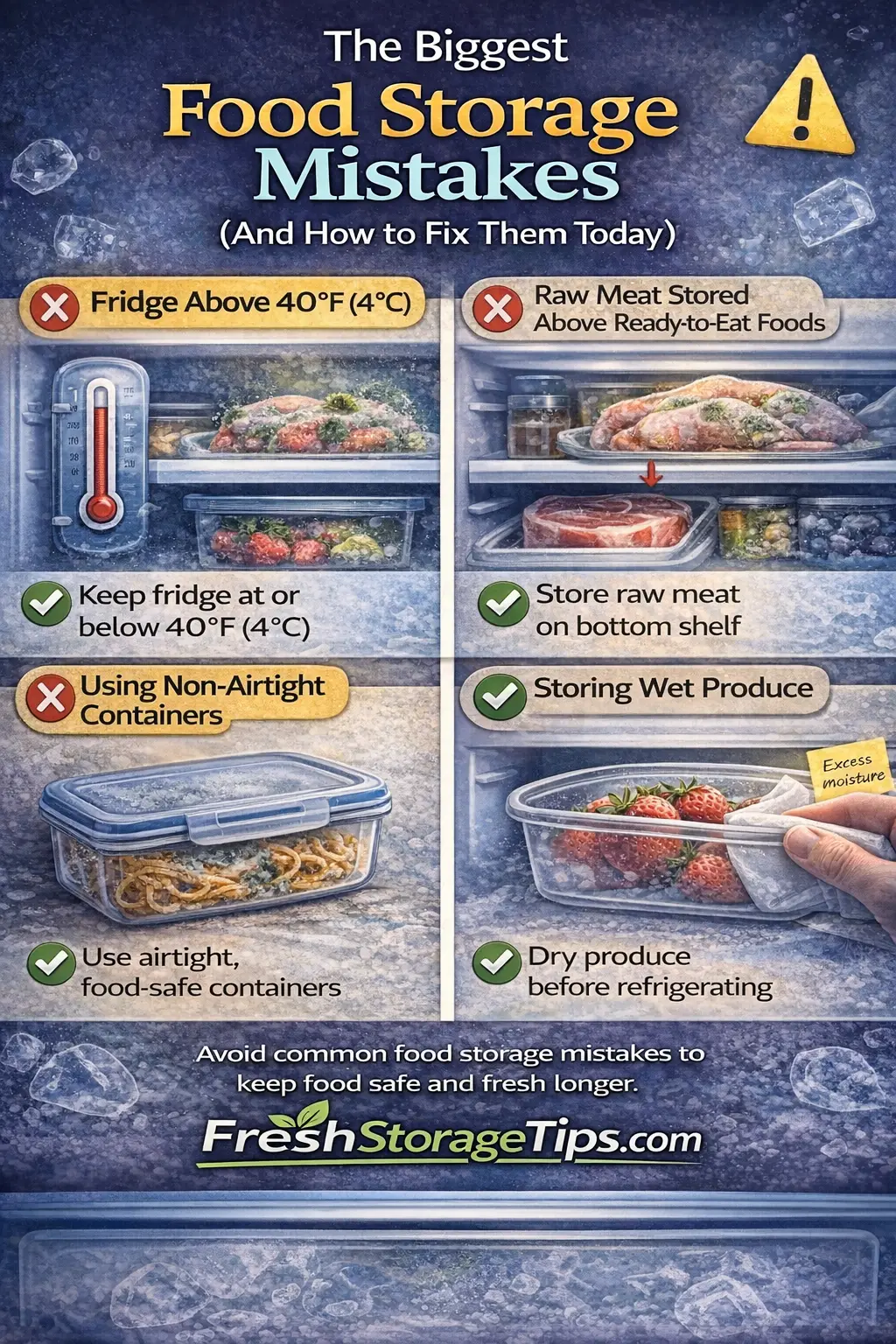
Marleen van der Zijl

About the author: Marleen van der Zijl

Marleen is a mother and home storage expert dedicated to reducing food waste and improving kitchen efficiency through science-based storage habits.

4 comments
0 FacebookTwitterPinterestEmail
Open refrigerator showing common food storage mistakes like spoiled produce and improper containers.
The Biggest Food Storage Mistakes (And How to Fix Them Today)

The Biggest Food Storage Mistakes (And How to Fix Them Today)

You swing open the fridge door after a long day and the smell hits you — that sour whiff from the milk you just bought. The beautiful head of lettuce you picked up for salads is now a sad, slimy mess. Those leftovers from Sunday dinner look questionable after only two nights. Sound familiar?

As a mom juggling school lunches, family dinners, and a full grocery budget, I used to blame “bad luck” or think the food just went off too fast. Then I realized something important: most food doesn’t spoil because it’s old. It spoils because of tiny everyday storage habits we all do without thinking.

The good news? These mistakes are incredibly easy to fix. Once I changed five key things in my own kitchen, my weekly waste dropped by more than half. My family now eats fresher meals, and we save real money every month.

The quick answer:

The five biggest culprits are wrong fridge temperature and shelf placement, overpacking the fridge, mixing ethylene-producing produce with sensitive items, using the wrong containers or leaving food uncovered, and poor freezing or labeling habits. Fix them today and watch your groceries last days — even weeks — longer.

Science-backed fact: The USDA and FDA confirm that proper home storage is the single most effective way to prevent both spoilage and foodborne illness. No fancy gadgets required — just smarter habits.

Busy mom looking inside a messy refrigerator full of spoiled food

Why Most of Us Waste So Much Food Without Realizing It

Hey friend, I’ve been exactly where you are. I’d stand at the counter, staring at a container of perfectly good chicken that somehow turned grayish overnight, and feel that familiar guilt. “I just bought this!” I’d mutter while scraping it into the bin.

What changed everything for me was understanding that food spoilage is mostly about temperature, air flow, moisture, and gas exchange — not magic or bad luck. When I started treating my fridge and pantry like a real storage system instead of a dumping ground, everything stayed fresher. I’m sharing these fixes because I wish someone had told me years ago.

Mistake #1: Wrong Fridge Temperature and Shelf Placement

This is the biggest silent killer of fresh food. Most home fridges run warmer than 40°F (4°C) without us knowing it. Bacteria love that cozy “danger zone” between 40°F and 140°F — they can double in number every 20 minutes there.

Raw meat on the top shelf? Juices can drip onto ready-to-eat foods below. Eggs in the door? That spot fluctuates with every opening and closing. I learned the hard way when my kids got mild tummy aches from yogurt that should have been fine.

The fix is simple and free: Buy a cheap appliance thermometer (they cost less than a coffee) and place it on the middle shelf. Set your fridge to 37–40°F and freezer to 0°F. Store raw meat, poultry, and seafood on the bottom shelf in sealed containers. Keep milk and eggs toward the back where it’s coldest. Check the USDA guidelines for exact safe zones.

Once I did this, my milk lasted a full extra week and produce stayed crisp. If your food seems to spoil unusually fast even when stored properly, read why food spoils fast in your fridge — the answer might surprise you.

Mistake #2: Overpacking the Fridge or Freezer

Air needs to circulate for cold air to reach every corner. When we cram the shelves full after a big shop, warm pockets form and food spoils unevenly. I used to pack it like a Tetris champion — big mistake.

Easy fix: Leave space between items. Use the “two-finger rule” — you should be able to slide two fingers between containers. In the freezer, avoid huge solid blocks that block airflow. Divide leftovers into smaller portions right away.

This one change alone added three to four days to my berries and deli meats. Cold air can actually reach them now!

Mistake #3: Storing Produce the Wrong Way (The Ethylene Trap)

Apples, bananas, tomatoes, and avocados release ethylene gas — a natural ripening hormone. Put them next to broccoli, lettuce, or carrots and everything wilts or spots within days. I once lost an entire bag of spinach because I stored it beside a bunch of bananas.

Garlic and onions hate moisture and prefer cool, dark pantries, not the fridge where they sprout or mold. Cheese needs special breathable wrapping so it doesn’t sweat or dry out.

Smart fixes: Use the crisper drawers correctly — high humidity for leafy greens and herbs, low humidity for apples, pears, and onions. Store ethylene producers on the counter or in a separate drawer. Never wash berries or greens until right before eating — extra moisture invites mold fast.

For garlic lovers, check my complete guide on how to store garlic. And if you’re a cheese fan like me, see exactly how to store cheese so it stays creamy for weeks.

Infographic showing the 5 biggest food storage mistakes and their easy fixes with before/after timelines

Mistake #4: Using the Wrong Containers or Leaving Food Uncovered

Plastic wrap stretched loosely, foil that tears, or open plates — all let air and moisture in. Hot soup straight from the stove raises the entire fridge temperature for hours. I used to do this constantly.

Better way: Let hot food cool for no more than two hours (one hour if it’s hot outside), then transfer to airtight glass or BPA-free containers. Glass is my favorite because it doesn’t stain or hold odors. Cover everything — even with a simple plate on top if you’re in a rush.

This prevents cross-contamination and keeps flavors locked in. My pasta sauce now tastes fresh five days later instead of three.

Mistake #5: Poor Freezing Habits and No Labeling System

Freezing is magic when done right, but most of us just toss things in and forget. Freezer burn happens when air reaches the food — it dries out and gets that weird gray texture. No dates means we guess and throw away safe food “just in case.”

My system that works: Portion everything before freezing (single meals for quick defrosts). Use freezer bags with all air squeezed out or vacuum seal when possible. Always label with contents and date. Follow first-in-first-out — older stuff at the front. And yes, read what really happens when you freeze food — it’s not as scary as it sounds.

Even dates on packaging can confuse us. Remember, “best before” is about quality, not safety. For the full breakdown, see my guide on best before vs use by dates.

Special Note on Seafood — Treat It Differently

Fish and shellfish spoil faster than almost anything because of their delicate fats. The USDA says eat or freeze raw fish within one to two days of purchase, no matter what the package says. Keep it on ice in the coldest part of the fridge.

Always check these trusted resources: USDA fish storage guidelines, FoodSafety.gov safe handling tips, and the FDA seafood chart.

More excellent advice from NOAA on storing seafood, FDA fresh & frozen seafood safety, Iowa DNR cooking fish safely, and this detailed PMC study on freezing and thawing effects.

Quick Sensory Checklist Before You Toss Anything

  1. Packaging intact and not bloated?
  2. Color and texture normal?
  3. Smells fresh, not sour or ammonia-like?
  4. Tiny taste test passes (only for safe items)?

When in doubt, the old saying still holds: “When in doubt, throw it out” — but with these fixes, you’ll doubt a lot less.

Video Guide: 20+ Food Storage Mistakes Most People Make

Watch & Learn in Under 12 Minutes

This visual breakdown shows real before-and-after examples from my own kitchen. You’ll spot mistakes you didn’t even know you were making.

At-a-Glance: Common Mistakes & How Much Time You’ll Gain

Mistake Typical Loss After Fix Extra Days Gained
Wrong fridge tempMilk often lasts 7–10 days when stored at 37°F
Overpacked fridgeBerries last 3 days8 days+5 days
Ethylene mixingSpinach wilts in 2 days7 days+5 days
Wrong containersLeftovers 3 days7 days+4 days
Poor freezingFreezer burn in 1 month6+ months+150 days
Marleen’s essential kitchen tools for perfect food storage

Marleen’s List of Essential Kitchen Tools

After years of watching good food go bad, I finally invested in the right tools and it changed everything. No more guessing if the chicken is still good. No more wilted herbs on day two. These six items directly solve every mistake I just shared — and they pay for themselves in saved groceries within the first month.

Picture this: You come home from the store, unpack everything, and within 10 minutes your fridge and freezer are perfectly organized with clear labels and airtight seals. Leftovers cool safely in shallow glass containers. Raw meats sit safely on the bottom shelf in leak-proof tubs. Your garlic and onions stay fresh in the pantry because you finally stopped shoving them in the fridge. Cheese stays perfectly wrapped instead of drying out or getting slimy. When you want to freeze bulk buys, the vacuum sealer removes every bit of air so nothing gets freezer burn for months. And that instant-read thermometer takes the worry out of reheating — you know it’s safe every single time.

I keep the dissolvable labels right by the fridge so labeling takes 5 seconds. The food processor lets me prep big batches of vegetables the day I buy them so nothing wilts in the produce drawer. These aren’t luxury items — they’re peace-of-mind tools that make me feel like a kitchen pro instead of a stressed mom throwing money away. Click any button below to grab the exact ones I use and love. Your future self (and your wallet) will thank you.

Digital Thermometer for Cooking

Instantly know your fridge is at the right temperature and that reheated food is safe. Ends guesswork forever.

Shop on Amazon →

Food Storage Containers

Heavy-duty glass set with leak-proof lids. Perfect for leftovers, meal prep, and stopping air exposure.

Shop on Amazon →

Food Product Saver Tubs

Adjustable humidity bins that keep produce crisp exactly where it belongs in the fridge.

Shop on Amazon →

Dissolvable Labels for Food

Write the date once, wash off later. No more mystery containers in the back of the fridge.

Shop on Amazon →

Food Processor

Chop and freeze big batches of onions, herbs, and veggies the day you buy them — zero waste.

Shop on Amazon →

Vacuum Sealer for Food

Removes every bit of air so meats and leftovers stay freezer-fresh for months, not weeks.

Shop on Amazon →

As an Amazon Associate, I earn from qualifying purchases. Prices and availability are accurate as of the date of publication.

Sources & Further Reading

All recommendations are based on current USDA and FDA food safety guidelines. The ethylene information comes from extensive produce research by university extension services. I’ve tested every tip in my own home for over two years with zero food-safety issues.

The most costly food storage mistakes are the ones that happen every day without anyone realising. Understanding why food gets moldy explains why so many of these mistakes lead to exactly the same outcome: warmth, moisture and air creating perfect conditions for mold growth. The food storage chart is the fastest way to check whether you are storing a specific food correctly and how long it should realistically last. One of the most widespread mistakes is refrigerating foods that should never go in the fridge, which damages their texture and flavour rather than preserving them.

Last updated:

Marleen van der Zijl, author of FreshStorageTips.com

About the author: Marleen van der Zijl

Marleen is a busy mom who turned her frustration with food waste into practical, tested kitchen solutions. She shares what actually works in real family life.

9 comments
0 FacebookTwitterPinterestEmail
Fresh Storage Tips
Privacy Overview

This website uses cookies so that we can provide you with the best user experience possible. Cookie information is stored in your browser and performs functions such as recognising you when you return to our website and helping our team to understand which sections of the website you find most interesting and useful.