
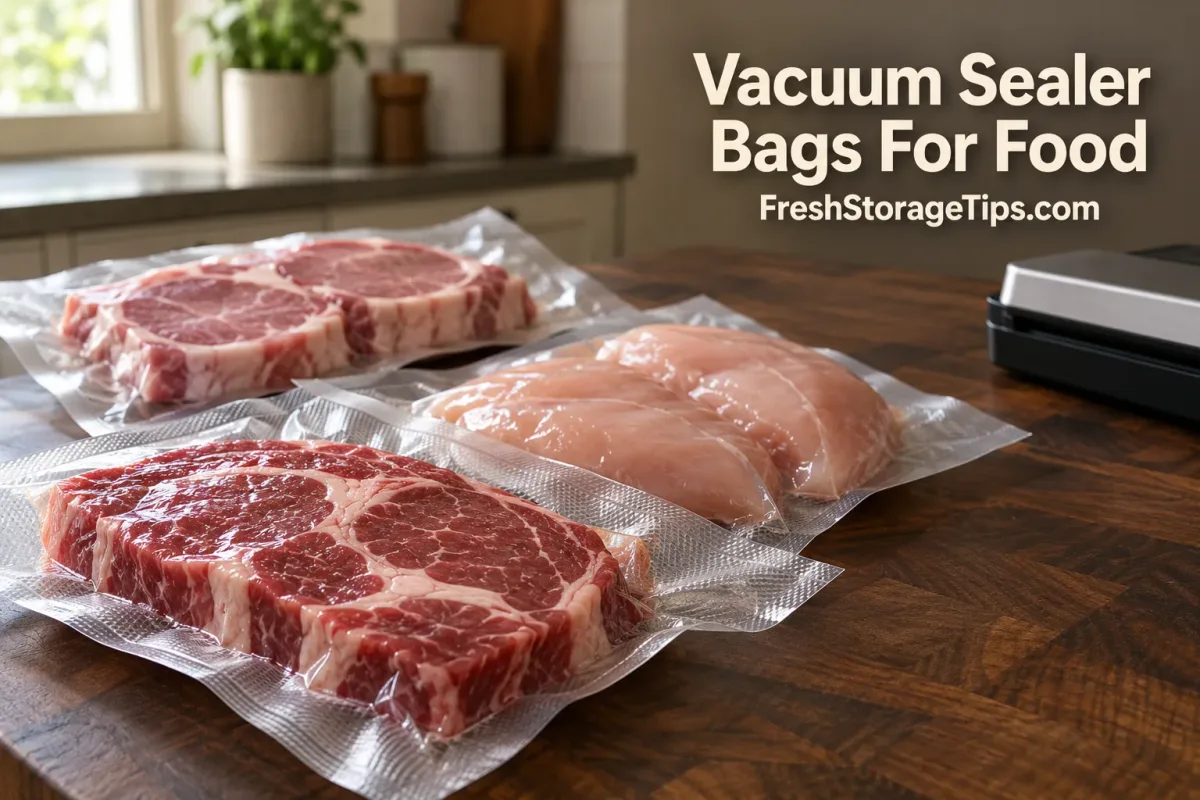
In the fridge, vacuum packing buys you days, not weeks: Michigan State University Extension gives fresh meat that is vacuum packaged with a good seal up to 7 days from purchase (a maximum, not a promise), against up to 3 days in a regular tray or butcher paper. The USDA’s general fridge times are shorter for some meats: 1 to 2 days for ground meat and poultry, 3 to 5 days for steaks, chops and roasts. In the freezer at 0°F, vacuum-sealed meat stays safe indefinitely, with best-quality times up to 12 months for steaks, roasts and whole poultry. That’s where the sealer really earns its keep.
Sealing meat at home? The sealer and bags we link to on this page: FoodSaver FM2100 vacuum sealer bags (Amazon; as an Amazon Associate I earn from qualifying purchases)
The Number You Keep Seeing Online
Search this question and you’ll find neat charts saying vacuum-sealed raw meat lasts “1 to 2 weeks” in the fridge. Several of the charts we found were published by brands that sell vacuum sealers or bags. That doesn’t make them wrong, but it does make them worth checking.
So we went looking for official numbers. Here’s what we found:
- Michigan State University Extension: most fresh meat keeps “up to three days after packaging” in a tray with overwrap or in butcher paper. “Longer storage time of up to seven days from retail purchase can be used if the product is vacuum packaged with a good seal and the air is removed from the package.”
- Clemson University Extension: vacuum packaging “may extend the storage time of refrigerated foods”, without giving a number, and the food “must still be kept refrigerated or frozen”.
- The USDA fridge table has no separate times for vacuum-packed raw meat. It gives 1 to 2 days for ground meat and poultry and 3 to 5 days for steaks, chops and roasts.
We found no government or university source that backs up “two weeks in the fridge” for raw meat.
How to read these two together:
- Michigan State’s 7 days is a maximum with conditions: fresh meat, vacuum packaged with a good seal and the air removed, counted from the day you bought it. It’s an upper limit, not a promise for every package.
- The USDA times are general fridge times for fresh meat, whatever the wrapping. For ground meat and poultry they are the shorter, safer numbers to plan with.
- Sealing at home doesn’t add days. The clock starts when you buy the meat, not when you seal it, and putting it in a vacuum bag doesn’t reset it.
In short: count on days, not weeks. If you won’t cook it within that time, the freezer is the better place for it.
How Long Vacuum-Sealed Meat Lasts: Fridge and Freezer
Note: this table shows the USDA’s general times for fresh and cooked meat. They are not specific to vacuum sealing; the USDA doesn’t publish separate vacuum times. The freezer column is about quality, not safety.
| Meat | Fridge (40°F or below), general USDA time | Freezer (0°F), best quality |
|---|---|---|
| Ground beef, pork, turkey, lamb | 1 to 2 days | 3 to 4 months |
| Steaks and chops | 3 to 5 days | 4 to 12 months |
| Roasts | 3 to 5 days | 4 to 12 months |
| Chicken or turkey, whole | 1 to 2 days | 12 months |
| Chicken or turkey, parts | 1 to 2 days | 9 months |
| Raw sausage | 1 to 2 days | 1 to 2 months |
| Bacon | 7 days | 1 to 2 months |
| Wild game, uncooked | Not in the fridge table | 8 to 12 months |
| Cooked meat (leftovers) | 3 to 4 days | 2 to 3 months |
| Cooked poultry (leftovers) | 3 to 4 days | 4 months |
Source: USDA FSIS refrigerator table and USDA FSIS freezer chart. The freezer times are for quality only: the USDA says food “stored constantly at 0 °F will always be safe”. For the fridge, Michigan State’s conditional up to 7 days (above) is the only vacuum-specific time we found.
Why the Fridge Clock Only Slows Down
Taking the air out sounds like taking the bacteria out. It isn’t. Here’s what Clemson’s food safety specialists explain:
- Less oxygen slows some bacteria and helps others. Removing air can hold back the spoilage bacteria that make meat smell, change color or turn slimy. But some disease-causing bacteria “prefer low-oxygen environments and reproduce well in vacuum-packaged foods.”
- You lose your warning signs. When the spoilage bacteria are held back, harmful ones can grow “without obvious symptoms of the food being spoiled to warn the consumer.” In other words, the sniff test is less reliable on vacuum-sealed meat than on meat in a regular wrap.
- Botulism is the reason for the rules. C. botulinum grows in moist, low-acid food without oxygen when it’s warm. Meat, poultry and seafood are all low-acid foods, as an Ask Extension food expert points out. Cold storage is what keeps it in check.
None of this means vacuum sealing is risky. It means the fridge and freezer rules still apply in full. Clemson puts it in one line: “Vacuum packaging does not allow you to store foods at room temperatures.”
Where Vacuum Sealing Really Pays Off: The Freezer
Here the sealer is the hero of the story. The USDA explains that freezer burn, those grayish-brown leathery spots, “is caused by air coming in contact with the surface of the food.” No air against the meat, much less chance of freezer burn.
Freezer burn doesn’t make meat unsafe; it just makes those spots dry. You can cut them away before or after cooking. But if you freeze steaks for months, keeping the air out is what keeps them worth eating. The USDA notes that the store’s wrap “is permeable to air and quality may diminish over time”, and advises overwrapping packages for long freezer storage. A vacuum bag is about as overwrapped as a steak can get.
A few freezer habits that help:
- Freeze fresh meat early, not on its last fridge day. The USDA notes that food frozen at peak quality comes out tasting better.
- Lay bags flat in one layer until frozen, then stack them. The USDA advises against stacking packages while they freeze, because fast freezing gives smaller ice crystals and less drip.
- Write the date on every bag. Clemson’s advice is to “date foods before storing and use within recommended times.” A sealed bag of mystery meat from last year is nobody’s favorite surprise.
- Check your freezer is really at 0°F. The USDA recommends an appliance thermometer; see our refrigerator and freezer thermometer picks.
Store-Bought Vacuum Packs Are a Different Story
Meat that was vacuum packed before you bought it comes with its own date and its own rules:
- Raw meat in a store vacuum pack: check the date on the package. Michigan State’s “up to seven days from retail purchase” is meant for exactly this kind of well-sealed package.
- Cooked and cured products are a separate group. The USDA gives unopened hot dogs and luncheon meats 2 weeks, and commercial vacuum-packed dinners with a USDA seal 2 weeks unopened. Once opened, the shorter times apply (luncheon meats: 3 to 5 days). Those 2 weeks are not meant for raw steak.
- You can freeze it as it is. The USDA says: “Freeze unopened vacuum packages as is.” If a package tears in the freezer, the food is still safe; just rewrap it.
- Purple beef is normal. Beef that hasn’t touched oxygen, “in vacuum packaging, for example”, is burgundy or purplish, according to the USDA. After about 15 minutes in the air it turns cherry red. So purple or burgundy straight out of the bag is normal. Brown is a different story: the USDA says beef that turned brown during long storage “may be spoiled, have an off-odor and be tacky to the touch”.
Thawing Vacuum-Sealed Meat Safely
Thawing is where a vacuum bag needs a little extra respect, because a closed bag at room temperature is exactly the low-oxygen, warm spot that the bacteria above enjoy. The safe ways, from the USDA and Clemson:
- In the fridge: the best way. Small packs often thaw overnight; most need a day or two.
- In cold water: keep the bag sealed and submerged in cold tap water, change the water every 30 minutes, and cook the meat right after it has thawed.
- In the microwave: only if you cook the meat right away.
Never on the counter. And don’t leave thawed meat above 40°F for more than 2 hours, or more than 1 hour when it’s above 90°F.
Fish gets one extra rule. Clemson notes that fish can naturally carry C. botulinum, so vacuum-packed fish should never thaw in its package on the counter. Thaw it in the fridge, or under cool running water: either take the fish out of the bag first, or take it out the moment it’s thawed. If it hasn’t thawed in the package within 30 minutes, take it out of the package. More on fish in our seafood storage section.
Can you refreeze it? Yes, if it thawed in the fridge: the USDA says that’s safe, even without cooking it first, although you may lose some quality. Meat thawed in cold water or the microwave should be cooked before you freeze it again.
A Small Toolkit for Sealing and Freezing Meat
Need a sealer first? Here are the 5 vacuum sealers I would pick for different kitchens, from a small pump to a heavy-duty one for hunting season.
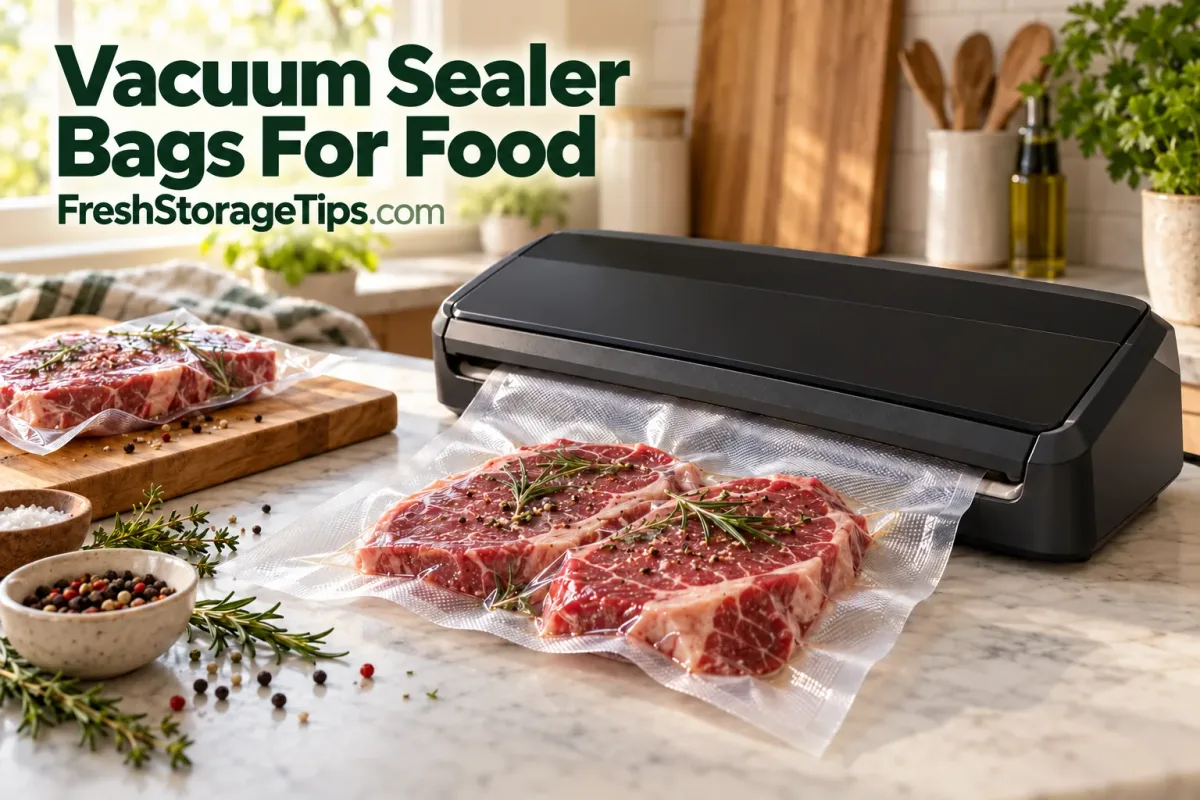
FoodSaver FM2100 Vacuum Sealer
Takes the air out before meat goes into the freezer, which can help reduce freezer burn by limiting air exposure.
See the FoodSaver on Amazon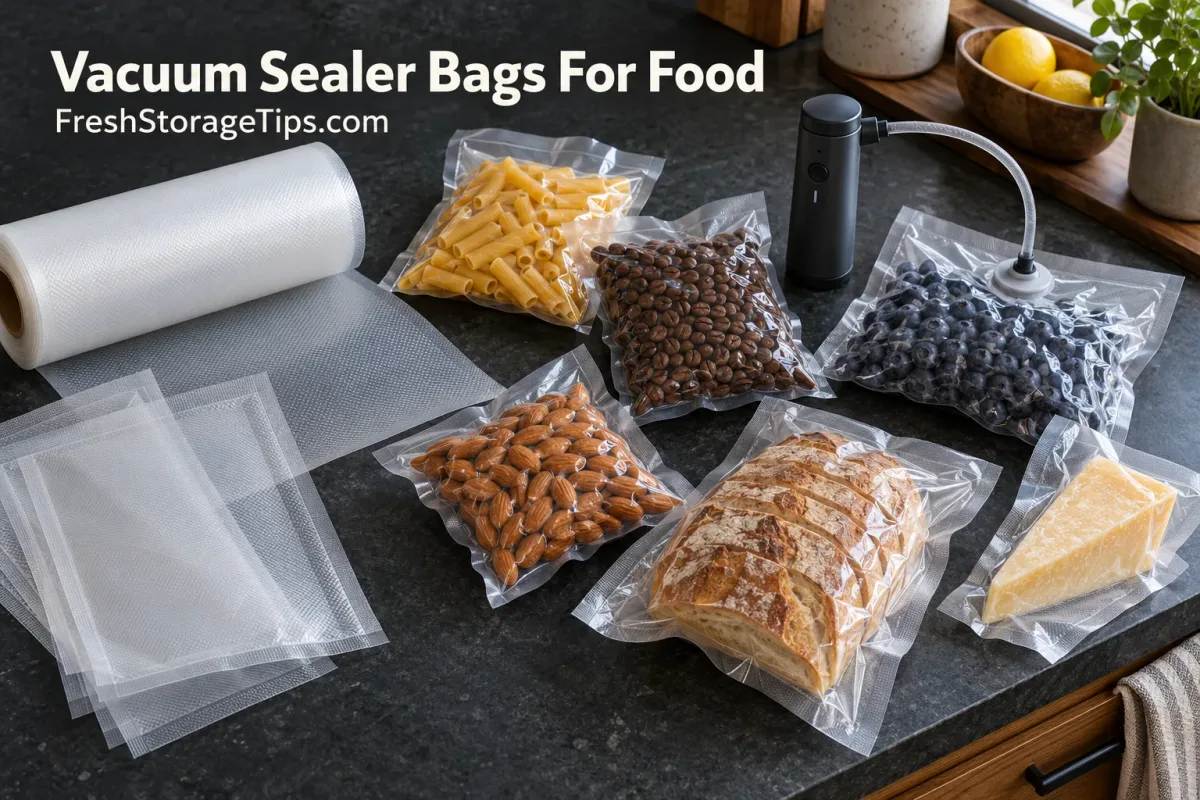
Vacuum Sealer Bags for Food
A sealer is only as good as its bags. Check that the size and type fit your machine before you order.
Look at these bags on Amazon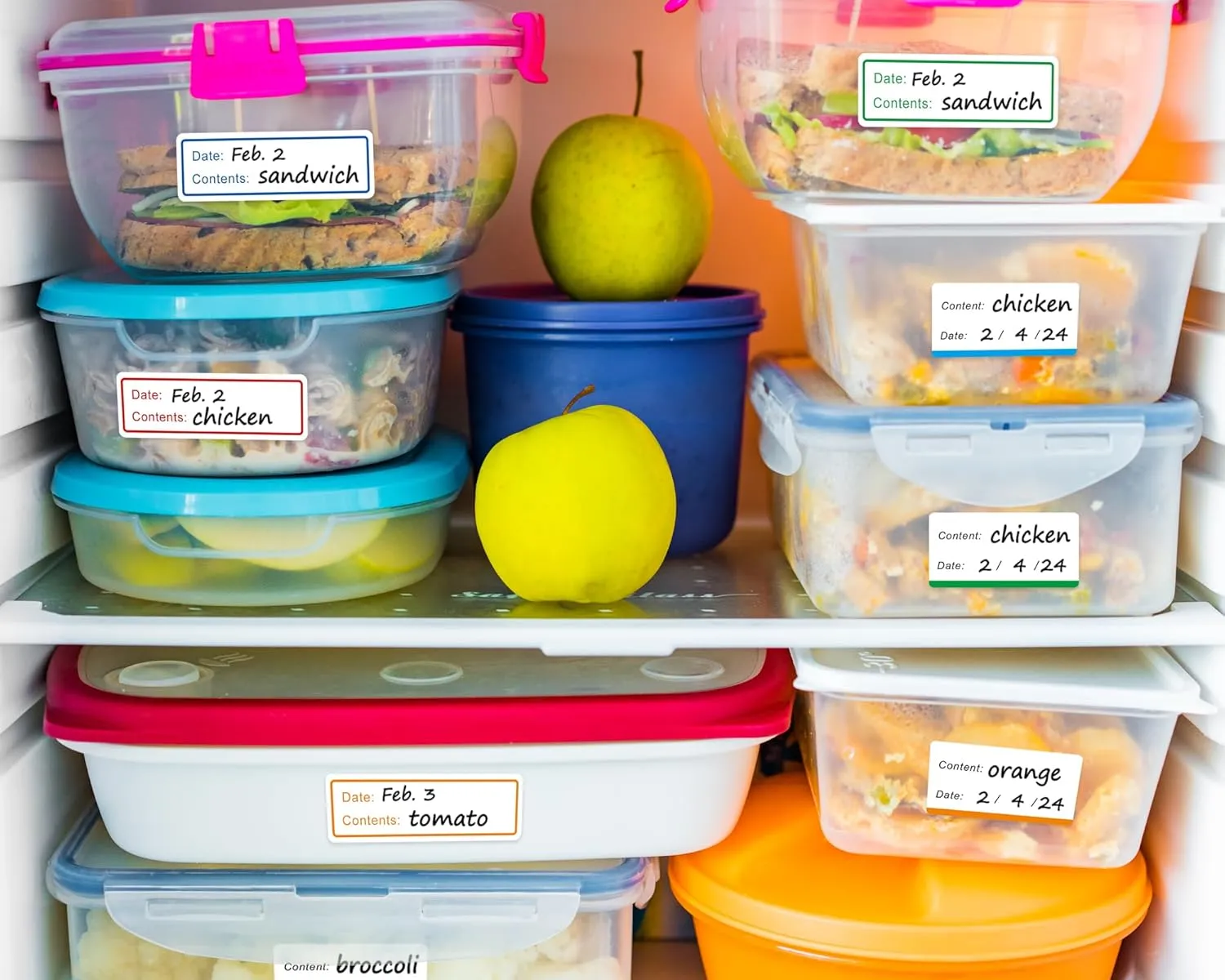
Freezer Labels
For the date and what’s inside, so you can follow Clemson’s advice to date food before storing it.
Check labels on AmazonAs an Amazon Associate I earn from qualifying purchases.
Frequently Asked Questions
How long does vacuum sealed meat last in the fridge?
Days, not weeks. Michigan State University Extension gives fresh meat that is vacuum packaged with a good seal up to 7 days from purchase, against up to 3 days in a regular tray. The USDA’s general times are 1 to 2 days for ground meat and poultry and 3 to 5 days for steaks, chops and roasts. We found no official source for the “1 to 2 weeks” in many online charts.
How long does vacuum sealed meat last in the freezer?
At a constant 0°F it stays safe indefinitely. For best quality, the USDA gives 4 to 12 months for steaks, chops and roasts, 3 to 4 months for ground meat, 12 months for whole poultry and 9 months for poultry parts.
Can vacuum sealed meat go bad?
Yes. Vacuum sealing slows some bacteria, but it doesn’t stop them, and some harmful bacteria grow well without oxygen. Clemson University warns that vacuum-packed food can become unsafe without obvious signs of spoilage, so stick to the fridge times.
Can vacuum sealed meat be left out at room temperature?
No. Clemson University says vacuum packaging does not allow you to store food at room temperature, and perishable food held above 40°F for more than 2 hours should be thrown away.
Why is vacuum packed beef purple?
Because it hasn’t been exposed to oxygen. The USDA says beef in vacuum packaging is burgundy or purplish and turns cherry red after about 15 minutes in the air. The color alone doesn’t mean it has gone bad.
Can you refreeze vacuum sealed meat?
If it thawed in the refrigerator, yes: the USDA says that’s safe without cooking it first, although quality may suffer. Meat thawed in cold water or in the microwave should be cooked before refreezing.
Sources & Transparency
Fridge times come from the USDA FSIS refrigeration table and from Michigan State University Extension, ”Breaking down the dates on meat packages” by Jeannine Schweihofer (also reprinted by Western Livestock Journal); freezer times, freezer burn, thawing and refreezing from USDA FSIS Freezing and Food Safety, with the refreezing rules for cold-water and microwave thawing from The Big Thaw; the color of vacuum-packed beef from USDA FSIS Beef from Farm to Table. The safety side of vacuum packaging comes from Clemson University’s Vacuum Packaging Foods at Home and Thawing Vacuum Packed Fish, and from an Ask Extension expert answer. Some of these pages are older (the USDA fridge table was last updated in 2015), but we found nothing newer that contradicts them. We did not test anything ourselves, and we don’t use the storage charts published by vacuum sealer brands.
Sealing is only one part of keeping meat fresh. For the basics per cut, see how long steak lasts in the fridge, how long ground beef lasts in the fridge, signs your chicken breast has gone bad and how to store bacon, or start at our meat storage section. What freezing actually does to food is explained in what happens when you freeze food.
Last updated: