How to Store Vodka (Freezer vs Shelf: What Actually Works?)
You return home from the local liquor store, pull a brand new bottle of vodka from the paper bag, and instinctively slide it straight into the back of your freezer. It is simply what everyone does before hosting a party, right? But as you close the heavy freezer door, a curious question suddenly hits you: is storing vodka at sub-zero temperatures actually the best way to keep it fresh, or are you quietly ruining its carefully crafted taste without realizing it?
This is a highly debated topic among casual home drinkers and professional bartenders alike. Understanding the correct beverage storage technique for clear spirits is absolutely critical if you want your cocktails to taste exactly as the master distiller originally intended.
Vodka is generally one of the most chemically stable spirits you can possibly buy, but how you physically store the bottle can drastically influence its pouring texture, its subtle aroma, and the overall drinking experience. Whether you choose to keep it ice-cold next to the frozen vegetables or standing upright on a warm liquor shelf, the choice is not merely about temperature preference. The environment actually alters how the liquid physically behaves inside your glass.
The Quick Answer: Vodka does not need freezing or refrigeration to stay safe. It will not spoil thanks to its high alcohol content. The freezer is best for creating thicker, smoother shots by masking the alcohol burn. The shelf is best for preserving the subtle botanical flavors and aromas of premium brands.
Bar Quality Tip: Freezing premium, highly filtered vodka is generally considered a waste of money by tasting experts. The extreme cold completely numbs your palate and hides the expensive, delicate nuances the distiller worked so hard to create.
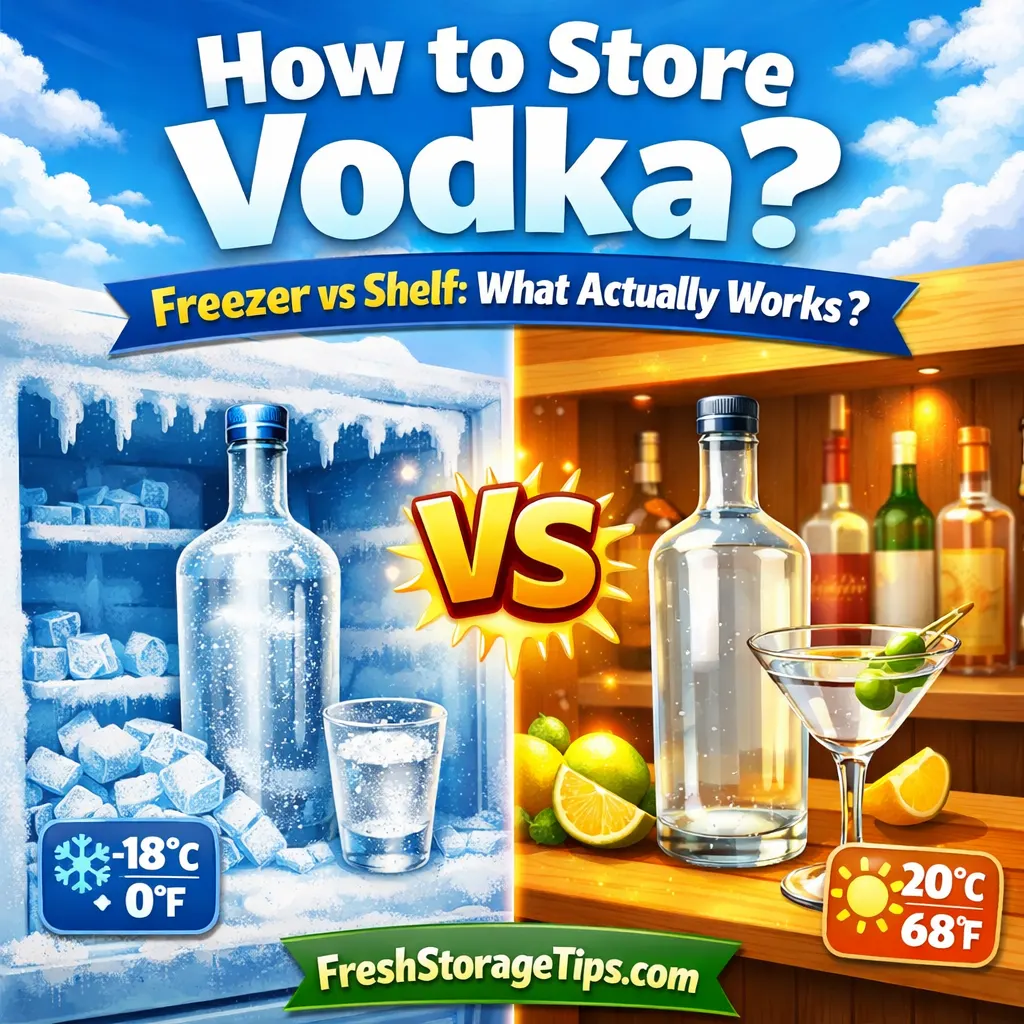
Freezer vs shelf: freezing mutes flavor while room temperature storage preserves the full taste profile.
Does Vodka Go Bad?
The shortest and most accurate answer is no. Vodka does not go bad, spoil, or expire in a way that will ever make you physically ill. The core reason for this extreme stability lies completely within the chemistry of the distillation process.
Standard vodka is composed almost entirely of two things: water and ethanol. During the rigorous manufacturing process, the liquid is distilled multiple times to strip away impurities, natural sugars, and heavy organic compounds. The final product is typically bottled at 40 percent alcohol by volume (80 proof). This incredibly high concentration of pure alcohol creates an intensely hostile environment for any biological organism. The UC Davis Food Safety guidelines clearly outline that high-proof spirits inherently prevent the growth of mold, yeast, or dangerous bacteria.
Because there are no perishable ingredients involved, an unopened bottle will remain safe to drink indefinitely. Even after you break the factory seal, the liquid remains completely safe. However, safety and quality are two entirely different concepts. While it will never rot, careless storage can certainly diminish the quality, leaving you with a drink that tastes weak or slightly metallic.
Should Vodka Be Stored in the Freezer?
This is perhaps the most persistent myth in home bartending. The freezer is a serving preference, not a true storage method. You do not need to keep your bottle in the freezer to preserve its lifespan.
When you store vodka in a freezer, the extreme cold drastically alters the physical viscosity of the alcohol. The liquid becomes noticeably thicker, heavily syrupy, and much heavier in the glass. This dense, heavy texture makes the spirit feel incredibly smooth as it coats your throat, entirely reducing the harsh, stinging alcohol “burn” that many casual drinkers strongly dislike. It is the perfect serving method if you are trying to quickly swallow a cheap, harsh brand.
However, there is a major downside. Extreme cold acts as an aggressive anesthetic on your taste buds. It completely mutes subtle aromas and delicate flavor nuances. This is why the University of Georgia CAES advises that proper temperature control is vital for experiencing the true profile of any complex beverage. If you have paid top dollar for a highly refined, premium bottle made from winter wheat or specific potatoes, keeping it in the freezer will completely hide the quality differences you just paid for. For premium brands, storing the bottle upright on a dark, room-temperature shelf is the absolute best way to protect and enjoy its true character.
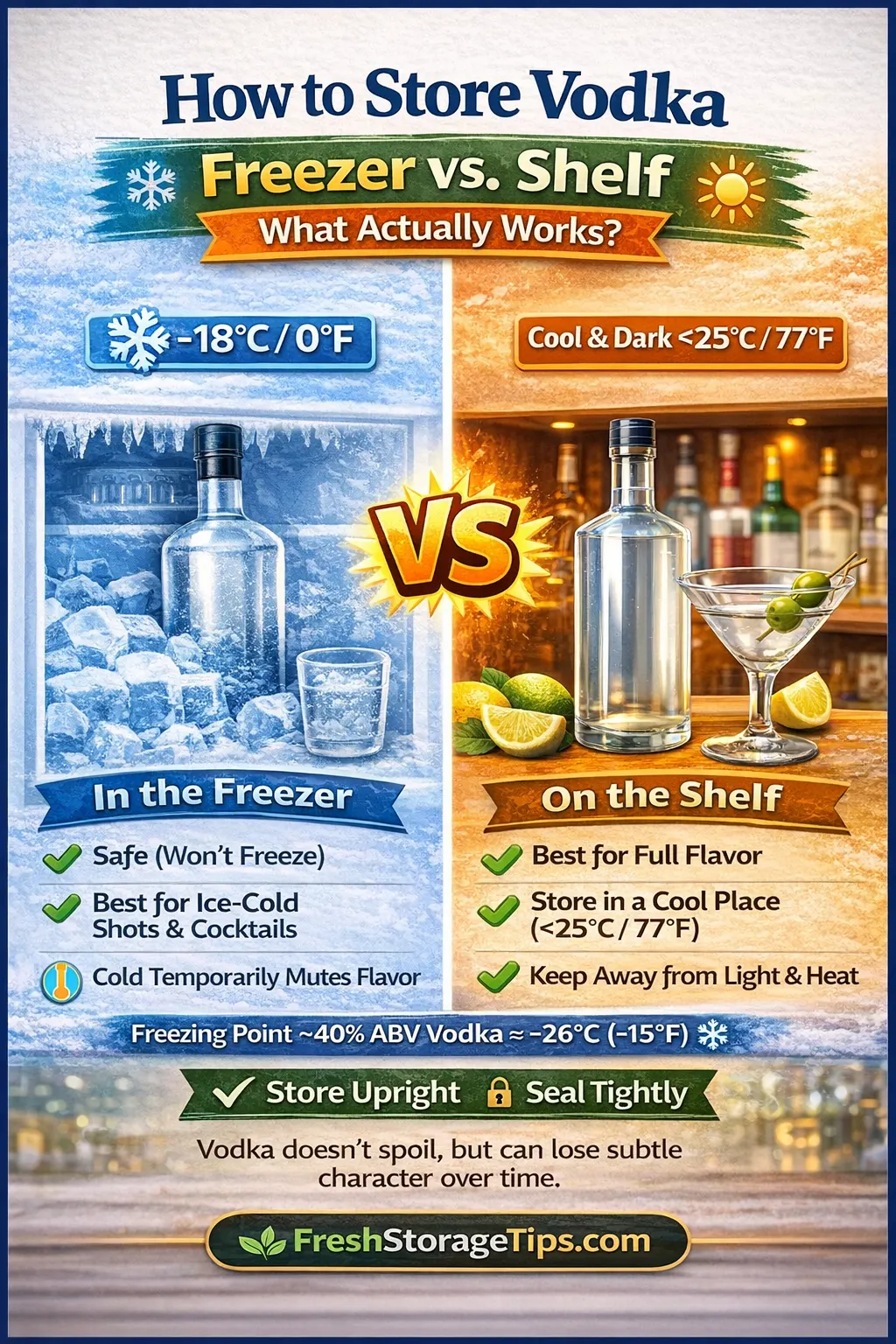
Vodka storage guide: freezer keeps it ice-cold but mutes flavor, while shelf storage preserves taste.
Does Vodka Freeze?
A common fear is that leaving the bottle in the freezer for too long will result in a shattered glass bottle full of solid ice. You do not need to worry about this happening in a standard home kitchen.
Water freezes at 32°F (0°C), while pure ethanol freezes at a shockingly low -173°F (-114°C). Because standard 80-proof vodka is a blend of 60 percent water and 40 percent ethanol, the freezing point of the mixture lands somewhere in the middle, roughly around -16°F (-27°C).
Most standard residential freezers are safely calibrated to operate right around 0°F (-18°C). Therefore, your home freezer simply does not get cold enough to turn the liquid into a solid block of ice. The water molecules will attempt to slow down and crystallize, which is exactly why the liquid becomes thick and syrupy, but the high ethanol content completely prevents it from freezing solid. It is perfectly safe to leave your bottle in there indefinitely.
Vodka vs Other Spirits: What Is Actually Different?
A frequent mistake home bartenders make is assuming all clear and dark liquors require the exact same handling. They are fundamentally different, and their specific storage requirements reflect this. If you are also wondering how to store bourbon or need to review why tequila goes bad, you must recognize the distinct differences in their chemical makeup.
| Storage Factor | Vodka (Clear) | Whiskey / Bourbon | Tequila (Agave) |
|---|---|---|---|
| Flavor Profile | Neutral, clean, crisp | Rich, complex, oaky | Fresh, herbal, citrus |
| Oxidation Impact | Very minimal | Moderate fading | Noticeable fading |
| Freezer Storage? | Common & acceptable | Never recommended | Never recommended |
| Shelf Stability | Extremely high | High | High |
| Best Use Case | Shots & mixed cocktails | Sipping neat | Sipping & cocktails |
As the table illustrates, vodka is highly unique. Oxidation has minimal impact due to vodka’s neutral profile, unlike bourbon or tequila which rely heavily on delicate organic compounds extracted from wooden barrels or fresh agave plants. You must learn how to store vermouth in the fridge and keep whiskey on the shelf, but vodka handles almost any stable environment with ease.
How Long Does Vodka Last After Opening?
Your open bottle of vodka will retain its best quality for several years, often much longer if sealed properly. Unlike dark spirits where trapped oxygen slowly kills the sweet flavor notes, the actual threat to an open bottle of clear spirit is simple evaporation.
Ethanol evaporates significantly faster than water at room temperature. When you leave the cap loose, the alcohol slowly escapes into the surrounding ambient air. Over the course of two or three years, an improperly sealed 80-proof bottle might drop to 70-proof or lower. This leaves the remaining liquid tasting incredibly weak, watery, and entirely unbalanced.
To truly appreciate the deep need for proper storage, we must respect the science. Scientific studies repeatedly emphasize the sheer importance of strict temperature control for all beverages. According to detailed agricultural research published by the Purdue University Extension, delicate wine products are stored optimally between 10 and 16 degrees Celsius. While high-proof vodka is much tougher than wine, a consistently cool room keeps its volatile molecules completely stable. Furthermore, the National Institutes of Health (NIH / NCBI) published peer reviewed research confirming that oxygen exposure during storage inevitably causes chemical reactions. Similar handling practices regarding airtight seals are strongly echoed in the Oregon State University Extension guidelines. Keeping your bottles sealed prevents evaporation, meaning the drink will easily last for five years or more.
Interactive Storage Chart
This handy reference chart clearly shows exactly how long your bottle will maintain its absolute peak quality depending on how you treat it. Use the interactive buttons to filter the best method.
| Bottle Condition | Best Location | Maximum Quality Time | Important Storage Tip |
|---|---|---|---|
| Unopened Bottle | Dark Pantry | Indefinite | Store upright to protect the cork from the strong alcohol. |
| Opened (Well Sealed) | Cool Cabinet or Freezer | Several Years | Ensure the cap is tight to stop ethanol evaporation. |
| Stored Improperly (Heat/Sun) | Sunny Window/Counter | Under 6 Months | Flavor will degrade and taste harsh or slightly metallic. |
Signs Your Bottle Has Lost Its Edge
Because the clear drink does not contain any perishable ingredients, sugars, or dairy, it will not spoil in a way that causes severe food poisoning. You will not get sick from drinking a ten year old open bottle of standard vodka. However, if heavily abused by sunlight or left with a loose cap, the quality will drop noticeably.
You should consider replacing a bottle if you notice any of the following distinct changes:
- 👀 A Flat, Watery Taste: This is the most common issue. If the cap was left loose, the alcohol evaporated into the air. What is left behind is mostly water. If your 80-proof shot feels suspiciously weak, evaporation ruined it.
- ⚠️ A Harsh, Metallic Flavor: If the bottle was stored in a very hot room or near a sunny window, the extreme heat can break down the subtle botanicals, leaving the alcohol tasting incredibly harsh, aggressive, or slightly metallic.
- ⚠️ Cloudiness or Floating Debris: Pure vodka should be crystal clear. If you see a cloudy haze or strange floating particles, the bottle may have been contaminated by a dirty pour spout or something fell inside. Throw it away immediately.
By understanding exactly what to look for, you can successfully avoid serving bad drinks. If you also stock delicate items, learning how to store Baileys Irish Cream properly is vital, as dairy products carry much higher risks.
Video Guide: Does Quality Matter?
See the Blind Taste Test
If you want a clear visual breakdown of exactly how different tiers of clear spirits taste and how chilling them affects the palate, watch this highly entertaining blind taste test. The host explains the exact methods serious experts use to identify quality.
Storage Tip: Pay very close attention to how they discuss the “burn.” Remember, storing your cheap bottles in the freezer is the absolute easiest way to mask that harsh, aggressive burn.
Step-by-Step Storage Guide
We all absolutely hate seeing expensive purchases slowly lose their value. To ensure you get the absolute most out of every single pour and keep your bottles tasting perfectly crisp for years, I have created a highly practical checklist. Following these steps guarantees maximum longevity.
- Step 1: Store the Bottle Upright. Unlike wine, which must be stored horizontally on its side to keep the cork wet, liquor must stand straight up. The high proof alcohol will slowly dissolve and completely destroy the cork if they remain in constant physical contact.
- Step 2: Seal Tightly. Push the cork back in firmly or screw the metal factory cap back on as tightly as physically possible after every single pour. This firmly prevents the valuable ethanol from constantly evaporating into the air.
- Step 3: Choose a Dark Location. Store the sealed bottle safely inside a dark pantry or a closed liquor cabinet. Keep it far away from bright windows, as UV rays destroy sensitive flavor compounds rapidly.
- Step 4: Control the Temperature. If you choose the shelf method over the freezer, ensure your chosen storage area stays consistently cool. Avoid placing the bottle directly above your heating radiator, dishwasher, or oven.
- Step 5: Decant When Necessary. If you drink the bottle down until it is only a quarter full, the massive amount of trapped empty air will increase the rate of evaporation. Buy small glass sample bottles and immediately pour the remaining liquid into them.
Using proper decanting techniques is the exact same brilliant strategy you would use when learning how to store opened whiskey. Minimizing empty air space is the ultimate key to beverage longevity.
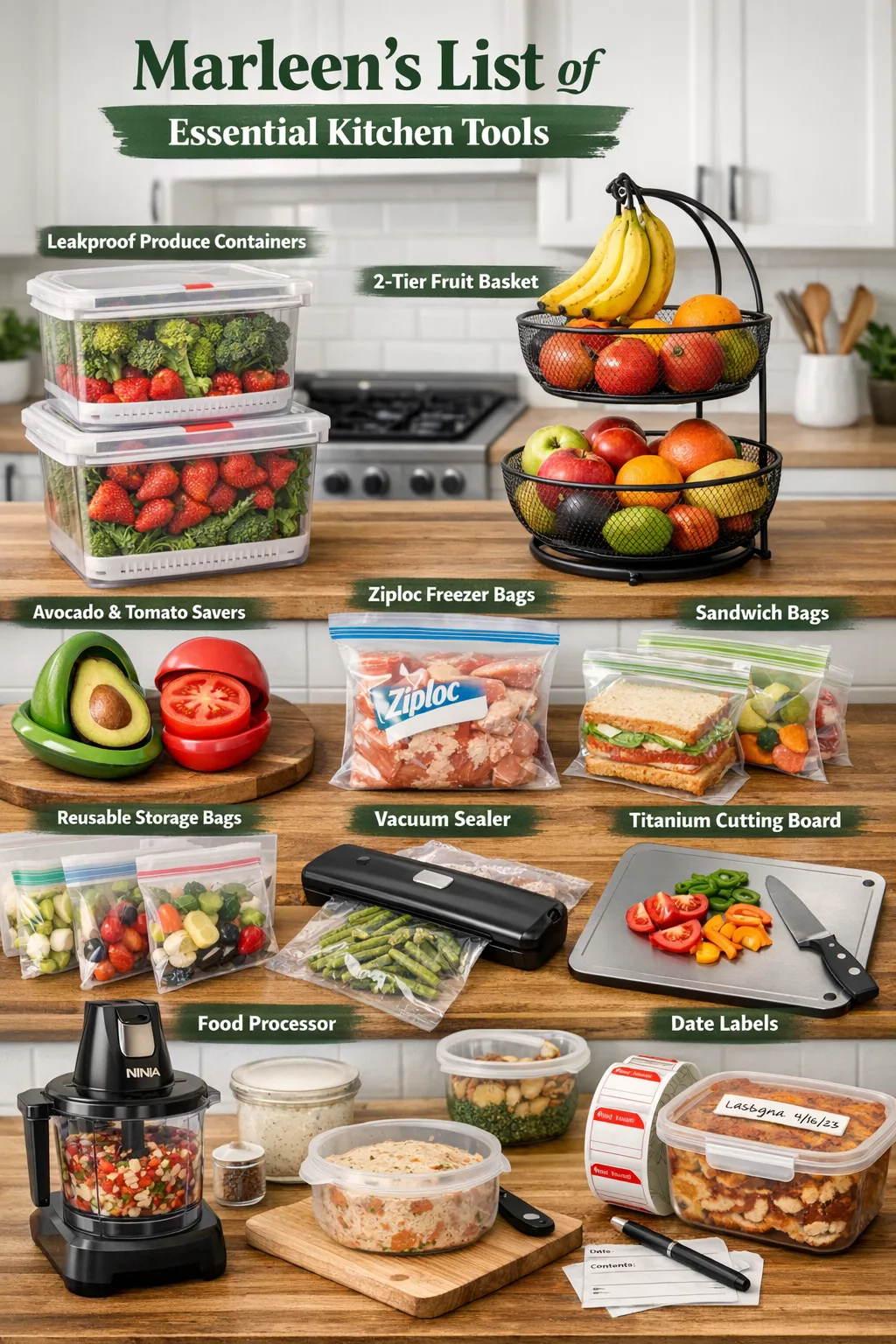
Storing liquids, fresh ingredients, and bulk foods properly requires a bit of thoughtful precision and planning. Over the years of running my own busy kitchen, hosting countless family dinners, and mixing late night drinks for friends, I have meticulously tested dozens of storage methods. I quickly realized that having the correct, high quality equipment changes absolutely everything. It is not just about keeping your food safe from harmful bacteria; it is about deeply respecting the expensive ingredients you purchase and making sure they retain their absolute best flavor until the very last drop or bite.
When dealing with highly sensitive items like premium spirits, delicate fresh herbs, or organic produce, managing the kitchen environment is your top priority. You need to control the internal temperature, minimize destructive oxygen exposure, and accurately keep track of time. For example, knowing exactly how warm your pantry gets during the summer is incredibly critical. You would be shocked to learn how many home cabinets reach temperatures that cause rapid spoilage. Investing in a highly reliable best refrigerator thermometer or ambient digital cooking thermometer ensures that your delicate bottles, fresh meats, and daily dairy are sitting securely in the optimal safe zone. This simple knowledge extends their shelf life significantly and prevents frustrating, unnecessary waste.
Beyond basic temperature control, managing direct air exposure is how you truly win the daily battle against food waste. Investing in a high quality vacuum sealer allows you to actively pull the destructive oxygen away from your ingredients. This completely locks in freshness for months longer than standard, flimsy plastic baggies. For daily use, I constantly rely on sturdy, airtight food storage containers and dedicated food product saver tubs. These hard sided bins effectively prevent delicate items from being crushed and feature heavy duty silicone seals that lock out humidity and strong, cross contaminating odors from the rest of the busy kitchen. This is especially helpful if you are also managing messy bar ingredients and need to know how to store Kahlúa securely.
Finally, visual organization is the ultimate glue that holds a highly functional kitchen together. If you cannot easily remember when you opened a bottle, popped a cork, or froze a large batch of soup, you are highly likely to throw it away out of an abundance of caution. Using specialized dissolvable labels has completely streamlined my entire pantry and freezer system. You can write the exact date directly on your bottles and containers, and when you are finally done, the label washes away completely under warm water without leaving any sticky, frustrating adhesive residue behind. Pair these smart, effective storage habits with a strong food processor for prepping bulk ingredients quickly, and you will quickly find that managing your kitchen inventory becomes a highly efficient, stress free routine that saves you an incredible amount of money every single month.
Vacuum Sealer for food
The absolute ultimate tool for pulling oxygen away from your ingredients to stop premature spoilage.
View on AmazonDigital Thermometer for cooking
Ensure your pantry and your cooked meals are hitting the exact perfect temperatures safely.
View on AmazonFood Storage Containers
High quality, highly durable bins that stack neatly and keep out damaging humidity and strong odors.
View on AmazonDissolvable Labels for food
Track bottle opening dates perfectly. They wash off easily under warm water with zero sticky residue left over.
View on AmazonFood Product Saver Tubs
Specialized hard sided tubs specifically designed to keep your most delicate produce fresh and crisp.
View on AmazonFood Processor
Prep large batches of ingredients incredibly quickly before sealing and storing them for later use.
View on AmazonAs an Amazon Associate, I earn from qualifying purchases at no extra cost to you. Thank you for supporting the site!
Frequently Asked Questions
Does vodka freeze solid in the freezer?
No. Standard 80-proof vodka (40% ABV) has a freezing point of roughly -16°F (-27°C). Because most home freezers are set around 0°F (-18°C), the liquid will become thick and heavily syrupy, but it will not freeze into a solid block of ice.
Does vodka go bad if not refrigerated?
No. Vodka contains a high volume of alcohol which acts as a permanent preservative. It will never spoil, rot, or grow dangerous bacteria sitting at room temperature on a standard bar shelf.
How long does vodka last after opening?
Vodka will retain its best quality for several years, often much longer if sealed properly. Oxidation has minimal impact due to its naturally neutral flavor profile. Evaporation from a loose cap is the only real threat.
Should vodka be stored in the freezer?
The freezer is a serving preference, not a storage method. Freezing changes the texture and smoothness by hiding the alcohol burn, but it does not improve preservation or long-term quality. In fact, it actively hides the subtle flavors of premium brands.
Sources & Transparency
This comprehensive guide references scientific alcohol storage guidelines provided by the Purdue University Extension and the National Institutes of Health. Additional detailed data on proper beverage handling, commercial production, and consumer safety was consulted via UC Davis Food Safety and the Oregon State University Extension as well as industry standards from Oklahoma CareerTech.
Last updated:
2 comments
[…] dark shelf — botanicals are fragile. Freezer mutes flavor and can cause louching. VodkaFreezer is fine — neutral spirit with no fragile botanical oils to protect. WhiskeyCool dark shelf […]
[…] → Spirits How to Store Gin (Fridge, Freezer or Shelf: What Actually Works?) Read → Spirits How to Store Vodka — Does It Go in the Freezer? Read → Liqueur How to Store Baileys Irish Cream — Does It Need the Fridge? Read → Spirits […]