
How to Store Gin (Fridge, Freezer or Shelf: What Actually Works?)
 By
By You bring home a fresh bottle of gin, admire that crisp juniper-and-citrus aroma — and pause. Should it go in the fridge, the freezer, or stay on the shelf? Most people follow standard alcohol habits and quietly ruin the very flavors they paid a premium for.
Gin is not a bulletproof neutral spirit. It is a delicate suspension of botanical oils, citrus peels, earthy roots, and floral notes. When comparing shelf vs fridge vs freezer storage for gin, the shelf consistently preserves flavor best — and the science explains exactly why.
Store gin upright in a cool, dark cabinet at 59–68°F (15–20°C), tightly sealed. Avoid long-term freezer storage — it mutes botanical flavors and can cause premium gin to turn cloudy. Refrigeration is fine for cold serving but dulls the aroma. The cool dark shelf is always the best way to store gin.
- Best storage: Cool, dark shelf at 59–68°F (15–20°C)
- Fridge: Optional — slightly mutes aroma, fine for cold martinis
- Freezer: Fine for cheap gin shots, ruins premium botanicals
- Shelf life once opened: 1–2 years at peak quality
- Biggest enemies: UV light, heat, and oxygen — not bacteria
In most U.S. homes, room temperature typically ranges between 68–72°F (20–22°C), which is slightly warmer than ideal for gin storage. Storing gin in a shaded cabinet away from heat sources — not on an open kitchen counter near a stove or window — helps maintain the optimal flavor window even in a warm American home.
The science: why gin needs specific care
Distillers spend enormous effort extracting essential oils from raw botanicals — juniper berries, citrus peel, coriander, cardamom, angelica root — either through vapor infusion or direct maceration. The goal is to trap volatile organic compounds inside the alcohol, forming a fragile, aromatic suspension that defines the gin’s entire identity.
Three environmental forces determine how quickly those flavors degrade. All three are completely avoidable.
UV Light
Breaks down aroma molecules within weeks. Clear glass offers zero protection. Always store in a dark, closed cabinet.
Heat
Above 68°F, delicate citrus and floral top notes evaporate into the headspace. Fluctuating temps accelerate damage.
Oxygen
Once opened, oxygen steadily dulls juniper and citrus notes over weeks and months. Seal tightly every time.
1. Light — ultraviolet degradation
Light is the silent killer of aromatics. Direct sunlight, or even prolonged exposure to fluorescent kitchen lights, bombards the glass with UV radiation that breaks down the organic molecules responsible for gin’s flavor. A craft gin bottle left on a sunny windowsill can lose its bright, piney edge within weeks — leaving a flat, dull liquid behind. Dark-colored bottles offer some UV protection; clear glass leaves the liquid entirely exposed.
2. Heat — volatilization
Heat accelerates chemical reactions. When gin is stored above 68°F (20°C) — above a refrigerator, near an oven, or beside a radiator — the most delicate, highly volatile top notes like citrus and soft florals begin to break down and evaporate into the bottle’s headspace. Stable, cool storage is far more important than most people realize.
3. Oxygen — oxidation after opening
Once you crack the seal, the clock starts ticking. Oxygen enters the headspace and chemically alters the flavor profile — crisp, sharp notes gradually becoming muddy and subdued. As you consume more and the liquid level drops, the headspace grows and oxidation accelerates. A bottle that’s three-quarters full lasts far longer than one that’s nearly empty.
“Gin behaves more like a fragile perfume than a bulletproof industrial alcohol. Extreme cold numbs it; heat and light destroy it.”
The showdown: shelf vs. fridge vs. freezer
The differences between storage environments go well beyond temperature — each one affects the entire aromatic profile of what ends up in your glass.
Cool dark shelf
Botanicals stay fully dissolved. Aromas bloom the moment you pour. Exactly what the distiller intended.
Refrigerator
Suppresses aroma volatility. Less fragrant from the fridge, but flavor returns as the drink warms in your hand.
Freezer
Non-chill filtered gins turn cloudy (louching). Botanical balance disrupted. Fine for cheap shots only.
The cool dark shelf — the gold standard
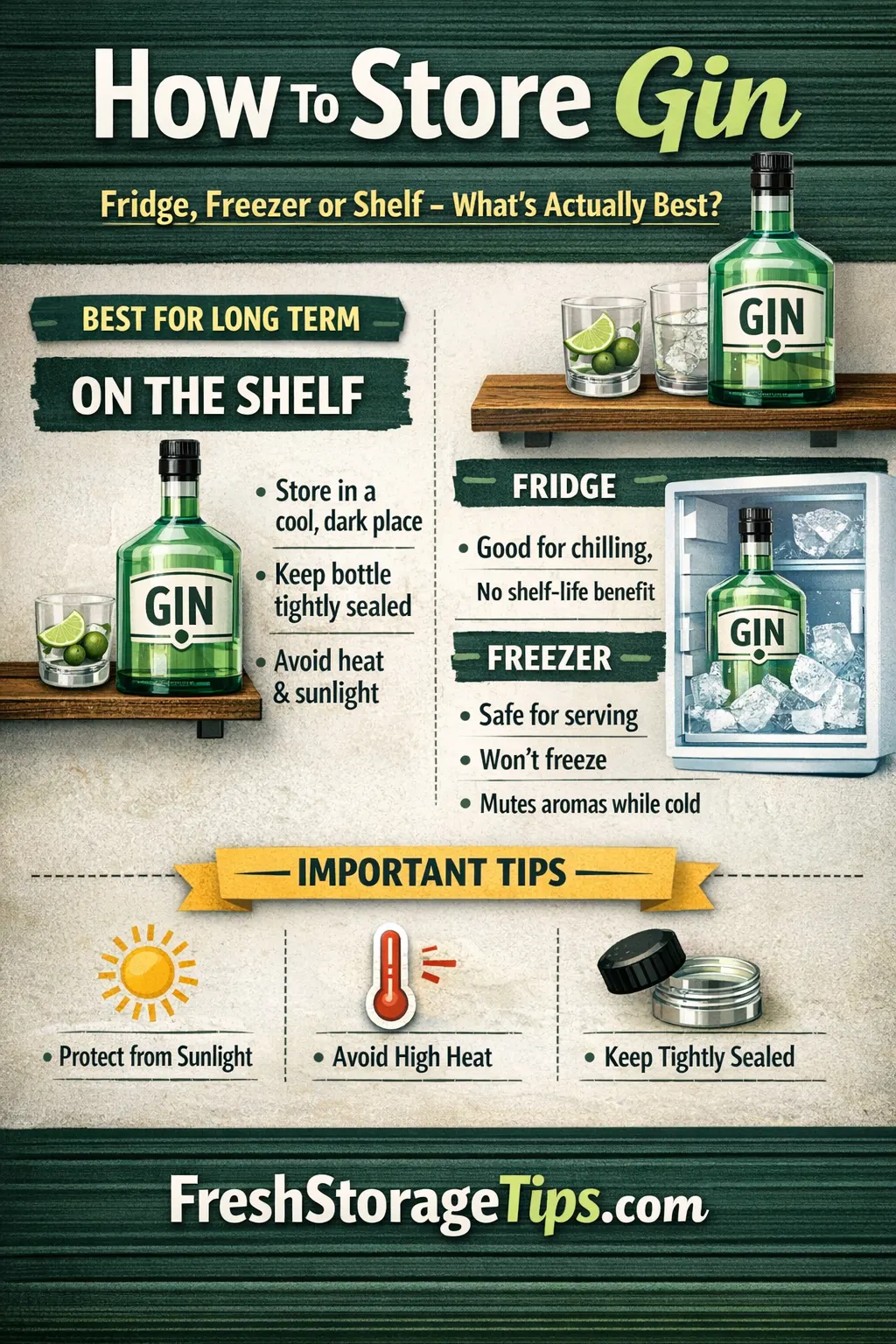
A closed cabinet or pantry maintained between 59–68°F (15–20°C) is the gold standard for gin storage. At this temperature, essential oils remain perfectly dissolved in the alcohol and the aromas are highly active — when you pour a measure into a glass, the scent immediately blooms. If you are drinking gin neat, over a single large ice cube, or mixing a premium cocktail, shelf storage ensures you experience exactly what the master distiller intended.
At temperatures above 77°F (25°C), the rate of flavor degradation increases significantly, especially for citrus and floral botanicals, which are the most volatile components in gin.
In warmer U.S. climates — particularly in Southern states — kitchen cabinets can easily climb above 72°F in summer. If your home runs warm, consider moving your gin to a basement shelf, a wine cooler set to 60°F, or the coolest interior cabinet in the house. A few degrees of difference compounds significantly over weeks.
The refrigerator — the acceptable compromise
Storing gin in the fridge is not harmful, but it alters the experience. Cold temperatures suppress the volatility of the aromatic oils — pull a bottle straight from the fridge and it will smell significantly less fragrant than a room-temperature bottle. For martinis where you want it ice-cold without heavy ice dilution, the fridge is a practical tool. Confirm your fridge runs between 35–38°F — a quality refrigerator thermometer is inexpensive insurance.
The freezer — the flavor killer for premium gin
Putting gin in the freezer (-18°C / 0°F) is a mistake for any bottle worth savoring. Many premium craft gins are “non-chill filtered” — the distillery deliberately leaves heavy botanical oils in the liquid for richer mouthfeel. Freeze a non-chill filtered gin and you’ll witness louching: the essential oils coagulate and physically fall out of suspension, turning the liquid cloudy or milky. It’s harmless — the gin clears as it warms — but the delicate balance is disrupted, and repeated freezing degrades the botanicals over time.
Shelf life and degradation timeline
High-proof alcohol never becomes unsafe to drink — but the qualitative shelf life is absolutely finite. Here’s what to expect from a correctly stored opened bottle.
| Bottle condition | Quality window | What happens |
|---|---|---|
| Unopened (sealed) | Indefinite | Zero oxygen exposure. Botanicals remain perfectly suspended and vibrant. |
| Opened — well sealed, mostly full | 1–2 years | Slow oxidation begins; high alcohol preserves the core flavor profile. |
| Opened — half full or less | 6–12 months | Large headspace allows rapid oxygen exchange. Top notes fade noticeably. |
| Poorly stored (heat or light) | Within months | UV strips color; heat evaporates oils. Liquid becomes dull and flat. |
Pro tip: When a bottle hits one-third full, transfer the remainder into a smaller, airtight bottle. Less headspace means dramatically slower oxidation — you’ll taste the difference in every pour.
How gin compares to other spirits
Gin storage rules make more sense when placed alongside the rest of the liquor cabinet. The rules are not universal — each spirit’s chemistry dictates completely different needs.
Quick spirit storage guide
Best Storage Tips for Gin
Unlike wine, gin must never lie on its side. Contact between high-proof liquid and the stopper over time degrades the seal and can contaminate flavor.
Even indirect light contributes to UV degradation over weeks. A closed pantry or liquor cabinet beats an open display shelf every time.
Keep gin away from the top of the fridge, near ovens, radiators, or sunny windows. Even a few degrees above 68°F accelerates flavor loss over time.
Every extra minute of exposure means more oxygen enters the headspace — push the stopper fully home after every single use.
When a bottle hits one-third full, decant into a smaller airtight bottle. Less headspace equals dramatically slower oxidation.
Write the date on a dissolvable label when you open a bottle. Knowing exactly when it was opened helps you track the 1–2 year quality window.
Bottom line
The best way to store gin is upright, sealed tightly, in a cool dark cabinet at 59–68°F (15–20°C). In most U.S. homes, this means choosing a shaded interior cabinet away from heat sources — not an open counter near a stove or window. Refrigeration is a fine choice if you drink gin frequently and want it cold. The freezer is appropriate only for inexpensive bottles where chilling the burn is the point. No storage method makes gin unsafe — but improper storage will quietly rob it of everything that made it worth buying.
Homemade infused gins are even more sensitive to light and temperature than commercial varieties — store in dark, cool conditions and enjoy within 2–4 weeks for peak flavor.
Marleen’s Recommended Storage Tools
Personally tested in my kitchen — the exact kit I use to protect spirits, keep garnishes fresh, and stay accurate on temperature.
Vacuum Sealer
Seal fresh citrus peels and herbs to keep garnishes vibrant for weeks, not days.
View on AmazonDigital Thermometer
Confirm your cabinet or fridge holds the exact temperature to protect delicate botanical oils.
View on AmazonDissolvable Labels
Mark opening dates on bottles and syrups. Wash off cleanly under warm water.
View on AmazonAirtight Containers
Store dry botanicals — juniper, cardamom, star anise — away from humidity before use.
View on AmazonFood Processor
Prep large batches of infusion ingredients or fresh fruit purees quickly and cleanly.
View on AmazonProduce Saver Tubs
Keep limes, lemons, and cucumbers crisp so cocktail garnishes stay top-tier.
View on AmazonAs an Amazon Associate I earn from qualifying purchases — at no extra cost to you.
Frequently asked questions
No. Gin does not go bad or become unsafe to drink at room temperature. The high alcohol content — typically 40–47% ABV — creates an environment where bacteria and mold cannot survive. However, prolonged exposure to heat or direct sunlight will gradually degrade the botanical flavors, making the liquid taste dull and flat even though it remains perfectly safe to consume.
This is called louching. Many premium craft gins are non-chill filtered, meaning the distillers left a high concentration of botanical essential oils in the liquid for richer mouthfeel. When temperature drops sharply in a freezer, those natural oils lose their solubility in the alcohol, fall out of suspension, and clump together — creating a cloudy or milky appearance. It is completely harmless. The gin will return to crystal clarity once it warms back to room temperature.
While gin remains safe to drink indefinitely, an opened bottle will stay at its absolute peak flavor for about 1 to 2 years, provided it is kept tightly sealed in a cool, dark cabinet. As the liquid level drops and the headspace grows, oxygen exposure accelerates — steadily flattening the bright juniper and citrus notes. Transfer to a smaller bottle when nearly empty to slow this process considerably.
The best way to store gin is upright in a cool, dark cabinet at 59–68°F (15–20°C), sealed tightly after every use and kept away from heat sources and direct sunlight. In most U.S. homes, this means an interior cabinet rather than a countertop near a window or stove. Refrigeration is a fine short-term option. The freezer should be avoided for any bottle you want to enjoy at its best.
Yes — with caveats. For an inexpensive, neutral gin where you simply want it ice-cold, the freezer works fine. The alcohol content prevents the liquid from freezing solid. The problem is with premium, botanical-forward, or non-chill filtered gins: extreme cold mutes the flavors you paid for and may trigger louching. For quality gin, chill the glass instead and pour from a room-temperature bottle.