
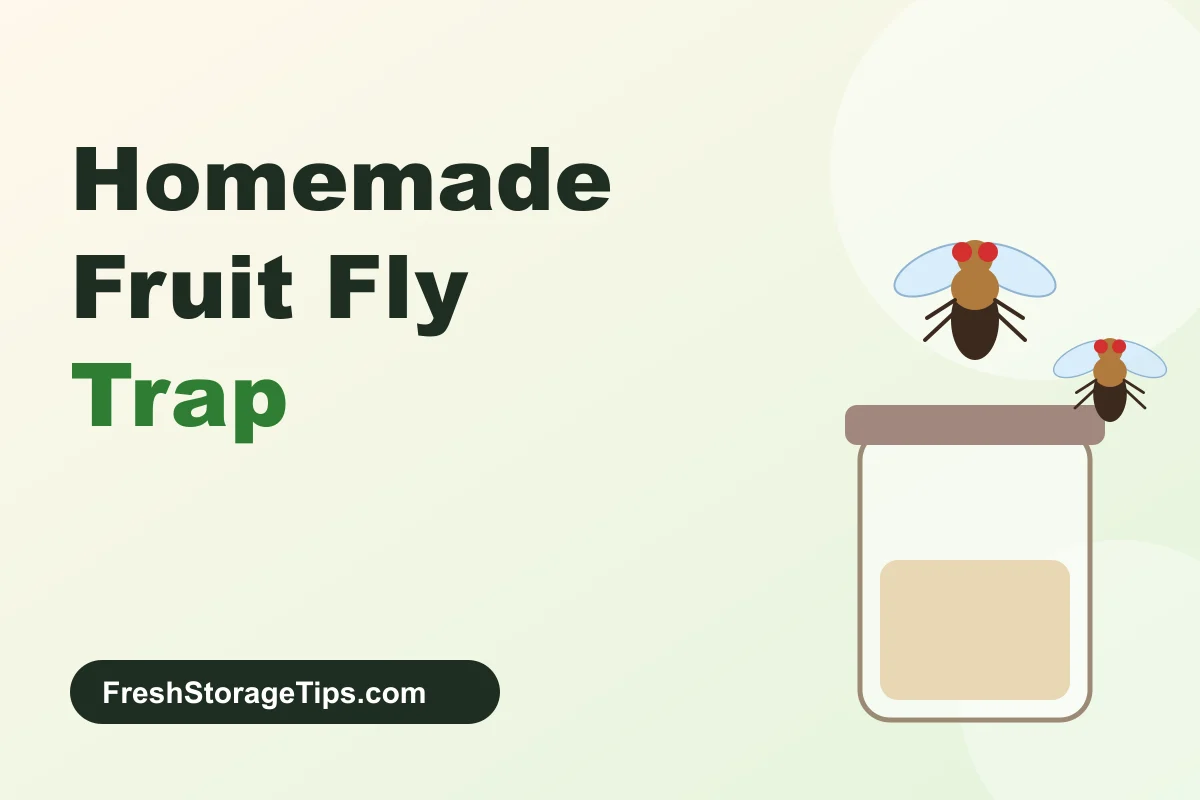
The simplest homemade fruit fly trap is the one the University of Kentucky describes: pour a few ounces of cider vinegar into a jar, roll a sheet of paper into a funnel and set it in the jar opening. Put the jar where you see the flies. They crawl in toward the smell and don’t find their way back out. A trap only catches adults, so remove the breeding source too.
Rather not make one? The two traps I’d pick (why these two): TERRO Fruit Fly Trap 4-Pack Zevo plug-in trap (Amazon; as an Amazon Associate I earn from qualifying purchases)
What You Need
- a glass jar or a tall glass,
- a few ounces of cider vinegar,
- a sheet of paper (notebook or printer paper),
- a piece of tape.
That’s it. The University of Kentucky’s fruit fly fact sheet also shows a slice of banana as bait in the jar, so a bit of very ripe fruit works too.
How to Make It, Step by Step
- Pour the bait. A few ounces of cider vinegar in the bottom of the jar, or a piece of overripe banana.
- Roll a cone. Roll the paper into a funnel with a small opening at the narrow end, about the width of a pencil (my tip: small enough that a fly can crawl in but won’t easily find the way out).
- Set the cone in the jar. Narrow end down, not touching the vinegar. Tape the edges so there are no gaps (my tip).
- Place the jar. Wherever you see the flies: next to the fruit bowl, the sink, the trash or the recycling.
- Check it every day. The University of Kentucky says the caught flies can be killed or released outdoors.
Variations People Use
- Plastic wrap instead of a cone: cover the jar tightly with plastic wrap and poke a few small holes with a toothpick. Same idea, no paper needed (my tip).
- A drop of dish soap: many people add one drop of dish soap so the flies sink instead of landing on the surface. This is a kitchen trick, not something the extension sheets describe, so it’s optional.
- Fruit instead of vinegar: a slice of very ripe banana in the jar, as in the University of Kentucky’s photo.
Why the Trap Isn’t Enough on Its Own
This is the part most “fruit fly hack” videos skip. A female fruit fly can lay about 500 eggs, and a new generation can grow from egg to adult in about a week, according to the University of Kentucky. The same fact sheet says all breeding areas must be found and removed. So if a forgotten onion, a slimy drain or a sticky recycling bin is still feeding the next generation, your jar will keep filling up.
Start with the source, then trap: the 4-step plan to get rid of fruit flies. Drains are a common hiding place: fruit flies in the drain or the fridge.
Homemade or Store-Bought?
A jar trap costs almost nothing and you can make one tonight. A store-bought trap is tidier, doesn’t spill as easily and lasts longer between refills. If you’d rather buy one, I picked two for different kitchens in the fruit fly traps I’d pick.
Safe Around Kids and Pets
- Use a jar that can’t tip easily, and keep it out of reach of small children and pets. A cat or dog will happily investigate a jar of vinegar and fruit (my advice).
- Don’t use a drinking glass the family uses, or label the jar, so nobody drinks from it (my advice).
- Never add bug spray or other chemicals to the bait. The extension sheets don’t call for it, and it doesn’t belong on a kitchen counter.
- Empty it into the trash outside, rinse the jar and start fresh when it’s full or starts to smell (my advice).
Homemade Trap Questions
What is the best bait for a homemade fruit fly trap?
Cider vinegar is the bait the University of Kentucky describes. A slice of very ripe banana works as well, because fruit flies are drawn to ripening and fermenting fruit.
Why isn’t my fruit fly trap catching anything?
Check that the funnel opening is small and touches no liquid, that there are no gaps around the cone, and that the trap sits where the flies are. If ripe fruit is out in the open, the flies may prefer the fruit over your trap.
Do I need dish soap in a vinegar trap?
No. The funnel trap from the University of Kentucky works without soap. A drop of unscented dish soap is a popular extra, but it’s a kitchen trick, not part of the extension advice.
How long does a homemade fruit fly trap take to work?
A new generation can grow up in about a week, so my advice is to keep the trap going for a week or two after you remove the breeding source.
Sources & Transparency
The funnel trap, the bait, the 500 eggs, the one-week life cycle and the need to remove breeding sites: University of Kentucky Entomology, ENTFACT-621 “Fruit Flies” (Michael F. Potter). The plastic-wrap version and the safety tips are marked as my own advice; the dish soap drop is a common kitchen trick, not extension advice.
Last updated: