You trust your fridge.
You toss groceries in, close the door, and assume everything inside is protected. The milk goes in the door. Leftovers get pushed to the back. Vegetables sit in drawers you barely think about.
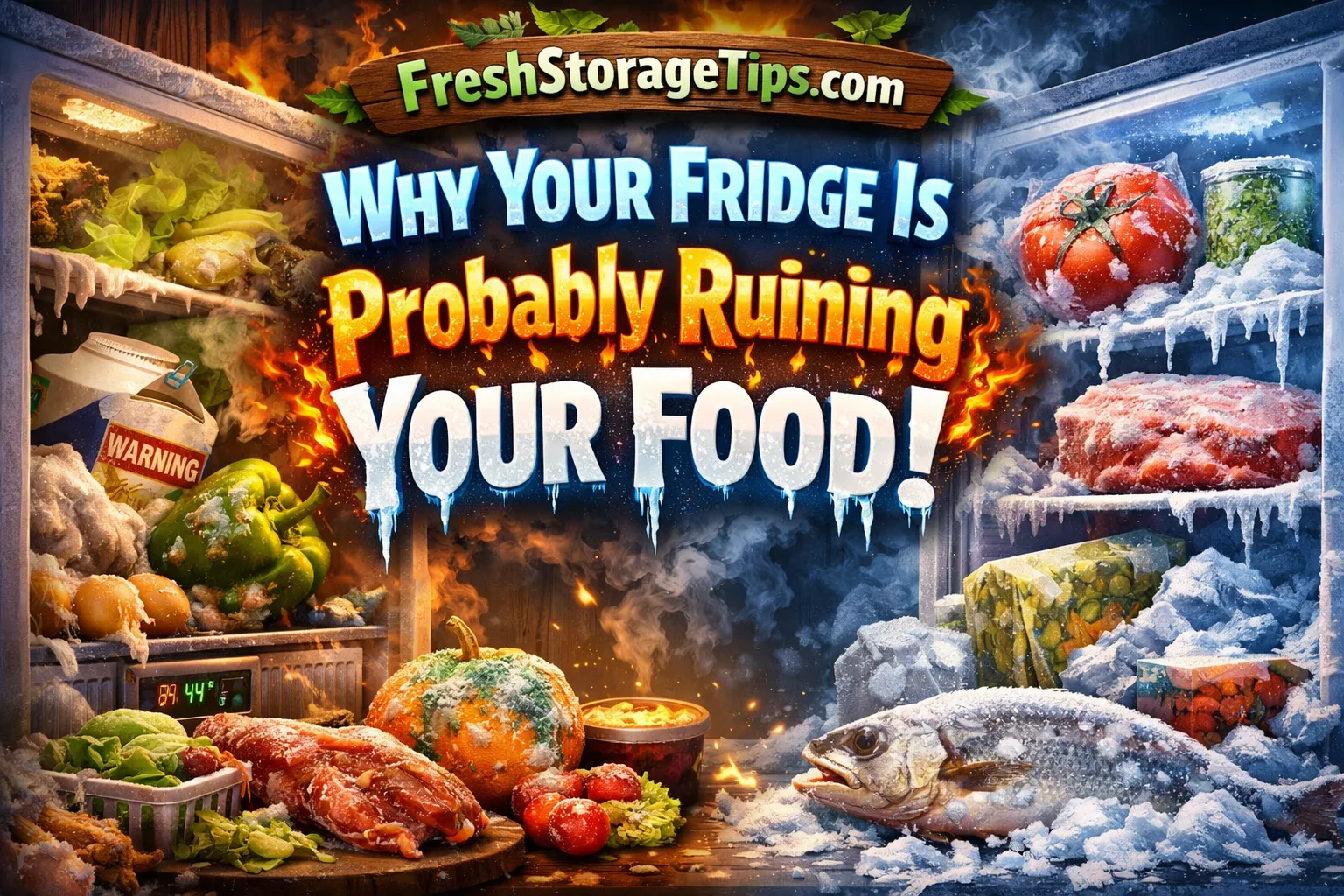
It feels cold, so it must be working. But if you are constantly wondering why food spoils fast in your fridge, the appliance itself is likely the culprit.
Most home fridges are slightly too warm, overcrowded, and badly organized. And that combination slowly shortens the life of your food without you noticing.
The Quick Fix: If your refrigerator is above 4°C (40°F), overpacked, or poorly organized, it speeds up spoilage instead of slowing it down. Correct temperature, airflow, and proper shelf placement make the difference between food lasting days and going bad early.
Food Safety Tip: Always keep a simple digital thermometer inside your main compartment. Relying on the arbitrary “1 through 5” dial setting is dangerous. You want absolute proof that the internal environment remains safely under 40 degrees Fahrenheit at all times.
The Illusion of the Cold Box
I used to be so guilty of treating my kitchen appliances like magic boxes. I would come home from the local supermarket, my canvas bags completely overflowing, and I would just play a chaotic game of Tetris trying to make every single item fit inside. I honestly thought that as long as the heavy door managed to click shut, my family’s meals were completely safe from harm. I was so incredibly wrong.
Most of us never actually check the internal climate of our most expensive kitchen tool. We feel a blast of chilly air against our face when we grab a snack, and we assume everything is perfectly fine. But feelings are deeply deceiving. Your appliance works incredibly hard to fight off the ambient heat of your home, and every single time my kids leave the door wide open while deciding what to drink, warm air rushes in, completely destroying the delicate temperature balance.
When your groceries sit in an environment that hovers just above the safety line, they do not immediately smell foul. Instead, they just quietly degrade. The beautiful leafy greens you bought for salads start to wilt days early. The expensive cream starts to taste slightly sour long before the date printed on the carton. Getting the temperature exactly right, understanding how air moves, and knowing exactly where to place specific items makes a massive difference in your monthly grocery budget.
The Microclimates of Your Shelves
Think of the inside of your unit as a large house with several different weather patterns. You would never dream of putting your winter boots in a sunny greenhouse, so why would you place delicate, expensive proteins in the warmest part of your appliance? Let’s break down exactly how these zones work.
- The Top Shelves: This area has the most consistent temperature because it is usually far away from the cooling vents, but it is not the coldest spot. Heat naturally rises, even in a confined space. This makes the top shelf the perfect resting place for things that are already fully cooked. I always put my prepared meals, hummus, and deli meats up here. It is also the absolute best place to keep things like how to store fried chicken, ensuring the breading stays somewhat stable without freezing against the back wall.
- The Bottom Shelf: Because cold air is heavy and sinks, this is your safety zone. This is the chilliest area available to you. It is exactly where you should keep raw meat, poultry, and anything that poses a terrible risk of dripping. By keeping raw items on the lowest level, you completely eliminate the nightmare scenario of raw chicken juices falling onto your fresh, ready-to-eat salad greens down below.
- The Door Compartments: This is the warmest, most unstable place in the entire machine. Every time you open it, the items in the door are subjected to room-temperature air. Please, stop putting your milk and eggs here! I reserve the door purely for things that have high acid or high sugar content, like ketchup, mustard, soy sauce, and soda. If you want to know more about keeping dairy perfectly safe, check out my guide on how to store cheese. It will totally change how you handle your cheddar blocks!
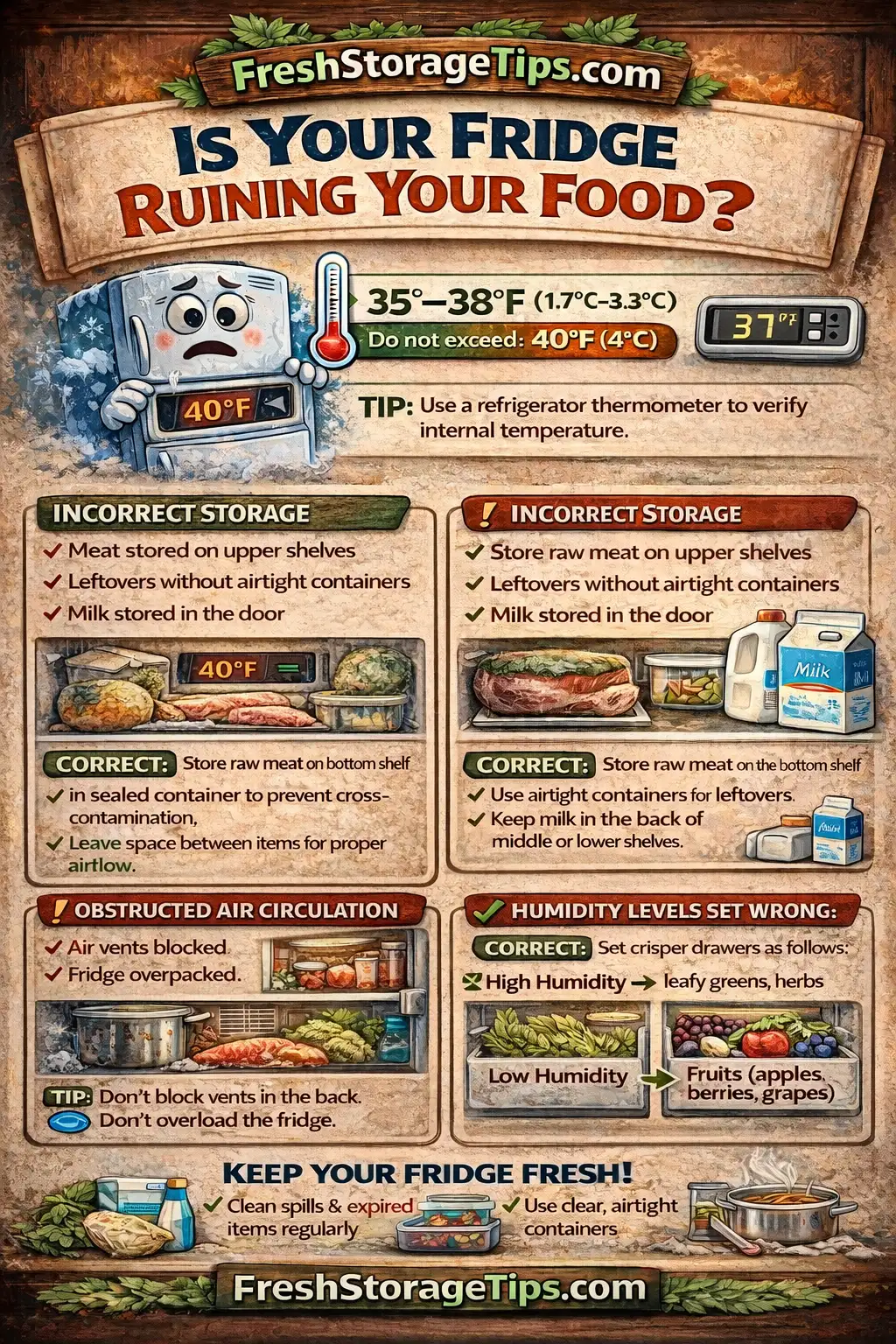
Visual Glance: The Zone Layout
This simple timeline graphic shows how long things truly last when placed in the correct zones versus the wrong zones. If you put a gallon of milk in the door, you are shaving days off its lifespan.
Unlike bananas, which happily sit on the counter in a bowl, most of your delicate produce needs specific humidity controls. Your crisper drawers are designed to manage moisture, not temperature. One should be set to high humidity for thin greens that wilt easily, and the other to low humidity for things that off-gas and rot quickly, like apples. I learned the hard way that mixing these up results in slimy spinach. You can read more about my fruit successes in my general fruit storage overview.
Step-by-Step: How to Organize Your Fridge for Maximum Freshness
To stop your groceries from spoiling early, you need a system. Follow these exact steps to reset your appliance:
- Empty and Wipe Down: Take everything out of the appliance. Wipe the shelves with warm, soapy water to remove sticky spills and invisible bacteria that accelerate rot.
- Check the Temperature: Place a digital thermometer on the middle shelf. Ensure it reads strictly below 40 degrees Fahrenheit to keep bacteria from multiplying.
- Assign the Zones: Put raw meats on the very bottom shelf. Move dairy and eggs to the middle, and keep pre-cooked leftovers on the top. Only use the door for highly acidic condiments.
- Create Airflow: Load your groceries back in, leaving at least an inch of space between items and the back wall so cold air can circulate freely.
Temperature Consistency Showdown
Not all shelves are created equal. Here is how stable the temperatures really are based on location.
Video Guide: The Meat Lifespan
Understanding Protein Storage
This fantastic video from America’s Test Kitchen covers exactly how long meat can sit on your shelves before it becomes a danger to your family. Meat is one of the most expensive items we buy, so letting it spoil is a terrible waste of money.
Storage Tip: Notice how they discuss the “danger zone” of temperatures. If your appliance is struggling to keep up because it is too full, your meat is slowly inching toward that zone even while sitting on the shelf.
Always place your raw proteins on a rimmed baking sheet or plate on the very bottom shelf. This catches any accidental leaks from the plastic wrapping, saving you from a massive cleaning headache later on.
Interactive Fridge Placement Chart
Filter by the type of grocery. Placing items on the correct shelf drastically extends their freshness.
| Grocery Item | Ideal Location | Safe Time | Risk or Tip |
|---|---|---|---|
| Milk & Cream | Middle Shelf Back | 7-14 Days | Never place in the door; it sours quickly. |
| Raw Chicken | Bottom Shelf | 1-2 Days | Keep on a rimmed plate to stop drips. |
| Leafy Greens | High-Humidity Crisper | 5 Days | Add a paper towel to absorb excess moisture. |
| Eggs | Middle Shelf | 3 Weeks | Keep in original carton to block odors. |
| Deli Meats | Top Shelf / Deli Drawer | 3-5 Days | Wrap tightly to prevent drying out. |
The Ultimate Test: Storing Seafood
If you genuinely want to know if your appliance is truly doing its job correctly, look at how it handles fresh fish. Seafood is incredibly delicate and spoils faster than almost anything else we buy. If your storage environment is struggling to maintain a deep chill, your fish will let you know immediately by filling your entire kitchen with a terrible, sour odor.
According to the experts, raw fish only lasts a very short time before turning dangerous. But the safety clock actually starts ticking the very moment you are standing at the seafood counter. I always make sure to follow the recommended guidelines for safe selection and handling of fish and shellfish to ensure I am never bringing home something that is already on the verge of spoiling. Once I get it into my kitchen, I reference this incredibly helpful downloadable FDA safety chart to remind myself of the specific timelines for different species. If you ever wonder exactly how long you can store fish, the answer from the USDA is usually just one or two days at most before it absolutely needs to be cooked or thrown into the freezer.
The wonderful folks at NOAA explain exactly how to store and handle seafood properly, noting that placing it on crushed ice in the absolute coldest part of your fridge is the only way to go. I actually put my wrapped salmon in a small container, fill another larger bowl with ice cubes, and set the container directly on top of the ice. The FDA also strongly warns about the severe risks of cross-contamination when selecting and serving fresh and frozen seafood safely. You must keep it wrapped incredibly tight!
And if you or your family caught the fish yourselves, like my husband sometimes tries to do on lazy summer weekends, the Iowa DNR has fantastic practical advice on cleaning and cooking fish safely so you do not accidentally get sick from your own catch. Finally, deep scientific studies on bacterial growth in cold environments, such as those detailed in this comprehensive PMC research article, prove that even a tiny two-degree temperature fluctuation can completely ruin delicate proteins. Keep it cold, keep it low, and eat it fast.
Safety: The Overcrowding Trap
Have you ever played grocery Tetris? You know, when you buy way too much at the weekend market and have to shove things into every available inch of the fridge? I used to think a totally full appliance meant I was doing a great job providing abundance for my family. What I was actually doing was creating a warm box of rotting food.
- ⚠️ Blocked Vents: Refrigerators do not just make things cold; they blow cold air around. If you pack a huge leftover box tightly against the back vents, the air cannot flow. The front gets warm, and the back freezes solid.
- ⚠️ Trapped Gases: Produce releases ethylene gas. If the air isn’t moving, this gas gets trapped around your vegetables, causing them to rot at double the speed.
- 👀 The One-Inch Rule: A good rule of thumb is to leave about an inch of empty space between your food containers and the internal walls. If you cannot clearly see the back wall, you have far too much stuff in there!
I ruined a huge batch of fresh fruit this way once. I blocked the main air vent with a giant casserole dish, and by Tuesday, my delicate berries were destroyed. If you want to know the right way to handle berries so they survive, look at my tips on how to store strawberries and how to keep cherries fresh. They desperately need airflow!
Fridge Myths Busted
Let’s clear up some terrible kitchen folklore that is costing you money:
- 🚫 Myth: Hot food ruins your fridge. Reality: Modern appliances can handle warm leftovers perfectly fine. Waiting hours for food to cool on the counter invites dangerous bacterial growth. Put it away while it is still slightly warm!
- 🚫 Myth: The colder, the better. Reality: Dropping the dial to its absolute lowest setting will just freeze your lettuce and ruin the texture of your dairy. Aim for a stable 37°F (3°C).
- 🚫 Myth: Baking soda lasts forever. Reality: That open box of baking soda you put in the back to absorb smells stops working after about a month. You need to replace it, or better yet, use dedicated charcoal absorbers.
I used to dread putting groceries away. Stuff would constantly get lost in the dark corners, my sour cream would freeze solid against the back wall, and I regularly threw away fuzzy leftovers I forgot about. It was a disaster that cost my family hundreds of dollars in wasted food.
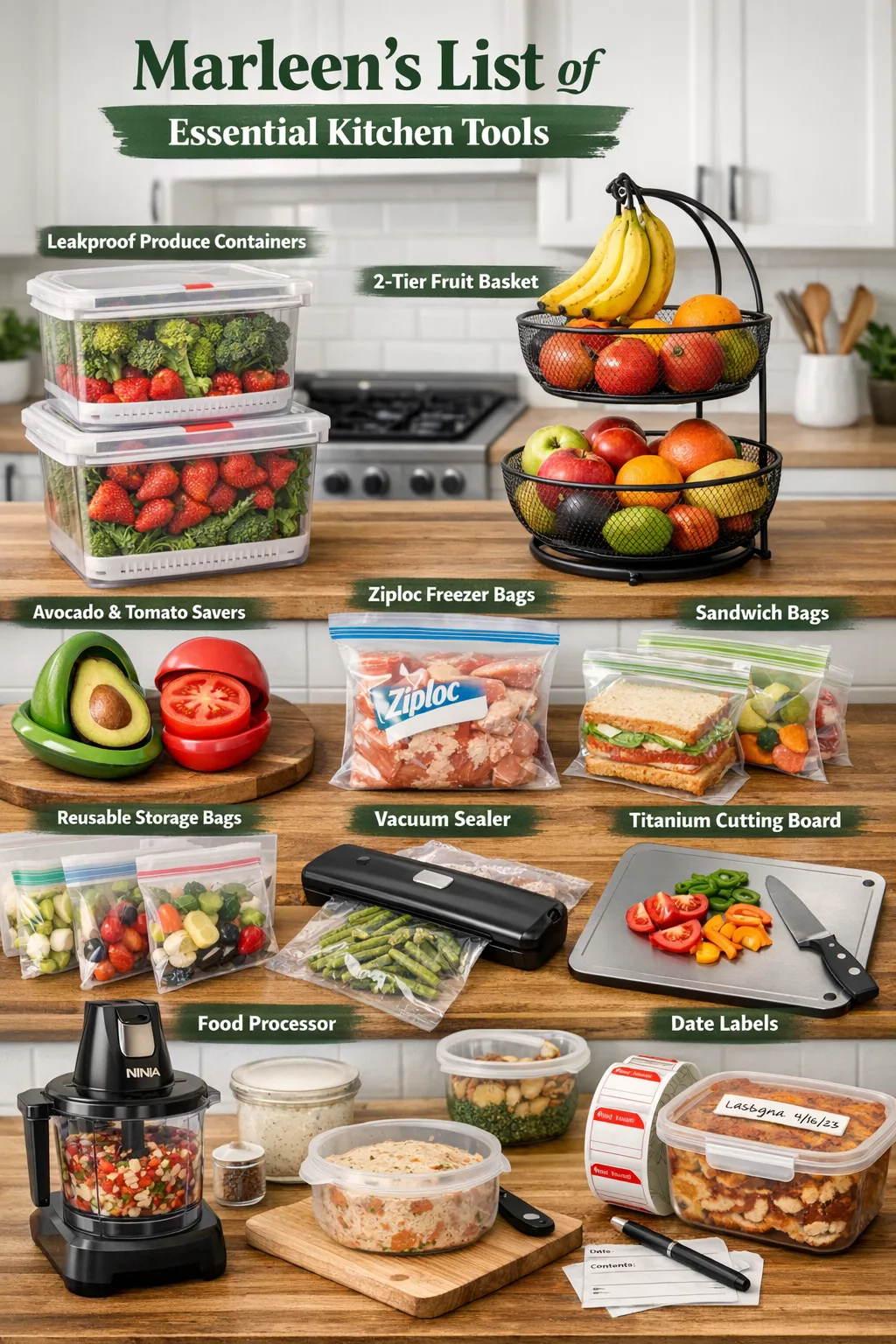
Dealing with a busy kitchen requires systems that actually make sense. The built-in crisper drawers are rarely enough. By investing in the right food storage containers, vacuum sealers, and a reliable digital thermometer, you instantly create stability, airflow, and total visibility. These simple tools turn the chaos of “what is for dinner” into a beautifully streamlined space—and best of all, they pay for themselves by stopping early spoilage dead in its tracks!
Digital Thermometer for Cooking
The only way to verify your fridge is under 40°F and your meats are cooked to a safe internal temp.
View on AmazonFood Storage Containers
Stop using cloudy, mismatched plastic! These stackable containers keep leftovers colder and prevent cross-contamination.
View on AmazonFood Product Saver Tubs
These specialized bins regulate moisture perfectly to stop your expensive lettuce and berries from turning to slime.
View on AmazonDissolvable Labels for Food
Never guess when you cooked that meal again. Write the date, and the label washes completely off in the sink!
View on AmazonFood Processor
Chop and prep your bulk vegetables in seconds before storing them perfectly in your new clear bins.
View on AmazonVacuum Sealer for Food
The ultimate kitchen tool for preventing freezer burn and extending the shelf life of your expensive raw meats.
View on AmazonAs an Amazon Associate, I earn from qualifying purchases.
Sources & Transparency
This guide references vital food safety guidelines from the FDA and the USDA regarding proper storage temperatures. Data on seafood risks and handling was heavily consulted via the National Oceanic and Atmospheric Administration (NOAA) and the National Institutes of Health (NIH) public databases.
Food goes bad because of bacteria, mold and oxidation, three processes that all accelerate above 40°F. Mold is the most visible sign of spoilage and you can learn exactly why food gets moldy and which conditions cause it to grow fastest. Even inside the fridge, food spoils if stored incorrectly. Find out why food spoils fast in the fridge and the specific habits that speed it up. Most storage mistakes that speed up spoilage are avoidable once you understand the science behind what bacteria and mold actually need to thrive.
Last updated:
Update Log
- : Published comprehensive guide on appliance temperature zones and airflow management.