How to Store Sea Bass: Remove the fish from the packaging and pat it completely dry. Prepare a “draining rig” by placing a colander inside a bowl filled with crushed ice. Lay the fish on the ice (separated by plastic wrap if desired) and cover with more ice. Wrap the bowl and store in the bottom of the fridge. Drain the melted water daily. This keeps it fresh for 3 to 4 days.
Food Safety Tip: Bacterial growth on fish doubles with every few degrees of temperature increase. Always keep Sea Bass below 40°F (4°C) as per FDA guidelines.

The Jewel of the Seafood Counter
Sea Bass is a term that covers a few different culinary stars, from the rich and buttery Chilean Sea Bass (actually Patagonian Toothfish) to the lean and flaky Black Sea Bass. Regardless of the variety, it is almost always one of the most expensive items in the case. Buying it is a commitment to a special meal, and there is nothing more heartbreaking than pulling that expensive paper package out of the fridge only to be hit with a wave of “fishy” odor.
I recall splurging on Chilean Sea Bass for an anniversary dinner. I left it in the butcher paper on the top shelf of my refrigerator. By the next evening, the edges were dry, yet the fish felt tacky and smelled sharp. I had to throw it out. It was a costly mistake that taught me a valuable lesson: standard refrigerators are not designed for fresh fish.
The average home fridge runs at about 38°F to 40°F. While this is safe for milk and leftovers, it is actually too warm for optimal fish storage. Fish enzymes are adapted to cold ocean waters and stay active even at 40°F, breaking down the flesh. To keep Sea Bass pristine, you need to get it closer to 32°F. Whether you are storing lean wild bass or fatty farmed varieties, the “Ice Rig” technique is your best defense against spoilage.
The Science: Why Sea Bass Spoils
To keep Sea Bass fresh, we have to understand what is happening on a microscopic level. It is a battle against enzymes, bacteria, and oxidation.
- Enzymatic Autolysis: Fish digest their own tissues after harvest. The enzymes responsible for this are highly active in cold-water species. In a standard fridge, these enzymes soften the meat rapidly, turning a firm fillet into mush within 48 hours. Lowering the temperature to 32°F by using direct contact with ice slows this activity significantly.
- Bacterial Bloom: The surface of the fish is covered in bacteria naturally found in ocean water. These psychrophilic (cold-loving) bacteria thrive at 40°F. However, their growth rate drops dramatically at 32°F. According to studies on seafood preservation, proper icing can double the shelf life compared to simple refrigeration.
- Lipid Oxidation: This is especially relevant for fatty fish like Chilean Sea Bass. The rich oils that make it delicious can turn rancid if exposed to oxygen. Vacuum sealing or tight wrapping prevents the fat from reacting with the air, which causes that “stale fish” taste.
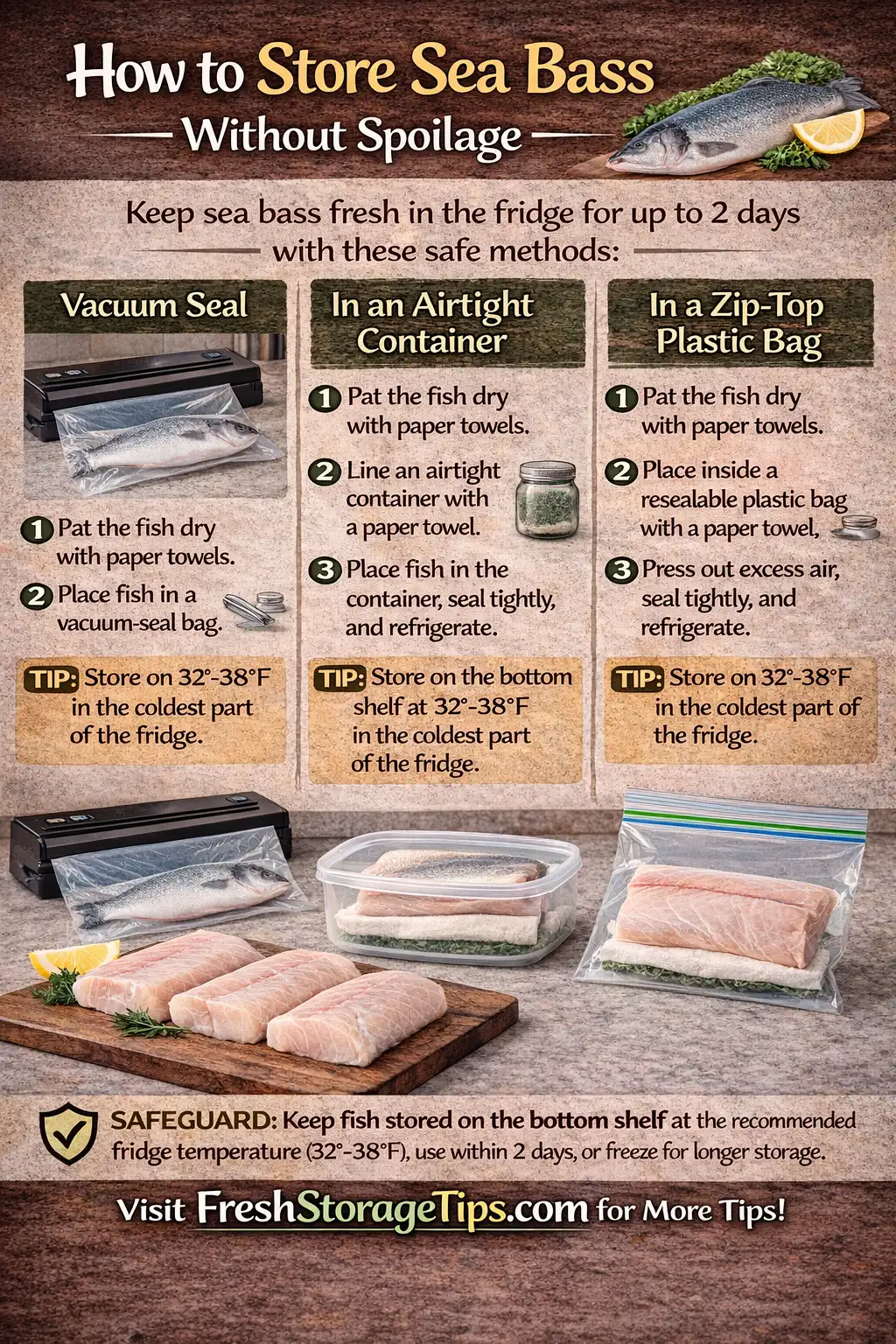
Visual Glance: The Freshness Timeline
This timeline helps you plan your cooking. Sea Bass is a “cook or freeze” protein; it does not improve with age.
You should treat Sea Bass with the same level of care as when you store fresh halibut. Both are premium white fish that degrade quickly. It is much more sensitive than smoked salmon, which is cured and can handle a standard fridge shelf for a week.
Storage Method Showdown
Using an “Ice Rig” is the only way to mimic professional storage. Here is how it compares to leaving it in the bag.
Video Guide: Freezing Techniques
The “Glazing” Method
In this video, fishmonger Hans Haveman demonstrates a crucial technique for freezing fish called glazing. If you cannot eat your Sea Bass within two days, freezing is the best option.
How it works: You dip the fish in ice water and place it on a tray in the freezer. Once frozen, you dip it again to form a second layer of ice. This shell of ice acts as a barrier, protecting the delicate meat from the dry air of the freezer.
This prevents freezer burn effectively without needing expensive vacuum equipment. It is the best way to ensure your expensive Sea Bass still tastes moist and sweet when you thaw it months later.
Interactive Storage Chart
Filter by the state of your fish. Cooked leftovers are easier to handle than raw fillets.
| State | Best Method | Safe Time | Risk or Tip |
|---|---|---|---|
| Fresh Raw | Ice Rig | 3–4 Days | Drain water daily; standing water ruins texture. |
| Pan Seared | Airtight Tub | 3–4 Days | Cool completely before sealing to stop condensation. |
| Thawed | Plate in Fridge | 1 Day | Do not refreeze. Cook immediately. |
| Vacuum Sealed | Deep Freeze | 9 Months | Best for fatty Chilean Sea Bass. |
| Store Wrapped | Fridge Shelf | 1–2 Days | High risk of spoilage; transfer to ice ASAP. |
Safety: The Sniff Test
Consuming spoiled fish is a serious health risk. Referencing FoodSafety.gov standards, here is how to check your Sea Bass:
- ⚠️ Ammonia Smell: Fresh fish should smell mild, like the ocean or cucumber. If it smells sharp, chemical-like, or like ammonia, it has gone bad. Do not rinse it; discard it.
- 👀 Milky Slime: The surface should be shiny and tight. If you see a thick, milky liquid accumulating in the package, or if the fish feels tacky to the touch, bacteria are multiplying.
- ⚠️ Gaping: If the flakes of the raw fish are separating from each other (gaping), it indicates the fish is old and the connective tissue has broken down. It will be mushy when cooked.
Sea Bass Myths Busted
Let’s clear up some kitchen folklore:
- 🚫 Myth: Fresh is better than frozen. Reality: “Flash frozen at sea” is often higher quality than “fresh” fish that has spent 5 days in transport. Don’t be afraid of the freezer aisle.
- 🚫 Myth: Lemon juice preserves it. Reality: Acid “cooks” the fish (ceviche style) and changes the texture. It does not kill all bacteria or parasites. Store it plain.
- 🚫 Myth: Thaw on the counter. Reality: Never thaw fish at room temperature. The outside warms up and grows bacteria while the inside is frozen. Thaw in the fridge or cold water.
Deep Dive: Building the Ice Rig
I mention this often because it is the single best way to store fish at home. Here is exactly how to do it step-by-step:
- Get Two Bowls: Find a colander or perforated pan that fits inside a larger solid bowl. There must be space between them.
- Add Ice: Fill the colander halfway with crushed ice.
- Place Fish: Lay the unwrapped, dried fish on top of the ice. You can use a sheet of plastic wrap as a barrier if you prefer the ice not to touch the meat directly.
- Cover: Place more ice on top (if you have enough) or simply cover the bowl tightly with plastic wrap.
- Drain Daily: This is the most important part. As the ice melts, the water drips into the bottom bowl. Empty this daily. Standing water ruins fish; melting ice preserves it.
This method keeps the fish at exactly 32°F, which is significantly colder than your 40°F fridge shelf.
Thawing Frozen Sea Bass
If you have frozen your Sea Bass, thawing it correctly is the final hurdle. The USDA recommends thawing in the refrigerator. Place the fish on a plate (to catch leaks) and let it sit for 24 hours.
The Quick Thaw: If you are in a rush, keep the fish in its sealed plastic bag and submerge it in a bowl of cold water. Change the water every 30 minutes. Do not use warm water, or the fish will turn mushy.
Pairing Partners
Sea Bass is often served with fresh sides. When you are prepping your meal, make sure your accompaniments are fresh too. I often serve it with chimichurri or dill sauce, so knowing how to store fresh herbs is key. Also, since butter sauces are classic with white fish, check out tips on how to store butter to ensure it hasn’t picked up fridge odors.
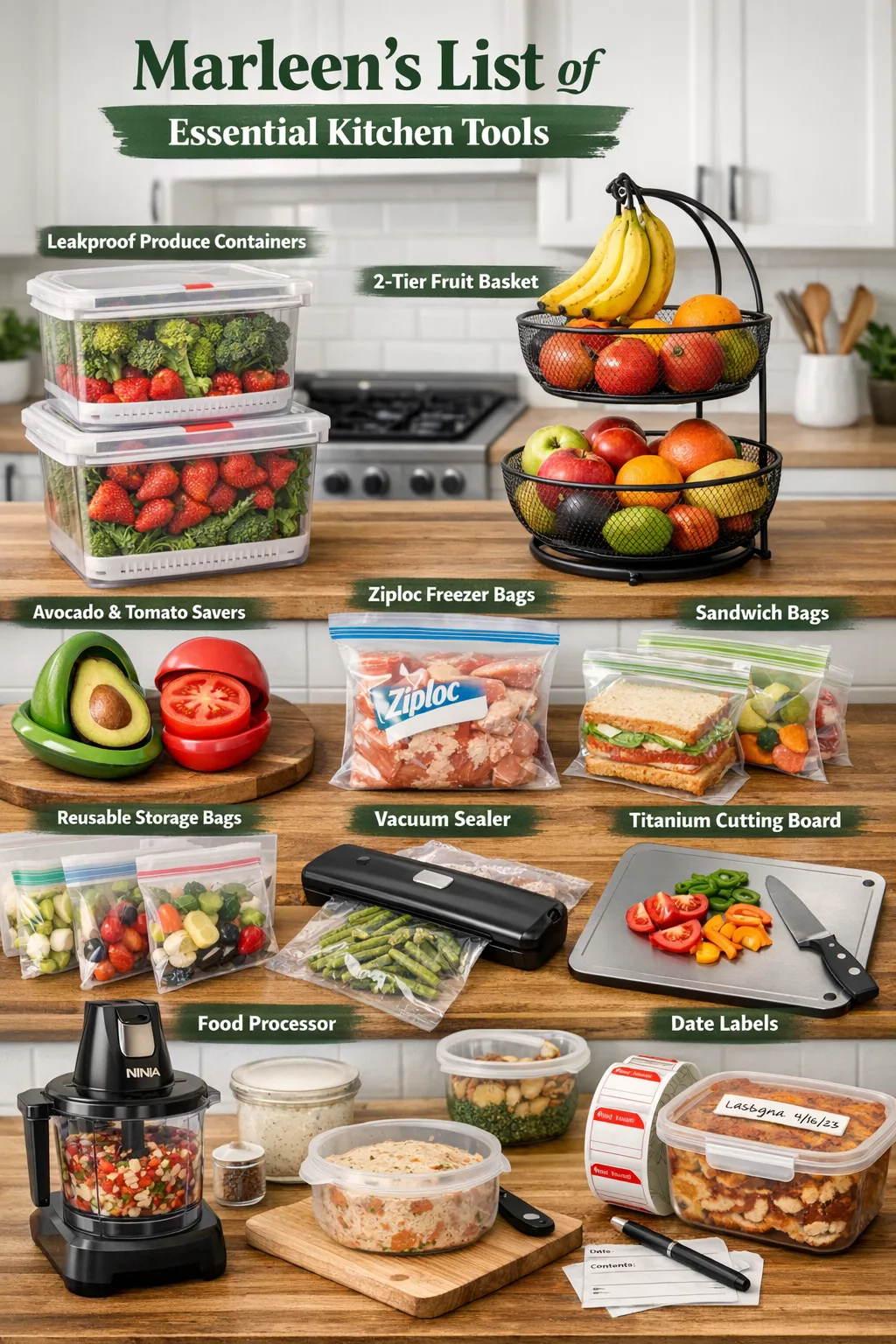
Cooking seafood at home can feel like a high-stakes game. The ingredients are expensive, the shelf life is short, and the margin for error is slim. However, I have found that having the right equipment transforms this anxiety into confidence. When you know you have the tools to keep your fish at the perfect temperature and handle it delicately, you are more likely to buy that beautiful fillet of Sea Bass and cook it perfectly.
The items I have curated below are the backbone of my seafood prep routine. First and foremost, a vacuum sealer is the best investment you can make for preserving expensive proteins. Oxygen is the enemy of quality, causing fat oxidation and freezer burn. Removing that air extends the life of your catch from weeks to months. For fresh storage, perforated hotel pans or specialized colanders are vital for creating the “ice rig” I mentioned. You cannot achieve professional results with a standard Tupperware container; you need drainage to keep the fish from sitting in bacterial soup.
Beyond storage, the right prep tools make the process safer and more enjoyable. A flexible fish spatula is a game-changer; its thin metal edge slides under delicate fillets without breaking them, unlike thick plastic turners. Fish bone tweezers are essential for safety, ensuring no guest chokes on a stray bone. And high-quality freezer bags and labels ensure you never lose track of your inventory. These tools turn your kitchen into a space where you can handle premium ingredients with the respect they deserve, saving you money and resulting in better meals.
Ziploc Freezer Bags
Essential for the water displacement method if you lack a sealer.
View on AmazonAs an Amazon Associate, I earn from qualifying purchases.
Sources & Transparency
This guide references food safety storage limits from the FDA Fish and Fishery Products Hazards Guide. Guidance on bacterial growth and seafood storage was consulted via NOAA Fisheries.
Sea bass lasts 1 to 2 days in the fridge and up to 6 months in the freezer when sealed tightly. Grouper has almost the same shelf life as sea bass and can be stored using the exact same method — both benefit from being placed on a bed of crushed ice at the back of the fridge. Swordfish is meaty and slightly fattier than sea bass, which means it holds its quality in the freezer for a similar 6-month window. For a tropical alternative with a very similar freshness timeline, mahi mahi follows the same 1 to 2 day fridge rule as sea bass.
Last updated:
Update Log
- : Added the “Ice Rig” method instructions and tips on avoiding ammonia smells.