How to Store Fresh Halibut: Remove the fish from the store paper immediately. Pat it dry with paper towels. Place the fillets in a colander set over a bowl filled with crushed ice, ensuring the melting water drains away from the meat. Cover the top with plastic wrap and store in the bottom of the fridge. This keeps it fresh for 2 to 3 days.
Food Safety Tip: According to the FDA, fresh fish should be kept below 40°F (4°C). The “ice rig” method helps get the temperature closer to 32°F, which significantly slows bacterial growth.
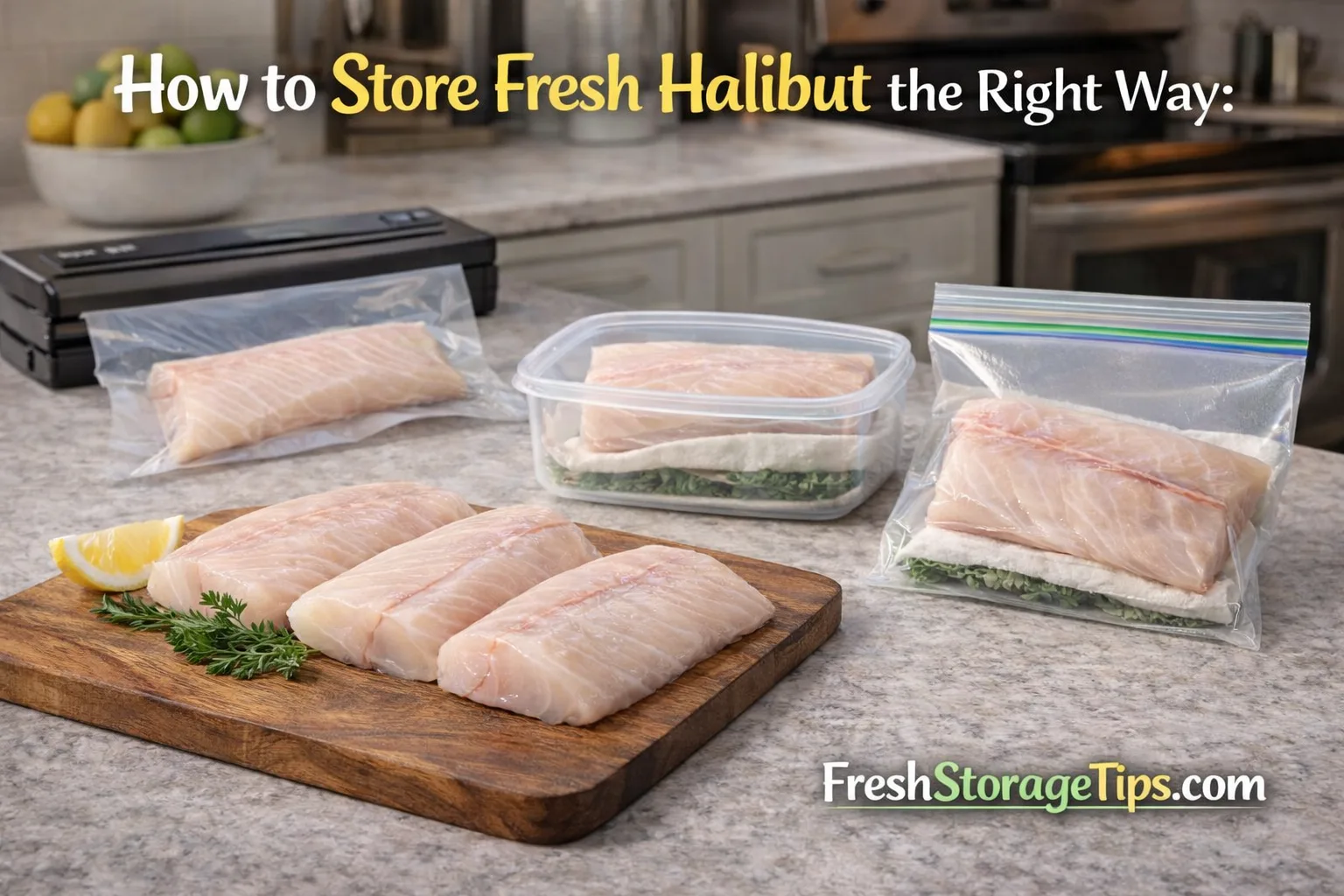
The Steak of the Sea
Halibut is often called the “steak of the sea” for good reason. It has a firm, meaty texture and a clean, mild flavor that even non-fish lovers enjoy. It is also one of the pricier items at the seafood counter. Buying fresh halibut is an investment, and there is nothing worse than opening the fridge a day later to find your beautiful fillets sitting in a pool of liquid, smelling questionable.
I remember the first time I bought a large piece of halibut for a dinner party. I left it in the butcher paper on the top shelf of my fridge. By the time I went to cook it 24 hours later, the edges had dried out, yet the fish smelled “fishy.” I had to trim it heavily, wasting expensive meat. I learned that treating premium white fish like chicken or beef is a recipe for disaster.
Fish from cold northern waters are biologically designed to function at low temperatures. A standard refrigerator running at 38°F or 40°F feels like a sauna to a halibut fillet. To keep it pristine, we need to get aggressive with cooling. Whether you are planning to grill it tonight or freeze it for next month, proper handling starts the moment you walk in the door.
The Science: Why Halibut Spoils Fast
To understand why we need ice, we have to look at the biology of the fish. Halibut live in deep, cold waters.
- Enzymatic Activity: The enzymes in warm-blooded animals (like cows) slow down significantly when chilled. However, the enzymes in cold-water fish are adapted to work efficiently at near-freezing temperatures. When you put halibut in a 40°F fridge, those enzymes remain very active, breaking down the proteins and turning the firm flesh mushy. You must get the temp down to 32°F to put the brakes on this process.
- Bacterial Growth: According to research on seafood preservation, bacterial growth on fish surfaces doubles with every few degrees of temperature rise. The difference between 32°F (on ice) and 40°F (fridge shelf) is massive in terms of shelf life.
- Oxidation: Halibut is a lean fish, meaning it has less fat than salmon. This makes it less prone to going rancid, but more prone to drying out. Direct airflow from the fridge fan will turn the surface into fish jerky. It needs to be wrapped tight.
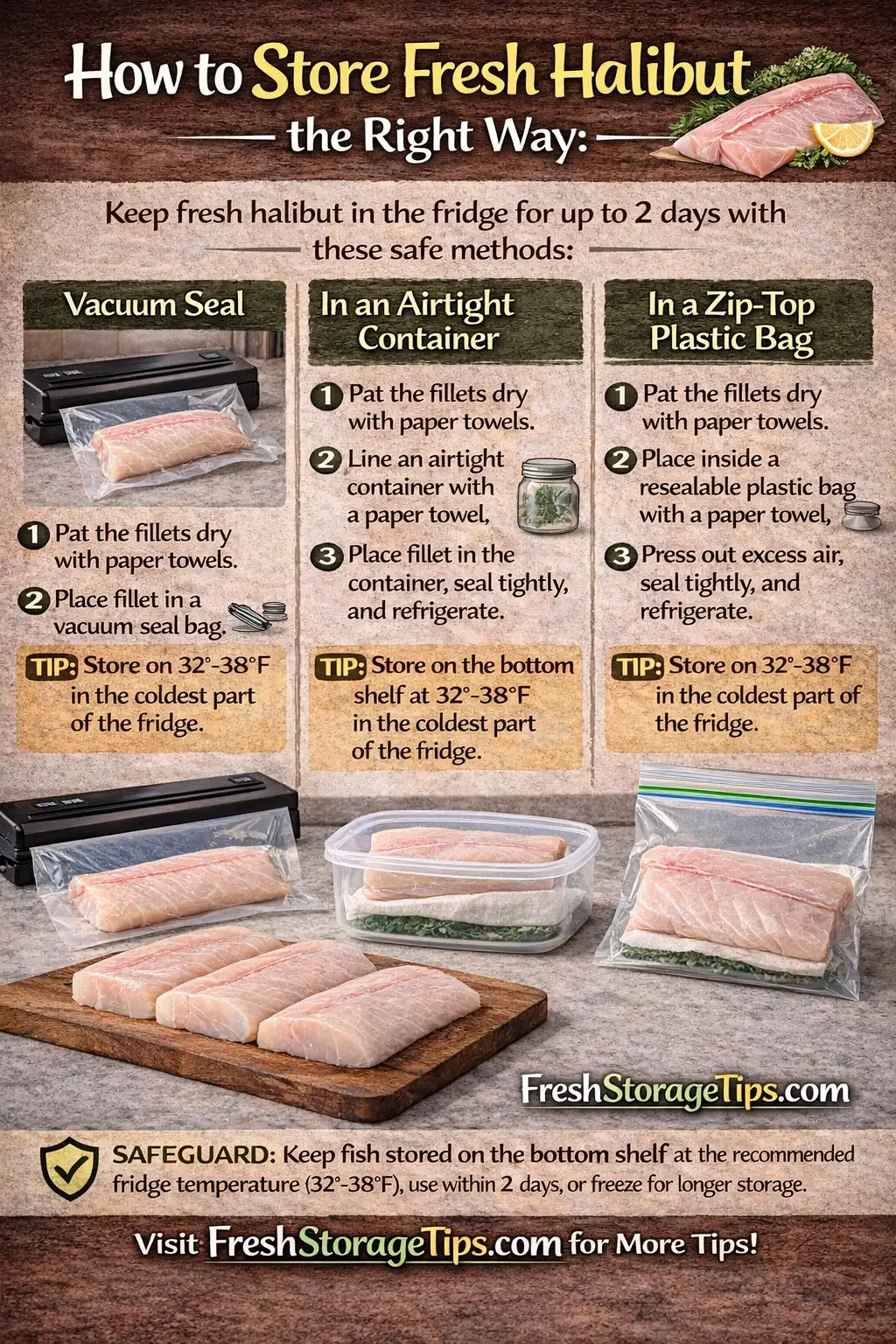
Visual Glance: The Freshness Timeline
This timeline helps you plan your menu. Seafood is not a “shop once for the week” item unless you have a plan.
Compared to other fish, halibut is more delicate than when you store salmon or Mahi Mahi. Those fish have higher oil contents that offer some protection. Lean white fish like halibut and cod have zero defense against temperature abuse.
Storage Method Showdown
Using an “Ice Rig” is the gold standard. Here is how it compares to other common methods.
Video Guide: Freezing Techniques
The “Glazing” Secret
In this video, fishmonger Hans Haveman shares a professional trick for freezing fish if you don’t have a vacuum sealer: Glazing.
How it works: You dip the fish in ice water and place it in the freezer. Once frozen, dip it again to form a second layer of ice. This shell of ice protects the delicate meat from the harsh, dry air of the freezer, preventing freezer burn.
He also stresses the importance of removing fish from store packaging. Those foam trays act as insulators, keeping the fish warm during the trip home. Get the fish out of there and onto ice immediately.
Interactive Storage Chart
Filter by the state of your halibut. Leftovers are easier to manage than raw fillets.
| State | Best Method | Safe Time | Risk or Tip |
|---|---|---|---|
| Fresh Raw | Ice Rig | 2–3 Days | Keep dry; do not let it soak in meltwater. |
| Grilled/Baked | Airtight Tub | 3–4 Days | Flake into salads if texture gets dry. |
| Thawed | Plate in Fridge | 1 Day | Cook immediately; do not refreeze. |
| Vacuum Sealed | Deep Freeze | 9 Months | Lean fish freezes well but dries easily. |
| Store Wrapped | Fridge Shelf | 1 Day | High risk of spoilage. |
Safety: The Nose Knows
Bad fish is a serious health hazard. Referencing FoodSafety.gov, here are the non-negotiable signs to watch for:
- ⚠️ Ammonia Smell: This is the most obvious sign. If the fish smells sharp, like chemicals or ammonia, throw it out immediately. Fresh halibut smells like the sea.
- 👀 Milky Liquid: Fresh fish might be slightly moist, but if there is a thick, milky liquid in the bag, it is a sign of bacterial slime.
- ⚠️ Gaping Flesh: If the meat is separating into flakes while raw (gaping), it is old. It might be safe to eat if it smells fine, but the texture will be mushy.
Halibut Myths Busted
Let’s clear up some kitchen folklore:
- 🚫 Myth: Fresh is always better than frozen. Reality: “Flash frozen at sea” halibut is often fresher than “fresh” fish that has sat on a truck for 5 days. Don’t be afraid of the frozen aisle.
- 🚫 Myth: Rinse with vinegar to clean it. Reality: Vinegar cooks the surface (ceviche style) and ruins the texture. Just use cold water and pat dry.
- 🚫 Myth: Thaw on the counter. Reality: Never thaw fish at room temperature. The outside warms up and grows bacteria while the inside is still frozen. Thaw in the fridge overnight.
Deep Dive: Building the Ice Rig
I mention this method often because it is the single best way to store fish at home. Here is exactly how to do it step-by-step:
- Get Two Bowls: Find a colander or perforated pan that fits inside a larger solid bowl. There must be space between them.
- Add Ice: Fill the colander halfway with crushed ice.
- Place Fish: Lay the unwrapped, dried fish on top of the ice. You can use a sheet of plastic wrap as a barrier if you prefer the ice not to touch the meat directly.
- Cover: Place more ice on top (if you have enough) or simply cover the bowl tightly with plastic wrap.
- Drain Daily: This is the most important part. As the ice melts, the water drips into the bottom bowl. Empty this daily. Standing water ruins fish; melting ice preserves it.
This method keeps the fish at exactly 32°F, which is significantly colder than your 40°F fridge shelf.
Thawing Frozen Halibut
If you have frozen your halibut, thawing it correctly is the final hurdle. The USDA recommends thawing in the refrigerator. Place the fish on a plate (to catch leaks) and let it sit for 24 hours.
The Quick Thaw: If you are in a rush, keep the fish in its sealed plastic bag and submerge it in a bowl of cold water. Change the water every 30 minutes. Do not use warm water, or the fish will turn mushy.
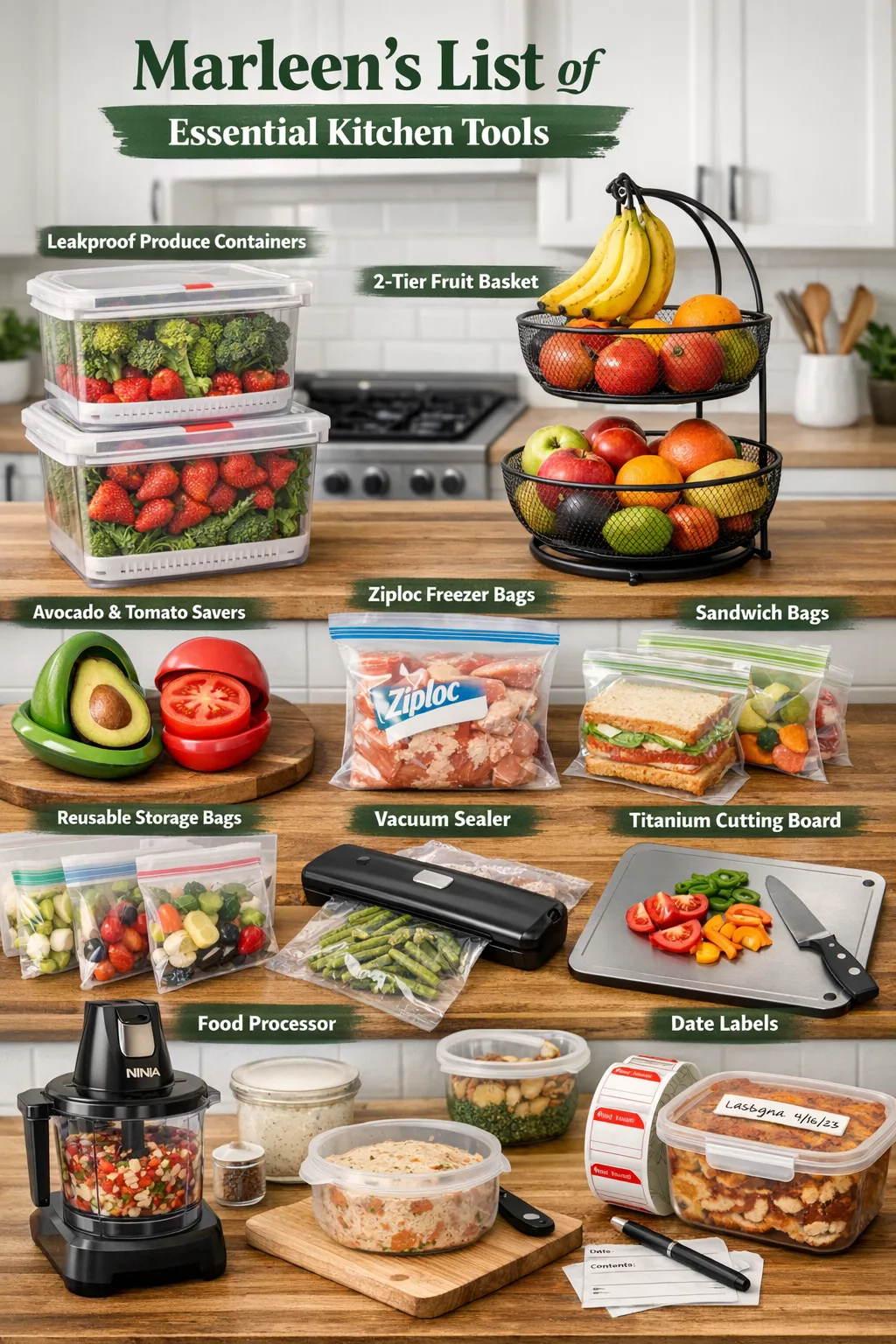
I think many of us avoid cooking fish at home because we are afraid of messing it up. We worry about the smell, the bones, or the delicate texture sticking to the pan. But I have found that having the right tools turns that anxiety into confidence. When you invest in a few key pieces of equipment, you are not just buying gadgets; you are buying the ability to handle expensive proteins like halibut with the respect they deserve.
The items I have listed below are the exact tools I use to maintain the “cold chain” in my own kitchen. A vacuum sealer is perhaps the most important investment for seafood. Oxygen is the enemy of fish, causing fat oxidation and freezer burn. Removing that air extends the life of your catch from weeks to months. For fresh storage, perforated hotel pans or specific colanders are vital for creating the “ice rig” I mentioned above. You simply cannot get the same results with a standard Tupperware container.
Beyond storage, preparation is key. A flexible fish spatula is a game-changer; its thin metal edge slides under delicate fillets without breaking them, unlike thick plastic turners. And let’s talk about safety: fish bone tweezers are essential. Nothing ruins a dinner party faster than a guest choking on a bone. Having a dedicated tool to remove them shows care and professionalism. Finally, high-quality freezer bags and date labels ensure that you never have to play the “mystery meat” guessing game in your freezer again. These tools make cooking seafood a joy rather than a chore.
Ziploc Freezer Bags
Essential for the water displacement method if you lack a sealer.
View on AmazonAs an Amazon Associate, I earn from qualifying purchases.
Sources & Transparency
This guide references food safety storage limits from the FDA Fish and Fishery Products Hazards Guide. Guidance on bacterial growth and seafood storage was consulted via NOAA Fisheries.
Fresh halibut lasts 1 to 2 days in the fridge at 32 to 38°F and up to 6 months in the freezer when double-wrapped. Smoked fish like smoked salmon lasts up to 2 weeks in the fridge — much longer than fresh halibut because the smoking and curing process slows bacteria growth. Sea bass has a very similar fridge and freezer shelf life to halibut and benefits from the same crushed ice storage technique. Delicate thin-cut fish like sole is even more perishable than halibut and should be used on the day of purchase if possible.
Last updated:
Update Log
- : Added the “Ice Rig” method instructions and tips on avoiding ammonia smells.