How to Store Swordfish: Remove the steaks from the store packaging and pat them dry. Place them in a colander over a bowl of crushed ice, ensuring water drains away from the meat. Cover the bowl tightly with plastic wrap to prevent drying and store in the bottom of the fridge. This keeps the fish fresh and safe for 3 to 4 days.
Food Safety Tip: Swordfish is susceptible to histamine development (scombroid poisoning) if it gets warm. The “The FDA recommends keeping swordfish below 40°F (4°C) at all times to reduce the risk of histamine formation.”

The Steak of the Sea
Swordfish is often called the “steak of the sea” because of its incredibly dense, meaty texture. Unlike flaky white fish, swordfish holds up on the grill just like a beef steak. It is a premium protein, often costing upwards of $25 per pound, which makes bringing it home a bit stressful. You want to ensure that investment makes it to the dinner table in perfect condition.
I recall buying two beautiful swordfish steaks for a weekend barbecue. I left them in the butcher paper in the fridge for two days. When I unwrapped them, the edges were curled and dry, and there was a faint chemical smell. I had to trim away nearly a quarter of the steak to get to the good meat. It was a waste that could have been avoided.
Because swordfish is a large, predatory fish, it has different biological properties than smaller fish. It spoils differently and carries specific risks if not kept ice-cold. Whether you are marinating it for kebabs or grilling it whole, temperature control is the single most important factor. Let’s look at how to keep your swordfish juicy and safe.
The Science: Histamines and Texture
Storing swordfish correctly is a matter of both food safety and texture preservation. It belongs to a category of fish that requires strict temperature management.
- Scombroid Poisoning Risk: Swordfish, like tuna and Mahi Mahi, is susceptible to scombroid poisoning. This happens when bacteria on the fish convert an amino acid called histidine into histamine. This conversion happens rapidly at temperatures above 40°F. Once histamine forms, you cannot cook it out. It causes an allergic-like reaction. Keeping the fish on ice (32°F) is the only way to stop this process completely.
- Dense Muscle Fibers: Swordfish has a tight muscle structure. In the dry environment of a refrigerator, moisture evaporates from the surface quickly, creating a tough, jerky-like “pellicle” on the outside. This is why tight wrapping is essential after the fish is chilled.
- Bloodline Oxidation: You will notice a dark red area on the steak. This is the bloodline, a muscle rich in myoglobin. This area oxidizes (turns brown) and develops a strong “fishy” flavor much faster than the white meat. Trimming this before storage or cooking can improve the flavor profile significantly.
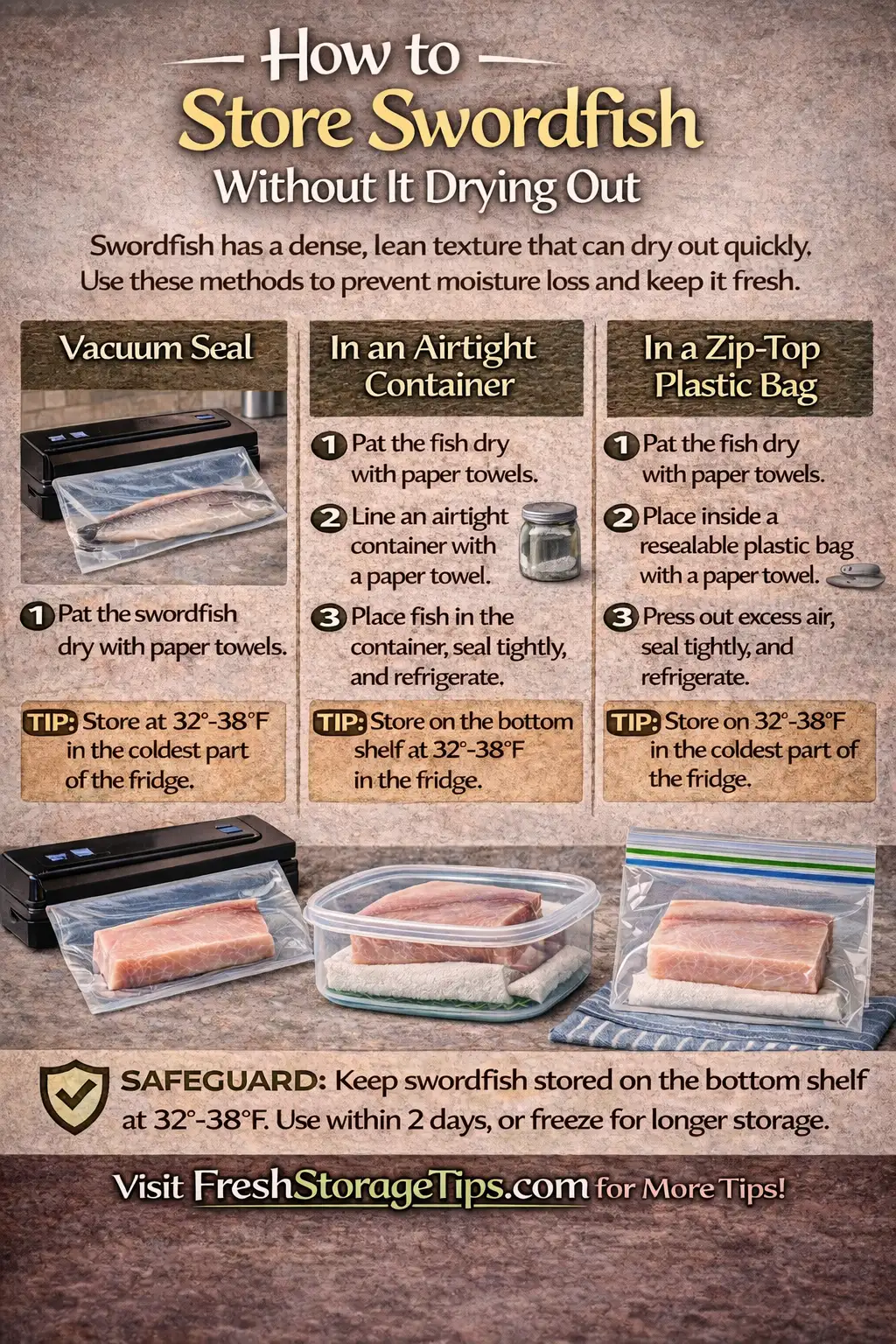
Visual Glance: The Freshness Timeline
This timeline helps you plan your grilling schedule. Swordfish is robust, but it still has a ticking clock.
Compared to other fish, swordfish is hardier than delicate haddock or pollock. Its dense meat allows it to last an extra day or two if handled correctly. It behaves similarly to salmon, though it has less fat to protect it from drying out.
Storage Method Showdown
The “Ice Rig” is the only method I recommend for fish this expensive. Here is why.
Video Guide: Chef Tips for Swordfish
Handling the Meat
In this video, Chef Evan Deluty demonstrates how to handle swordfish. While he focuses on cooking, pay attention to the texture of the raw fish he uses.
Storage Takeaway: Notice how firm and moist the meat is. If your swordfish looks dried out or is separating, it has been stored improperly. He also discusses the “bloodline” (the dark red part). For storage, bacteria love this nutrient-rich bloodline. If you plan to store the fish for more than 2 days, trimming that red part off before storage can actually help the rest of the white meat stay fresh longer.
Treating the fish gently and keeping it cold ensures that when it hits the hot pan, it sears beautifully rather than steaming in its own breakdown fluids.
Interactive Storage Chart
Filter by the state of your fish. Cooked swordfish is excellent in salads and stores easily.
| State | Best Method | Safe Time | Risk or Tip |
|---|---|---|---|
| Fresh Steak | Ice Rig | 3–4 Days | Trim red bloodline for milder flavor. |
| Grilled/Seared | Airtight Tub | 3–4 Days | Great cold in salads; don’t overheat. |
| Thawed | Plate in Fridge | 24 Hours | Cook immediately. Do not refreeze. |
| Vacuum Sealed | Deep Freeze | 9 Months | Remove air to prevent oxidation. |
| Store Wrapped | Fridge Shelf | 1–2 Days | Transfer to ice ASAP. |
Safety: The Nose Knows
Swordfish spoilage is dangerous due to histamine risks. Referencing FoodSafety.gov, here are the warning signs:
- ⚠️ Ammonia Smell: Fresh swordfish smells mildly salty. If you detect ammonia, sulfur, or a “sour” odor, it is unsafe. Do not attempt to wash it off.
- ⚠️ Slimy Surface: The flesh should be moist but not sticky. If there is a tacky, slimy coating that feels slick, bacteria colonies are established.
- 👀 Brown Edges: If the white meat is turning brown or gray at the edges (unrelated to the bloodline), it is oxidizing and drying out. Trim these parts before cooking if the smell is okay.
Swordfish Myths Busted
Let’s clear up some kitchen folklore:
- 🚫 Myth: Lemon juice preserves it. Reality: Acid “cooks” the surface (ceviche) and changes the texture. It does not prevent histamine formation. Store plain.
- 🚫 Myth: Thaw in the microwave. Reality: This ruins the texture of dense fish like swordfish, making it rubbery. Thaw in the fridge or cold water only.
- 🚫 Myth: The red part is bad. Reality: The red bloodline is safe to eat, though it has a stronger, iron-like flavor. Some people remove it for a milder taste, but it is not “spoiled.”
Deep Dive: Building the Ice Rig
This is the best way to keep swordfish at 32°F in a 40°F fridge. Here is how:
- Get Two Bowls: Find a colander that fits inside a larger solid bowl. There must be space between them for drainage.
- Add Ice: Fill the colander halfway with crushed ice.
- Place Fish: Lay the unwrapped, dried steaks on top of the ice. Use a sheet of plastic wrap as a barrier if you prefer.
- Cover: Place more ice on top or cover the bowl tightly with plastic wrap.
- Drain Daily: As the ice melts, the water drips into the bottom bowl. Empty this daily. Standing water breeds bacteria.
This method keeps the fish safe and prevents the formation of histamines.
Freezing Swordfish: Vacuum is King
Because swordfish steaks are thick and dense, they freeze very well. However, they are prone to oxidation. A vacuum sealer is the best tool here.
If you don’t have one, use the water displacement method: put the fish in a Ziploc bag, submerge the bag in water (without letting water inside) to push the air out, and seal. This is better than just zipping it shut.
Thawing Without Loss
Thawing swordfish slowly is crucial. Place the frozen steak on a plate in the fridge for 24 hours. If you are in a rush, submerge the sealed bag in cold water for 30-45 minutes. Never use warm water, or the texture will become mushy.
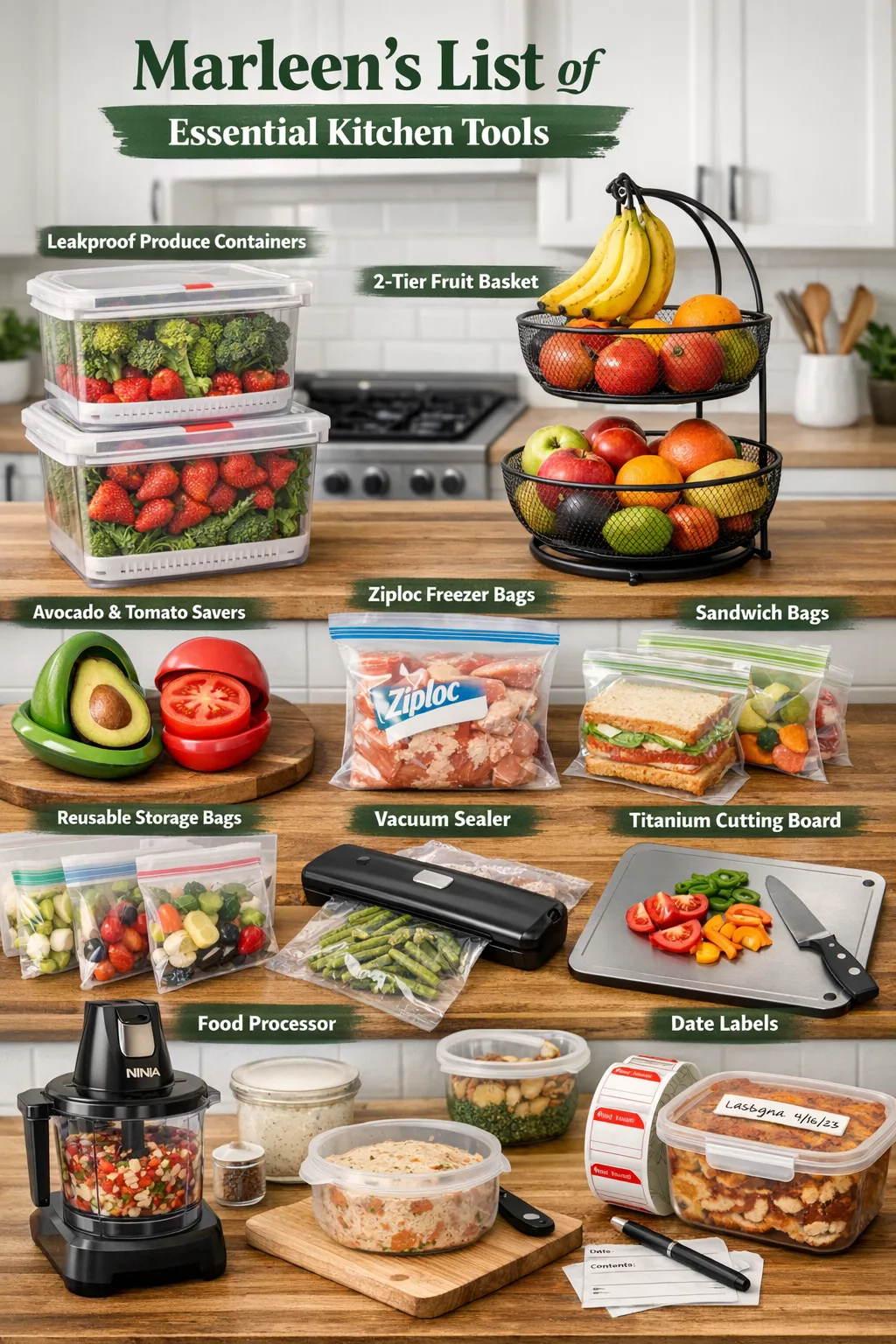
Swordfish is a premium protein, often costing as much as a good ribeye steak. When I spend that kind of money on a meal, I want to ensure it is perfect. I used to be afraid of freezing expensive fish, thinking it would ruin the texture. But once I invested in the right tools, I realized that I could buy seafood on sale, freeze it properly, and enjoy a high-end dinner on a Tuesday night for half the price.
The items I have selected below are the exact tools I use to protect my investment. A vacuum sealer is the most important one. Swordfish steaks are thick and have a bloodline that oxidizes easily. A vacuum sealer removes the oxygen that causes this discoloration and “fishy” taste, keeping the steak fresh in the freezer for months. For fresh storage, perforated pans allow me to build the “ice rig” I mentioned earlier. This keeps the fish at a safe 32°F without waterlogging it, which is something a standard Tupperware container simply cannot do.
Beyond storage, I have included prep tools that make cooking easier. A sturdy fish spatula is essential for flipping heavy swordfish steaks on the grill without them sticking or breaking. Fish bone tweezers are a safety must-have; finding a bone in a steak can ruin the experience. And clear freezer labels help you practice “first-in, first-out” inventory management, so you never waste food. These tools pay for themselves by preventing waste and giving you the confidence to cook restaurant-quality seafood at home.
As an Amazon Associate, I earn from qualifying purchases.
Sources & Transparency
This guide references food safety storage limits from the FDA Fish and Fishery Products Hazards Guide. Guidance on bacterial growth, histamine formation, and seafood storage was consulted via NOAA Fisheries.
Swordfish lasts 1 to 2 days in the fridge and 3 to 4 months in the freezer — slightly less than leaner fish because its higher fat content means it can go rancid faster. Sea bass is leaner and similar in texture to swordfish, with the same 1 to 2 day fridge window. Grouper is another firm-fleshed fish that stores identically to swordfish in both the fridge and freezer. The most commonly stored fish at home is salmon, which lasts up to 3 months frozen here’s how that compares to swordfish.
Last updated:
Update Log
- : Added critical safety information regarding scombroid poisoning and detailed the “Ice Rig” method.