How to Store Haddock: Remove the fish from the store wrapping and pat it dry. Place the fillets in a colander over a bowl of crushed ice, ensuring the meltwater drains away from the flesh. Cover the bowl tightly with plastic wrap and store it in the coldest part of your refrigerator (usually the bottom shelf). Use within 2 to 3 days.
Food Safety Tip: Haddock is a lean fish that spoils quickly. The FDA recommends keeping it below 40°F (4°C), but getting it closer to 32°F (0°C) with ice is safer.

The Fish and Chips Favorite
Haddock is a staple in many households, especially for those of us who love a good fish fry or a comforting chowder. It is a cousin to cod but has a slightly sweeter flavor and finer flakes. Because it is a cold-water fish from the North Atlantic, it is incredibly delicate. Bringing a fresh fillet home is a treat, but that treat can turn into a smelly disaster if you do not handle it correctly.
I remember buying beautiful haddock for a Friday night dinner, only to have my plans change. I left the fish in its paper wrap until Sunday. When I opened it, the smell was sharp and the texture was tacky. I had to toss it. That waste hurt my wallet and my heart. I learned that lean white fish like haddock have zero tolerance for standard refrigerator temperatures.
To keep haddock smelling like the ocean and tasting sweet, you have to mimic the conditions of the boat it was caught on. This means ice, drainage, and air protection. Whether you are dealing with fresh fillets or thawing a frozen block, the rules remain the same. Let’s look at how to protect your catch.
The Science: Lean Fish Spoilage
Haddock faces specific challenges because of its biology. It is a lean fish, meaning it has very low fat content compared to salmon.
- Enzymatic Breakdown: The digestive enzymes in cold-water fish are designed to work at temperatures near freezing. In a standard 40°F fridge, these enzymes act like they are in a sauna. They go into overdrive, breaking down the muscle fibers. This turns the firm flakes into mush. Getting the temperature down to 32°F stops this process.
- Bacterial Growth: According to seafood preservation studies, the bacteria on fish skin multiply rapidly as the temperature rises. Even a few degrees make a difference. The “Ice Rig” method keeps the fish consistently colder than the ambient air of the fridge.
- Dry Out Risk: Because haddock lacks the protective oil of fatty fish, it dries out instantly if exposed to the fan in your fridge. This creates a tough, dry layer on the fillet. You must wrap it tightly or keep it in a sealed environment once it is on ice.
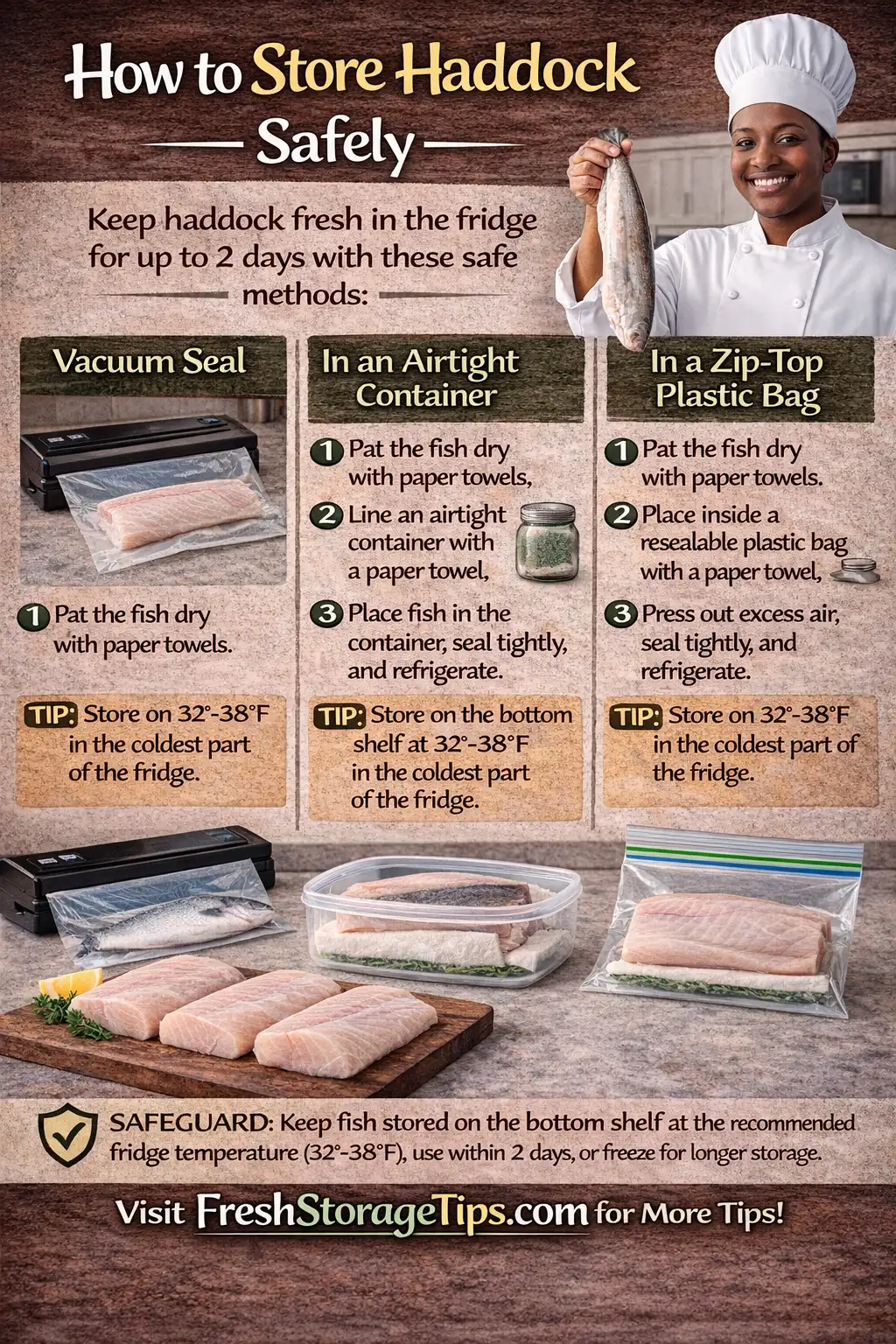
Visual Glance: The Freshness Timeline
This timeline helps you plan your meals. Haddock is not a fish that improves with age; it is a race against the clock.
Compared to other white fish, haddock is very similar to how you store fresh halibut or sea bass. It is much more fragile than salmon, which has oils that offer a slight buffer against spoilage. Treat haddock as the most delicate item in your fridge.
Storage Method Showdown
Using the ice method is the only way to get more than 24 hours out of a fresh fillet.
Video Guide: The “Frozen at Sea” Advantage
Fresh vs. Frozen Debate
This video highlights a crucial concept: Frozen at Sea (FAS). Haddock caught in the cold North Atlantic is often processed and frozen on the boat within hours of being caught.
Why this matters: This process “pauses” the deterioration immediately. A piece of FAS haddock, once thawed properly, is often chemically fresher than a “fresh” fillet that has sat on a truck and in a display case for 5 days.
If you live inland or far from the coast, buying high-quality frozen haddock is often the safer and tastier choice. Do not be afraid of the freezer aisle!
Interactive Storage Chart
Filter by the type of haddock. Smoked haddock (often yellow) keeps much longer than raw white fillets.
| State | Method | Safe Time | Risk or Tip |
|---|---|---|---|
| Fresh Raw | Ice Rig | 2–3 Days | Drain daily to avoid bacteria soup. |
| Smoked (Dyed/Undyed) | Vacuum Seal | 10 Days | Keep sealed; odor transfers easily. |
| Battered/Fried | Paper Towel + Box | 2–3 Days | Batter will soften. Reheat in oven. |
| Raw Fillet | Deep Freeze | 6 Months | Lean fish dries out faster in freezers. |
| Thawed | Plate in Fridge | 24 Hours | Do not refreeze raw haddock. |
Safety: The Sniff Test
Consuming spoiled fish is dangerous. Referencing FoodSafety.gov, here is when to discard it:
- ⚠️ Ammonia Smell: This is the #1 sign. If it smells sharp, chemical, or distinctively “fishy,” it is gone. Fresh haddock smells mild.
- ⚠️ Milky Slime: The flesh should be translucent and shiny. If it looks opaque or has a thick, milky slime, bacteria are present.
- 👀 Gaping: If the raw meat is separating into flakes (gaping) just by looking at it, the connective tissue has broken down. It will be mushy when cooked.
Haddock Myths Busted
Let’s clear up some common misconceptions:
- 🚫 Myth: Fresh is always best. Reality: As noted, “Frozen at Sea” is often fresher than “fresh” fish that has been transported for days. Trust your nose, not just the label.
- 🚫 Myth: Rinse with vinegar to clean. Reality: Acid cooks the delicate meat (ceviche style) and ruins the texture for frying. Just rinse with cold water.
- 🚫 Myth: Microwave thawing is fine. Reality: Microwaves cook the edges while the middle stays frozen. It ruins the delicate flakes of haddock. Thaw in the fridge or cold water.
Deep Dive: Smoked Haddock (Finnan Haddie)
Smoked haddock is a delicacy, often dyed bright yellow (though traditional smokers leave it natural). The smoking process cures the fish slightly, extending its shelf life compared to raw fillets.
Storage Tip: Smoked fish has a pervasive odor. You must wrap it in multiple layers of cling film or use a vacuum sealer. If you don’t, your milk and butter will taste like smoke by the next morning. Store it in the coldest part of the fridge for up to 10 days.
Freezing Haddock: The Glaze
Because haddock is so lean, it suffers from freezer burn very easily. If you don’t have a vacuum sealer, use the “glazing” method.
- Dip the fillet in ice water.
- Place it on a baking sheet in the freezer for 1 hour.
- Remove it and dip it in water again.
- Freeze again. Repeat this 3 times until a shell of ice forms.
- Place the glazed fish in a bag. The ice shell protects the meat from drying out.
Pairing and Prep
Haddock is the classic choice for Fish & Chips. If you are prepping a batter, make sure your flour and baking powder are fresh. Check how to keep flour fresh to ensure your batter crisps up perfectly. Also, serve with plenty of lemon; knowing how to store fruit like lemons keeps them juicy for squeezing.
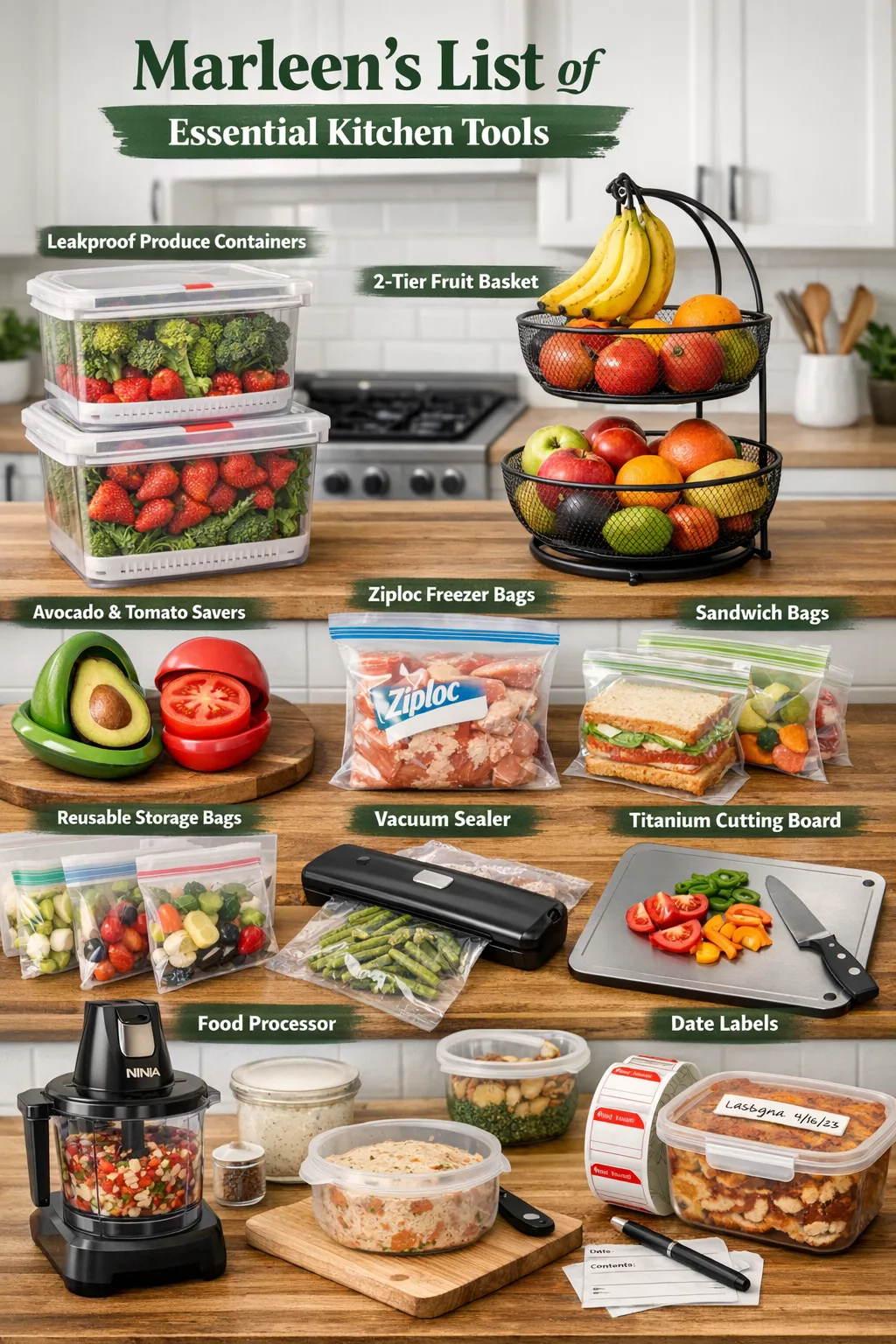
I understand the hesitation many people feel about cooking fish at home. It can be expensive, it smells if you look at it wrong, and it is easy to overcook. However, I have found that stocking my kitchen with the right tools eliminates 90% of these problems. When you have a system in place to keep fish cold, clean, and prepped, it becomes a fast and healthy weeknight option rather than a stressful event.
The items I have chosen below are specifically for handling delicate proteins like haddock. A vacuum sealer is the absolute best way to prevent freezer burn and oxidation. It pays for itself by allowing you to buy bulk frozen fish without fear of waste. For fresh storage, having the right colanders and pans to build an “ice rig” is essential. You cannot just use a cereal bowl; you need a setup that drains the water away so the fish doesn’t get soggy.
Preparation tools are just as vital. A flexible fish spatula is thin enough to slide under a flaky piece of haddock without breaking it apart in the pan. Fish bone tweezers are a safety essential, especially if you are feeding kids. And high-quality freezer bags and date labels help you manage your inventory so you never have to guess how old that fillet in the back of the freezer is. These tools turn your kitchen into a professional workspace where you can handle seafood with confidence and ease.
As an Amazon Associate, I earn from qualifying purchases.
Sources & Transparency
This guide references food safety storage limits from the FDA Fish and Fishery Products Hazards Guide. Guidance on bacterial growth and seafood storage was consulted via NOAA Fisheries.
Haddock lasts 1 to 2 days in the fridge and up to 6 months in the freezer when tightly wrapped in moisture-proof packaging. Pollock is in the same family as haddock and has exactly the same short fridge shelf life — both are best cooked on the day of purchase when bought fresh. Flounder is another mild white fish with the same 1 to 2 day fridge window, though its flat shape makes it slightly easier to store. Because pollock and haddock are both used to make fish sticks, the frozen version of these fish lasts up to 18 months compared to just 2 days for fresh.
Last updated:
Update Log
- : Added specific sections on Frozen at Sea (FAS) haddock and storage tips for smoked haddock.