How to Store Flounder: Rinse the fillets to remove surface slime and pat them bone-dry. Place them in a colander set over a bowl filled with crushed ice. Ensure the melting ice water drains away from the fish. Cover the bowl tightly with plastic wrap and store it in the coldest part of your refrigerator. This method keeps the delicate meat fresh for 3 to 4 days.
Food Safety Tip: Flatfish like flounder have a large surface area relative to their weight. This makes them cool down fast but also warm up fast. According to the FDA, keep them constantly below 40°F (4°C) to prevent bacterial blooms.

The Delicate Flatfish Dilemma
Flounder, also known as Fluke or Sole depending on the region, is one of the most delicate fish in the sea. Its meat is sweet, mild, and incredibly thin. While this makes it cook in seconds, it also means it spoils faster than almost any other fish. The thinness of the fillet means there is no dense core to hold the cold; the entire piece warms up the moment you take it out of the cooler.
I learned the hard way that you cannot treat flounder like a steak. I once bought beautiful local flounder for a Tuesday night dinner, left it in the grocery bag, and by Wednesday evening, it was a sticky, smelly mess. The disappointment was real. Unlike a thick swordfish steak that can withstand a little temperature fluctuation, flounder is unforgiving.
To keep this fish pristine, you have to manage two things: temperature and slime. Yes, slime. Flatfish have a natural protective coating that turns into a bacterial breeding ground once the fish is caught. Removing this and keeping the meat at exactly 32°F is the only way to ensure your dinner tastes like the ocean, not the pier. Let’s look at the specific steps to save your catch.
The Science: Thin Fillets and Slime
Flounder presents unique storage challenges due to its biology as a bottom-dwelling flatfish.
- Surface Area to Volume Ratio: Because flounder fillets are so thin, they have a massive surface area compared to their weight. This means bacteria have more “real estate” to attack. In a standard 40°F fridge, surface bacteria multiply rapidly, spoiling the thin meat all the way through in hours, not days.
- The Slime Factor: Flatfish produce a heavy mucus layer to protect their skin from the ocean floor. When harvested, this slime remains. According to seafood preservation research, this mucus is often the first place spoilage bacteria colonize. Rinsing it off and drying the fish is a critical preservation step that many home cooks skip.
- Enzymatic Softening: The enzymes in flounder are adapted to cold water. If the fish warms up, even slightly, these enzymes dissolve the connective tissue. Since flounder connective tissue is already weak (which is why it is so tender), any enzymatic activity turns the fillet into mush. Aggressive icing is the only solution.
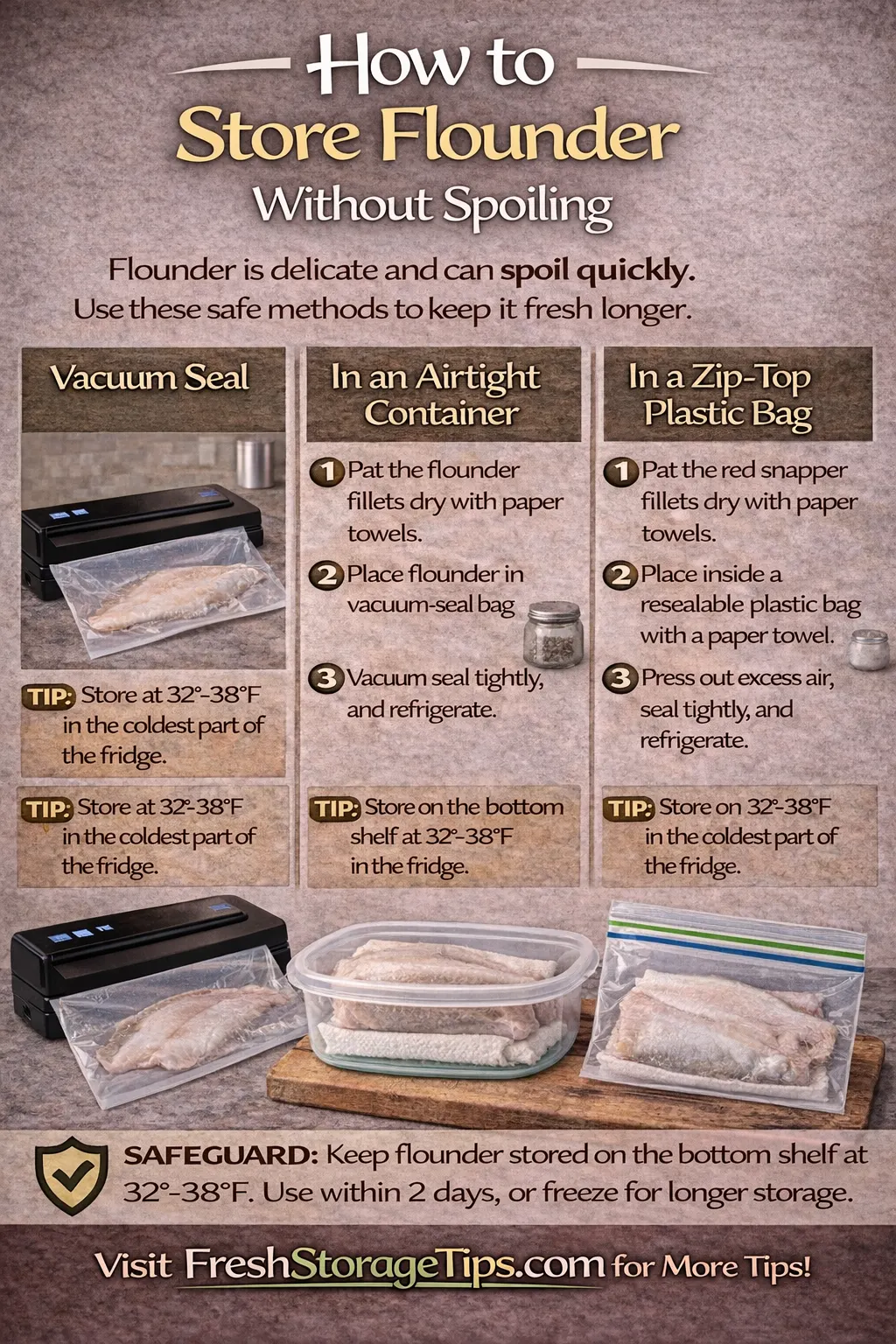
Visual Glance: The Freshness Timeline
This timeline helps you plan. Flounder is a “buy today, eat today” fish unless you use the ice method.
In the seafood hierarchy, flounder is more fragile than sea bass or grouper. It is comparable to pollock in texture but even thinner. Treat it as the most perishable item in your grocery cart.
Storage Method Showdown
Using an “Ice Rig” is non-negotiable for keeping flounder fresh past 24 hours.
Video Guide: The Speed of Processing
Handling the Catch
This video is fascinating because it shows how quickly a professional can process a flounder. The speed is key—the less time the fish spends warm in the air, the better.
Storage Takeaway: Notice how thin the fillets are as they come off the bone. There is almost no fat to protect them. This reinforces why you cannot just throw them in a bag.
If you catch your own flounder (fluke), getting them on ice immediately is the most important step. If you buy them, ask the fishmonger for a bag of ice to keep them cold on the ride home. Every minute counts.
Interactive Storage Chart
Filter by the state of your fish. Whole flounder keeps slightly better than fillets because the skin protects the meat.
| State | Best Method | Safe Time | Risk or Tip |
|---|---|---|---|
| Fresh Fillet | Ice Rig | 3 Days | Pat dry first to remove slime. |
| Whole (Gutted) | Ice Rig | 4 Days | Pack belly cavity with ice. |
| Fried/Baked | Paper Towel + Box | 3 Days | Reheat in oven to re-crisp skin. |
| Vacuum Sealed | Deep Freeze | 6 Months | Use parchment between layers. |
| Thawed | Fridge Plate | 24 Hours | Cook immediately; do not refreeze. |
Safety: The Sniff Test
Spoiled flounder is not subtle. Referencing FoodSafety.gov, here is what to look for:
- ⚠️ Ammonia Smell: Fresh flounder smells sweet and mild. If it smells sharp, chemical, or like ammonia, the proteins are rotting. Toss it.
- ⚠️ Sticky Slime: While flatfish are naturally slimy, fresh slime is clear and slippery. Spoiled slime is thick, tacky, and cloudy/milky. If it feels like glue, it is bad.
- 👀 Yellowing: The flesh should be translucent white or pinkish. If it turns opaque yellow or beige, it is oxidized and likely spoiled.
Flounder Myths Busted
Let’s clear up some kitchen folklore:
- 🚫 Myth: Fresh is better than frozen. Reality: Thin fillets freeze very fast, preserving quality. High-quality frozen flounder is often better than “fresh” fish that sat in a display case for 3 days.
- 🚫 Myth: Rinse with vinegar to clean. Reality: Acid cooks the delicate meat instantly (ceviche style). Use cold water to rinse off slime, then dry it.
- 🚫 Myth: Thaw in water. Reality: Never thaw naked flounder fillets directly in water. They will absorb it like a sponge and fall apart. Keep them in a sealed bag.
Deep Dive: Building the Ice Rig
This is the secret to professional storage. Here is the step-by-step:
- Tools: You need a colander (or perforated pan) and a slightly larger bowl that the colander can sit in.
- Ice Base: Fill the colander halfway with crushed ice.
- Placement: Lay the unwrapped, dried fillets on top of the ice. Use a sheet of plastic wrap as a barrier to prevent the ice from denting the soft meat.
- Cover: Put more ice on top, or seal the bowl tightly with plastic wrap.
- Drain Daily: The ice will melt. This washes away bacteria, but you must pour the water out of the bottom bowl daily. If the fish sits in the water, it absorbs it and becomes mushy.
This keeps the fish at 32°F, maximizing shelf life.
Freezing: The Glaze Method
If you don’t have a vacuum sealer, “glazing” is the best way to freeze flounder without freezer burn.
- Dip the fillet in ice water.
- Lay it flat on a baking sheet and freeze for 1 hour.
- Remove it, dip it in water again, and freeze again.
- Repeat until a thin shell of ice coats the fish.
- Place the glazed fillets in a freezer bag. The ice shell protects the meat from the dry air.
Thawing Without Damage
Thawing flounder requires patience. The USDA recommends thawing in the refrigerator overnight. Place the fillets on a plate.
Warning: Do not microwave thaw flounder. The edges will cook and turn rubbery while the center stays frozen. If you are in a rush, put the sealed bag in cold water for 20 minutes.
Pairing Partners
Flounder is mild and loves butter and lemon. When you are storing your fish, check your other ingredients. Make sure you know how to store butter so it hasn’t picked up fridge odors, and keep your lemons fresh using fruit storage tips.
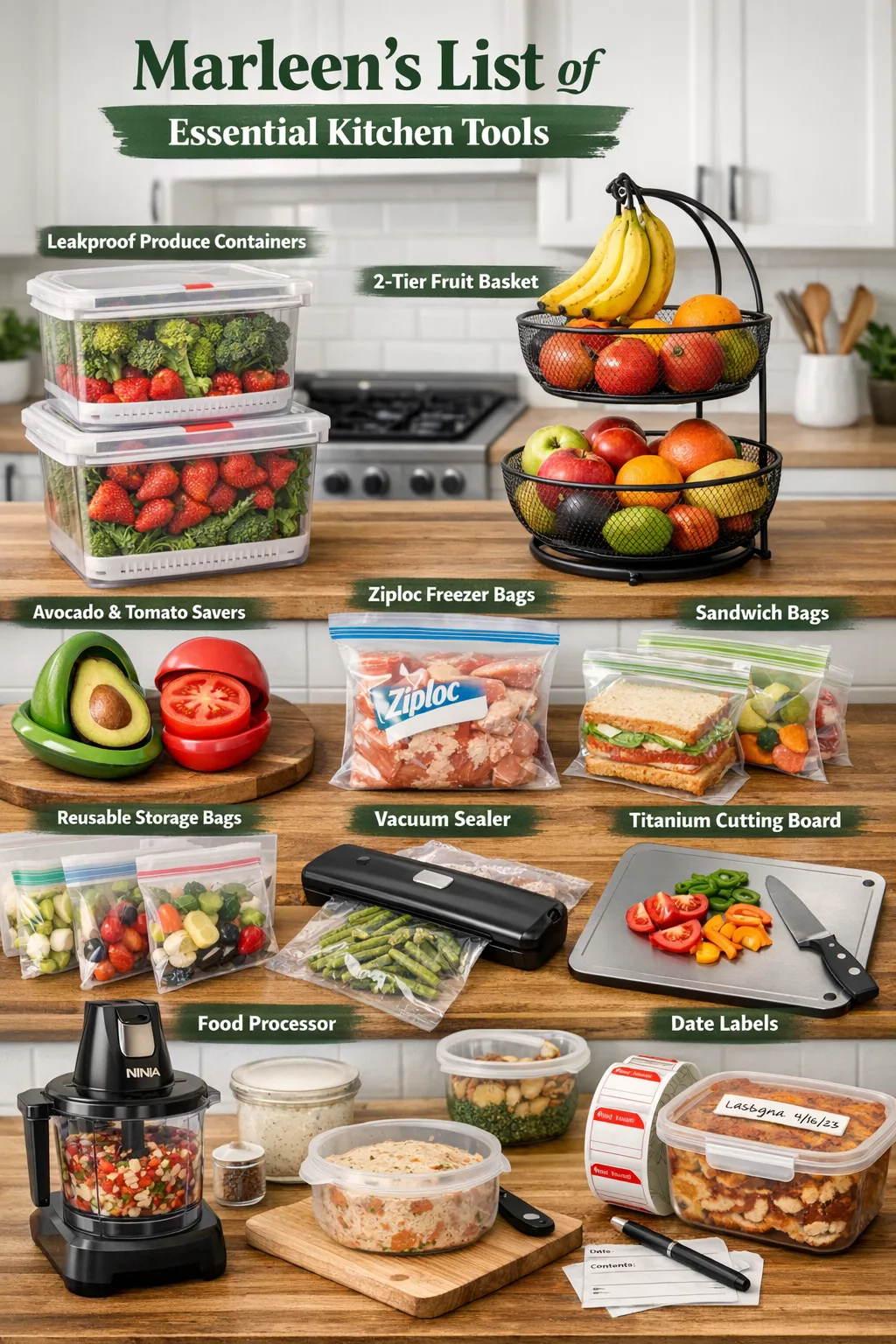
I grew up in a coastal town where fresh fish was a weekly staple, not a luxury. But even with that access, I saw how quickly a beautiful piece of flounder could go bad if it wasn’t handled right. It gave me a lifelong appreciation for the “cold chain”—that unbroken line of refrigeration from the boat to your plate. Maintaining that chain in your own kitchen is the single most important thing you can do to improve your seafood cooking.
The tools I have curated below are designed to help you do exactly that. A vacuum sealer is my top recommendation for anyone who buys seafood. Oxygen is the enemy of delicate fish like flounder, causing fat oxidation and freezer burn that ruins the texture. By removing the air, you can keep fillets tasting fresh-caught for months. For fresh storage, perforated pans are essential for building the “ice rig.” You need a system that allows melting ice to drain away, keeping the fish cold but dry. A soggy fish is a spoiled fish.
Beyond storage, preparation tools matter. A flexible fish spatula is a game-changer for thin fillets. Its wide, thin metal edge slides under the fish without tearing it, which is crucial for delicate flounder. Fish bone tweezers are a safety essential, ensuring your family dinner doesn’t end with a bone in someone’s throat. And high-quality freezer bags and date labels help you manage your inventory so you never waste food. These tools turn your kitchen into a professional workspace where you can handle seafood with confidence.
Ziploc Freezer Bags
Essential for the water displacement method if you lack a sealer.
View on AmazonAs an Amazon Associate, I earn from qualifying purchases.
Sources & Transparency
This guide references food safety storage limits from the FDA Fish and Fishery Products Hazards Guide. Guidance on bacterial growth and seafood storage was consulted via NOAA Fisheries.
Flounder lasts 1 to 2 days in the fridge and up to 3 months in the freezer when wrapped in moisture-proof packaging. Sole and flounder are closely related flatfish with the same short shelf life — buying either on the day you plan to cook gives the best result. Haddock is a lean white fish with a similar fridge window to flounder, though it holds up slightly better when frozen for longer periods. When fresh flounder is not available, frozen fish products keep for up to 18 months and are a reliable alternative.
Last updated:
Update Log
- : Added specific instructions for removing slime from flatfish and the “glazing” freezing method.