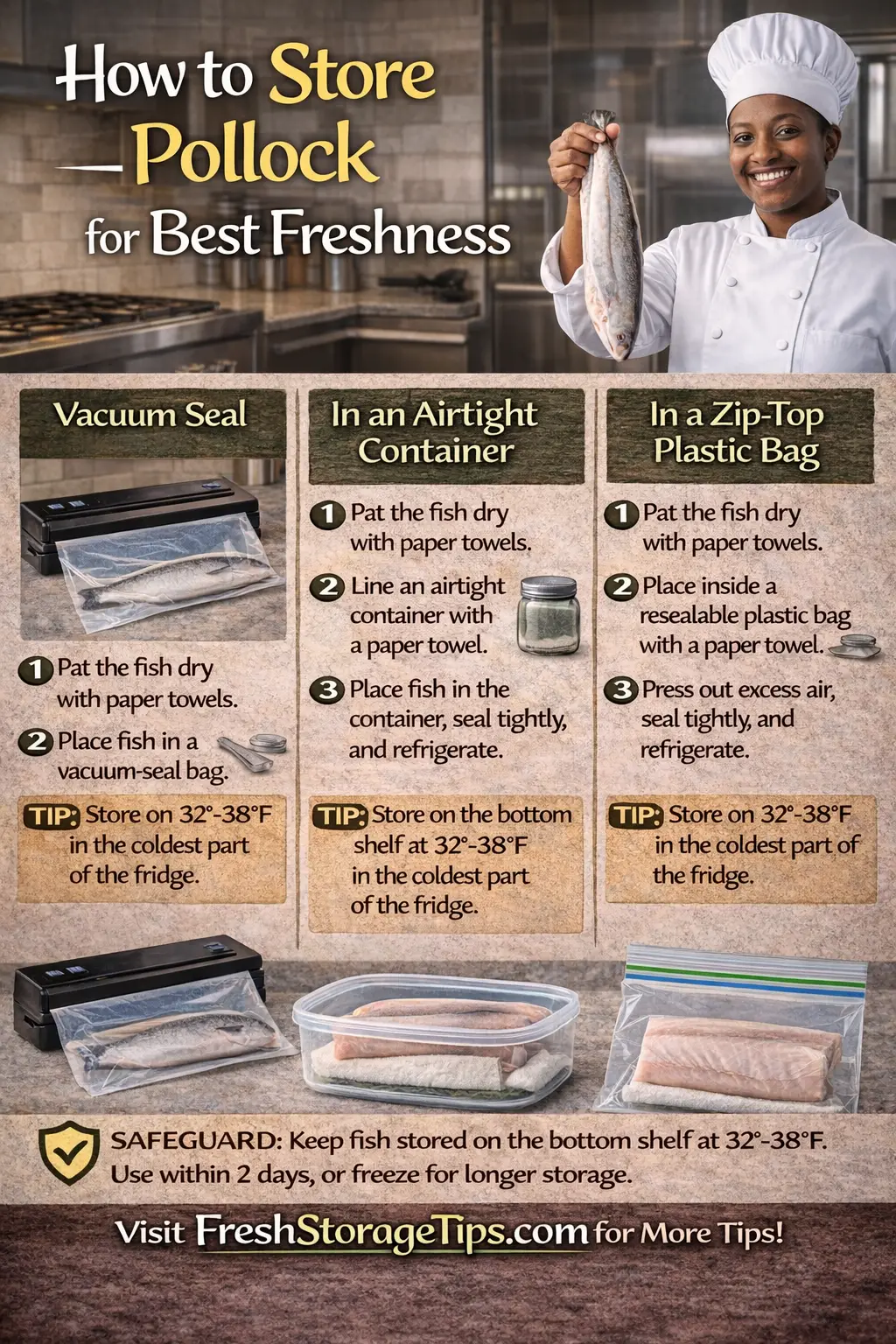
How to Store Pollock: Remove the fillets from the store packaging immediately. Pat them dry with paper towels. Place the fish in a colander set over a bowl of crushed ice, ensuring the meltwater drains away from the fillets. Cover tightly with plastic wrap and store in the coldest part of your fridge. Use within 2 to 3 days.
Food Safety Tip: Pollock is a delicate cold-water fish. The FDA advises keeping seafood below 40°F (4°C), but getting it closer to 32°F (0°C) with ice is critical for maintaining its soft texture.

The Underrated White Fish
Pollock often gets a bad reputation as merely the filling for fish sticks or imitation crab, but a fresh fillet of Alaskan Pollock is a wonderful ingredient in its own right. It is flaky, mild, and incredibly sustainable. However, it is also one of the softest and most fragile fish in the market. If you treat it like a hearty steak of salmon, you will be disappointed.
I remember buying a large pack of fresh pollock fillets because the price was unbeatable. I left them in their foam tray in the fridge for two days. When I opened the package, the fillets had practically disintegrated into a mushy, watery mess that smelled strong. I learned then that pollock has a much shorter shelf life than its cousin, the cod. It requires gentle handling and very cold temperatures to hold its shape.
pollock has a slightly looser muscle structure and marginally more surface fat than cod and a looser muscle structure, it breaks down rapidly once out of the water. To keep it firm enough for frying or baking, you need to master the art of the “Ice Rig.” This simple setup mimics the conditions of a professional fishmonger’s case right in your home kitchen.
The Science: Soft Flesh Spoilage
To keep pollock fresh, we have to fight its natural biology. It is a Gadoid fish (related to cod and haddock), but it has unique challenges.
- Enzymatic Softening: The enzymes in pollock are adapted to deep, cold waters. In your 40°F fridge, these enzymes are hyperactive. They break down the connective tissue between the flakes much faster than in other fish. This is why pollock turns “mushy” so quickly. Reducing the temperature to 32°F puts these enzymes to sleep.
- Higher Oil Content: While still considered a white fish, pollock has slightly more oil than cod. This oil is rich in omega-3s, but it also oxidizes when exposed to air, leading to “fishy” odors faster. Keeping the fish wrapped tight or buried in ice protects these oils.
- Bacterial Growth: Surface bacteria multiply exponentially as the temperature rises. According to studies on seafood preservation, keeping fish at 32°F instead of 40°F can double its usable shelf life. For a fish as delicate as pollock, this is the difference between a delicious dinner and the garbage bin.
Visual Glance: The Freshness Timeline
This timeline helps you plan your meals. Pollock is not a fish you can buy on Sunday for a Friday dinner. It needs to be eaten quickly.
Compared to other white fish, pollock is more fragile than haddock and significantly softer than sea bass. It shares a similar vulnerability with halibut, but because the fillets are usually thinner, they dry out even faster.
Storage Method Showdown
Using ice is the only way to get more than 24 hours of quality shelf life.
Video Guide: From Catch to Cook
Handling Delicate Fish
This video from The Fish Locker gives a great overview of handling pollock. Notice how careful he is with the fillets. Unlike salmon which can take some rough handling, pollock fillets can tear under their own weight.
Storage Takeaway: When you store pollock, do not stack too many fillets on top of each other. The weight of the top fillets can crush the bottom ones, squeezing out moisture and ruining the texture. Store them in a single layer if possible, or separate layers with plastic wrap.
The video also highlights the importance of removing the skin for certain preparations, which should be done just before cooking to keep the flesh protected during storage.
Interactive Storage Chart
Filter by the state of your fish. Frozen pollock blocks (often used for fish sticks) store differently than fresh fillets.
| State | Best Method | Safe Time | Risk or Tip |
|---|---|---|---|
| Fresh Fillet | Ice Rig | 2–3 Days | Do not let it sit in water! |
| Fried/Battered | Paper Towel + Box | 2–3 Days | Batter will soften. Reheat in oven. |
| Baked/Poached | Airtight Tub | 3–4 Days | Use in fish cakes or chowder. |
| Frozen Block | Deep Freeze | 6 Months | Keep sealed to prevent drying. |
| Thawed | Plate in Fridge | 24 Hours | Cook immediately. Do not refreeze. |
Safety: The Sniff Test
Because pollock spoils faster than other fish, you need to be vigilant. Referencing FoodSafety.gov, check for these signs:
- ⚠️ Ammonia Smell: This is unmistakable. If the fish smells like window cleaner or strong chemicals, the proteins are decomposing. Toss it.
- ⚠️ Gray/Dull Color: Fresh pollock should be glistening and translucent white/pink. If it looks dull, matte, or distinctly gray, it is old.
- ⚠️ Mushy Texture: Press the fillet gently. It should spring back. If your finger leaves an indentation or the meat feels like paste, do not eat it.
Pollock Myths Busted
Let’s clear up some common misconceptions:
- 🚫 Myth: It’s just “poor man’s cod.” Reality: Alaskan Pollock is a sustainable, delicious fish. While cheaper, it requires more care in storage than cod because it is softer.
- 🚫 Myth: Freezing ruins it. Reality: Pollock actually freezes very well because it is lean. High-quality frozen pollock is often better than “fresh” fish that has been sitting out.
- 🚫 Myth: The gray layer is bad. Reality: Pollock has a darker “fat line” or layer under the skin. This is normal and safe, though some people trim it off for a milder flavor.
Deep Dive: Building the Ice Rig
This method is essential for pollock. Here is exactly how to do it step-by-step:
- Get Two Bowls: Find a colander or perforated pan that fits inside a larger solid bowl. There must be space between them.
- Add Ice: Fill the colander halfway with crushed ice.
- Place Fish: Lay the unwrapped, dried fish on top of the ice. You can use a sheet of plastic wrap as a barrier if you prefer the ice not to touch the meat directly.
- Cover: Place more ice on top (if you have enough) or simply cover the bowl tightly with plastic wrap.
- Drain Daily: This is critical. As the ice melts, the water drips into the bottom bowl. Empty this daily. Standing water turns pollock into mush.
This method keeps the fish at exactly 32°F, maximizing shelf life.
Thawing Frozen Pollock
If you have frozen your pollock, thawing it correctly is vital to prevent it from falling apart. The USDA recommends thawing in the refrigerator. Place the fish on a plate and let it sit for 24 hours.
Warning: Do not thaw pollock in warm water. The flesh is so delicate that warm water will begin to cook the outside and break down the structure, leading to a fillet that disintegrates in the pan.
Pairing Partners
Pollock is mild and loves strong flavors. When storing your ingredients, make sure your accompaniments are fresh too. It pairs well with fresh dill or parsley. Also, since it is often battered, knowing how to store flour ensures your coating is crisp, not stale.
I feel like pollock is the unsung hero of the seafood world. It is affordable, sustainable, and versatile, yet many home cooks avoid it because they think it is “cheap” or “mushy.” The truth is, the difference between a mushy fillet and a flaky, delicious dinner usually comes down to the tools you use to store and prep it. Treating an affordable ingredient with the same respect you would give a lobster transforms the final result.
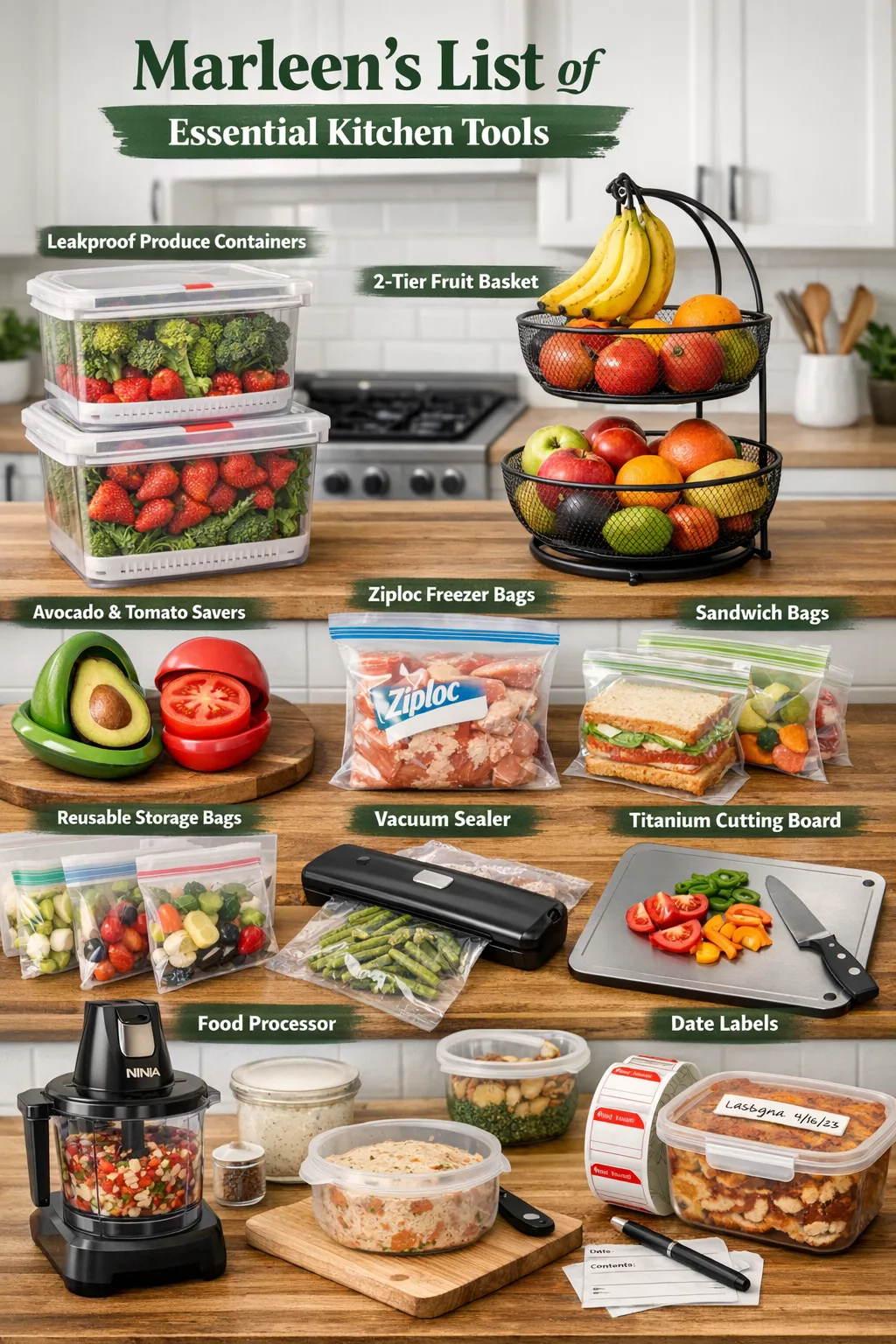
The items I have selected below are designed to handle delicate proteins. Pollock is softer than cod or haddock, which means it falls apart easily if mishandled. A wide, flexible fish spatula is absolutely non-negotiable in my kitchen; it supports the entire length of the fillet so it doesn’t break when you flip it. For storage, the “ice rig” requires specific equipment—perforated pans or colanders that fit inside catch bowls. You cannot just use a plate; you need drainage to keep the fish dry and cold.
Furthermore, because pollock freezes so well, investing in a vacuum sealer allows you to buy in bulk when prices drop. Removing oxygen prevents the oxidation that leads to that “old fish” taste. High-quality freezer bags and clear labeling ensure you know exactly what is in your freezer, preventing food waste. By equipping your kitchen with these professional-grade but affordable tools, you elevate your everyday cooking. You stop wasting money on spoiled fish and start enjoying healthy, delicious seafood meals more often. It is a small investment that pays off every time you cook.
As an Amazon Associate, I earn from qualifying purchases.
Sources & Transparency
This guide references food safety storage limits from the FDA Fish and Fishery Products Hazards Guide. Guidance on bacterial growth and seafood storage was consulted via NOAA Fisheries.
Fresh pollock lasts 1 to 2 days in the fridge and up to 6 months in the freezer when wrapped properly. Haddock is in the same fish family as pollock and has the same short fridge window — both are best bought and cooked on the same day when fresh. Most commercial fish sticks are made from pollock, which is why the frozen product lasts up to 18 months while the fresh version only keeps for a couple of days. Delicate white fish like sole needs the same urgent refrigeration as pollock and should never sit out at room temperature.
Last updated:
Update Log
- : Added specific care instructions for the delicate texture of Pollock and updated freezing tips.