
“BPA-free” means the product was made without bisphenol A, a chemical used in hard, clear polycarbonate plastic and in the coating inside some food cans. That’s all it promises. It doesn’t say the product is free of similar chemicals like BPS or BPF, and it doesn’t make plastic oven-proof. The FDA and the EU’s food safety authority EFSA assess BPA differently: the FDA says it’s safe at the levels found in food, EFSA concluded in 2023 that it’s a health concern, and the European Commission has since banned it in food contact materials. If you want to avoid it, look for “BPA-free” or “bisphenol-free” from the maker, and use glass for hot food.
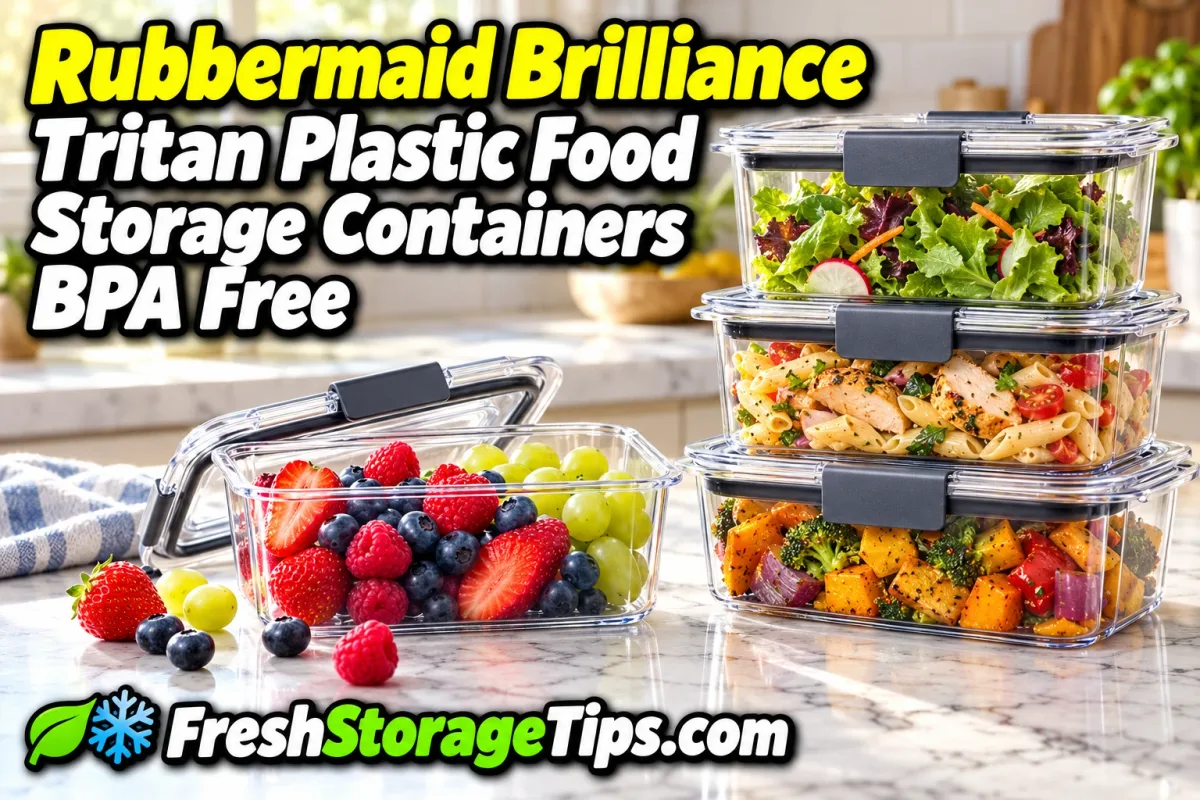
Containers I’d look at (why these): Rubbermaid Brilliance Tritan Rubbermaid Brilliance Glass (Amazon; as an Amazon Associate I earn from qualifying purchases)
First, What Is BPA?
BPA stands for bisphenol A. The FDA describes it as an industrial chemical used to make polycarbonate, “a hard, clear plastic,” and in epoxy resins that line some metal food and drink cans. NIEHS, the US government’s environmental health institute, adds a few more places: shatterproof windows, eyewear, water bottles, bottle tops and water supply pipes.
Why do people care about it in the kitchen? Because, as NIEHS explains, food and drinks are the main way BPA gets into our bodies. It can move into food from the coating inside cans and from polycarbonate products such as tableware, food storage containers and water bottles. How much moves into a drink may depend more on the temperature than on the age of the container, according to NIEHS.
What “BPA-Free” Does and Doesn’t Promise
✅ It does mean
- The product was made without bisphenol A.
- In practice: a hard, clear plastic labeled BPA-free shouldn’t be classic BPA-based polycarbonate (my note).
❌ It doesn’t mean
- Free of other bisphenols such as BPS or BPF.
- Safe for the oven, or for the microwave: that’s a separate line on the label.
- That the product is certified safe: “BPA-free” is the maker’s own claim, not a certificate.
- That every part is covered, unless the maker says so: lids and seals can be other materials (my note).
The Catch: BPS and BPF
When BPA got a bad name, some makers switched to other bisphenols, such as bisphenol S (BPS) and bisphenol F (BPF). A product made with those can still honestly say “BPA-free.”
Are those better? Not necessarily. A 2015 systematic review in Environmental Health Perspectives, the journal of NIEHS, looked at 32 studies and concluded: “BPS and BPF are as hormonally active as BPA, and they have endocrine-disrupting effects.” All of those studies were lab and animal studies (25 in the lab, 7 in animals), so they don’t tell you what happens at the levels in your kitchen. Worth knowing: the EU’s new ban also covers “other harmful bisphenols,” not BPA alone.
What to look for instead: a maker that says the material is free of all bisphenols, not just BPA. Eastman, the company that makes Tritan plastic, says Tritan “is not only BPS-free but also free of all bisphenols.” That’s the maker’s own claim, but it’s the kind of claim to look for.
Is BPA Dangerous? Why the FDA and EFSA Assess It Differently
This is where it gets confusing, because two big food safety agencies looked at the same chemical and came to different conclusions. Here are both, in their own words:
BPA is “safe at the current levels occurring in foods,” according to the FDA’s page on BPA (content current as of April 2023). The FDA no longer allows BPA in baby bottles and sippy cups (2012) or in infant formula packaging (2013), but says those changes were made because industry had stopped using it there, “not based on safety.”
In April 2023, EFSA set a new tolerable daily intake for BPA “around 20,000 times lower” than before, and found that “consumers with both average and high exposure to BPA in all age groups exceeded the new TDI, indicating health concerns.”
What the EU did next: the European Commission adopted Regulation (EU) 2024/3190 (December 19, 2024), which bans BPA and other harmful bisphenols in food contact materials such as can coatings, reusable drink bottles and kitchenware. After an 18-month transition, most food contact articles made with BPA may no longer be placed on the EU market for the first time since July 20, 2026. A few exceptions, such as some can coatings and professional equipment, run into 2028 and 2029, and a correction in February 2026 (Regulation (EU) 2026/250) clarified those transition rules.
I’m not going to pick a winner here; I write about storing food, not toxicology. The practical point doesn’t depend on who’s right: BPA can migrate into food from some food contact materials, such as can coatings and polycarbonate (NIEHS). That gives you choices if you’d rather keep your exposure low.
How to Avoid BPA in Your Kitchen
These steps come from NIEHS, which offers them as a personal choice, especially for infants and children:
- Don’t microwave polycarbonate plastic containers. NIEHS says polycarbonate can break down over time from use at high temperatures.
- Check the recycling code, but know its limits. NIEHS says some, but not all, plastics marked with code 3 or 7 may be made with BPA. So a 7 isn’t proof of BPA, and another number isn’t proof of BPA-free.
- Use fewer canned foods, because of the BPA-based coatings inside some cans.
- For hot food and liquids, use glass, porcelain or stainless steel when possible.
- Use baby bottles that are BPA free.
My tip: the simplest switch is reheating leftovers in a glass dish instead of a plastic box. Glass storage containers with oven-safe bases do both jobs, which is one reason I included a glass set in my airtight container picks.
How Can You Tell if a Container Is BPA-Free?
- Look for the words on the product or packaging: “BPA-free,” or better, “bisphenol-free.” Remember that it’s the maker’s claim, and check whether it covers the lid and seal too.
- Check the maker’s own page for the material name. Tritan, for example, is a copolyester that Eastman says contains no bisphenols.
- Don’t rely on the recycling number alone. NIEHS says only that some plastics with code 3 or 7 may be made with BPA.
- No label and no information? If you can’t find out, use it for dry food or cold food rather than for reheating (my advice).
- Glass, porcelain and stainless steel aren’t plastic at all. Lids often are, so check those too (my advice).
BPA-Free Questions
What does BPA free mean?
It means the product was made without bisphenol A, a chemical used in polycarbonate plastic and in some can linings. It doesn’t say anything about other bisphenols such as BPS or BPF, and it doesn’t mean the product is oven or microwave safe.
Is BPA-free plastic safe?
It’s free of BPA, but it may contain other bisphenols. A 2015 review in Environmental Health Perspectives found BPS and BPF about as hormonally active as BPA, in lab and animal studies. For hot food, NIEHS suggests glass, porcelain or stainless steel.
Is BPA banned in the US?
Not in general. The FDA no longer allows BPA in baby bottles, sippy cups (2012) and infant formula packaging (2013), and says BPA is safe at the levels in food. The European Union bans BPA and other harmful bisphenols in food contact materials (Regulation (EU) 2024/3190); the main transition ended on July 20, 2026.
Which recycling numbers have BPA?
NIEHS says some, but not all, plastics marked 3 or 7 may be made with BPA. The number alone doesn’t prove it either way; look for “BPA-free” or “bisphenol-free” from the maker.
Is Tritan BPA free?
Yes, according to its maker Eastman, which says BPA has never been an ingredient or byproduct of Tritan and that Tritan is free of BPS and all other bisphenols.
Sources & Transparency
What BPA is, FDA position and the 2012/2013 changes: FDA, “Bisphenol A (BPA): Use in Food Contact Application”. EU assessment: EFSA, “Bisphenol A in food is a health risk” (April 19, 2023). EU ban: European Commission, “Commission proposal banning BPA in food contact materials is becoming law” (November 29, 2024) and the regulation itself, Commission Regulation (EU) 2024/3190 of 19 December 2024 (corrected by Regulation (EU) 2026/250). Transition dates: European Commission, Access2Markets and Food Packaging Forum, “EU BPA ban reaches main transition deadline” (July 20, 2026). Where BPA is found, exposure and tips: NIEHS, “Bisphenol A (BPA)”. BPS and BPF: Rochester and Bolden, “Bisphenol S and F: A Systematic Review and Comparison of the Hormonal Activity of Bisphenol A Substitutes,” Environmental Health Perspectives, 2015. Tritan: Eastman, Tritan FAQ. This page explains labels and official advice; it isn’t medical advice. Tips marked as mine are my own advice.
Last updated: