You open your refrigerator and start putting away groceries.
Tomatoes go in the vegetable drawer. Bread goes on the top shelf. Potatoes get squeezed next to the onions. It feels logical. Cold keeps food fresh… right?
Not always. In fact, some foods actually spoil faster, lose flavor, or develop strange textures when stored in the fridge. And chances are, several of them are sitting in your refrigerator right now.
The quick answer:
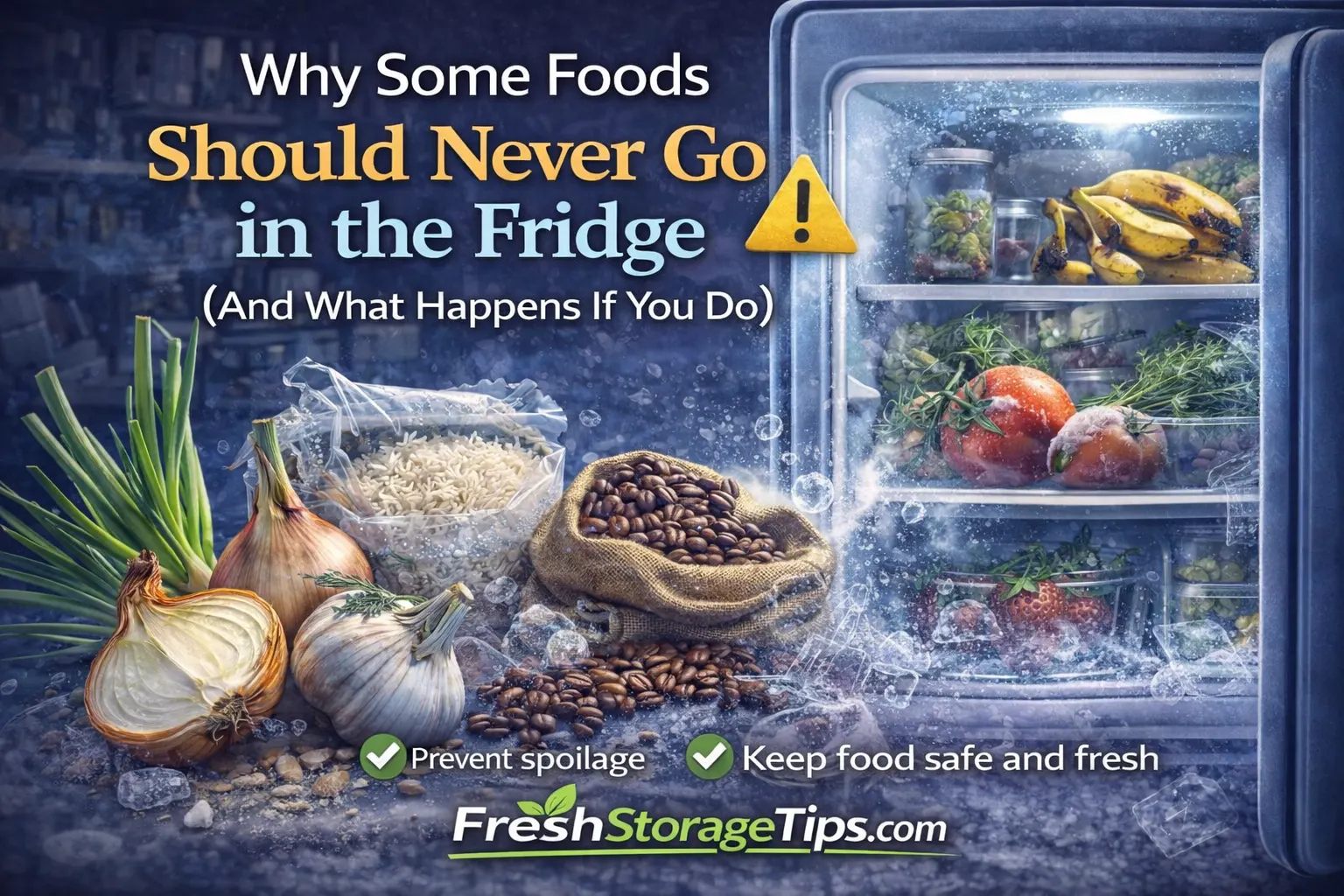
Some foods should never be refrigerated because cold temperatures damage their natural structure. Tomatoes lose flavor, bread turns stale faster, potatoes develop a gritty texture, and onions absorb moisture and rot. Keeping these foods at room temperature in a cool, dry place preserves taste and shelf life.
The Logic of the Cold Box
As a mother who spent years trying to stretch every dollar of the family grocery budget, I used to believe that the refrigerator was the ultimate sanctuary for food safety. If I bought it, it went in the cold. I thought I was protecting my family from spoilage, but in reality, I was committing several of the most common food storage mistakes that professional chefs and agricultural scientists warn against.
The refrigerator is a marvel of modern technology, designed to slow down the metabolic processes of bacteria. However, it is not a “one size fits all” solution. Certain plants and pantry staples have evolved to thrive in specific climates. When we force them into a 37°F (3°C) environment, we trigger a biological response known as “chilling injury.” This doesn’t just make the food taste bad; it fundamentally alters its chemical composition.
Understanding which items stay on the counter and which ones go behind the glass door is the first step toward a kitchen that produces better-tasting meals and generates less waste. Let’s look at the science behind why your fridge might be the enemy of your favorite ingredients.
1. Tomatoes: The Victim of Cellular Collapse
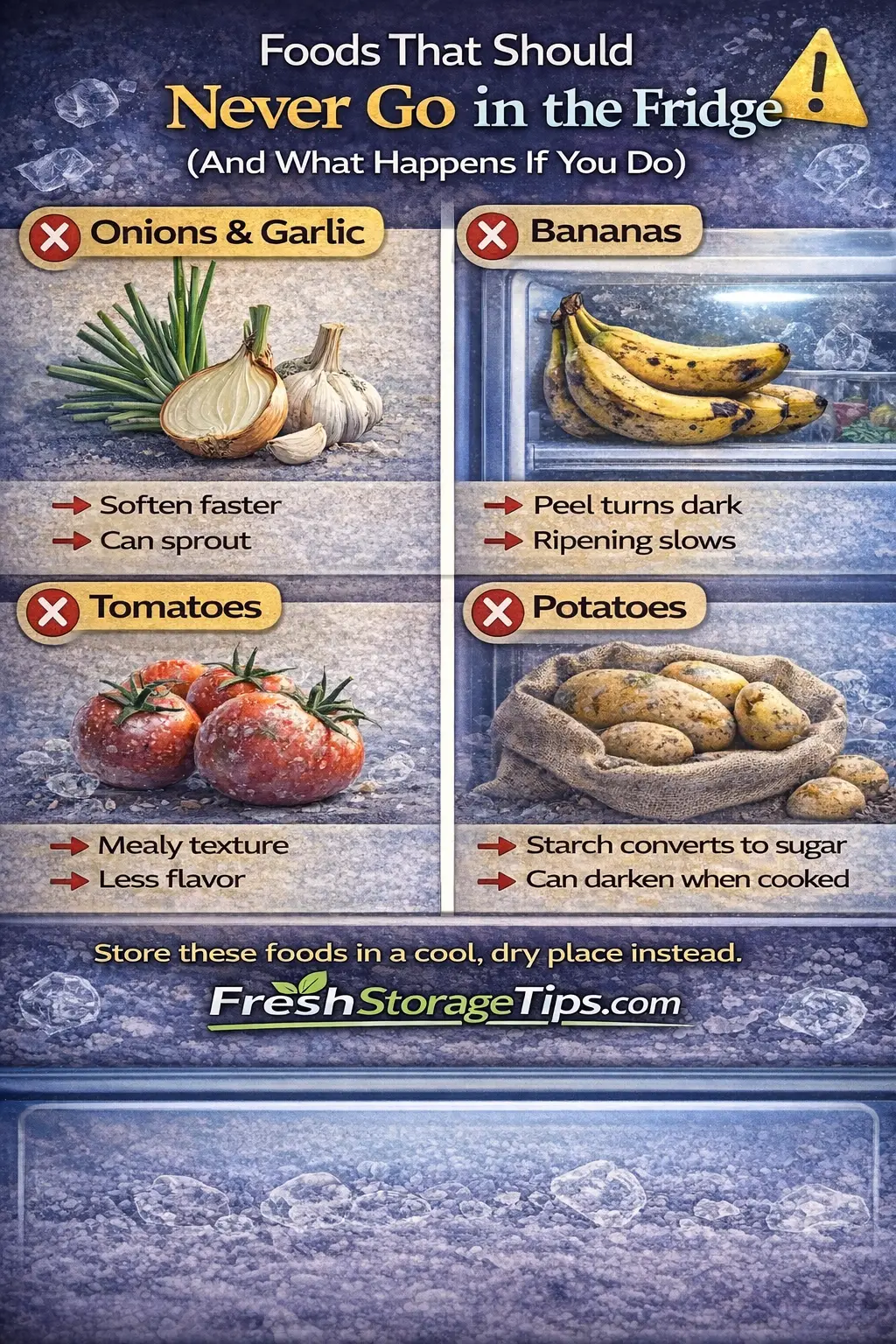
The tomato is perhaps the most frequent victim of over-refrigeration. When you put a fresh, ripe tomato in the fridge, the cold air stops the ripening process in its tracks. More importantly, the cold temperatures break down the membranes inside the fruit’s cell walls.
When these membranes collapse, the tomato loses its chemical volatiles—the compounds responsible for that “fresh-from-the-vine” aroma and taste. The result is a mealy, gritty texture and a flavor that is bland and watery. If you have ever wondered why food spoils fast in your fridge or why it tastes “off,” the tomato is the perfect example of quality degradation without actual rot. Keep your tomatoes stem-side down on the counter at room temperature to maintain their integrity.
2. Potatoes: The Starch-to-Sugar Conversion
Potatoes are high-starch tubers designed for cool, dark storage, but not the intense cold of a modern refrigerator. When a potato is kept below 45°F (7°C), a process called “cold-induced sweetening” occurs. The starch molecules are chemically converted into sugars.
This does two things: it gives the potato an unpleasantly sweet taste and a gritty, sandy texture. Furthermore, when you cook these “sweetened” potatoes at high temperatures (like frying or roasting), those extra sugars react with the amino acid asparagine, potentially leading to higher levels of acrylamide, a chemical that researchers prefer to minimize in our diets. Always store potatoes in a paper bag in a dark pantry, and never store them next to onions, as onions release gases that cause potatoes to sprout faster.
3. Onions: The Moisture Trap
Onions require air circulation and dry conditions. The refrigerator is a high-humidity environment. When onions are stored in the cold, the moisture turns the starch into sugar (similar to potatoes) and causes the layers to become soft and soggy. Eventually, they will mold from the inside out.
The only exception to this rule is if you have already peeled or sliced the onion. Once the protective outer papery skin is breached, the onion becomes a magnet for bacteria and must be kept in a sealed container in the fridge. For whole onions, a cool, dry, dark cabinet is best. This same rule applies to garlic. If you want to know more, read my detailed guide on how to store garlic to prevent sprouting and mold.
4. Bread: The Retrogradation Effect
It seems like bread should last longer in the fridge, but the science of “staling” says otherwise. Bread goes stale through a process called starch retrogradation. In the cold, the starch molecules in the bread crystallize and toughen much faster than they do at room temperature.
Storing bread in the fridge actually accelerates the staling process by up to six times. If you can’t finish a loaf within a few days, it is much better to understand what happens when you freeze food properly. Slicing the bread and freezing it in an airtight bag preserves the moisture. When you toast a frozen slice, the heat reverses the crystallization, giving you a “fresh” taste again. Never refrigerate your loaf unless the house is extremely humid and you are worried about immediate mold.
Safety and Authority: USDA and FDA Guidelines
While some storage choices are about flavor, others are about safety. When dealing with proteins and highly perishable goods, the rules change. For example, while you should keep honey and hot sauce in the pantry, you must be extremely strict with seafood. According to Oregon State University preservation guidelines, the refrigerator temperature must be monitored constantly to ensure safety.
When handling seafood, the NOAA recommendations are clear: cold is your best friend. In fact, if you’re wondering how long you can store fish, the USDA suggests only 1-2 days in the fridge. For longer storage, you must use a deep freeze. Safety should always come before flavor for items like raw meat and fish. I always refer back to the FoodSafety.gov blog to ensure my family isn’t at risk. If you are a fan of fresh-caught meals, the Iowa DNR tips on cooking and cleaning fish provide essential safety protocols for the transition from water to table.
Always remember that while a mealy tomato is a disappointment, poorly handled fish is a health hazard. The FDA guidelines on seafood safety highlight the importance of maintaining a strict cold chain for anything from the ocean.
Mistake Recovery: What to do if you messed up
If you find these items in your fridge right now, don’t panic. Here is how to save them:
- Cold Tomatoes: Take them out and let them sit at room temperature for 24 hours. Some flavor volatiles may return, though the texture will remain slightly changed.
- Cold Potatoes: Let them come to room temperature for several days before cooking. This can help convert some of those sugars back into starch, reducing the gritty texture.
- Crystallized Honey: If your honey turned into a solid white block in the fridge, place the jar in a bowl of warm water. It will liquefy again. Never microwave it, as that destroys the beneficial enzymes.
Expert Insights: The Fridge vs. Room Temp Debate
The Amish and “Cellar” Methods
This video explores how traditional food preservation techniques—like root cellars—often outperformed modern refrigeration for specific vegetables. Notice how they emphasize darkness and ventilation over pure cold.
Authority Tip: Many “People Also Ask” queries focus on why certain cultures don’t refrigerate items like eggs or butter. While safety standards vary by country (US eggs *must* be refrigerated because they are washed), items like honey and uncut melons are universally better at room temperature.
Remember that the refrigerator is also an odor-cross-contamination chamber. Storing coffee in the fridge is a mistake because coffee beans act as a molecular sponge, absorbing the smell of your leftovers and the moisture of the cooling system.
5. Honey and Syrups: The Crystal Fortress
Honey is a miracle of nature. It has a low pH and low moisture content, making it naturally antibacterial. It never truly “expires,” as we see in my discussion on best before vs use by dates. However, it is a supersaturated sugar solution.
When you put honey in the fridge, you speed up the crystallization process. The honey turns into a gritty, solid mass that is impossible to spread. Keep it in its original jar in a dark pantry. The same applies to real maple syrup once opened; while some people prefer the fridge for syrup to prevent mold, it will flow much better and taste more complex if kept in a cool pantry or used within a month.
6. Melons and Tropical Fruits
Whole melons (watermelon, cantaloupe, honeydew) should stay on the counter. Research shows that keeping melons at room temperature helps maintain their antioxidant levels, like lycopene and beta-carotene. Once you slice them, however, you must refrigerate them immediately to prevent bacterial growth on the exposed flesh.
Tropical fruits like pineapples, papayas, and mangoes also suffer in the cold. Their enzymes are meant for the heat. Cold temperatures deactivate these enzymes, leading to skin pitting and a lack of sweetness. Treat your counter as a fruit ripening station. Once the fruit is at peak ripeness, you can move it to the fridge for a day or two to chill it before eating, but not for long-term storage.
The Humidity Factor
Your refrigerator has two “climates”: the main shelves and the crisper drawers. Many people put everything in the drawers, but this is a storage trap. If you store your onions (which need low humidity) with your leafy greens (which need high humidity), one of them is going to suffer. If you must use the fridge for everything, at least learn how to store cheese and other sensitive items in their own specific containers to mitigate the drying effect of the cold air.
The Countertop vs. Fridge Guide
| Food Item | Best Location | What Happens in Fridge | Storage Tip |
|---|---|---|---|
| Tomatoes | Counter | Mealy texture, loses aroma | Stem side down to prevent bruising. |
| Potatoes | Pantry | Starch turns to sugar, gritty | Keep in a dark paper bag. |
| Leafy Greens | Fridge | Necessary to prevent wilting | High humidity drawer. |
| Bread | Counter / Freezer | Stales 6x faster | Freeze slices for long-term use. |
| Fresh Seafood | Fridge (Coldest spot) | Essential for safety | Store on ice for extra chill. |
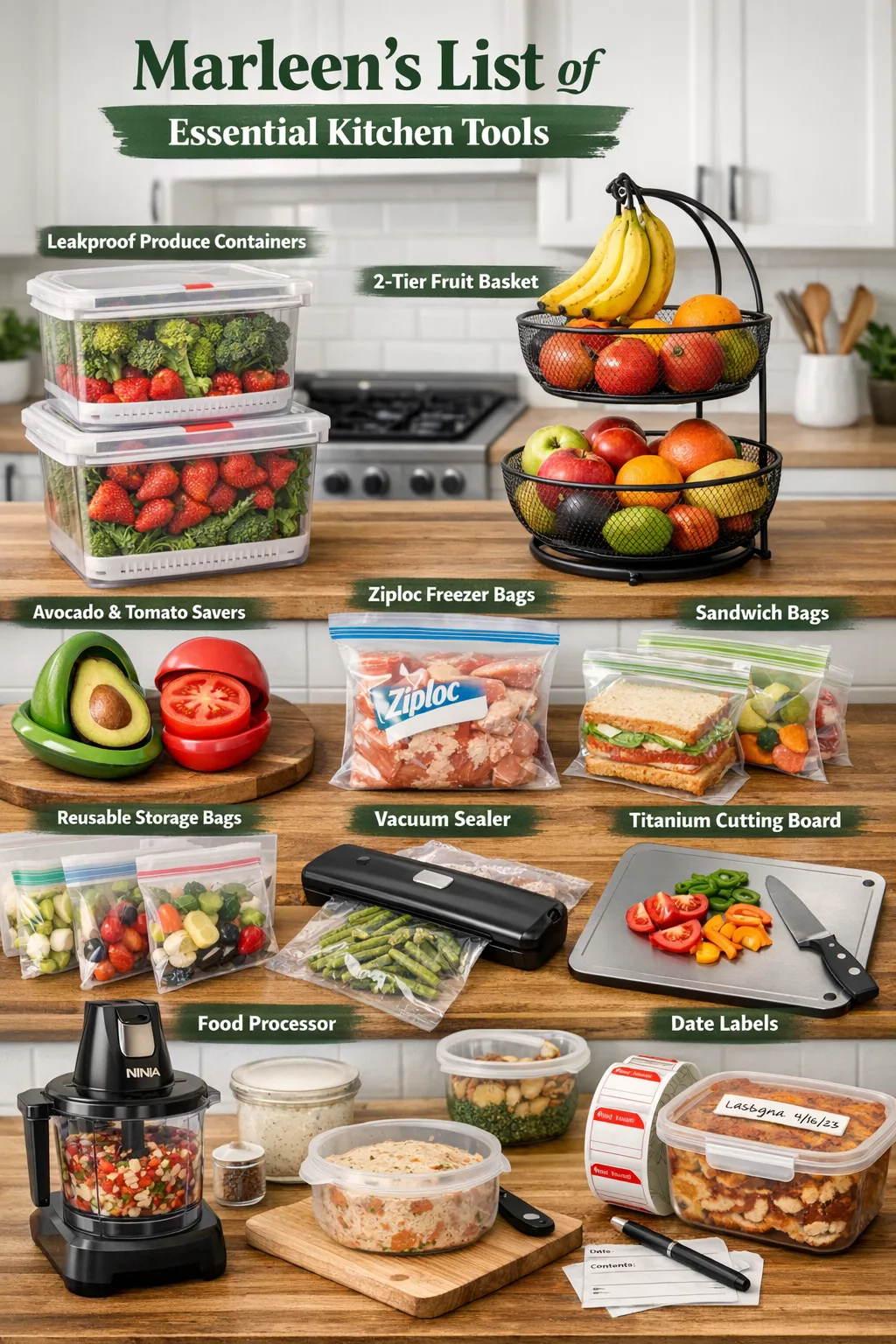
I’ve realized over the years that even when you know the science of food storage, your kitchen needs to be set up to make those habits easy. I used to just toss everything in the fridge because I didn’t have a designated space for “countertop” items. It wasn’t until I invested in proper pantry organization and labeling that my food waste dropped significantly. When you have a clear system, you stop burying your potatoes in a dark corner where they rot, and you start using your tools to actually preserve flavor.
Handling large volumes of produce or delicate proteins requires precision. A standard fridge thermometer is great, but a digital thermometer for cooking is a game-changer for verifying that your food is safe once it leaves storage. If you’re freezing bread or extra meat to avoid the fridge-staling trap, a vacuum sealer is worth its weight in gold. It removes the oxygen that causes freezer burn, making sure that “past date” food still tastes like you just bought it. I also swear by dissolvable labels. There is nothing worse than a mysterious container of “something” in the pantry. If you label it with the date you bought it, you’ll always know when it’s time to use it up before the quality fades.
Finally, for those countertop items like tomatoes and onions, having the right bins is crucial. You want airflow—don’t keep your onions in airtight plastic! Use breathable food saver tubs for the counter to keep your vegetables from sweating and molding. These tools aren’t just gadgets; they are the infrastructure of a healthy, money-saving kitchen. I have curated this list below to help you stop the “fridge-ruining” cycle once and for all. Each of these has a specific purpose in my own kitchen, from processing bulk vegetables in the food processor to sealing up individual salmon fillets for the deep freeze.
Vacuum Sealer for Food
Stop freezer burn dead in its tracks. Perfect for bread and bulk meats.
View on AmazonDissolvable Labels for Food
The best way to track “Use By” dates without sticky residue on your jars.
View on AmazonDigital Thermometer for Cooking
Essential for checking internal safety temps of stored proteins.
View on AmazonFood Storage Containers
Airtight and stackable. Essential for the “opened onion” fridge rule.
View on AmazonAs an Amazon Associate, I earn from qualifying purchases.
Sources & Authority
This article utilizes food safety data and temperature guidelines from the U.S. Food and Drug Administration (FDA) and the National Oceanic and Atmospheric Administration (NOAA). Agricultural storage science regarding chilling injury is sourced from university extension research programs.
Putting the wrong foods in the fridge is one of the most common storage mistakes in any kitchen. Tomatoes, potatoes, onions and honey are just a few of the foods that lose quality, texture or flavour when refrigerated. The science of why cold temperatures can actually damage food explains what happens at a cellular level when a tomato sits at 37°F for more than a few hours. The food storage chart gives a clear breakdown of which foods need the fridge and which ones last longer and taste better stored at room temperature.
Last updated: