How to Store Romaine Lettuce: Separate the leaves and soak them in a mixture of water and white vinegar (to kill bacteria). Rinse well and dry them completely in a salad spinner. Wrap the leaves in dry paper towels, place them in a Ziploc bag or airtight container, and store in the crisper drawer. This method often keeps them crunchy for 10–14 days, and in ideal conditions can last up to 3 weeks. up to 3 weeks.
Food Safety Tip: Always wash your produce thoroughly before eating. The vinegar method described below helps reduce bacteria like Listeria.
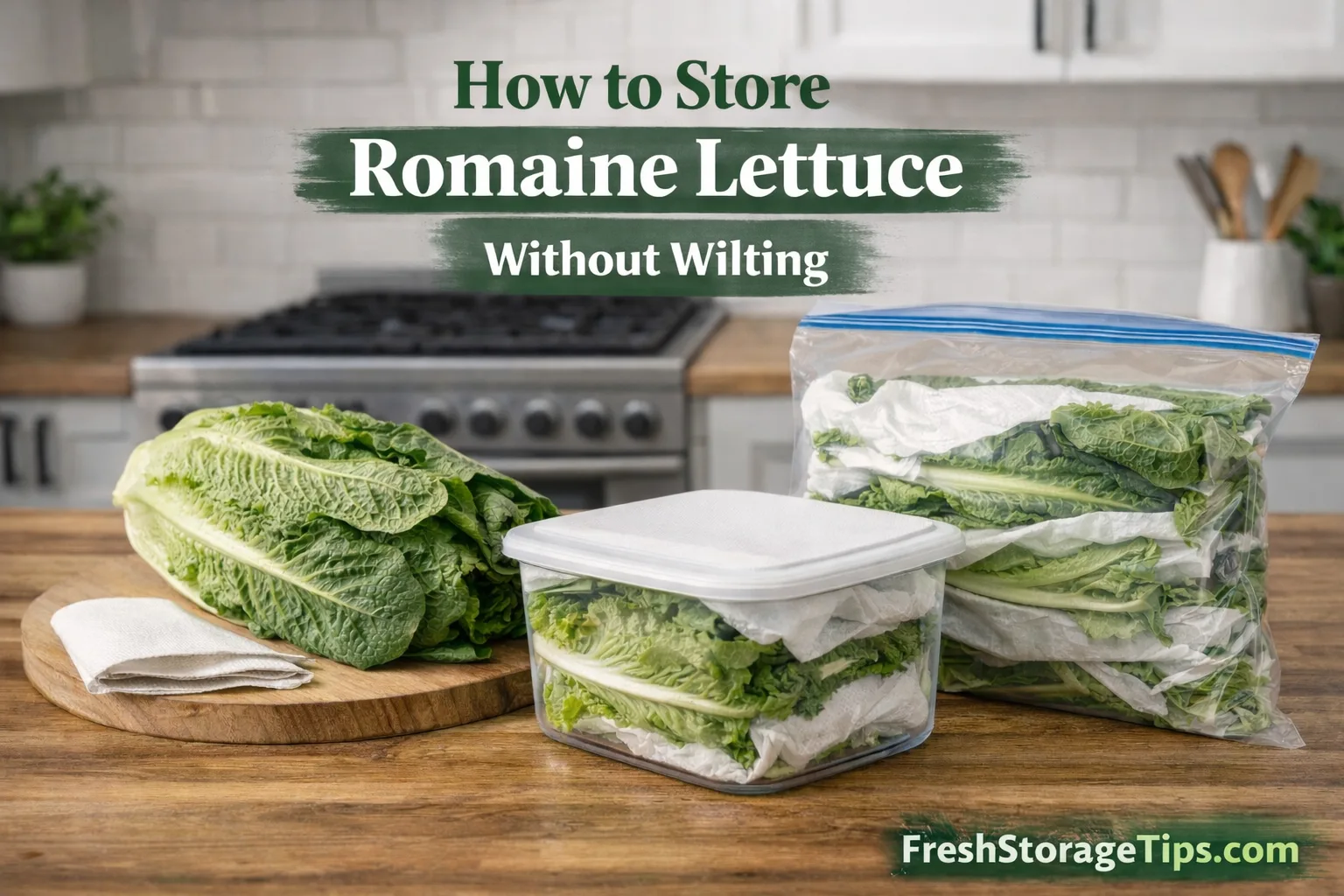
The “Caesar Salad” Disappointment
Is there anything sadder than craving a crisp Caesar salad, only to open your fridge and find your romaine lettuce has turned into a limp, pinkish, slimy mess? For years, I treated romaine just like any other vegetable—tossing the bag into the drawer. But unlike general vegetable storage, leafy greens require a specific balance of humidity and airflow.
Romaine is unique because it has a sturdy rib and delicate leaves. If you leave it in the grocery store bag, it suffocates in its own moisture. If you leave it naked, it dehydrates. The trick involves a “spa day” for your lettuce using a vinegar wash. It sounds intense, but it helps slow the growth of spoilage bacteria, giving you significantly longer crunch compared to untreated storage.
Don’t worry, you can absolutely save it. Whether you have whole hearts or a bag of leaves, there are tricks to pause the decay. We are going to look at the smart way to package it so your lunch is always fresh.
The Science: Why Romaine Wilts
To keep romaine fresh, we have to fight three enemies: bacteria, dehydration, and oxidation. The slime you feel on old lettuce is essentially a colony of bacteria breaking down the plant cells.
- The Vinegar Wash: By using a vinegar wash (acetic acid), we lower the pH on the surface. This aligns with guidance from food scientists regarding produce surface safety.
- Pink Ribs (Oxidation): You might notice the white ribs turning pink. This is a reaction to oxygen, similar to a cut apple. While safe to eat, it indicates the lettuce is aging.
- Ethylene Gas: Romaine is sensitive to ethylene. Keep it far away when you are storing apples or avocados.
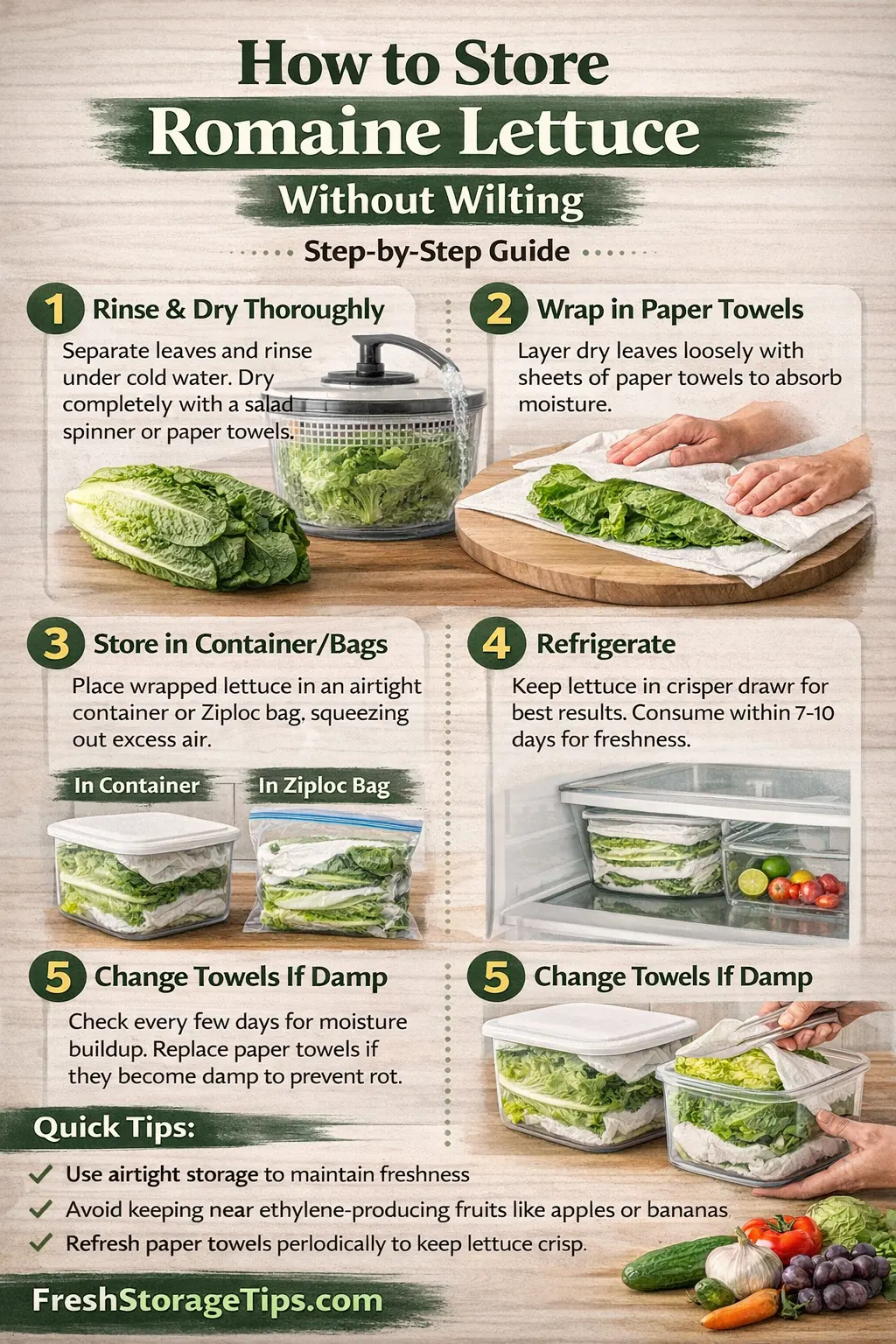
Visual Glance: The Crunch Timeline
This timeline shows why the prep work is worth it. A little effort on grocery day buys you weeks of easy salads.
I have noticed in my own kitchen that Romaine hearts tend to last about 4 days longer than the loose-leaf varieties when using the paper towel method. Also, unlike hardy greens such as when you store kale, romaine has a higher water content in the ribs, making it much less forgiving of freezing temperatures.
Storage Method Showdown
How you treat the lettuce on day one determines how it tastes on day fourteen.
Video Guide: The Vinegar Wash
The Vinegar Wash for Cleaner Greens
This video breaks down the specific ratio for cleaning your greens. It is not just about dirt; it is about killing pathogens.
The Golden Ratio: Mix 1/4 cup of distilled white vinegar with 10 cups of water. Soak for 2 minutes.
According to University of Maine Extension, proper washing is a critical step in food safety.
Interactive Storage Chart
Filter by the state of your lettuce. Whole heads behave differently than chopped salad kits.
| Lettuce Type | Container | Quality Life | Risk or Tip |
|---|---|---|---|
| Whole Hearts (Washed) | Ziploc + Paper Towel | 21 Days | Dryness is key. Use salad spinner. |
| Whole Head (Unwashed) | Produce Bag | 7-10 Days | Remove rubber bands to prevent rot. |
| Chopped/Shredded | Airtight Tub | 2-3 Days | Oxidizes pink quickly. Eat fast! |
| Bagged Salad Mix | Original Bag | 3-5 Days | Add fresh paper towel inside. |
| Salad with Dressing | Bowl | 1 Day | Soggy immediately. Keep dressing separate. |
Safety: The “Pink Slime” Warning
Food safety is paramount with raw greens. Referencing Nutrition.gov guidelines, here is when to toss it:
- ⚠️ Black Spots: Tiny black spots can be mold. If they are slimy, toss the whole head.
- ⚠️ Sour Smell: Fresh romaine smells like rain or grass. If it smells sour, bacteria are present.
- 👀 Pink Ribs: Pinking is usually safe (just aging), but if accompanied by slime, do not eat it.
Always trust your nose, just like when checking other lettuce types.
Romaine Myths Busted
Let’s clear up some kitchen folklore:
- 🚫 Myth: Metal knives turn lettuce brown. Reality: It’s mostly a myth with modern stainless steel. Tearing creates more cell damage than a sharp cut!
- 🚫 Myth: Freezing is okay for smoothies. Reality: Romaine turns to bitter brown water. Don’t do it.
- 🚫 Myth: Store it with tomatoes. Reality: Tomatoes release moisture and ethylene. Keep them separate.
Common “Salad Friends” Storage Mistakes
We often prep our salads all at once, but this is a mistake if you want leftovers. Vegetables like cucumbers and tomatoes have high water content and will release moisture into the container, making your crisp romaine soggy.
Store your ingredients separately. For instance, follow the guides on how to store cucumbers and how to store tomatoes individually, and only combine them in the bowl right before you add the dressing.
Your Quick Hits Cheat Sheet
In a rush? Here is the “mom summary” for saving your salad.
| If your lettuce is… | Smart Snap Move | Crunch Score |
|---|---|---|
| Fresh from Store | Vinegar wash immediately. | 10/10 Crisp |
| Slightly Wilted | Soak in ice water for 20 mins. | 8/10 Revived |
| Pink Ribs | Safe to eat, but eat today. | 6/10 Okay |
| Slimy | Do not eat. Discard. | Unsafe |
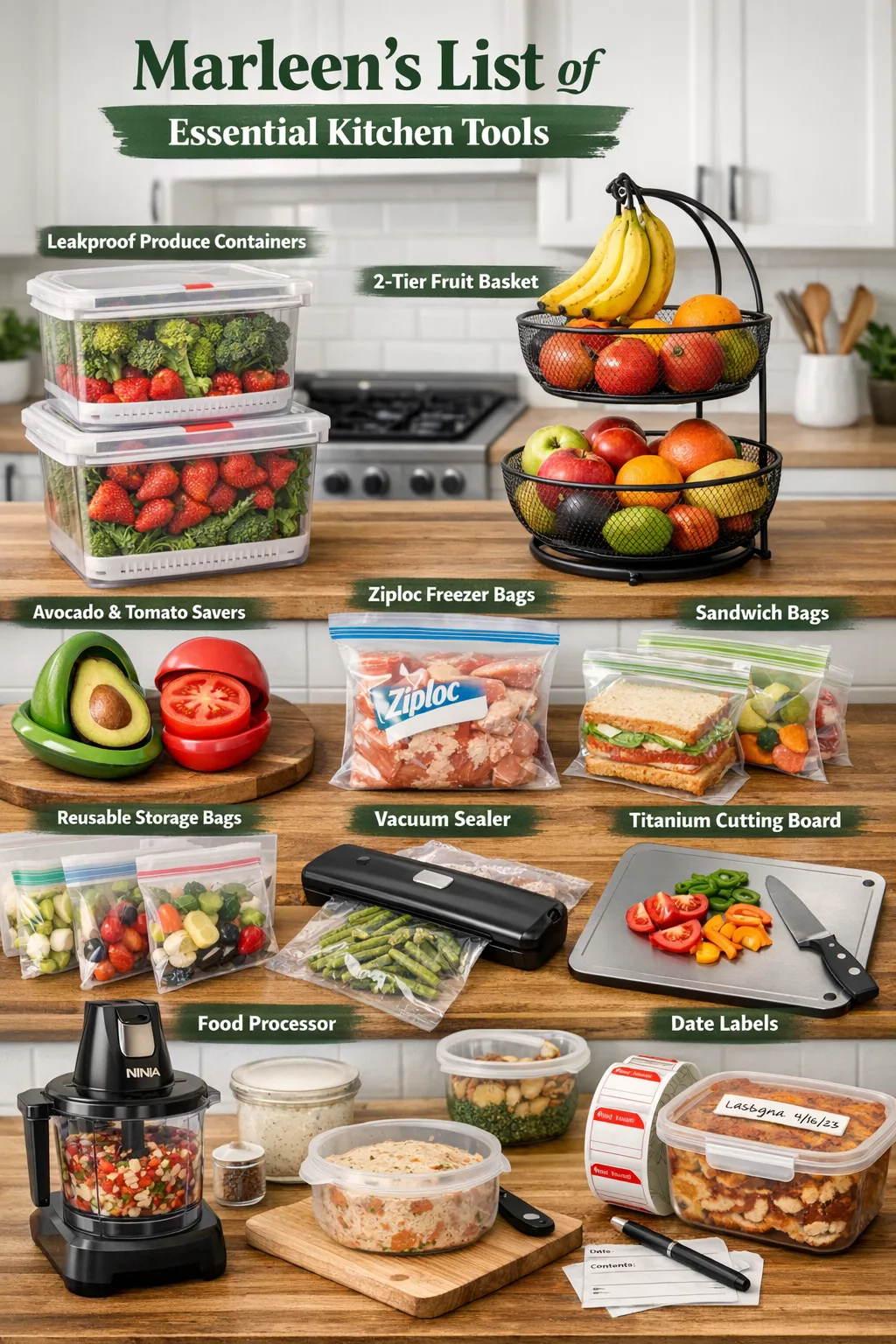
Having the right storage tools makes saving greens easy. Here are my top picks.
Leakproof Containers
Removable colanders promote airflow and prevent moisture buildup.
View on AmazonAs an Amazon Associate, I earn from qualifying purchases.
Sources & Transparency
This guide references food safety storage limits from the FDA HACCP program. Guidance on washing produce with vinegar was consulted via the University of Maine Cooperative Extension.
Romaine lettuce lasts up to 10 days in the fridge when stored whole with the outer leaves intact and a paper towel inside the bag to absorb moisture. Iceberg lettuce has a very similar storage window, lasting 1 to 2 weeks under the same conditions. For all types of lettuce, the principle is the same: never wash it before storing and always keep it in the crisper. Arugula is far more delicate than romaine and wilts within 3 to 5 days even with the same careful storage method.
Last updated:
Update Log
- : Added vinegar wash video and updated kitchen tool recommendations.