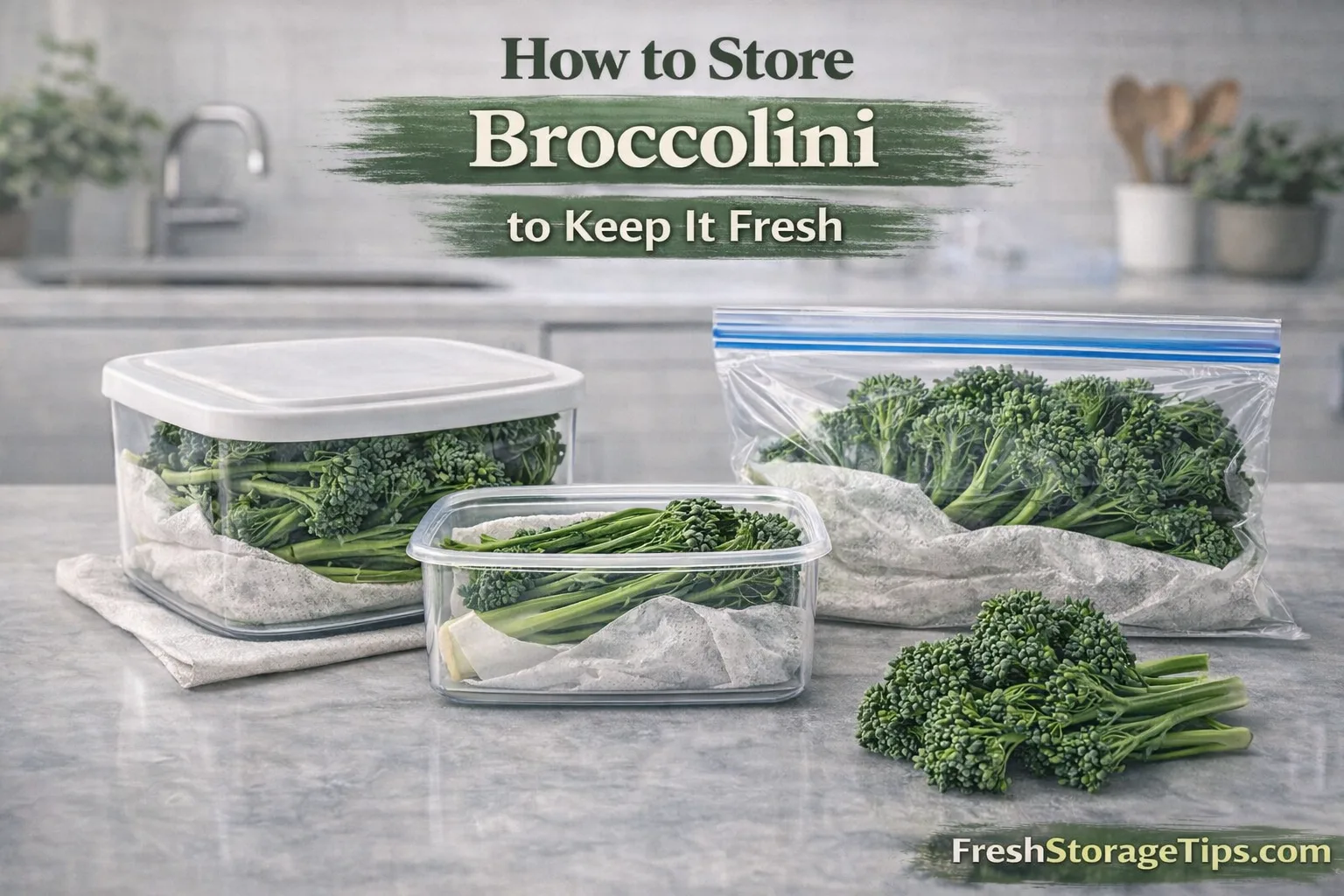
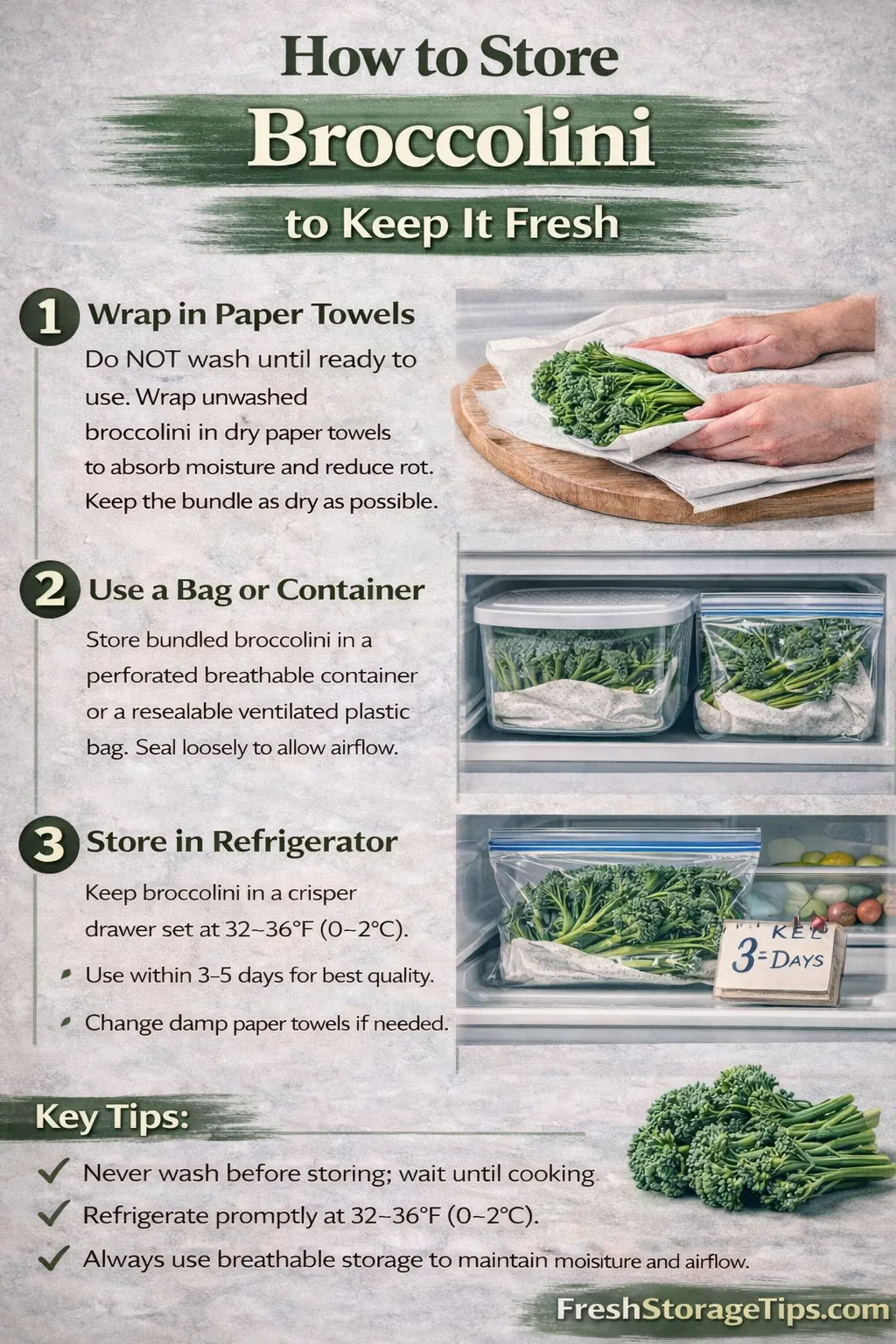
How to Store Broccolini: Treat it like fresh flowers. Trim the bottom of the stems and place the bunch upright in a jar with an inch of water. Cover the florets loosely with a plastic bag and store in the fridge. This keeps it crisp for 7 to 10 days. If space is tight, wrap the unwashed bunch in damp paper towels and place in a perforated plastic bag in the crisper drawer.
Food Safety Tip: The tightly packed florets can hide small insects or dirt. Always wash thoroughly by swirling in a bowl of cold water right before cooking.
The Elegant Hybrid
Broccolini has become a favorite in my kitchen for its elegant appearance and sweet, earthy flavor. It is often confused with baby broccoli, but it is actually a distinct vegetable. It is a natural hybrid of standard broccoli and Chinese kale (Gai Lan). This parentage gives it the best of both worlds: the tender florets of broccoli and the long, leafy, asparagus-like stems of kale.
However, this unique structure also makes storage a bit of a puzzle. The florets are prone to yellowing if they get too warm, while the long stems will turn rubbery if they get dehydrated. I used to buy a bunch for a special dinner, only to find it limp and sad two days later. It was frustrating because broccolini is often more expensive than standard broccoli.
The secret to keeping it fresh lies in treating it according to its shape. Because it has long stems, it behaves very much like a cut flower. By understanding its need for hydration, we can extend its life significantly. Let’s look at why it spoils and how to keep it restaurant-quality for over a week.
The Science: Why It Turns Yellow
To keep broccolini green, we have to fight biology. The “heads” of the broccolini are actually clusters of thousands of tiny immature flower buds. Even after harvest, the plant wants to complete its life cycle by opening those flowers.
- Chlorophyll Degradation: When broccolini is exposed to ethylene gas (from apples or bananas) or warm temperatures, the green chlorophyll breaks down. This reveals the yellow pigments underneath. Once the buds turn yellow and start to open, the vegetable becomes fibrous and bitter.
- Transpiration: The long, thin stems have a high surface-to-volume ratio. This means they lose water very fast compared to a thick stalk of regular broccoli. When the water pressure inside the cells drops, the stems lose their snap and become bendy.
- Respiration Rate: Broccolini has a very high respiration rate. It consumes oxygen and burns through its own sugar reserves quickly. Keeping it very cold (near 32°F or 0°C) is the only way to slow this metabolism down. This is why the crisper drawer is essential.
Visual Glance: The Freshness Timeline
This timeline helps you prioritize your cooking schedule. Broccolini is more delicate than standard broccoli but hardier than spinach.
You will find that broccolini shares storage characteristics with other stem vegetables. It behaves similarly to when you store asparagus, thriving when upright in water. However, it is less prone to slime than when you store bok choy, making it a reliable staple for the weekly rotation.
Storage Method Showdown
I have tested several ways to keep these greens crisp. The “Bouquet Method” is the clear winner, but there are alternatives for crowded fridges.
Video Guide: The Bouquet Technique
Treat it Like Flowers
This video demonstrates the most effective way to store broccolini. It might look funny to have a “vase” of greens in your fridge, but it works wonders.
Why it works: By trimming the ends and placing them in water, you allow the vascular system of the plant to continue pulling up moisture. This keeps the internal water pressure high, resulting in that satisfying “snap” when you break a raw stem.
The plastic bag over the top acts like a mini greenhouse. It keeps the humidity high around the delicate florets, preventing them from drying out in the arid environment of the refrigerator.
Interactive Storage Chart
Filter by the state of your broccolini. Cooked broccolini needs to be handled differently than fresh raw bunches.
| State | Method | Freshness | Key Tip |
|---|---|---|---|
| Raw Bunch (In Water) | Bouquet Method | 10 Days | Change water every 2 days to prevent slime. |
| Raw Bunch (Wrapped) | Damp Towel + Bag | 5–7 Days | Do not seal bag tight; allow airflow. |
| Roasted/Sautéed | Airtight Container | 3–4 Days | Texture will soften. Reheat in oven. |
| Blanched | Freezer Bag | 10 Months | Blanch for 2 mins to keep color green. |
| Washed | Dry Towel + Bag | 3 Days | Excess moisture on florets causes mold. |
Safety: When to Toss It
Even with the best storage, produce eventually goes bad. Referencing safety standards from Nutrition.gov, here is how to identify spoiled broccolini:
- ⚠️ Mushy Florets: The buds should be tight and dry. If they feel soft, wet, or turn into a mushy paste when touched, they are rotting. Discard.
- 👀 Yellowing: If the florets are bright yellow, the vegetable is old. It is safe to eat but will likely taste bitter and woody. It is usually better to compost it at this stage.
- ⚠️ Strong Odor: Broccolini has a mild, earthy scent. If you detect a strong, pungent smell similar to dirty socks or ammonia, bacteria have taken over.
Broccolini Myths Busted
Let’s clear up some common confusion about this vegetable:
- 🚫 Myth: It is just baby broccoli. Reality: It is a specific hybrid of broccoli and Chinese kale. It has a sweeter, more peppery flavor than standard broccoli and edible stems that don’t need peeling.
- 🚫 Myth: You must peel the stems. Reality: Unlike large broccoli stalks which have a woody skin, broccolini stems are tender all the way through. No peeling required!
- 🚫 Myth: Yellow flowers are poisonous. Reality: They are just flowers. They are edible and look pretty in salads, but their presence means the stems might be getting tough.
Deep Dive: Freezing Instructions
Broccolini freezes exceptionally well, but you cannot skip the blanching step. According to University of Maine Extension, blanching is necessary to stop enzymatic activity.
Step-by-Step Blanching:
- Clean: Wash the broccolini and trim the very woody ends (usually just the bottom 1/4 inch).
- Boil: Bring a large pot of water to a rolling boil. Add a pinch of salt.
- Cook: Drop the broccolini in. Boil for exactly 2 minutes for thin stalks, or 3 minutes for thick ones.
- Shock: Remove with tongs and plunge immediately into a bowl of ice water. Leave it there for the same amount of time it boiled.
- Dry: This is crucial. Pat the stalks completely dry with a clean towel. Excess water creates freezer burn.
- Flash Freeze: Lay the stalks in a single layer on a baking sheet and freeze for 1 hour. This prevents them from sticking together.
- Store: Transfer to a freezer bag, remove air, and freeze for up to 10 months.
Reviving Limp Broccolini
If you left your broccolini on the counter or in an open bag and it has gone floppy, it is just dehydrated. You can use the “ice shock” method to bring it back.
Trim a fresh slice off the bottom of the stems. Submerge the entire bunch in a sink or large bowl of ice water. Let it soak for 30 to 45 minutes. The cells will rehydrate, and the stems will firm up again. This is a great trick to save money and reduce food waste.
Comparison: Broccolini vs. Broccoli Rabe
It is easy to confuse these two, but they need different care. Broccolini is a broccoli hybrid and likes the “bouquet method” we discussed. Broccoli Rabe (Rapini) is actually closer to a turnip green. It has very leafy stems and smaller buds. Broccoli Rabe is more delicate and wilts faster. For Rabe, I recommend using the method used when you store Swiss chard (wrapping leaves in towels) rather than standing it in water, as the heavy leaves tend to droop and rot in a jar.
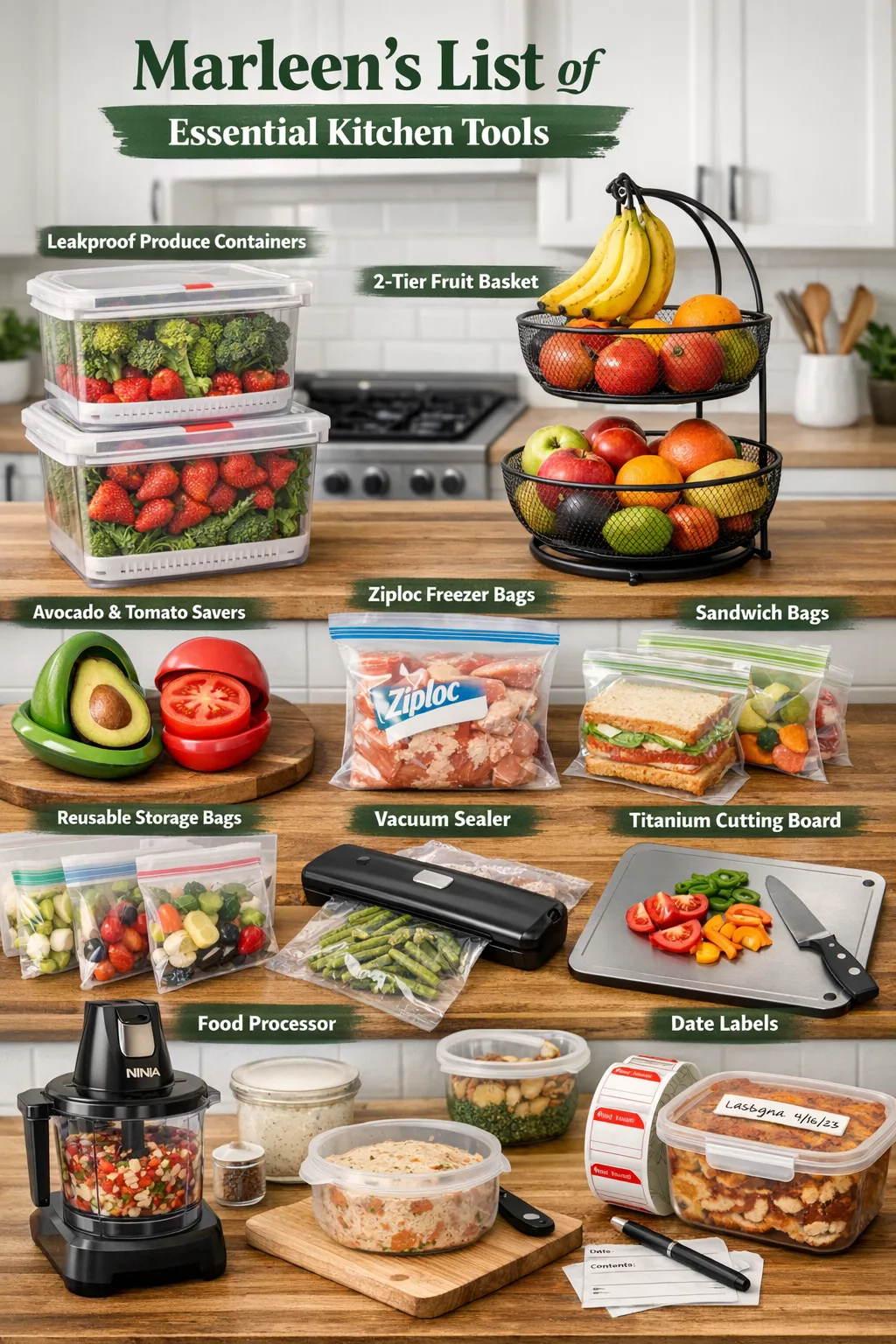
I learned a long time ago that having the right tools in the kitchen isn’t about being fancy; it is about being efficient and economical. We spend so much money on fresh produce like broccolini, asparagus, and herbs, only to watch them wilt because we don’t have a good way to store them. The items I have curated below are the specific solutions I use to extend the life of my groceries.
For example, using a produce keeper with proper ventilation changed everything for me. Standard refrigerator drawers are often too humid or too dry, but a dedicated container allows you to control that environment. Similarly, the “bouquet method” requires tall, stable containers. While a mason jar works, having dedicated storage containers that fit in the fridge door or on a shelf without tipping over prevents spills and keeps water away from other foods.
Furthermore, preparation tools are just as important as storage tools. A good salad spinner isn’t just for lettuce; it is essential for drying washed broccolini before cooking to ensure it roasts instead of steams. High-quality freezer bags and vacuum sealers are non-negotiable for long-term preservation. If you blanch and freeze produce correctly, you lock in the value of the food you bought. These investments pay for themselves quickly by reducing the amount of yellow, limp vegetables you have to throw away at the end of the week. My goal is to help you build a kitchen ecosystem where fresh food thrives.
As an Amazon Associate, I earn from qualifying purchases.
Sources & Transparency
This guide references food safety storage limits from the FDA HACCP program. Guidance on respiration rates and stem vegetable storage was consulted via the Virginia Tech Food Science department.
Broccolini lasts 3 to 5 days in the fridge when stored upright in a glass of water, similar to asparagus. Bok choy and broccolini are both tender Asian greens that wilt within 2 days if left unwrapped in the fridge. Brussels sprouts are a sturdier cruciferous vegetable and last up to 5 days longer than broccolini under the same fridge conditions. Leafy greens like kale need the same paper towel and sealed bag method as broccolini to stay crisp for up to a week.
Last updated:
Update Log
- : Added the bouquet method instructions and tips for distinguishing broccolini from broccoli rabe.