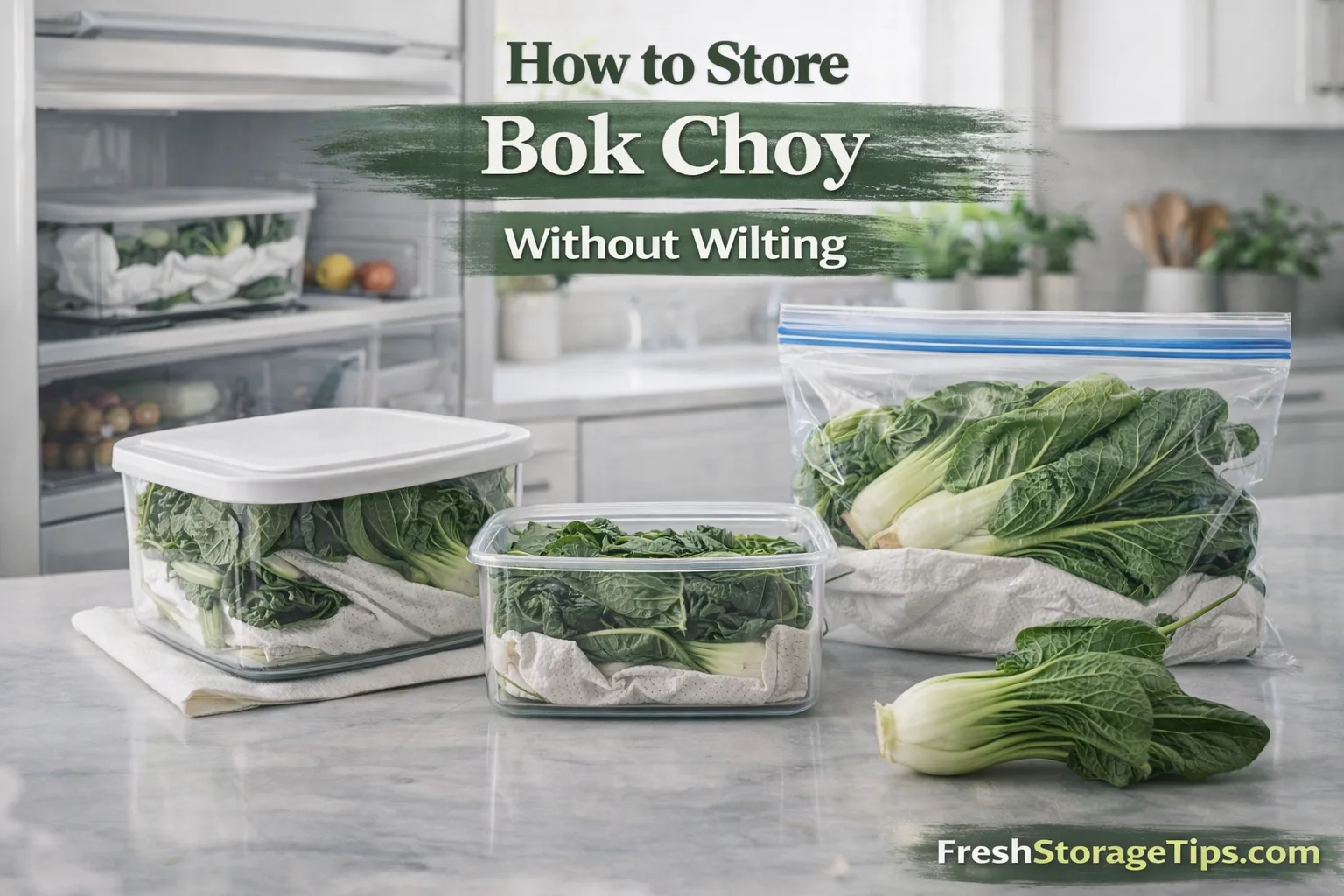
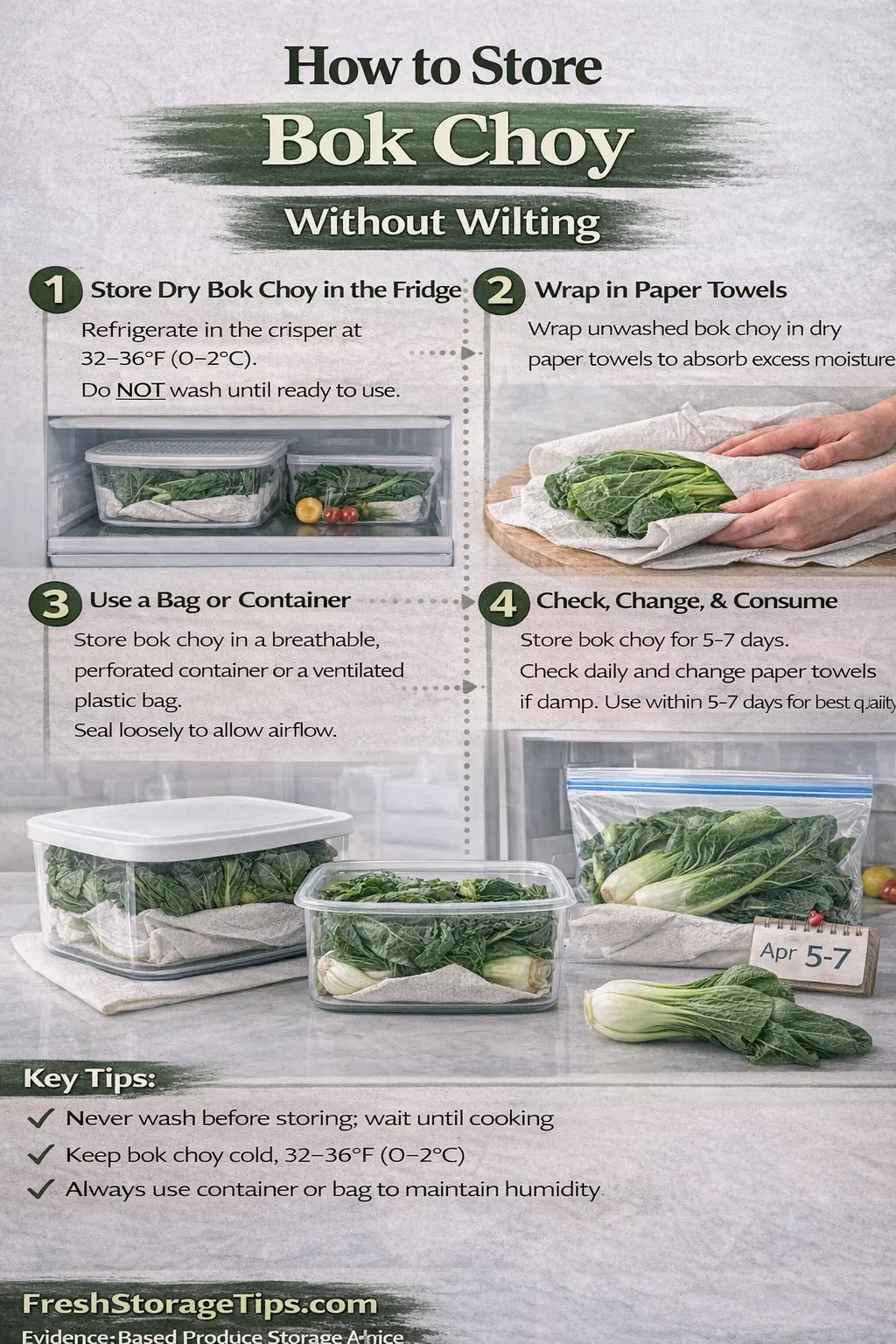
How to Store Bok Choy: Keep the heads unwashed until you are ready to cook. Wrap the entire bunch loosely in dry paper towels to manage humidity. Place the wrapped bunch inside a perforated plastic bag or a Ziploc bag left slightly open for airflow. Store it in the crisper drawer of your refrigerator. This method typically keeps bok choy fresh and crisp for 5 to 7 days.
Food Safety Tip: Dirt often accumulates near the base of the stalks. Always wash thoroughly by separating the stalks right before cooking to ensure all grit and potential bacteria are removed.
The Weeknight Stir-Fry Staple
There is something incredibly satisfying about the crunch of fresh bok choy in a hot stir-fry or noodle soup. It has that perfect balance of textures: the juicy, crisp white stalk and the tender, earthy dark green leaf. It truly is the best of both worlds. However, keeping it in that prime condition between the grocery store and your wok is often a challenge.
I cannot count how many times I have opened my vegetable drawer on a Wednesday, planning a quick dinner, only to find my beautiful bok choy has gone limp. The stalks become rubbery and bendy, and the leaves turn a sad shade of yellow. It is disappointing, and frankly, it is money down the drain. Bok choy is unique because it combines the moisture needs of a hardy cabbage with the delicate nature of salad greens.
Through years of trial and error in my kitchen, I have found that you cannot just toss it in the fridge naked, nor can you seal it up tight like leftovers. It requires a specific environment that balances humidity with airflow. Whether you are dealing with tiny Baby Bok Choy or the large Shanghai variety, the principles of preservation are the same. Let’s look at how to stop the wilt before it starts.
The Science: Understanding the Anatomy
To keep bok choy fresh, we have to look at its biology. It is a cruciferous vegetable, related to cabbage and broccoli, but its structure is more exposed. According to the Virginia Tech Food Science department, vegetables with high water content and large surface areas are most prone to rapid spoilage due to transpiration.
- Transpiration Rates: The large green leaves have many stomata (tiny pores) that release water vapor. When they release water faster than they can replenish it from the stalk, the cells collapse. This results in wilting. The stalk acts as a water reservoir, but even that runs dry eventually if the air in your fridge is too dry.
- Ethylene Sensitivity: Bok choy is highly sensitive to ethylene gas. This is a natural plant hormone released by ripening fruits like avocados, bananas, and melons. Exposure causes the green chlorophyll in the leaves to break down rapidly, turning them yellow and spotting the white stalks with rust-colored marks.
- Bacterial Vulnerability: The bulbous base of the bok choy holds dirt and moisture. If you wash it before storing, water gets trapped in the tight crevices between the stalks. This stagnant water becomes a breeding ground for soft rot bacteria, turning the base into mush while the rest of the plant is still fine.
Visual Glance: The Freshness Timeline
This timeline helps you plan your menu for the week. While it is more durable than spinach, it does not have the stamina of root vegetables. You should generally prioritize eating it before your other hardier greens.
In the hierarchy of greens, bok choy sits in the middle. It is more delicate than when you store collard greens, which can last two weeks, but slightly more robust than when you store arugula. Plan to cook your bok choy within the first half of the week for the best texture.
Storage Method Showdown
How you treat the vegetable immediately after shopping determines its lifespan. Here is a breakdown of common methods.
Video Guide: Preventing Waste
See the Technique
In this video, Meg walks through the practical steps of handling bok choy. Seeing the method in action often makes it easier to remember.
Key Takeaways: Notice how she handles the leaves gently. Bruised leaves release enzymes that speed up decay for the whole head. She also emphasizes the importance of removing any damaged outer leaves before storage, as these are often the starting point for rot.
Proper cleaning is also touched upon. While we advocate storing unwashed, knowing how to clean it efficiently when you are ready to cook is vital for food safety.
Interactive Storage Chart
Filter by the type of bok choy you have. Baby bok choy is harvested earlier and is much more tender (and perishable) than the large variety.
| Type | Best Container | Freshness | Key Tip |
|---|---|---|---|
| Large/Shanghai | Perf. Bag + Towel | 1 Week | Most durable variety. Keep crisper humid. |
| Baby Bok Choy | Clamshell or Bag | 3–5 Days | Very delicate. Do not stack heavy items on top. |
| Chopped Leaves | Airtight Tub | 2–3 Days | Stalks brown quickly (oxidize). Use fast. |
| Cooked/Sautéed | Sealed Container | 3 Days | Texture softens more upon reheating. |
| Blanched (Frozen) | Freezer Bag | 10 Months | Remove air to prevent freezer burn. |
Safety: When to Toss It
Consuming spoiled produce can lead to foodborne illness. Based on guidelines from Nutrition.gov, here are the non-negotiable signs that your bok choy is bad:
- ⚠️ Mushy Stalks: The white stalks should be firm and crunchy like celery. If they are soft, translucent, or mushy to the touch, the cell structure has collapsed due to rot.
- 👀 Brown Spots: Small brown spots on the white stalks (often called “pepper spots”) are actually cosmetic and safe to eat. However, large, spreading brown lesions indicate decay.
- ⚠️ Foul Odor: Bok choy has a mild cabbage scent. If it smells sour, fishy, or like ammonia, bacteria are present. Do not taste it; discard it.
Bok Choy Myths Busted
Let’s clear up some common kitchen folklore regarding Asian greens:
- 🚫 Myth: You must wash it as soon as you get home. Reality: This is the fastest way to ruin it. Water trapped in the base causes rot. See vegetable storage rules for more on this “dry is best” rule.
- 🚫 Myth: It lasts as long as cabbage. Reality: Bok choy is a type of cabbage (Chinese cabbage), but it lacks the dense, tight head that protects standard green cabbage. It dehydrates much faster.
- 🚫 Myth: Pepper spots mean it is diseased. Reality: Those tiny black dots on the stems are usually a cosmetic response to stress or soil conditions (Gomasho). They are safe to eat.
Deep Dive: Freezing Without Mush
Many people think you cannot freeze bok choy because it becomes soggy. While you cannot use thawed bok choy for a crisp raw salad, it is excellent for soups, stews, and sautéed dishes if you prep it correctly. The secret is blanching.
According to University of Maine Extension, blanching stops the enzymatic activity that degrades flavor and color during freezing.
Step-by-Step Blanching:
- Wash the bok choy thoroughly, separating the stalks to get all the dirt out.
- Bring a large pot of water to a rolling boil.
- Drop the bok choy in. Boil for exactly 2 minutes.
- Immediately transfer the greens to a bowl of ice water for another 2 minutes. This “shocks” the vegetable and stops the cooking.
- Drain well and squeeze out excess water.
- Place in freezer bags, remove the air, and freeze.
This process preserves the vibrant green color and ensures the stalks don’t become tough or woody in the freezer.
Reviving Wilting Bok Choy
If you find your bok choy looking a bit tired and bendy, do not throw it away yet. As long as there is no slime or bad smell, it is just dehydrated.
Fill a large bowl or clean sink with very cold water and a few ice cubes. Separate the leaves and submerge them completely. Let them soak for 15 to 20 minutes. The cells will reabsorb the water, and the stalks will snap back to attention. This hydration technique is similar to how you revive items when you store Swiss chard that has gone limp.
Pairing Partners
When storing bok choy, be mindful of its neighbors. It pairs beautifully in cooking with aromatics, so it makes sense to keep them handy. I always recommend checking guides on how to store fresh ginger and how to store garlic, as these three ingredients form the “holy trinity” of many stir-fries. Keeping these staples fresh ensures you can whip up a meal at a moment’s notice.
Over the years, I have realized that saving money on groceries isn’t just about buying what is on sale; it is about making sure what you buy actually ends up on your plate instead of in the compost bin. We often blame ourselves for letting produce go bad, thinking we simply didn’t cook fast enough. But often, the real culprit is the environment inside our refrigerator.
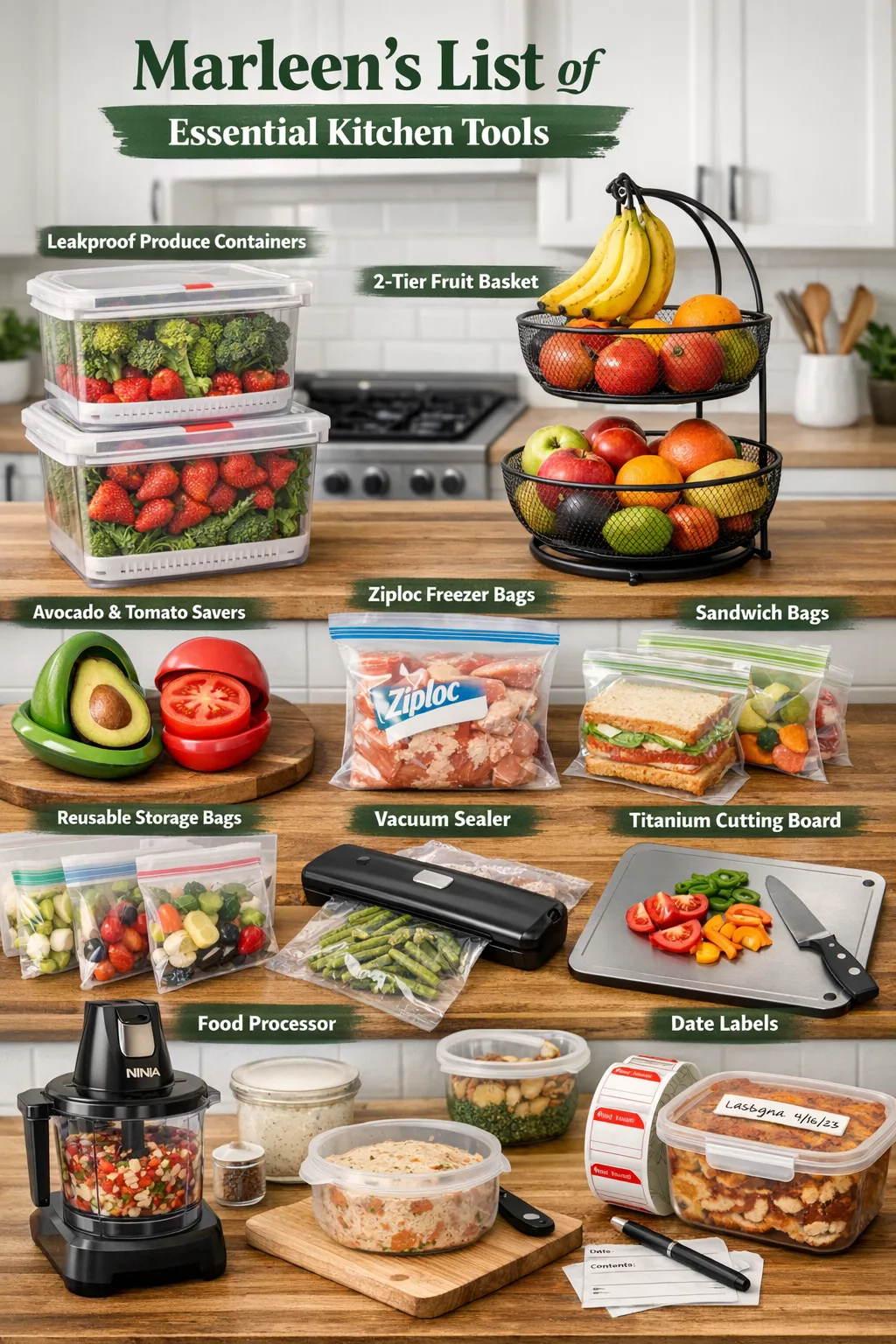
The tools listed below are not just random gadgets; they are the specific items I use to control the three main enemies of freshness: oxygen, moisture, and ethylene gas. For leafy greens like bok choy and kale, moisture control is the absolute priority. A standard plastic bag traps humidity, leading to rot, while an open shelf leads to dehydration. This is why I swear by leakproof containers with vents and produce keepers that regulate airflow.
Furthermore, organization plays a huge psychological role in reducing waste. If your garlic and ginger are buried at the bottom of a drawer, you will forget them until they shrivel. Using a tiered basket or clear containers keeps your ingredients visible and accessible. It inspires you to cook. When you can see your fresh produce, clearly labeled with dates, meal prep stops feeling like a chore and starts feeling like a creative process. Investing in high-quality storage gear is an upfront cost that pays for itself by saving hundreds of dollars in wasted food over the course of a year. These are the workhorses of my kitchen that I rely on every single week.
Leakproof Containers
Removable colanders promote airflow and prevent moisture buildup.
View on AmazonAs an Amazon Associate, I earn from qualifying purchases.
Sources & Transparency
This guide references food safety storage limits from the FDA HACCP program. Guidance on respiration rates and leafy green storage was consulted via the Virginia Tech Food Science department.
Bok choy lasts 3 to 5 days in the fridge when stored unwashed and wrapped loosely in a damp paper towel. Broccolini is stored almost identically to bok choy and has the same 3 to 5 day window before it starts to yellow and wilt. Napa cabbage is a larger relative of bok choy and lasts considerably longer in the fridge, up to 2 weeks, because its tighter leaves retain moisture better. Other leafy greens like kale can handle drying out a little more than bok choy before going bad, making it a sturdier option for meal planning.
Last updated:
Update Log
- : Added detailed blanching instructions and the paper towel storage method for unwashed greens.