How to Store Watermelon: Keep a whole, uncut watermelon on your counter at room temperature for 7 to 10 days to preserve its flavor and nutrients. Once cut, store the pieces in an airtight container in the refrigerator for 3 to 4 days. If you wrap a large cut section, use plastic wrap and seal it tightly against the flesh to prevent it from absorbing fridge odors.
Food Safety Tip: Melons grow on the ground and can pick up pathogens. The CDC recommends scrubbing the rind with a clean produce brush before cutting to prevent transferring bacteria from the knife to the fruit flesh.

The Giant of the Summer Kitchen
There is no greater symbol of summer than a massive, striped watermelon sitting on the kitchen counter. It promises hydration, sweetness, and sticky fingers for the kids. However, bringing home a 15-pound fruit presents a unique logistical challenge for any household. Where do you put it? And once you cut into it, how do you keep the rest from turning into a sad, mealy mess?
I remember one July when I bought a huge melon for a neighborhood barbecue that ended up getting canceled. I shoved the whole thing in the fridge, thinking it would keep for weeks. When I finally cut it open, the vibrant red color had dulled, and the texture was grainy and flavorless. I was so disappointed. It turns out that cold temperatures can actually hurt the quality of a whole melon.
Whether you have a seeded giant or a personal-sized seedless variety, the rules for keeping it fresh are specific. You have to balance the need for temperature control with the fruit’s biological desire to retain its nutrients. Let’s look at how to manage this giant fruit from the grocery store to your plate.
The Science: Lycopene and Temperature
Watermelon is not just water and sugar. It is a complex biological package that continues to change even after it is picked from the vine.
- Lycopene Preservation: Studies cited by agricultural researchers show that watermelons stored at room temperature (around 70°F) continue to develop lycopene. This is the pigment that gives them their red color and antioxidant properties. If you chill the melon immediately after harvest, you halt this process. The melon essentially goes into shock and stops improving its nutritional profile.
- Chilling Injury: While we love a cold slice of melon, the whole fruit suffers if kept too cold for too long. If a whole watermelon is kept below 50°F (10°C) for more than a few days, the cell structure begins to break down. This leads to color loss and that unpleasant “mealy” texture we all hate. The fridge is fine for a day or two to chill it before serving, but not for long-term storage.
- Ethylene Sensitivity: Watermelons are sensitive to ethylene gas. This is a ripening hormone emitted by fruits like apples, bananas, and tomatoes. If you store your melon next to a bunch of bananas on the counter, the rind will soften and the flesh will become mushy much faster. Give the melon its own space.
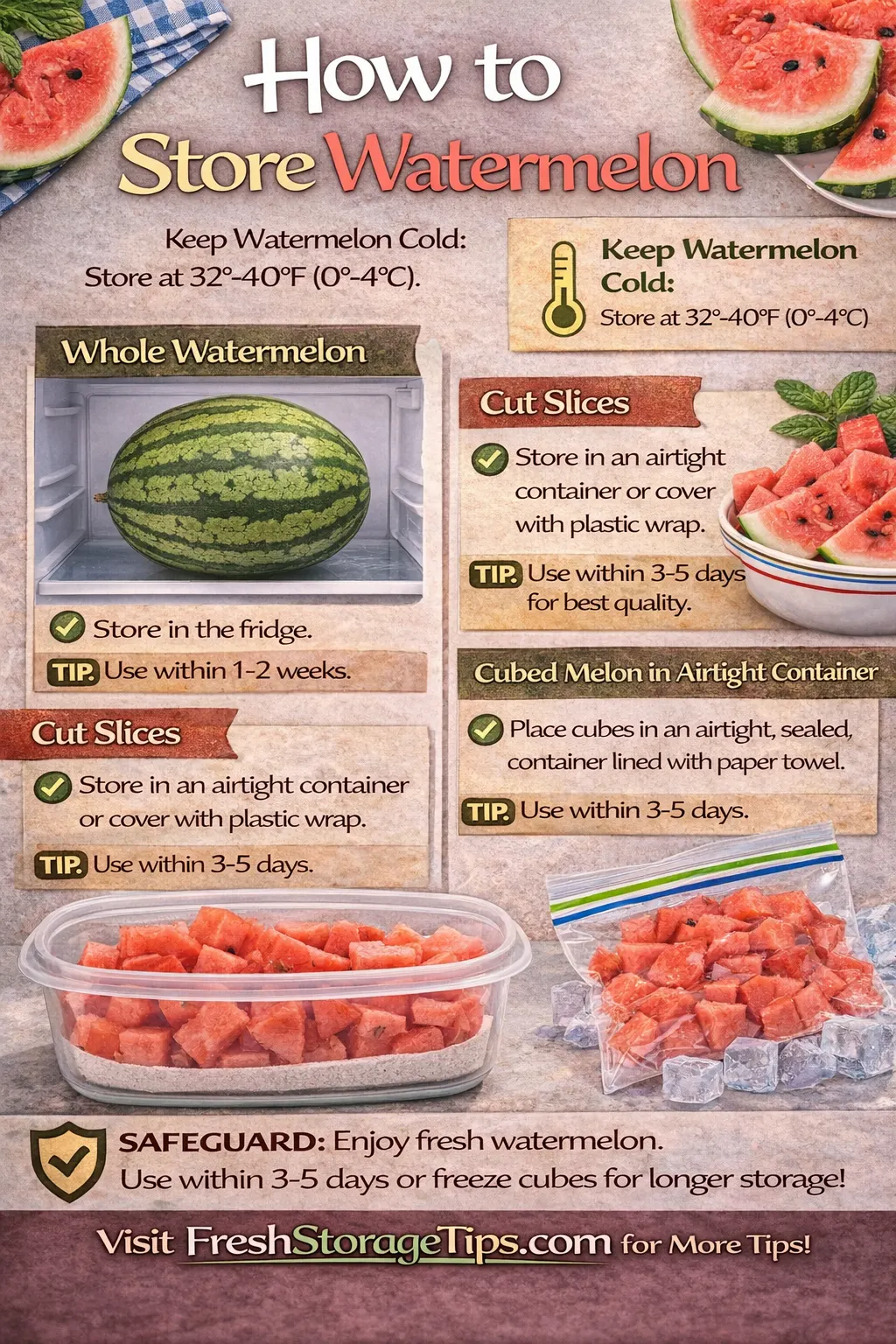
Visual Glance: The Freshness Timeline
This timeline helps you manage your consumption. Once that rind is breached, the clock starts ticking very fast.
Compared to other summer fruits, watermelon is quite durable until cut. It lasts longer on the counter than when you store strawberries or keep cherries fresh. However, once you cube it, it degrades faster than bananas in the fridge. Treat cut melon as a perishable item that needs to be eaten within days.
Storage Method Showdown
How you store the fruit determines the texture you get. Here is the breakdown.
Video Guide: Picking and Prepping
The Thump and The Cut
This video covers the basics, from selection to storage. Picking a good melon is the first step to successful storage. You want a heavy melon with a creamy yellow field spot.
Cutting Tip: The video demonstrates efficient ways to break down the melon. Notice how they handle the rind. Removing the rind before storing the meat allows you to fit more fruit into your containers. Storing huge wedges with the rind on wastes valuable fridge space and exposes more surface area to drying out.
Remember to wash the outside before you slice. This prevents the knife from dragging dirt from the skin into the sweet red meat.
Interactive Storage Chart
Filter by the state of your watermelon. Whole melons behave differently than juice or cubes.
| Form | Best Method | Safe Time | Risk or Tip |
|---|---|---|---|
| Whole Melon | Countertop | 10 Days | Keep away from direct sunlight. |
| Cubed Flesh | Airtight Tub | 3–4 Days | Drain liquid at bottom to prevent mush. |
| Half Melon | Plastic Wrap | 3 Days | Wrap tightly to stop fridge odors. |
| Chunks | Freezer Bag | 10 Months | Texture changes; use for smoothies. |
| Juice | Sealed Jar | 2 Days | Separates easily; shake before drinking. |
Safety: When to Toss It
Melon spoilage can cause food poisoning, specifically from bacteria like Listeria or Salmonella. Referencing FDA guidelines, here is what to watch for:
- ⚠️ Sour Smell: Fresh watermelon smells sweet and floral. If it smells sour, tangy, or fermented, the sugars are breaking down. Do not eat it.
- ⚠️ Slimy Texture: If the surface of the cubes feels slippery or gooey, bacteria have colonized the fruit. Rinse it? No. Discard it.
- 👀 Flesh Color: The flesh should be bright pink or red (or yellow for some varieties). If the color looks dark, dull, or watery, the cell structure has collapsed.
Watermelon Myths Busted
Let’s clear up some kitchen folklore:
- 🚫 Myth: Storing it whole in the fridge makes it sweeter. Reality: Cold stops the ripening process. For maximum sweetness, keep it on the counter until the day you cut it.
- 🚫 Myth: Thumping tells you everything. Reality: The thump test helps, but looking for the “field spot” (creamy yellow patch) and a dried brown stem is a more reliable indicator of ripeness.
- 🚫 Myth: Seeds are bad for storage. Reality: Seeded watermelons often have firmer flesh and store slightly better than seedless varieties, which can be more prone to mealiness.
Deep Dive: Freezing Technique
If you have too much melon, freezing is a great option, but you must manage your expectations regarding texture. The water expands and breaks the cells, so thawed melon will be soft.
The IQF Method (Individually Quick Frozen):
- Cut: Dice the melon into small cubes or use a melon baller.
- Tray: Line a baking sheet with parchment paper. Spread the pieces out so they are not touching.
- Freeze: Place the tray in the freezer for 2 to 3 hours until solid.
- Bag: Transfer the frozen chunks into a freezer bag. Remove as much air as possible.
These frozen chunks are perfect “ice cubes” for drinks or can be blended directly into smoothies.
Handling a Cut Half
Sometimes you only need half a melon. To store the other half, leave the rind on. Wrap the exposed flesh tightly with plastic wrap. Ensure there are no air gaps. You can also place a plate upside down over the cut side if it fits on your fridge shelf. Store it cut-side up if wrapped, or cut-side down on a plate (with a paper towel to catch juice). Consume within 3 days for the best quality.
The Rind is Edible
Don’t throw away the rind! It is essentially a cucumber relative. You can pickle the white part of the rind for a crunchy, tangy snack that lasts for months in the fridge. It reduces waste and gives you a whole new ingredient to enjoy.
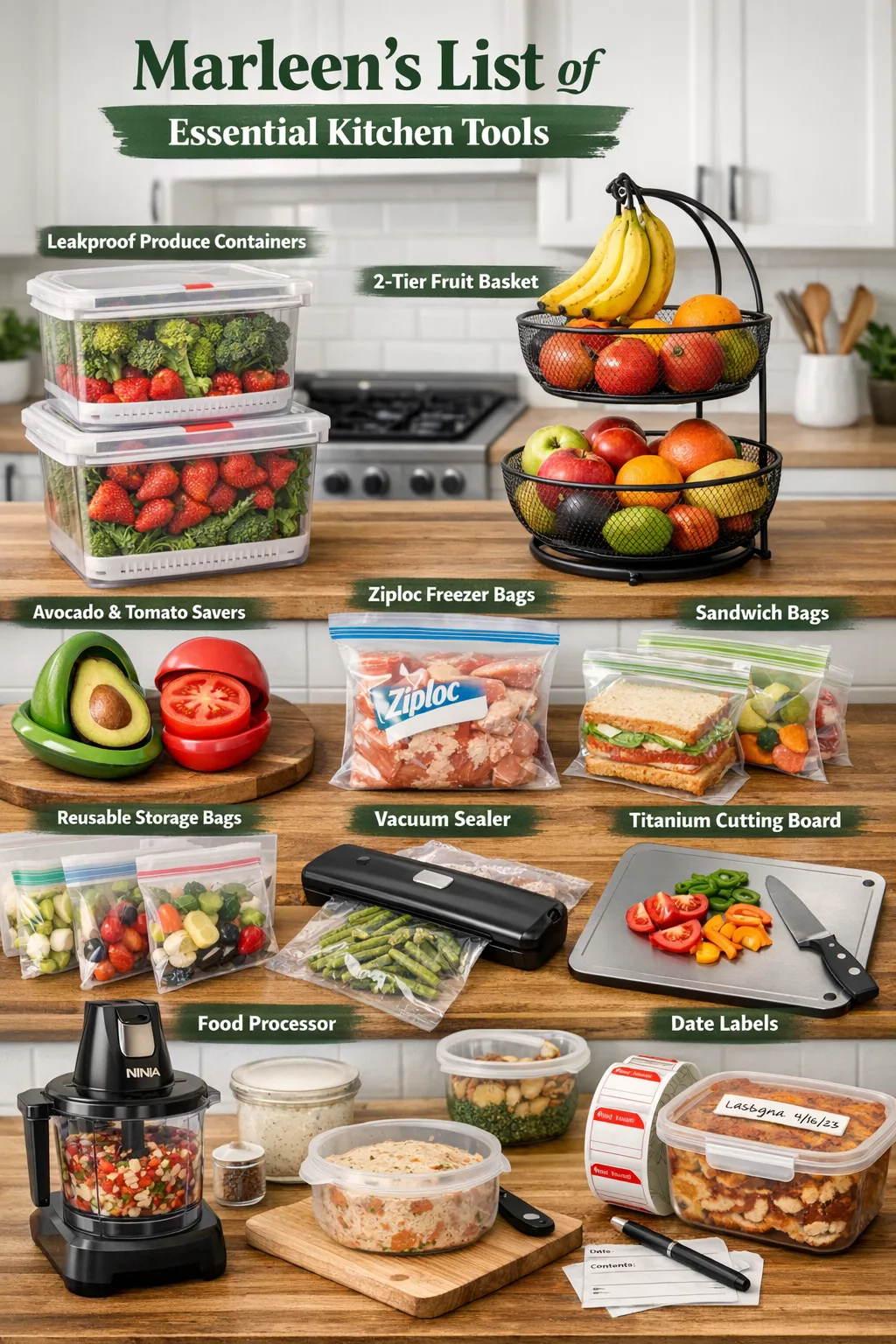
I absolutely love watermelon season, but I used to dread the actual process of breaking down a 20-pound fruit. It felt like a wrestling match in my kitchen. Juice would run off the counter, the melon would roll around dangerously, and I would end up with uneven chunks and a sticky floor. It wasn’t until I upgraded my equipment that I actually started enjoying the prep work. Dealing with large produce requires tools that are up to the task.
The items I have curated below are specifically chosen for handling giant fruits safely and efficiently. A standard 8-inch chef’s knife often isn’t enough for a large melon; a longer slicing knife gives you the leverage to make clean, safe cuts through the thick rind in one motion. Stability is also key. A large, non-slip cutting board with a juice groove changes everything. It catches the sticky liquid before it hits your floor and gives you enough surface area to work without cramping.
Once the melon is cut, storage becomes the next hurdle. Flimsy plastic bags leak and don’t stack well. I swear by large, rectangular glass or high-quality plastic containers with locking lids. They maximize fridge space and keep the melon from absorbing the smell of last night’s lasagna. If you are freezing melon for smoothies, a good blender and sturdy freezer bags are essential. These tools turn the chaos of “watermelon day” into a streamlined, satisfying routine that leaves you with a fridge full of healthy snacks ready to grab.
As an Amazon Associate, I earn from qualifying purchases.
Sources & Transparency
This guide references food safety guidelines from the CDC Fruit & Veggie Safety page. Data on lycopene retention and chilling injury was consulted via Washington State University Agricultural Extension.
A whole watermelon lasts up to 2 weeks at room temperature, but once cut it should go straight into the fridge and be eaten within 3 to 5 days. Oranges also store best at room temperature until cut and can last 1 to 2 weeks on the counter without losing quality. Other summer fruits like cherries need the fridge immediately and only last 1 to 2 days at room temperature, which is the opposite of watermelon. Avocados follow the same counter-first rule as whole watermelon and only move to the fridge once they reach full ripeness.
Last updated:
Update Log
- : Added tips for storing cut halves and the importance of draining cubes before sealing.