How to Store Red Snapper: Remove the fish from its packaging and pat it thoroughly dry. Prepare a drainage system by setting a colander over a bowl and filling it with crushed ice. Lay the snapper (whole or fillet) on the ice and cover it with more ice. Wrap the entire bowl in plastic wrap and store it on the bottom shelf of the refrigerator. Drain the water daily. This keeps it fresh for 3 to 5 days.
Food Safety Tip: Fish bacteria multiply rapidly above 40°F. The FDA advises keeping seafood as close to 32°F (0°C) as possible to inhibit spoilage and maintain safety.

The Jewel of the Gulf
Red Snapper is one of the most recognizable and prized fish in the sea. Its vibrant red skin and sweet, nutty flesh make it a centerpiece meal, whether you are roasting it whole or searing crispy-skin fillets. Because it is often sold whole, it presents a different storage challenge than your standard pre-cut fillets. Buying a whole fish is a commitment, and watching it go bad before you can cook it is a tragedy.
I remember the first time I bought a whole snapper from a local market. It looked stunning with its bright red scales. I put it on a plate in the fridge, uncovered. Two days later, the eyes were sunken and cloudy, and the smell was overpowering. I realized too late that whole fish carry more bacteria (especially in the belly cavity) and require aggressive cooling to stay fresh.
Unlike chicken or beef, which are fine at 40°F, snapper needs to be at 32°F. This is the temperature of melting ice. By mimicking the way fishmongers store their catch, you can extend the life of your snapper significantly. This allows you to buy it on a Tuesday and serve a show-stopping meal on Friday.
The Science: Why Snapper Spoils
To keep Red Snapper pristine, we have to fight biology. It is a warm-water fish, but once it is dead, it needs extreme cold to halt decomposition.
- Enzymatic Activity: Even after the fish is caught, enzymes in the gut and flesh remain active. They begin to digest the fish from the inside out. This makes the meat mushy. Direct contact with ice slows these enzymes down to a crawl.
- Bacterial Load: If you buy a whole snapper, the skin and the gut cavity are the main sources of bacteria. According to studies on seafood preservation, removing the guts and gills immediately is crucial because that is where spoilage starts. If you leave the organs in, the fish will spoil in half the time.
- Lipid Oxidation: While snapper is a lean fish, the fat layer under the skin can oxidize if left exposed to air. This creates a “fishy” taste. Vacuum sealing or tight glazing prevents oxygen from reaching the fat.
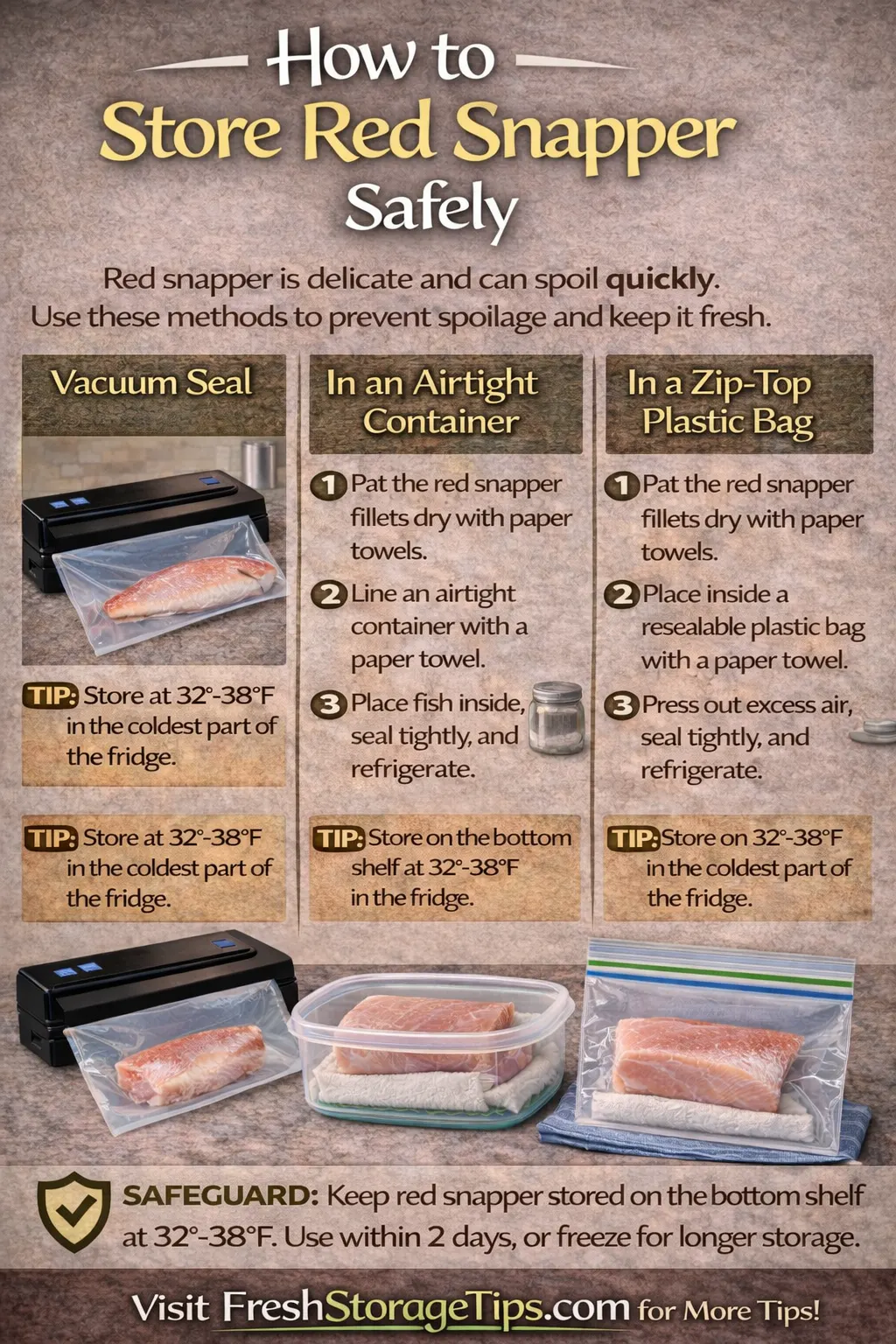
Visual Glance: The Freshness Timeline
This timeline helps you plan. Snapper is robust compared to some fish, but it is not immortal.
In the world of seafood, Red Snapper is sturdier than pollock or haddock, which fall apart easily. Its skin offers a layer of protection. It stores similarly to sea bass or grouper, thriving when buried in ice. Treat it better than you treat your general seafood mixes.
Storage Method Showdown
There is a massive difference between “fridge cold” and “ice cold.” Here is the proof.
Video Guide: Freezing for Long Term
The Glazing Technique
In this video, the method of preparing snapper for the freezer is explained. If you catch a lot of fish or buy in bulk, vacuum sealing is great, but glazing is an old-school alternative that works wonders for whole fish or fillets.
The Process: Dip the fish in ice water, freeze it for an hour, dip it again, and freeze again. Repeat this until a thick shell of ice coats the fish. This ice shell acts as a sacrificial layer.
The freezer air attacks the ice shell instead of the fish meat, preventing freezer burn for months. This is how commercial fisheries keep their product pristine.
Interactive Storage Chart
Filter by the cut. Whole fish need more attention to the cavity, while fillets are easier to manage.
| State | Best Method | Safe Time | Risk or Tip |
|---|---|---|---|
| Whole (Gutted) | Ice Rig | 4–5 Days | Pack ice inside the belly cavity. |
| Fresh Fillet | Ice Rig | 2–3 Days | Keep dry; do not let it float in water. |
| Roasted/Fried | Airtight Tub | 3 Days | Skin will lose crispness. Reheat in oven. |
| Vacuum Sealed | Deep Freeze | 10 Months | Remove air to prevent fat oxidation. |
| Thawed | Fridge Plate | 24 Hours | Do not refreeze raw snapper. |
Safety: Checking Your Snapper
Bad fish can make you very sick. According to FoodSafety.gov, these are the signs of spoilage:
- ⚠️ Cloudy Eyes: On a whole fish, the eyes are the first giveaway. They should be clear, bright, and bulging. If they are sunken, gray, or cloudy, the fish is old.
- ⚠️ Ammonia Smell: Snapper should smell mild. If you catch a whiff of ammonia or sulfur, the proteins are decomposing. Discard it.
- 👀 Brown Gills: Lift the gill cover. The gills should be bright red or pink. If they are brown, gray, or slimy, the fish has been out of water too long.
Snapper Myths Busted
Let’s clear up some kitchen folklore:
- 🚫 Myth: Leaving guts in keeps it fresh. Reality: Absolutely not. The enzymes in the stomach digest the fish from the inside out. Gutting it immediately is the most important step for preservation.
- 🚫 Myth: Rinse with vinegar to clean. Reality: Acid cooks the meat (ceviche style). Use cold water to rinse, then dry it thoroughly. Keep vinegar for the cooking process.
- 🚫 Myth: Freezer burn is mold. Reality: Freezer burn is dehydration. It is safe to eat but tastes like cardboard. You can trim it off, but prevention (glazing or vacuum sealing) is better.
Deep Dive: Building the Ice Rig
The “Ice Rig” is the only way to store fresh fish for more than a day. Here is the step-by-step:
- Tools: Find a colander that fits inside a larger bowl. There must be space between the two bottoms.
- Ice Base: Fill the colander halfway with crushed ice.
- Placement: Lay the snapper on the ice. If storing a whole fish, stuff the belly cavity with ice as well. This cools it from the inside out.
- Cover: Bury the fish in more ice.
- Drain Daily: The ice will melt. This is good because it washes away bacteria. However, you must pour the water out of the bottom bowl every day so the fish doesn’t sit in dirty water.
This method keeps the fish at 32°F, maximizing shelf life.
Thawing Frozen Snapper
Thawing correctly is vital. The USDA recommends thawing in the refrigerator for 24 hours. Place the fish on a plate to catch any liquid.
The Cold Water Method: If you are in a rush, place the sealed bag in a bowl of cold water. Change the water every 30 minutes. Do not use warm water, or the fish will start to cook and spoil.
What About the Scales?
If you buy a whole snapper, ask the fishmonger to scale it for you. Storing a fish with scales is fine, but scaling a cold, stiff fish at home makes a huge mess. If you must scale it at home, do it under running water to keep the scales from flying everywhere. Store the scaled fish wrapped tight.
I believe that cooking whole fish like Red Snapper is one of the most rewarding skills a home cook can master. It looks impressive on the table, it is often cheaper than buying fillets, and the flavor is superior because cooking on the bone keeps the meat moist. However, I also know it can be intimidating. The scales, the bones, and the storage requirements can scare people back to the frozen fish stick aisle.
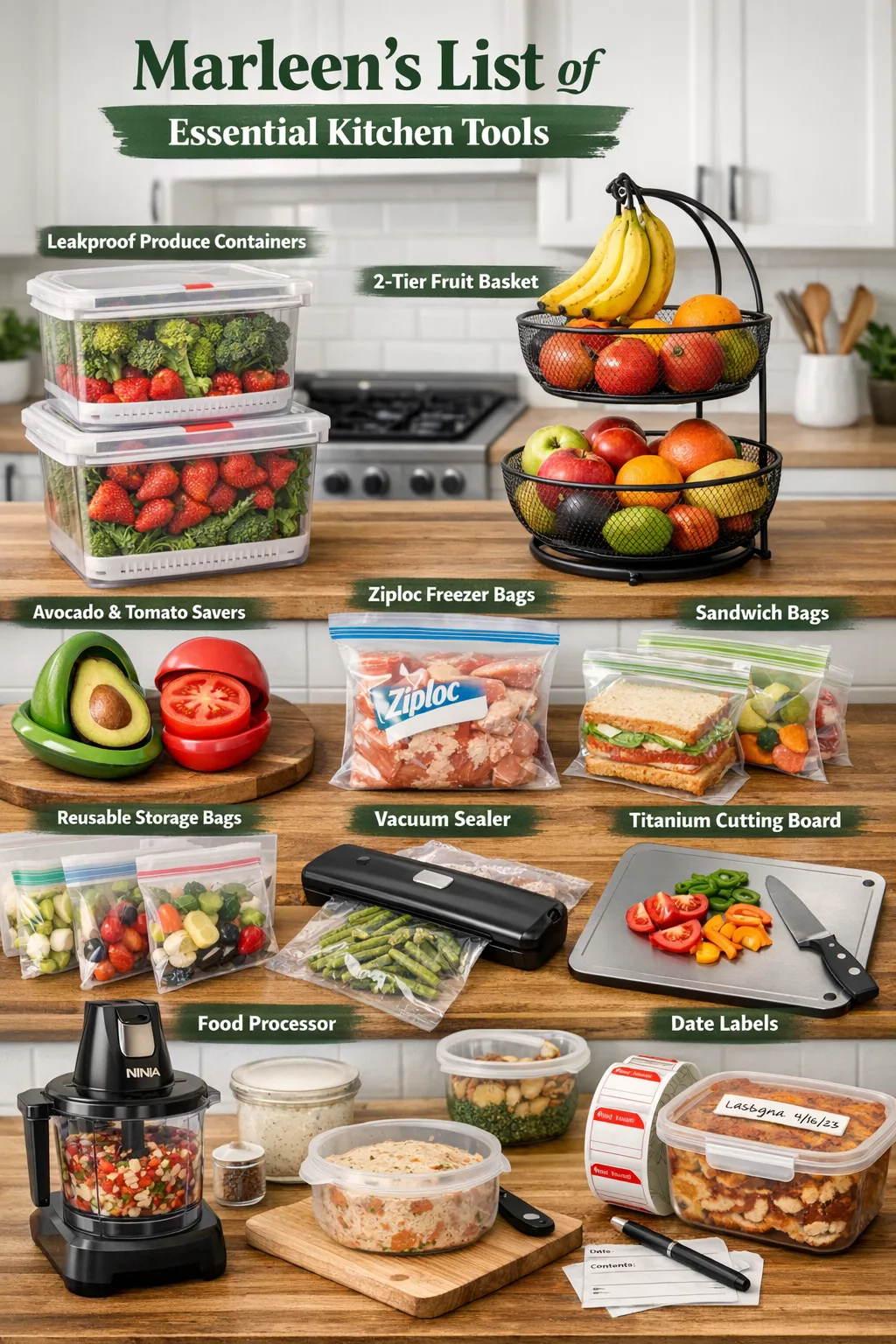
The tools I have curated below are designed to remove that intimidation factor. They are the exact items I use to handle whole fish safely and cleanly. A good pair of kitchen shears is essential for trimming sharp fins before you start cooking, preventing painful pricks. A sturdy fish scaler with a cover helps you prep the fish without covering your entire kitchen in flying scales. For storage, the “ice rig” requires a perforated pan or colander that fits inside a catch bowl. This simple setup is the secret to keeping fish fresh for days, not hours.
Furthermore, managing your freezer inventory is key to saving money. A vacuum sealer is the best investment for preserving the quality of fish you might not cook immediately. Oxygen causes freezer burn and fat oxidation, which leads to that “old fish” taste. Removing the air keeps the snapper tasting fresh-caught for up to a year. Clear labels help you track dates so you can rotate your stock like a pro. These tools turn the challenge of handling whole fish into a manageable, satisfying routine that allows you to feed your family better food for less money.
As an Amazon Associate, I earn from qualifying purchases.
Sources & Transparency
This guide references food safety storage limits from the FDA Fish and Fishery Products Hazards Guide. Guidance on bacterial growth and seafood storage was consulted via NOAA Fisheries.
Red snapper lasts 1 to 2 days in the fridge at 32 to 38°F and up to 6 months in the freezer when double-wrapped in plastic and foil. Sea bass has almost the same shelf life as red snapper and benefits from the same cold, damp storage method in the fridge. Grouper is the closest match to red snapper in terms of texture, fat content and how quickly it spoils. Fattier fish like salmon spoil faster than red snapper because fat oxidises more quickly always use the sniff test before cooking any fish stored for more than a day.
Last updated:
Update Log
- : Added tips for storing whole fish (gutting and gill removal) and the glazing freezing method.